
This is the curry I make when the first cold snap hits and a squash is sitting on the counter. Chunks of kabocha turn soft and sweet in a red curry coconut sauce, chicken thighs stay tender through the simmer, and a handful of Thai basil and a squeeze of lime at the end keep the whole pot from tasting heavy. It comes together in one pot in about 45 minutes, and it tastes better the next day.

What is Thai pumpkin curry?
Thai pumpkin curry, called gaeng fak thong in Thai, is a red curry built around winter squash. The squash is not a garnish here. It simmers in the sauce until just tender, and as it cooks it gives off starch that thickens the sauce and rounds out the heat from the curry paste. Kabocha is my pick because its flesh is dense and sweet, and it holds its shape better than a carving pumpkin, which tends to fall apart.
Expect a sauce that leans sweet and warm rather than fiery. Red curry paste brings chili heat and aromatics, coconut milk brings body, fish sauce brings salt, and a little palm sugar and lime juice pull the flavors into balance. The chicken is there for substance, not as the star. If you have made my Thai green curry with chicken, this one cooks the same way but lands sweeter and rounder, since the squash does part of the seasoning work.
Bloom the paste before anything else goes in
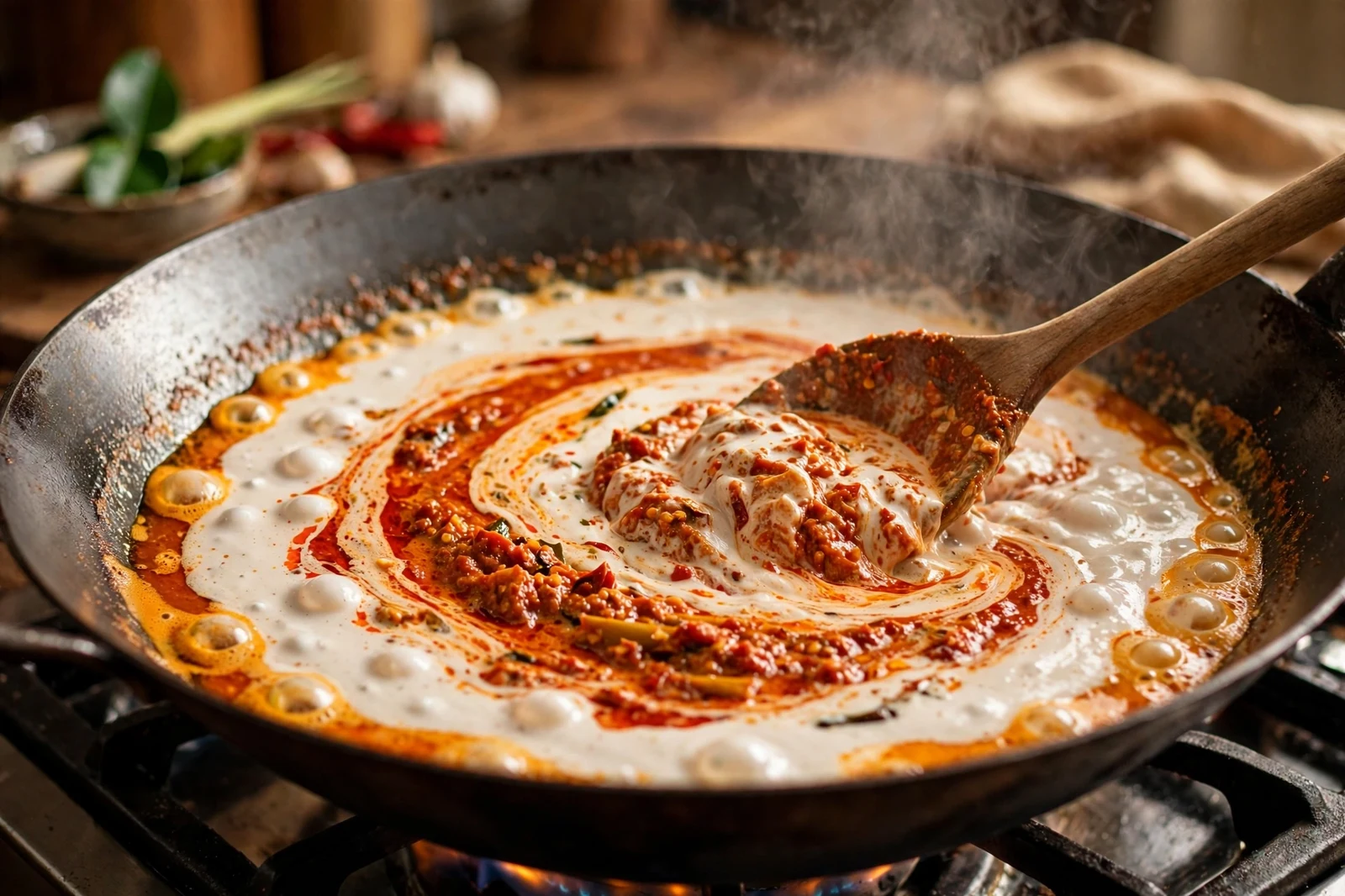
Open a can of full-fat coconut milk without shaking it and scoop the thick cream off the top, about 1/2 cup. Heat that cream in a wide pot over medium heat, add 3 tablespoons red curry paste, and stir for 1 to 2 minutes until it smells fragrant and the oil starts to separate at the edges. This step, called blooming, is the difference between a curry that tastes layered and one that tastes like raw spice stirred into milk.
Pour in the rest of the coconut milk and 1/2 cup chicken stock, then stir in 1 tablespoon fish sauce and 1 tablespoon palm sugar. Taste the sauce now, before the chicken and squash go in. It should read salty, a little sweet, and warm with chili. If one note shouts over the rest, fix it here, because the squash will only soften the edges later, not fix the balance.
Chicken thighs, cut right, and squash cut even
Use 1 1/2 pounds boneless, skinless chicken thighs, cut into bite-size pieces about 1 inch across. Thighs hold up to a simmer in a way breasts do not, and they stay juicy even if the pot runs a few minutes long. Cut the pieces close to the same size so they finish at the same time. A piece half the size of the rest will be dry before the big ones are done.
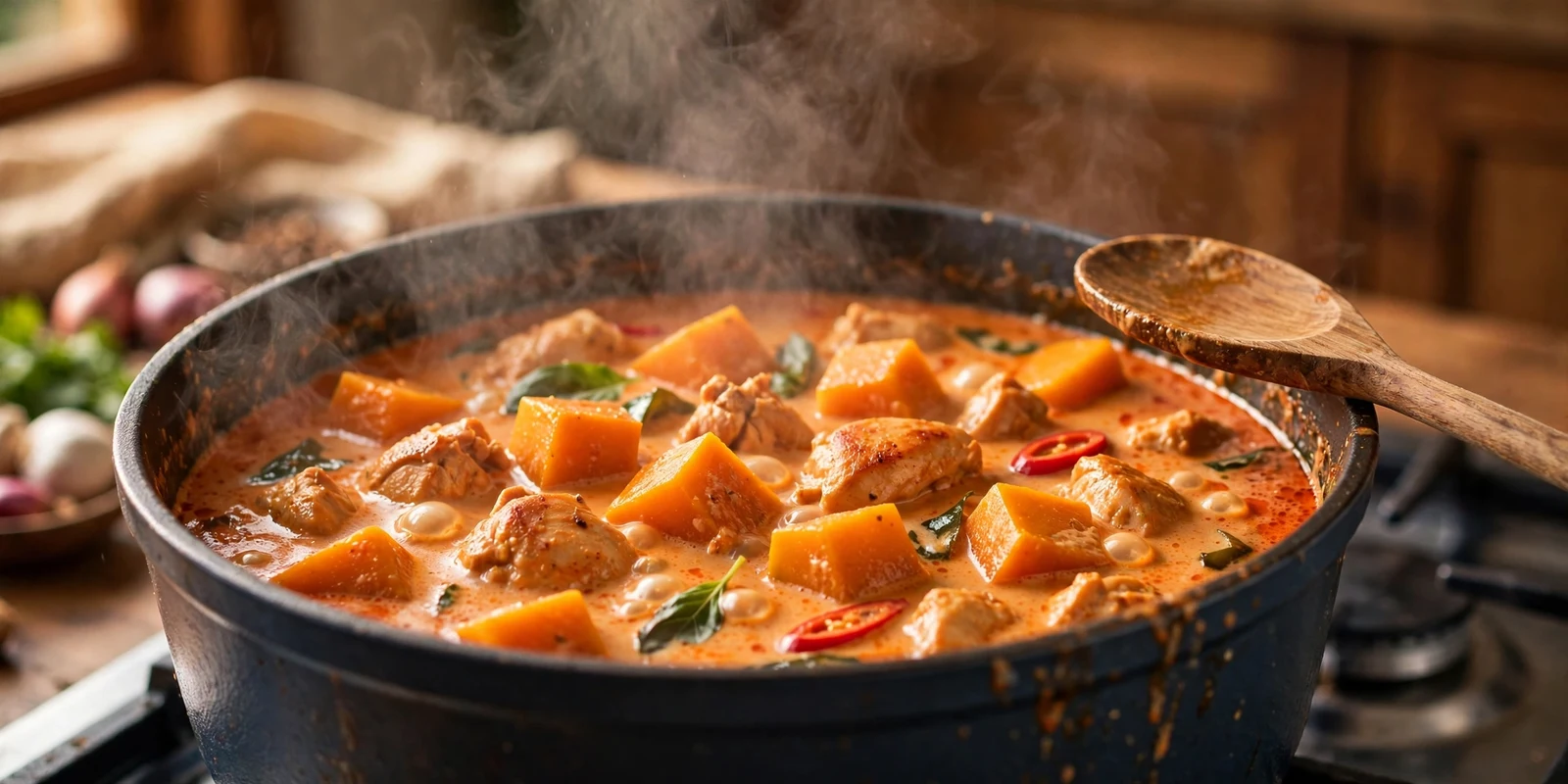
Peel and seed 1 small kabocha squash, about 2 pounds, and cut it into 1-inch cubes. Keep the cubes even too, for the same reason. Small cubes turn to mush while big ones are still firm in the middle, and uneven squash is the most common reason this curry comes out with a lumpy texture. Add the chicken and squash to the sauce, bring it to a gentle simmer, then cover and cook for 15 minutes.
Check the squash at 15 minutes with the tip of a knife. It should slide in with a little resistance, not fall apart. If it still feels hard in the center, give it 3 more minutes and check again. Pull the pot off the heat as soon as the squash is tender. It keeps cooking in the hot sauce, and 5 extra minutes is enough to turn neat cubes into a thick orange porridge.
Finish with basil and lime, off the heat
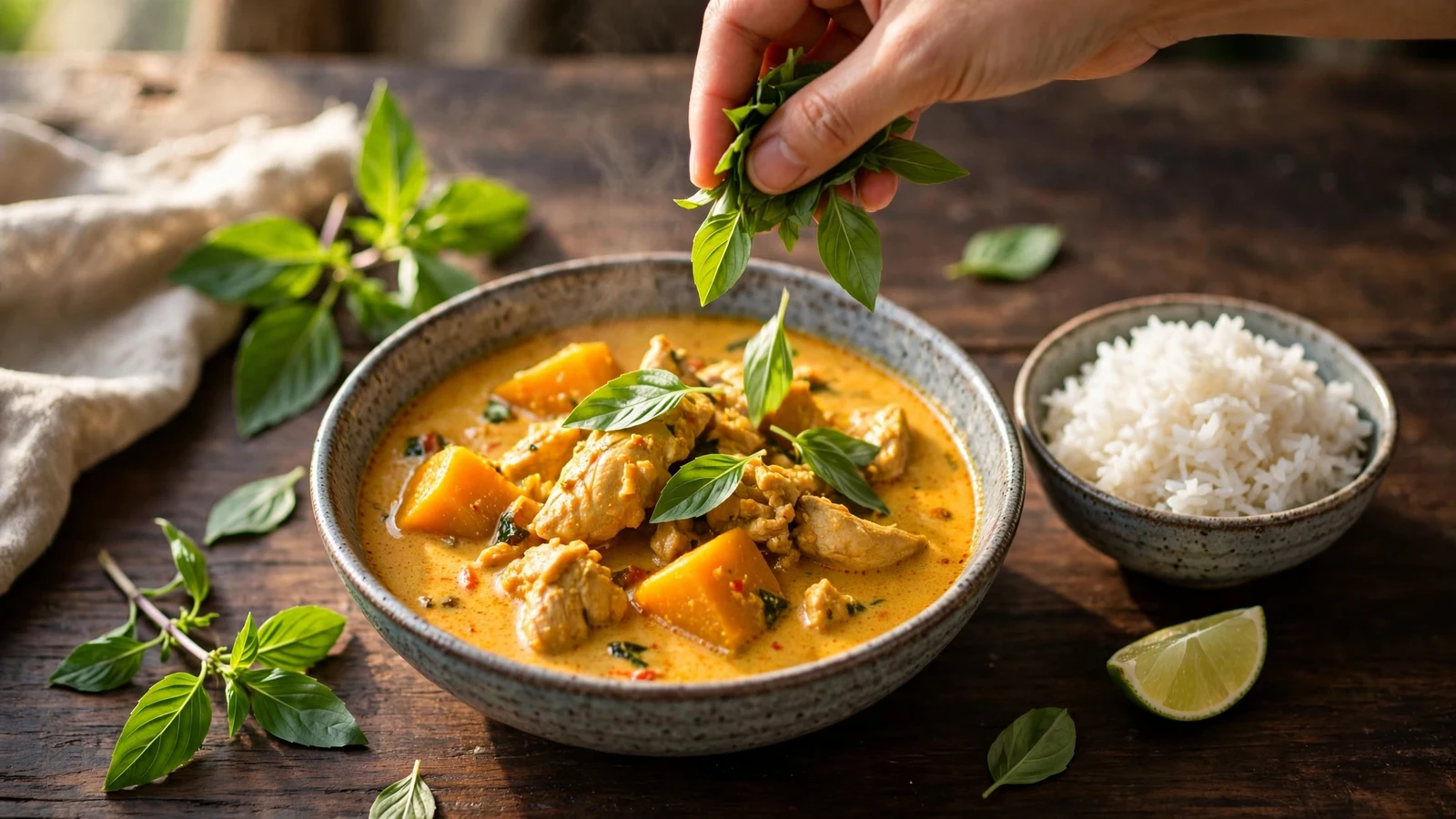
Stir in 1 cup Thai basil leaves and the juice of 1 lime, then let the pot sit for 2 minutes before serving. Basil loses its perfume fast in a boiling pot, and lime juice turns flat when it cooks, so both go in after the heat is off. Taste once more and add fish sauce a teaspoon at a time if it needs more salt, or another squeeze of lime if it reads too rich.
Serve over jasmine rice, with extra basil and lime wedges on the side. My jasmine rice guide covers the rinse and rest that keep the grains separate under a saucy curry. Leftovers keep 3 days in the fridge and reheat gently over low heat. Stir often while reheating and stop as soon as it is hot, since a hard boil will split the coconut milk and overcook the squash.
Troubleshooting: Fix My Thai Pumpkin Curry
If a pot comes out wrong, the cause is usually one of five things: sauce that splits, sauce that stays thin, squash that falls apart, chicken that dries out, or a curry that tastes flat from unbloomed paste. Work through them one at a time and the next pot lands closer.
HERB & LIME · KITCHEN HELP Choose what went wrong to see a practical next step. From Paul's kitchen. Results vary with chicken size, oil, and stove heat, adjust timing to your setup. Quick reference (also works without JavaScript) Cause: High heat or a hard boil after the coconut milk goes in breaks the emulsion and separates the fat. Try: Take the pot off the heat, lower it to a gentle simmer, and stir in a splash of room-temperature coconut milk to bring it back together. Prevent: Keep the curry at a low simmer once the coconut milk is in, and never let it boil hard. Cause: Light coconut milk or too much stock gives the sauce too little fat and too much liquid to thicken. Try: Simmer uncovered for a few minutes to reduce, or stir in a cornstarch slurry, 1 tablespoon cornstarch mixed with 2 tablespoons cold water, and simmer 1 minute. Prevent: Use full-fat coconut milk and measure the stock, since squash also releases water as it cooks. Cause: Pumpkin is high in water and breaks down fast, so extra minutes past tender turn cubes into porridge. Try: Stop cooking at once and serve the curry as a thicker stew, since the broken-down squash still thickens the sauce nicely. Prevent: Cut even 1-inch cubes, check with a knife tip at 15 minutes, and pull the pot off the heat as soon as the squash gives with a little resistance. Cause: Lean breast meat or pieces cooked all the way through before simmering dry out in the hot sauce. Try: Shred the dry pieces with two forks so they soak up more sauce and the texture is less noticeable. Prevent: Use chicken thighs cut into even pieces, and brown them only a few minutes before they finish cooking in the sauce. Cause: Curry paste stirred straight into liquid never gets hot enough to toast, so it keeps a gritty, raw spice taste. Try: Scoop out a ladle of sauce, fry a spoonful of paste in it until fragrant, and stir it back into the pot. Prevent: Bloom the paste in the thick coconut cream for 1 to 2 minutes, until fragrant and the oil separates, before adding any liquid.Fix My Thai Pumpkin Curry
Possible cause
What to try next
For next time
The coconut sauce split into oil and liquid
The sauce came out thin and watery
The pumpkin cubes fell apart into mush
The chicken came out dry
The curry tastes flat and the spice tastes raw
Thai Pumpkin Curry with Chicken
Ingredients
Method
- Open the coconut milk without shaking it and scoop about 1/2 cup thick cream off the top into a wide pot. Heat over medium heat, add the red curry paste, and stir 1 to 2 minutes until fragrant and the oil starts to separate.
- Pour in the remaining coconut milk and the chicken stock. Stir in the fish sauce and palm sugar. Taste and adjust the salt and sweetness before adding the chicken and squash.
- Add the chicken and squash cubes. Bring to a gentle simmer, cover, and cook 15 minutes, stirring once halfway through.
- Check the squash with the tip of a knife. It should give with a little resistance. If still firm in the center, cook 3 more minutes and check again. Remove from the heat as soon as the squash is tender.
- Stir in the Thai basil leaves and lime juice. Let the pot sit 2 minutes, taste once more, and adjust with fish sauce or lime. Serve over jasmine rice with extra basil and lime wedges.
Notes
More Thai recipes
- Thai Green Curry with Chicken
- Panang Curry with Chicken
- Massaman Curry with Beef
- Tom Yum Goong: Thai Hot and Sour Shrimp Soup
From the garden
Thai basil is the one herb I keep in a pot by the back door all summer, and this curry is where most of it ends up. A plant in a sunny spot gives enough leaves for a pot of curry every week, and leaves snipped right before cooking smell twice as strong as anything from a bag. My Thai basil growing guide covers the pot size and pinching routine that keeps one plant going for months.