
Chicken afritada is the pot I put on when I want dinner to take care of itself for most of an hour. Chicken pieces simmer in tomato sauce with potatoes, carrots, and bell peppers until the sauce turns thick enough to spoon over rice and the vegetables are tender all the way through. It uses pantry staples, it feeds four with rice, and it tastes even better the next day, which makes it a good pot to cook on a Sunday for the week ahead.
What is chicken afritada?
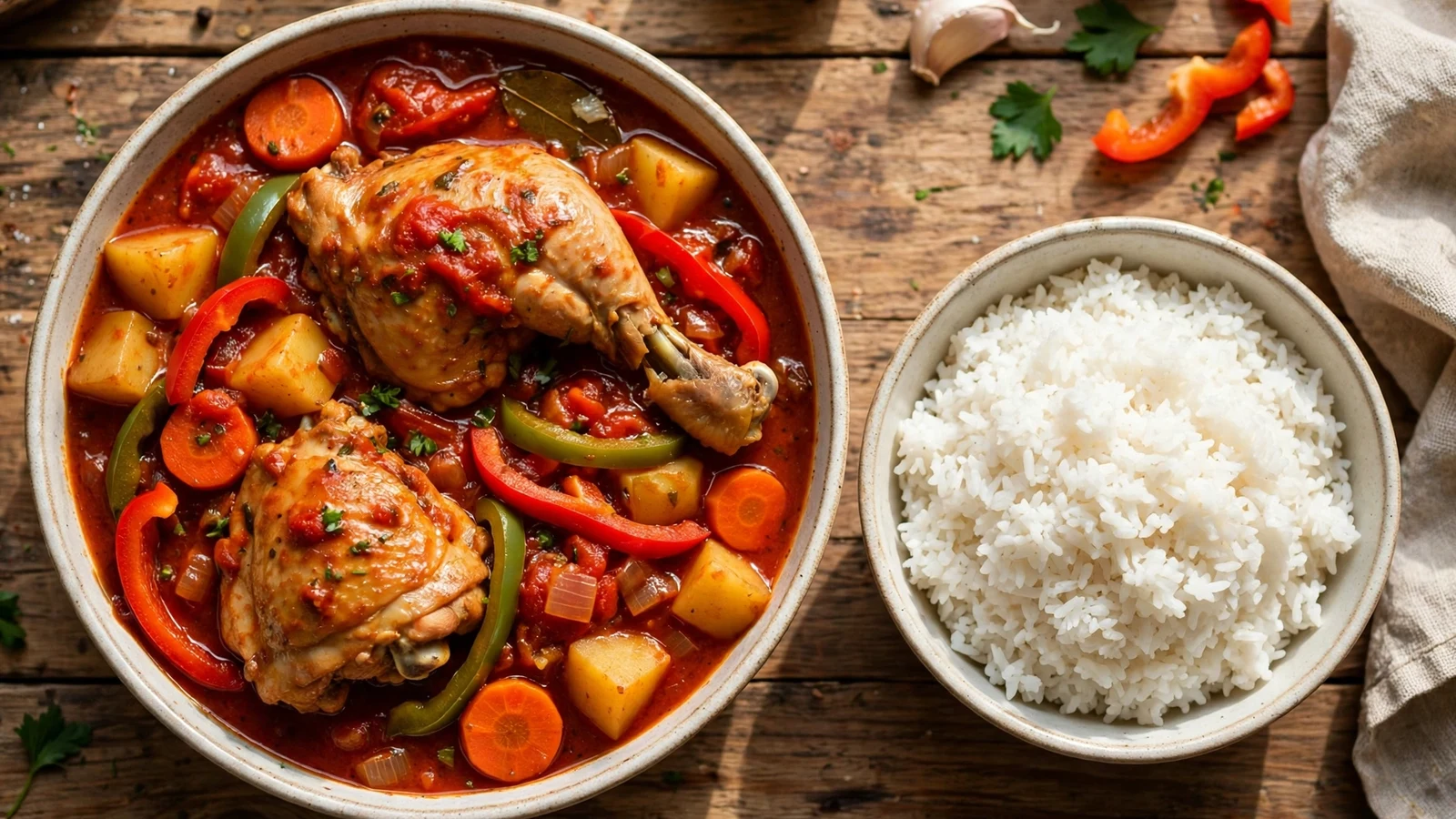
Afritada is a Filipino stew built on tomato sauce, and chicken is the most common version on home tables, next to pork afritada. The name traces back to the Spanish word fritada, a fried-then-braised dish, and the Filipino version keeps that shape: the meat is browned first, then simmered in tomato sauce with potatoes, carrots, and bell peppers. Fish sauce or soy sauce seasons it, a bay leaf goes in with the sauce, and a pinch of sugar softens the tomato edge when the tomatoes run sharp.
Expect a savory, lightly sweet tomato stew, not a spicy one. The sauce should coat a spoon, the potatoes should hold their shape, and the bell peppers should still have a little bite. Unlike our pork menudo, a thicker tomato pork stew, chicken afritada stays lighter and finishes in about an hour, which is why it shows up so often as a weeknight pot.
Brown the chicken first
Pat 2 pounds of bone-in chicken thighs dry and season them with 1 teaspoon of salt and 1/2 teaspoon of black pepper. Heat 2 tablespoons of vegetable oil in a heavy pot over medium-high heat and brown the chicken in two batches, about 5 minutes per side, until the skin turns golden. Move each batch to a plate as it finishes.
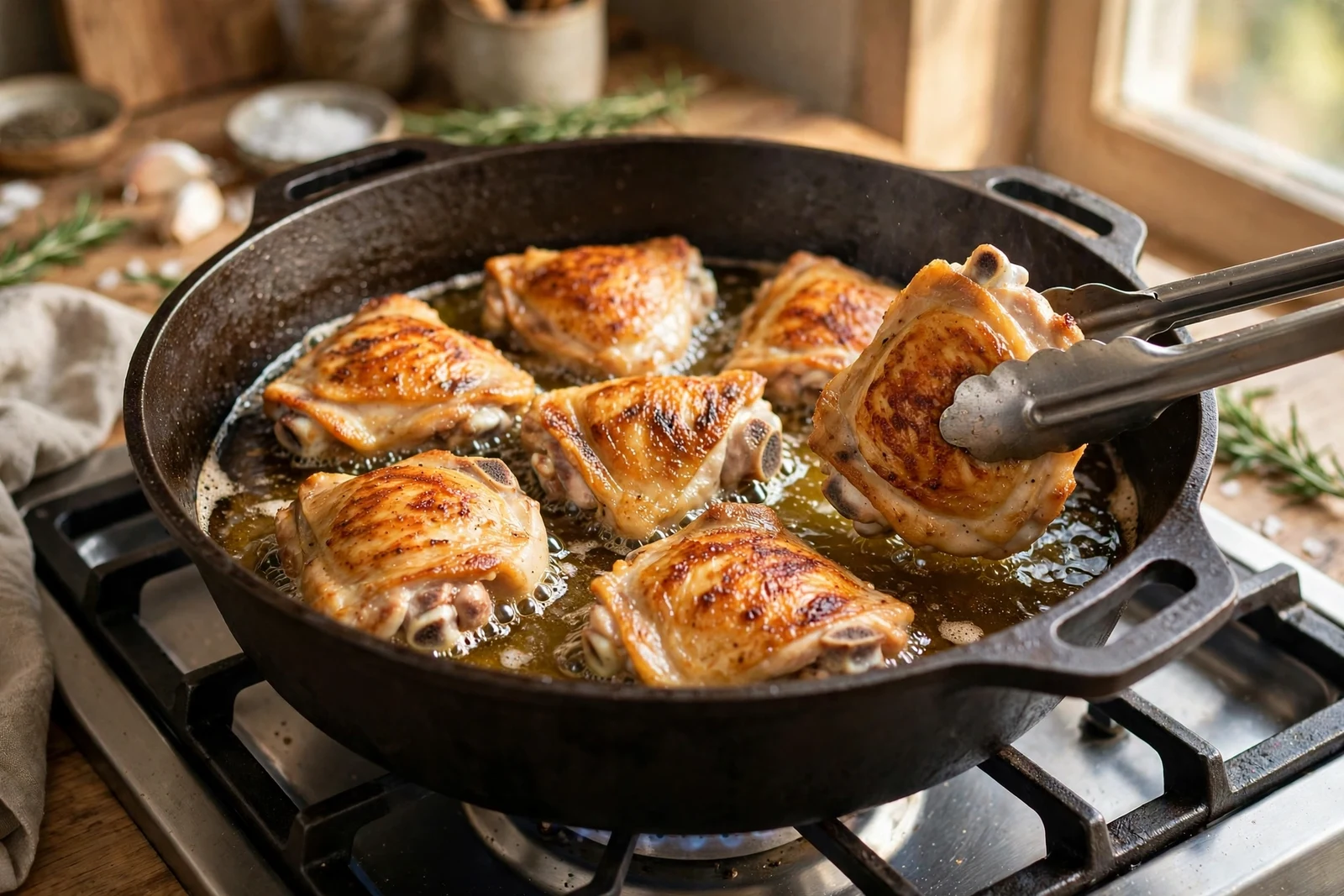
Two batches matter here. A crowded pot steams the chicken instead of browning it, and the browned bits left on the pot bottom are what give the sauce its base flavor. The chicken does not need to cook through at this stage. It finishes in the sauce, and pulling it early keeps the meat from drying out during the simmer.
Build the tomato sauce
Lower the heat to medium and cook 1 chopped onion in the same pot for about 5 minutes, until soft. Add 4 minced garlic cloves and cook for 1 minute more, until fragrant. Pour in 1 can (15 ounces) of tomato sauce and 1 cup of chicken broth, then stir and scrape the browned bits off the pot bottom. Add 1 tablespoon of fish sauce, 1 bay leaf, and 1 teaspoon of sugar if your tomatoes taste sharp.
Return the chicken and any juices from the plate to the pot. Bring the sauce to a gentle boil, then cover the pot, lower the heat, and simmer for 15 minutes. A low simmer keeps the sauce from spattering and the chicken from toughening. If the sauce starts to stick, add water a few spoonfuls at a time, not a full cup at once.
Add the vegetables in order
Add 2 potatoes cut into 1-inch cubes and 2 carrots cut into thick rounds, then cover and simmer for 15 minutes more. Potatoes cut smaller than 1 inch fall apart before the chicken finishes, and potatoes added at the start turn to mush by serving time. Check the potatoes with a fork at 15 minutes. They should give with light pressure but still hold their shape.
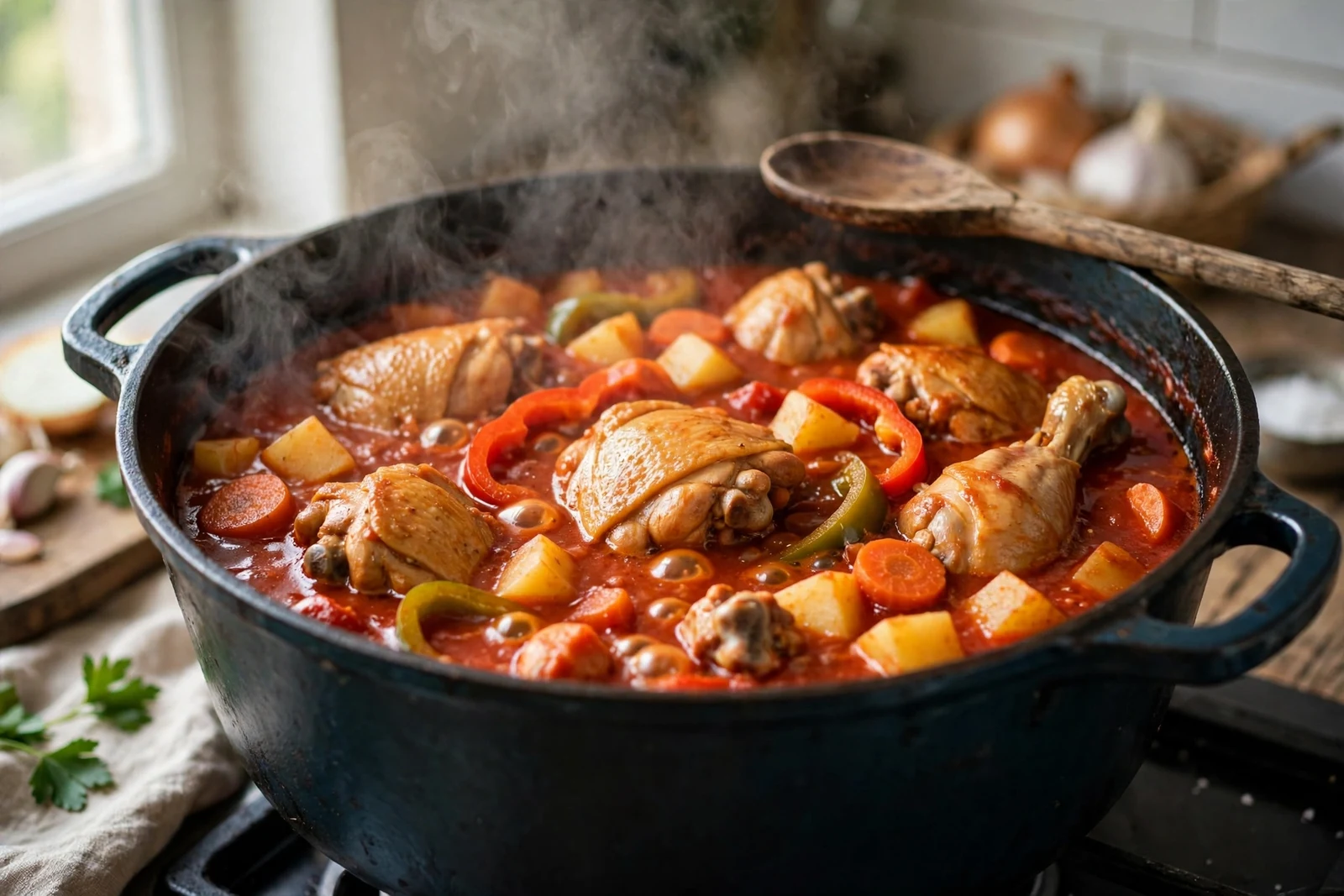
Add 2 sliced bell peppers and 1/2 cup of green peas, then simmer uncovered for 5 minutes. Peppers added last keep their color and a little bite, and the uncovered minutes let the sauce thicken to a spoon-coating texture. Fish out the bay leaf, taste the sauce, and adjust with salt or another spoonful of fish sauce. Let the pot rest for 5 minutes off the heat before serving, so the sauce settles and the flavors even out.
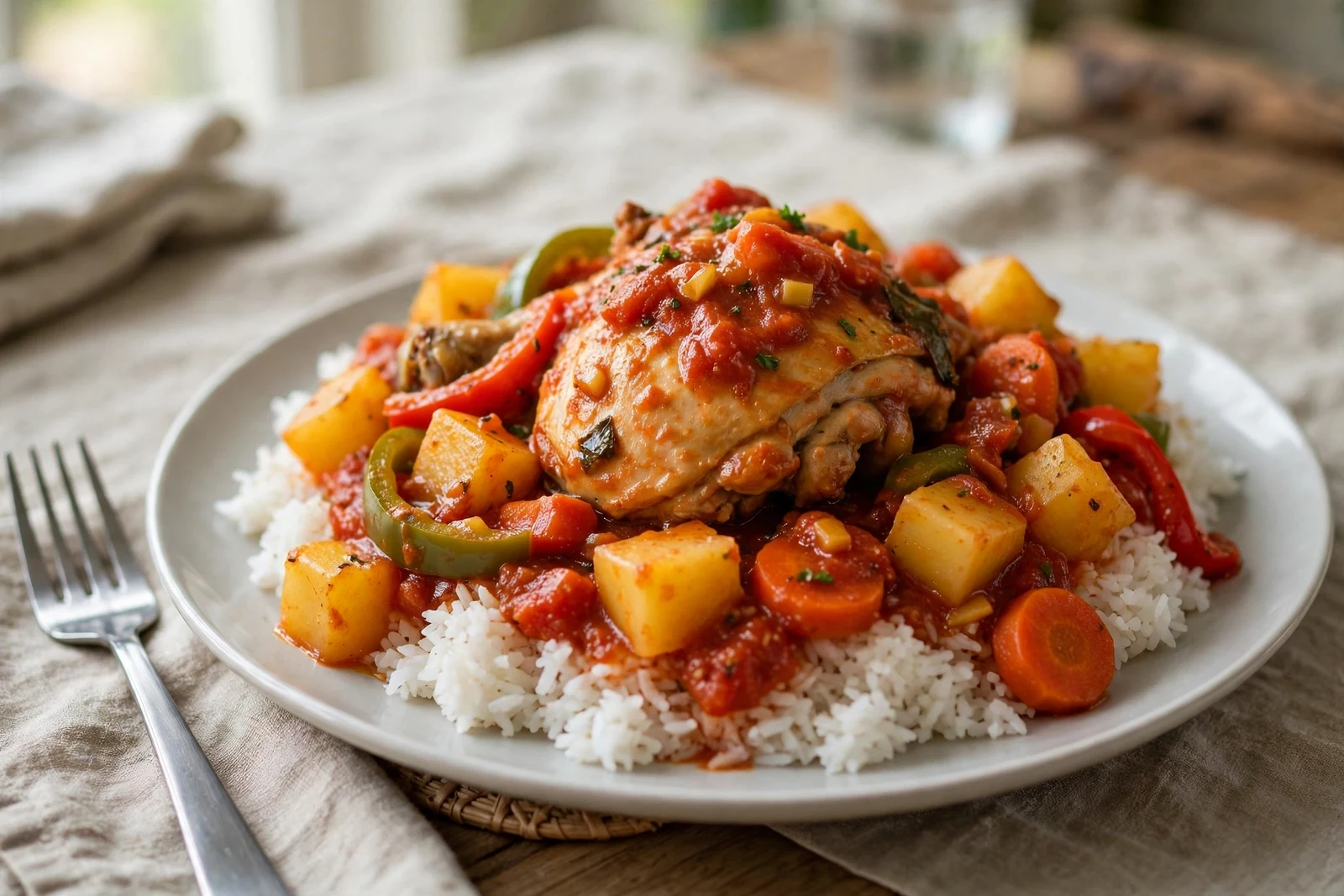
Serve with steamed rice, and spoon extra sauce over each plate. A grilled contrast at a bigger table is our chicken inasal, but on an ordinary night rice alone is enough. Leftovers keep in the fridge for 3 days in a sealed container, and the sauce thickens overnight, so add a splash of water when you reheat it over low heat.
Tips and variations
- Use bone-in thighs or drumsticks. Boneless breast dries out during a 35-minute simmer, while bone-in pieces stay moist and give the sauce more body.
- Swap the tomato sauce for 1 can (28 ounces) of crushed tomatoes and cut the broth to 1/2 cup, so the sauce does not turn watery.
- Add 1 tablespoon of soy sauce with the fish sauce if you want a darker, saltier sauce, but taste before adding more salt.
- For a pork version, use 2 pounds of pork shoulder cut into 1-inch cubes and simmer for 50 minutes before adding the vegetables, since pork needs longer than chicken.
- Freeze the cooled stew in portions for up to 2 months. Thaw overnight in the fridge and reheat over low heat with a splash of water.
Troubleshooting: Fix My Chicken Afritada
Most afritada problems come down to order and timing: vegetables added too early, sauce thinned by too much liquid, or chicken cooked past tender. The section below covers the most common ones, with a practical fix for each.
HERB & LIME · KITCHEN HELP
Fix My Chicken Afritada
Choose what went wrong to see a practical next step.
Possible cause
What to try next
For next time
From Paul's kitchen. Results vary with chicken size, oil, and stove heat, adjust timing to your setup.
Quick reference (also works without JavaScript)
The chicken turned dry
Cause: Boneless breast or a hard, long simmer cooks the meat past tender.
Try: Pull the pieces as soon as they are tender and let them rest in the sauce off the heat.
Prevent: Use bone-in thighs or drumsticks, keep the simmer gentle, and check tenderness at 30 minutes.
The sauce turned watery
Cause: Too much broth or water went in, or the pot stayed covered so nothing reduced.
Try: Simmer the pot uncovered for 5 to 10 minutes until the sauce coats a spoon.
Prevent: Use 1 can of tomato sauce plus 1 cup of broth per 2 pounds of chicken, and add water a few spoonfuls at a time.
The potatoes fell apart
Cause: The pieces were cut too small or went in too early and cooked too long.
Try: Fish out the broken pieces and mash a few into the sauce to thicken it.
Prevent: Cut potatoes into 1-inch cubes and add them after the first 15-minute simmer, then check with a fork.
The bell peppers went mushy
Cause: The peppers cooked with the potatoes for 20 minutes or more.
Try: Serve as is and add fresh sliced peppers at the table for crunch.
Prevent: Add bell peppers only for the final 5 minutes of cooking.
The sauce tastes sharp or sour
Cause: The tomato sauce was acidic and no sugar went in to balance it.
Try: Stir in 1 teaspoon of sugar, simmer 5 minutes, and taste again before adding more.
Prevent: Add 1 teaspoon of sugar when the tomatoes taste sharp, and season with fish sauce for balance.
Chicken Afritada: Filipino Tomato Chicken Stew
Ingredients
Method
- Brown the chicken: season the chicken with the salt and black pepper. Heat the oil in a heavy pot over medium-high heat and brown the chicken in two batches, about 5 minutes per side, until golden. Move each batch to a plate as it finishes.
- Build the sauce: lower the heat to medium and cook the onion in the same pot for about 5 minutes, until soft. Add the garlic and cook for 1 minute more, until fragrant. Pour in the tomato sauce and chicken broth, stir, and scrape the browned bits off the pot bottom. Add the fish sauce, bay leaf, and sugar if the tomatoes taste sharp.
- Simmer the chicken: return the chicken and any juices from the plate to the pot. Bring to a gentle boil, cover, lower the heat, and simmer for 15 minutes.
- Add potatoes and carrots: add the potatoes and carrots, cover, and simmer for 15 minutes more, until the potatoes give with light pressure but still hold their shape.
- Add peppers and peas: add the bell peppers and green peas and simmer uncovered for 5 minutes, until the peppers keep a little bite and the sauce thickens to a spoon-coating texture. Fish out the bay leaf and adjust with salt or fish sauce.
- Rest and serve: let the pot rest for 5 minutes off the heat, then serve with steamed rice, spooning extra sauce over each plate.
Notes
More Filipino recipes
Pork Menudo, Kare-Kare: Filipino Peanut Stew, Laing: Filipino Taro Leaves in Coconut Milk, and Ginisang Munggo: Filipino Mung Bean Stew.