
Ginger is one of those ingredients where the prep takes longer than it should. The root is knobby, the skin is thin, and a vegetable peeler digs into the flesh at every bump, so a small piece can lose a third of itself before it reaches the pan. A teaspoon fixes that. The edge of a spoon follows the curves of the root and lifts off only the papery skin, and it works on pieces a peeler cannot handle at all. This guide walks through the spoon method step by step, when a peeler or knife is the better call, and the times you can skip peeling entirely.

Why a spoon beats a peeler
A vegetable peeler is built for flat, straight vegetables like carrots and potatoes. Ginger is neither. Its skin sits in folds and around knobs, and a straight blade has to cut deep to stay in contact, which takes flesh with the skin. A paring knife has the same problem in the other direction: it can follow the curves, but one slip takes a thick slice of flesh, and the work is slow. A spoon solves both problems because it has no sharp edge. The rim scrapes the skin loose without cutting into the flesh underneath, and the curved bowl fits into the dips between knobs. In my kitchen, the difference is plain to see: peeler scraps come off thick and pale yellow, while spoon scraps come off as thin brown curls with almost no flesh attached. That is the whole test. If your scraps look like ginger, you are wasting ginger.
| Tool | Waste | Speed | Best for |
|---|---|---|---|
| Teaspoon | Least, only the thin skin | Fast, about a minute for a 2-inch piece | Fresh, firm ginger of any shape |
| Vegetable peeler | Most, cuts into the flesh at every bump | Slow on knobby roots | Large, straight pieces only |
| Paring knife | Moderate, easy to slice too deep | Slowest | Dry or shriveled ginger a spoon cannot grip |
| No tool, scrub only | None | Fastest | Young ginger, or ginger headed for the grater |
The spoon method, step by step
Start by breaking off only the piece you need. Ginger keeps longer unpeeled, so peel what the recipe calls for and leave the rest of the root alone. Snap the root at a joint between lobes; it breaks cleanly there, and each lobe is easier to hold than the whole knobby root. Rinse the piece under cold water and pat it dry. A dry root is easier to grip, and a wet one slips in your hand.
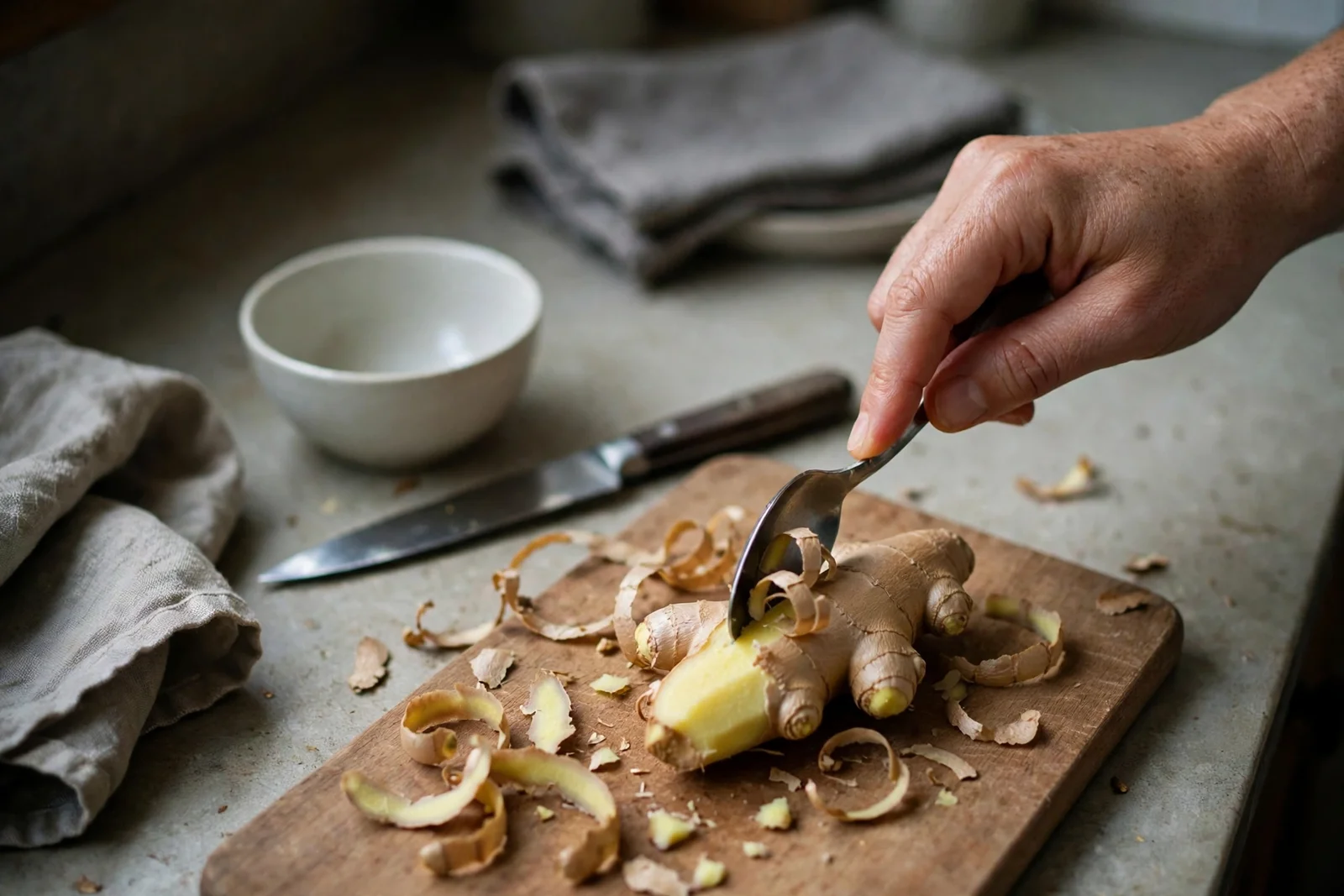
Hold the ginger firmly in one hand and the spoon in the other, with the bowl of the spoon facing down. Use the outer edge of the spoon, not the tip, and scrape downward with light, even pressure, the way you would scrape butter off bread. Work from the top of the piece toward your hand; the spoon has no sharp edge, so scraping toward your fingers is safe. The skin comes off in thin curls. Turn the piece as you go and follow each curve. A 2-inch piece takes about a minute, and most of that time goes to the corners.
Getting into the knobs and corners
The small side knobs are where most of the waste happens, because a peeler cannot reach them and a knife takes the whole knob off. With a spoon, switch to the tip and work it into each dip between the knobs, using short strokes. The tip reaches into the creases where the skin folds, and the same light pressure lifts it out. If a knob is too small to hold while you scrape it, snap it off the main piece first, peel it on its own, and add it to the pile. Those little knobs are just as full of flavor as the rest of the root, so they are worth the extra thirty seconds. When the piece is done, give it a quick rinse to wash off any loose skin, and it is ready to slice, mince, or grate.
When you can skip peeling altogether
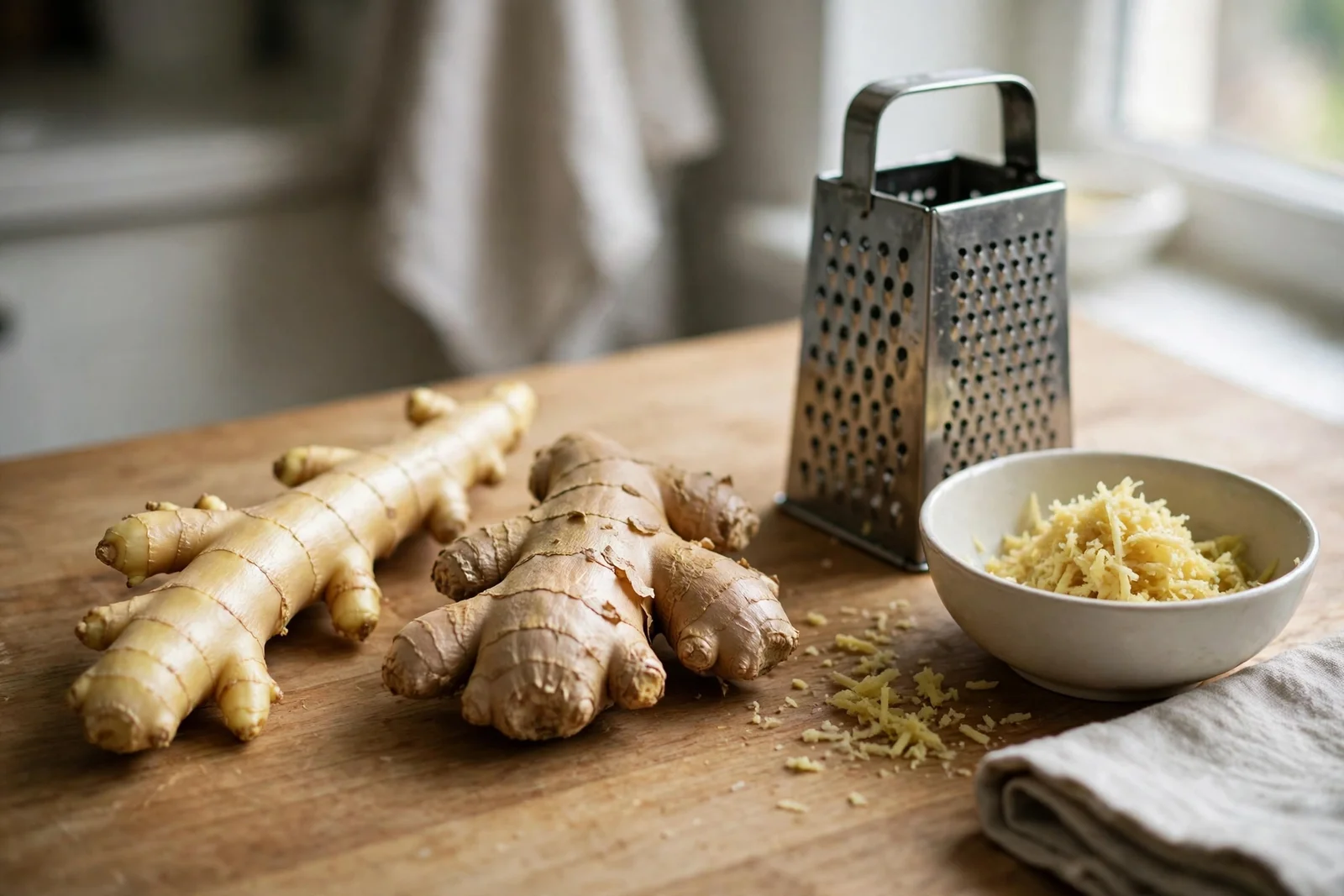
Not every piece of ginger needs peeling. Young ginger has pale, thin skin that is barely there at all, and if the recipe calls for grated ginger, that skin disappears into the grate. The same goes for ginger headed into a blender or a juicer: scrub it well under running water, trim off any dry or dark ends, and use it skin and all. The flavor compounds sit in the flesh, not the skin, so leaving a thin skin on changes nothing about the taste. What matters is the condition of the skin. Thick, wrinkled, or darkened skin should come off, and any soft or moldy spot means the piece should be thrown out, not trimmed. If you are unsure whether a piece counts as young, look at the color: young ginger is pale gold with a smooth, almost shiny skin, while older ginger is tan and papery.
Three ways to cut peeled ginger
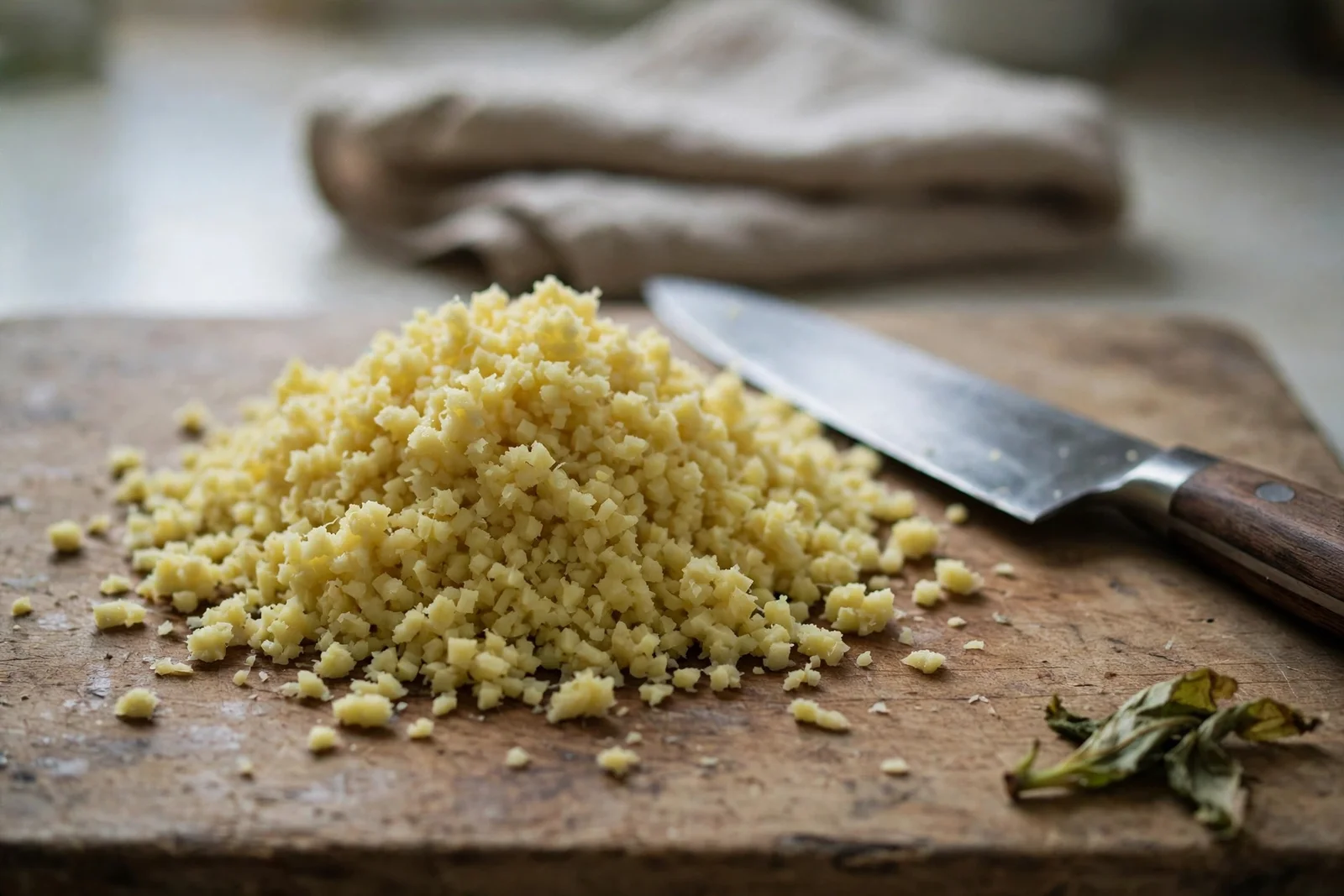
How you cut ginger depends on the dish. For stir-fries, slice it into thin coins, stack the coins, and cut them into matchsticks; thin matchsticks soften fast in a hot pan and spread their heat through the dish. For soups and braises, cut thicker slices, about the width of a coin edge, so the ginger holds up through a long simmer and can be fished out at the end. For sauces and marinades, grate it on a fine grater or microplane; a 1-inch piece of fresh ginger grates to about 1 tablespoon, which is the amount most recipes mean when they call for a tablespoon of grated ginger. Our ginger scallion sauce uses grated ginger this way, and the fine grate is what lets it melt into the hot oil. Whatever the cut, keep the pieces even. Uneven pieces cook at different speeds, and the thin ones burn while the thick ones stay raw.
Mistakes that waste ginger
The most common mistake is peeling the whole root at once. Peeled ginger dries out in the fridge within a day or two, while an unpeeled root keeps for weeks, so peel only what you need and store the rest as our guide to storing fresh ginger and galangal describes. The second mistake is soaking the ginger first. Soaking makes the skin slipperier and the fibers swell, which makes the spoon slide over the skin instead of catching it. Rinse it, dry it, and peel it dry. The third mistake is reaching for a peeler on a knobby root out of habit; if the root has more bumps than flat spots, the peeler will cost you more ginger than the spoon saves you in time. And if the ginger is old and shriveled, with skin that has gone leathery, the spoon will not lift it cleanly. That is the one case where a paring knife earns its place: shave the skin off in thin strips, accept the small loss, and move on.
What to cook with it
Once ginger is peeled, it goes into half the dishes on this site. Vietnamese ginger chicken simmers thick slices in a caramel sauce, ginger scallion chicken uses grated ginger in the poaching liquid, and tom kha gai leans on sliced ginger alongside galangal for its warm, sharp base. If you are choosing between the two roots, our ginger versus galangal guide lays out when each one belongs in the pot. And if you buy ginger often, it is worth growing your own: our guide to growing ginger in pots covers starting from a store-bought piece, and homegrown ginger comes out of the soil young, thin-skinned, and often needing no peeling at all.
More ginger recipes
Vietnamese Ginger Chicken (Ga Kho Gung), Ginger Scallion Chicken, Ginger Scallion Sauce, Che Troi Nuoc: Glutinous Rice Balls in Ginger Syrup
From the garden
Ginger from a pot comes out of the soil with thin, pale skin and almost no papery layer, and the first time I dug up a homegrown piece I peeled it with my thumbnail. Store-bought roots sit in cold storage for weeks, which is what thickens the skin; a piece you dig up and use the same day barely needs the spoon at all.