
Xiao long bao look like plain steamed dumplings until you bite into one. Inside each pleated wrapper is a spoonful of hot broth, held there by a trick that has nothing to do with pouring soup into a dumpling. The broth goes in solid, as chilled aspic mixed with seasoned pork, and it melts back into soup during steaming. Get the aspic firm, the wrapper thin at the edges, and the top pinched shut, and the rest is a short steam.
What is xiao long bao?
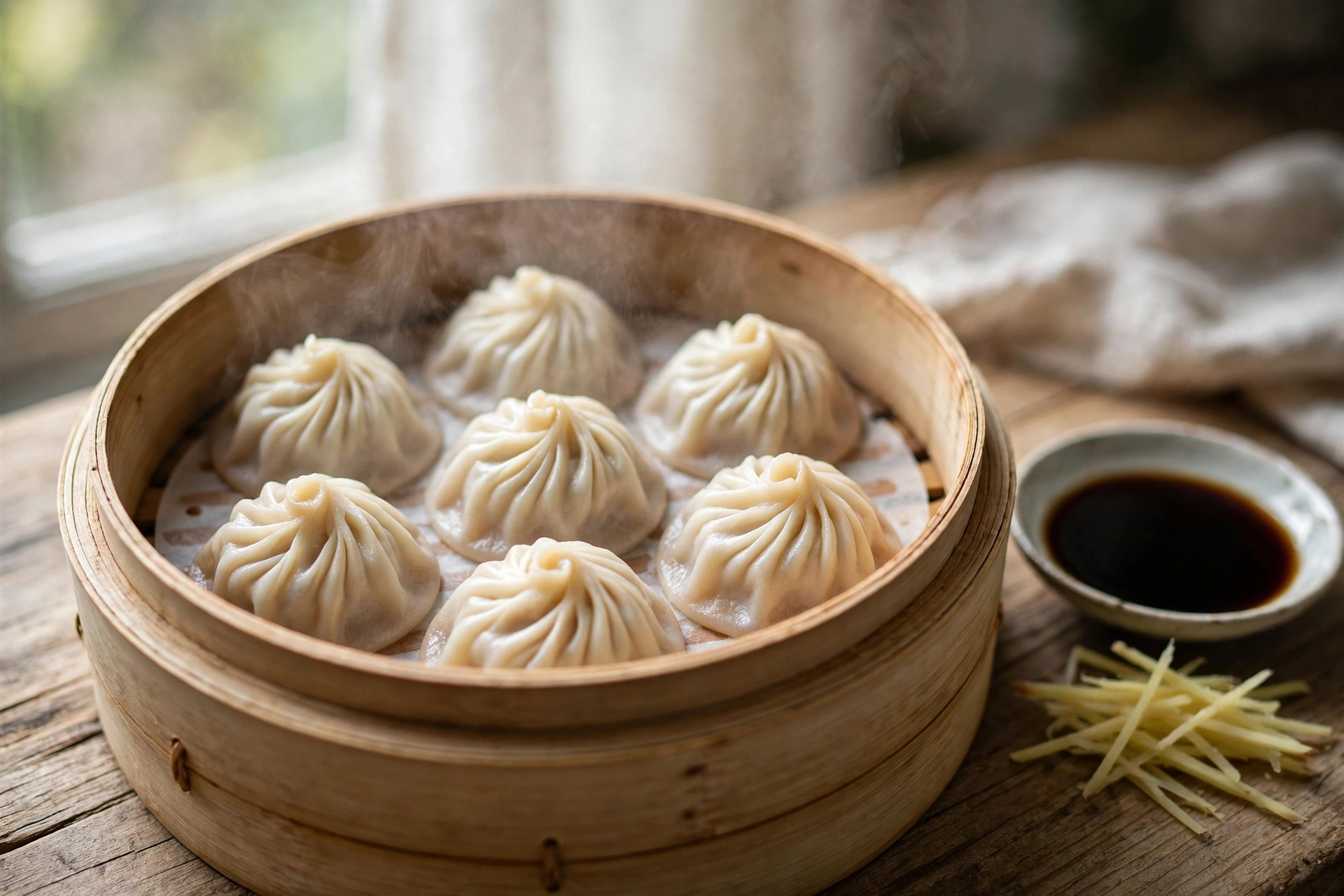
Xiao long bao, also called soup dumplings, come from Shanghai. The name means little basket buns, after the bamboo baskets they steam in. Each dumpling holds seasoned ground pork and broth inside a thin wheat wrapper, gathered at the top with pleats. You lift one with chopsticks onto a spoon, bite a small hole in the side, sip the broth, then eat the dumpling with black vinegar and slivers of fresh ginger.
Expect a soft wrapper, juicy pork, and broth that is savory and light rather than heavy. The vinegar matters. Black vinegar cuts through the pork fat in a way soy sauce does not, so serve it plain with ginger and skip the soy.
The soup is aspic, not liquid
This is the part most first attempts get wrong. You cannot spoon liquid broth into a dumpling and fold it shut. The broth has to go in as a solid. Simmer a good pork or chicken stock, set it with gelatin, chill it until firm, and cut it into small cubes. One cup of diced aspic for one pound of ground pork is the ratio that fills 24 dumplings without flooding them.

Keep everything cold while you work. Aspic that warms up turns soft, leaks into the pork, and leaves you with plain pork dumplings. If your kitchen runs warm, put the bowl of filling back in the fridge between batches of folding. The gelatin shortcut works fine: about 2 and a half teaspoons of unflavored gelatin per cup of stock, seasoned well, chilled until firm.
The dough and the pleat
The dough is simple: flour, warm water, and a pinch of salt, rested 30 minutes. Roll each piece into a round about 3 and a half inches across, with the edges thinner than the center. A thick edge makes a doughy rim. A center rolled too thin tears under the filling, and that tear is where the soup escapes.
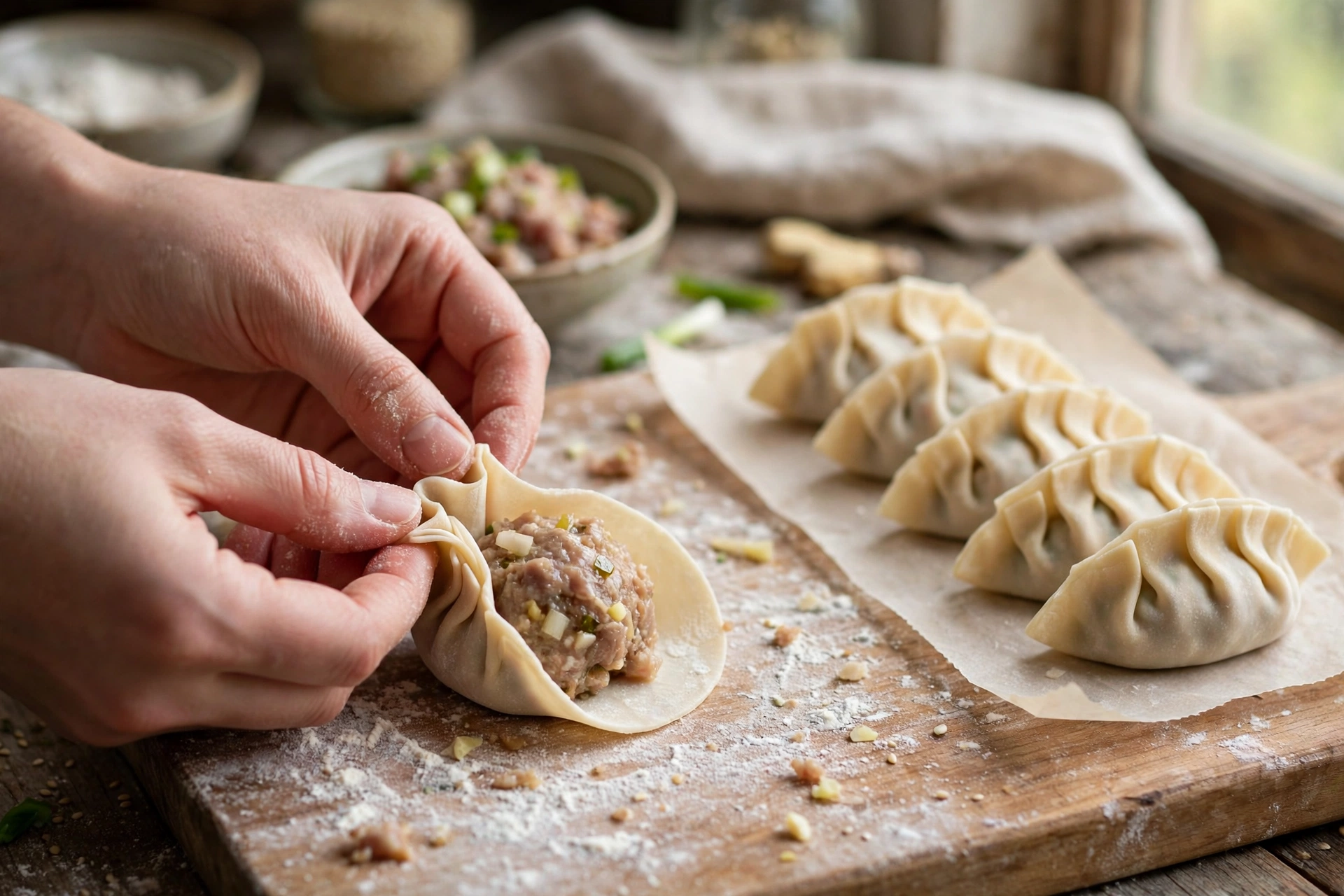
Put about one tablespoon of filling in the center, add a few cubes of aspic, and pleat around the edge, pinching the top closed. The first few will look rough. That is fine. What matters is the seal: wet your fingertip lightly, press the gathered top until no gap shows, and lift the dumpling by the body, not the top knot. Line the basket with perforated parchment or cabbage leaves so the bottoms do not stick.
Steam in batches, eat from a spoon
Steam over fully boiling water for 8 to 10 minutes. Do not crowd the basket. Dumplings that touch each other in the steamer stick together and tear when you pull them apart. Work in batches and keep the finished baskets covered while the next batch steams.
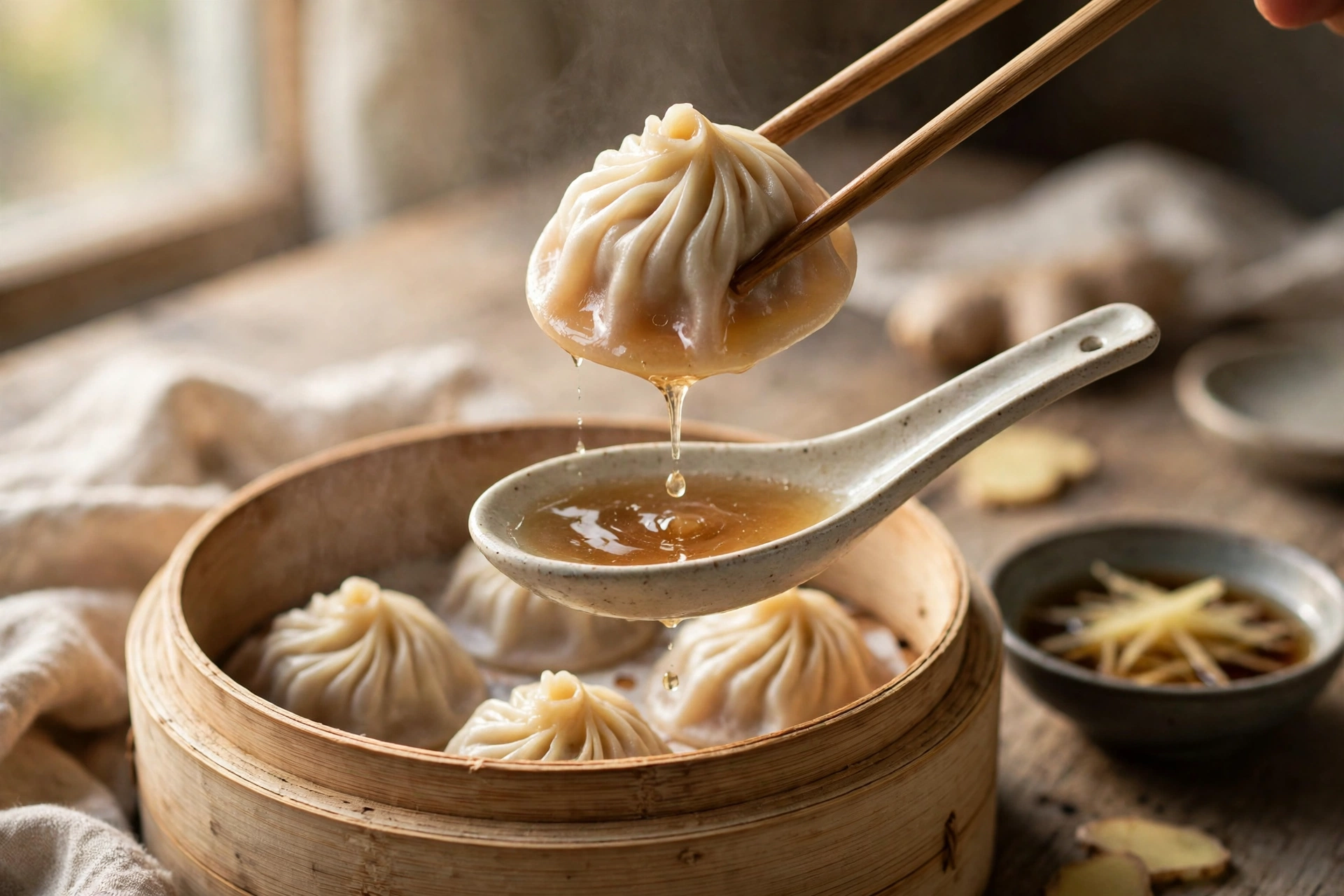
Serve at once. The broth cools fast, and cooled aspic sets again inside the wrapper. Lift each dumpling onto a spoon, bite a small hole in the side, sip the broth, add a few drops of vinegar and a sliver of ginger, then eat the rest. Biting straight into a dumpling fresh from the steamer burns, so the spoon step is worth the extra seconds.
For a fuller Chinese table, serve these before dan dan noodles or next to wonton soup on a night when you want two different kinds of dumpling cooking on one menu. The folding practice also carries over to homemade gyoza, which uses a thicker wrapper and a different fold but the same hand skills.
Troubleshooting: Fix My Xiao Long Bao
Most problems with this dish trace back to the aspic, the seal, or the steamer lining. Pick the problem that matches your batch and the fix that fits it.
HERB & LIME · KITCHEN HELP Choose what went wrong to see a practical next step. From Paul's kitchen. Results vary with pork fat content, wrapper thickness, and stove heat, adjust timing to your setup. Quick reference (also works without JavaScript) Cause: The top pleat was not pinched firmly shut, or the dumpling was overfilled. Try: Eat the leaked dumplings from a spoon so you still get the broth, and check the rest for open tops before they go back in the steamer. Prevent: Use about one tablespoon of filling per wrapper, wet your fingertip lightly, and press the gathered top closed until no gap shows. Cause: The wrapper was rolled too thin at the bottom, or it dried out while you were still folding. Try: Lift torn dumplings with a spoon under the body, never by the top knot, and steam them anyway, they still taste fine. Prevent: Rest the dough 30 minutes before rolling, keep rolled wrappers under a damp kitchen towel, and roll the edges thin while leaving the center slightly thicker. Cause: The bamboo basket was not lined, so the wet wrapper bonded to the wood as it steamed. Try: Slide a spoon or a small spatula under each dumpling while it is still hot, work slowly so the bottom does not rip. Prevent: Line the basket with perforated parchment or napa cabbage leaves before the dumplings go in. Cause: The aspic was too soft when it went into the filling, or there was not enough of it. Try: For the next batch, use a full cup of firmly chilled, diced aspic for one pound of pork, and keep the filling cold until folding time. Prevent: Chill the aspic until it holds its shape when cut, and if you use the gelatin shortcut, use about 2 and a half teaspoons of gelatin per cup of stock. Cause: The pork was too lean, so there was not enough fat to keep the filling tender. Try: Serve the batch with the vinegar and ginger dip, which adds back some of the missing richness, and note the pork for next time. Prevent: Use ground pork with about 20 percent fat, and do not cut the steaming time short, the filling must reach 160 degrees Fahrenheit inside.Fix My Xiao Long Bao
Possible cause
What to try next
For next time
The soup leaked out during steaming
The wrappers tore when I moved them
The dumplings stuck to the steamer
There was little or no soup inside
The filling came out dry and dense
Xiao Long Bao: Chinese Soup Dumplings
Ingredients
Method
- Make the aspic: warm the stock, stir in the gelatin until dissolved, then add the soy sauce and ginger. Pour into a shallow dish and chill until firm, at least 4 hours or overnight. Cut into small cubes.
- Make the dough: mix the flour, warm water, and salt into a soft dough, knead for 5 minutes, cover, and rest for 30 minutes.
- Mix the filling: combine the ground pork, diced aspic, soy sauce, Shaoxing wine, ginger, scallions, sesame oil, sugar, and white pepper. Keep the bowl cold, in the fridge between folding batches.
- Roll the wrappers: divide the dough into 24 pieces and roll each into a round about 3 and a half inches across, with the edges thinner than the center. Cover the rounds with a damp towel as you work.
- Fill and pleat: put about 1 tablespoon of filling in the center of each wrapper, pleat around the edge, and pinch the gathered top firmly closed. Set each dumpling on parchment as you finish it.
- Steam: line bamboo baskets with perforated parchment or cabbage leaves, place the dumplings in without touching, and steam over fully boiling water for 8 to 10 minutes.
- Serve at once with black vinegar and ginger slivers. Lift each dumpling onto a spoon, bite a small hole in the side, sip the broth, then eat the rest.
Notes
More Chinese recipes
If this dish worked for you, dan dan noodles bring the same pork and spice in noodle form. Mapo tofu is the Sichuan dish to cook when you want heat and numbing pepper on the table. Wonton soup is the gentler dumpling soup for a quiet night, and scallion oil noodles are the fast side dish that fits beside almost anything.
From the garden
The ginger in the filling and the dipping sauce is the part of this recipe that rewards a pot on the windowsill. If you keep ginger going in a container, a small piece grated fresh beats jarred ginger here. My guide to growing ginger in pots covers the pot size and watering rhythm that keep a plant going.
1 thought on “Xiao Long Bao: Chinese Soup Dumplings”