
A sprig of fresh curry leaves dropped into hot oil smells like nothing else in the kitchen: citrus peel, toasted nuts, and a green note that dried leaves never give. The plant behind that smell is a slow tropical shrub, and it grows well in a pot on a balcony or a sunny windowsill. This guide covers the plant to buy, the pot and soil it wants, and how to keep it alive through winter.
What curry leaf is
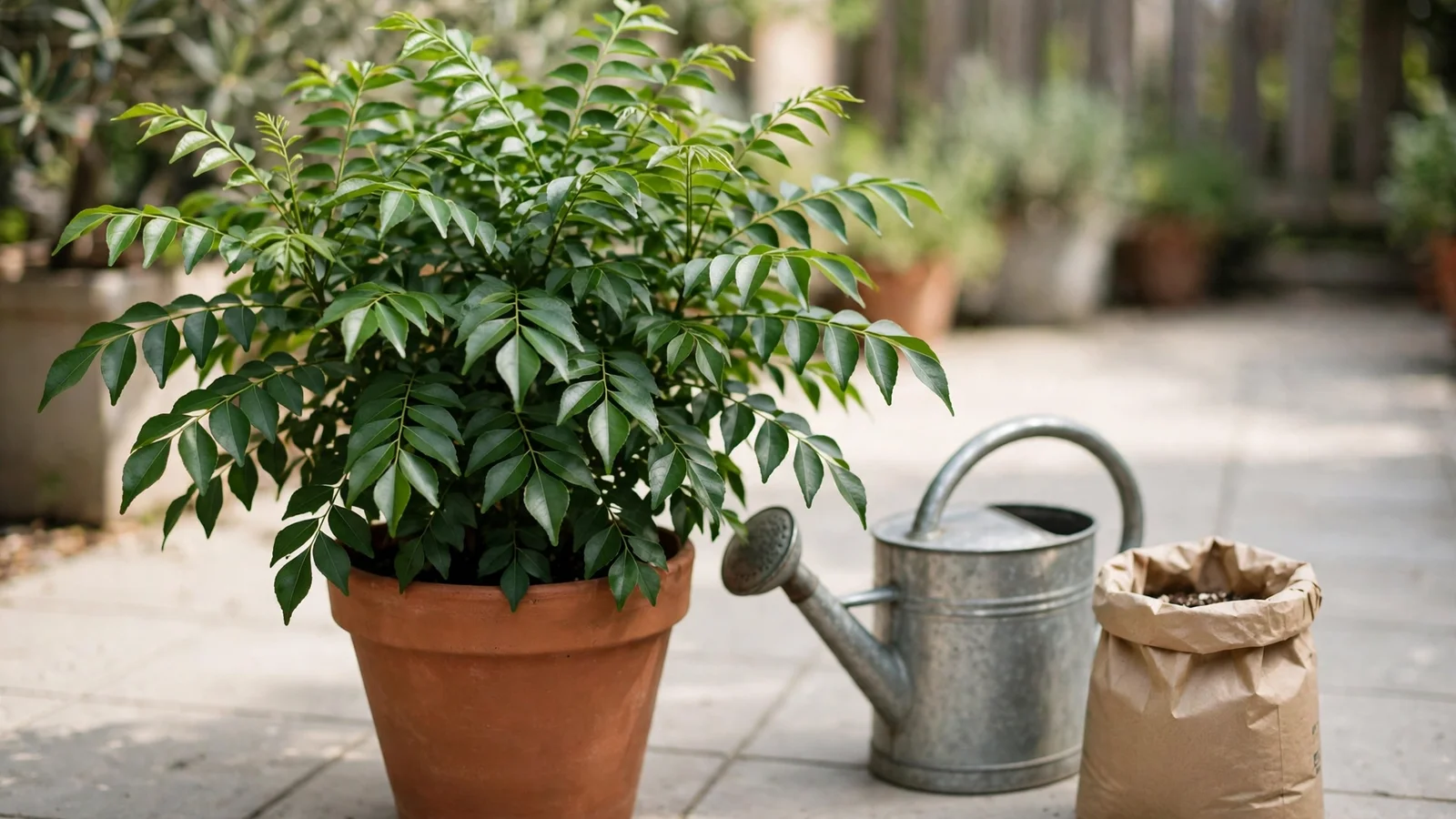
Curry leaf is Murraya koenigii, a small evergreen tree from India and Sri Lanka. Each leaf is a stem lined with 11 to 21 small pointed leaflets, dark green and glossy on top, paler underneath. Crush one between your fingers and it gives off a warm citrus scent with a toasted edge. That scent is the whole point of the plant: cooks fry the leaves in hot oil at the start of a dish, a step called tadka, and the oil carries the flavor into dals, curries, and rice.
Curry leaf is not curry powder, and it is not the plant sold as curry plant, Helichrysum italicum, which smells similar but tastes different and is not used the same way in cooking. If the tag at the nursery says Helichrysum, it is the wrong plant. Murraya koenigii is the one to buy.
In the ground in a warm climate, a curry leaf tree grows 6 to 15 feet tall. In a pot it stays 2 to 4 feet, which is why container growing suits it. It grows outdoors all year in USDA zones 9 through 11. Everywhere else, the pot is what makes it possible: the plant lives outside from late spring to fall, then moves indoors for winter. It is a slow grower, so a plant bought this spring will not give you a full harvest until next year, and that is normal.
Buy a nursery plant, not seed
Start with a young plant from a nursery, not seed. Seed takes weeks to sprout, the seedlings grow slowly, and the plant may take years to give leaves worth picking. A nursery plant arrives at a known size, usually 8 to 12 inches tall in a small pot, and it is already a year or more into its growth.
Look for a plant with deep green leaves, new growth at the tips, and a straight stem. Skip plants with yellowing leaves, curled new growth, or small brown bumps on the stems, which point to scale insects you would carry home with the plant. Some nurseries sell suckers, young shoots dug up from the roots of a mature plant. A sucker is a fine start too, since it is a clone of the parent plant and grows at the same pace as a nursery plant.
Spring is the best time to buy and plant, after the last frost. A plant set out in spring has the whole warm season to settle its roots before its first winter indoors.
Pot and soil
Curry leaf wants a pot it can grow into slowly, not a big empty one. Start a nursery plant in a 12 to 14 inch pot, about 3 to 5 gallons. A mature plant does well in a 16 to 20 inch pot. The plant grows better slightly pot-bound than in an oversized pot, because extra soil holds water the roots do not use, and wet soil is what kills this plant. Repot every 2 years in spring, moving up one pot size each time.
Drainage holes are not optional. A pot without them will hold water at the bottom no matter how careful your watering is, and the roots will rot. If you use a decorative outer pot, lift the inner pot out to water and let it drain fully before putting it back. Terracotta suits this plant: the clay breathes, dries out between waterings, and is heavy enough that a top-heavy plant does not tip over in wind.
Fill the pot with a mix that drains fast and holds a little moisture. A good blend is 50 percent potting mix, 30 percent perlite, and 20 percent compost. Do not use garden soil in a pot: it compacts, drains poorly, and suffocates the roots. Curry leaf wants slightly acidic to neutral soil, pH 6.0 to 7.0, and most potting mixes already sit in that range, so there is no need to test or adjust unless the leaves yellow badly between the veins.
Set the pot where it gets 6 to 8 hours of direct sun a day. A south-facing patio or balcony is ideal. Indoors for winter, the sunniest window you have is the right spot, and a plant that gets less than 6 hours of light will drop leaves and stop growing until spring.
Planting it
Plant on a mild day, and water the nursery pot first so the root ball slides out in one piece. Set the plant in the new pot so the top of the root ball sits level with the soil surface, about 2 inches below the rim so water has room to pool without running over the edge. Fill around the sides with mix, pressing gently to remove air pockets.

Water deeply right after planting, until water runs out of the drainage holes. That first watering settles the mix around the roots and shows you the pot drains. Then leave the plant in a sheltered spot out of strong wind for a week while it settles in. A layer of mulch on top, an inch of small bark or straw, slows drying and keeps the soil temperature steadier through summer.
Water, sun, and feeding
Water only when the top 1 to 2 inches of soil feel dry. Push a finger into the mix: dry at 2 inches means water, damp means wait. When you water, pour slowly until it runs out of the drainage holes, then empty the saucer so the pot never sits in water. In summer that is usually every 2 to 3 days; in winter indoors, every 10 to 14 days. The plant handles a short dry spell better than soggy roots, and overwatering is the most common way people kill a potted curry leaf.
Feed during the growing season, spring through early fall, with a balanced liquid fertilizer mixed to half the label rate. Once a month is enough for a potted plant. Stop feeding in winter, when the plant grows slowly and cannot use the feed. Yellow leaves with green veins point to iron shortage, which often follows overwatering or alkaline water, so fix the watering before adding more fertilizer.
Watch the new growth in spring for aphids, small green or black insects clustered on soft tips, and for scale, small brown bumps on stems and leaf undersides. A strong spray of water knocks aphids off, and wiping scale off with a damp cloth handles a light case. Indoors in winter, check for spider mites: fine webbing and dusty-looking leaves mean the air is too dry, so mist the leaves or set the pot on a tray of pebbles with water in it.
Pruning to keep it bushy
Left alone, a curry leaf plant grows into a single tall stem with leaves only at the top. Pruning is what turns it into a bushy plant with leaves within reach. Start when the plant reaches 8 to 12 inches tall: pinch off the growing tip just above a pair of leaves. That pinch makes the stem fork into two branches, and each of those branches can be pinched the same way once it grows out. Pinching the tip is the same move I use on growing Thai basil in pots, and it works here for the same reason: the plant puts its growth into side branches instead of one tall stem.
Do the main prune in early spring, before the new growth starts. Take out dead wood first, then branches that cross and rub each other, then any shoot growing from the base that you do not want. Cut just above a leaf node so the branch regrows cleanly. Never remove more than a third of the leaves in one pruning, and never strip a whole branch bare: the plant needs its leaves to feed the new growth.
Pinch off flower buds when they appear. The flowers are small and white and smell sweet, but a plant that sets seed puts its strength into fruit instead of leaves. Snapping the buds off keeps the leaves coming.
Bringing it indoors for winter
Curry leaf grows best between 65 and 90 degrees. It slows below 55 degrees, drops leaves below 50 degrees, and a frost can kill it outright, so bring the pot inside before night temperatures drop below 50 degrees. Do not wait for the forecast to say frost: a pot on a cold patio cools faster than the ground, and one cold night can strip a young plant bare.

Before moving it in, check the leaves for pests and rinse the foliage with water so you do not carry aphids or scale inside. Put the plant at your brightest window, and keep it away from heating vents, which dry the air and drop leaves. Water less often indoors, only when the top 2 inches dry, and do not feed until spring. Expect some leaf drop in the first two weeks inside: the plant is adjusting to lower light, and it will settle once it finds its rhythm. Move it back outside after the last frost, and give it a week in partial shade before full sun so the leaves do not scorch.
The same indoor move works for overwintering lemongrass indoors, and the two plants can share the sunny spot for winter, much like a potted calamansi does.
Harvesting and using the leaves
Wait until the plant is settled before you pick from it. A nursery plant needs about a year in its pot before regular picking, and leaves picked in the first 10 months are few and the plant needs them more than you do. Once the plant is bushy and growing well, pick in the morning, when the oils in the leaves are at their strongest.
Pick single leaflets off the stem, or snip a whole sprig with scissors and strip the leaflets off at the counter. Take the older, lower leaves first: they carry the most flavor. Never take more than a third of the plant at once, and never pick during winter dormancy, when the plant is barely growing and cannot replace what you take.
The leaves go into hot oil first. Heat a spoonful of oil in a small pan, add mustard seeds and let them pop, then add a sprig of curry leaves and a dried chili. The leaves crackle and turn a deeper green in seconds, and that oil goes over dal, into a curry, or onto rice. Fresh leaves are the point: dried leaves lose most of their scent in the jar, which is why a plant on the patio beats a packet from the shelf. For leaves you pick and do not use right away, how to store fresh curry leaves covers the fridge and freezer options that keep them usable for weeks.

Quick troubleshooting
| Problem | Likely cause | Fix |
|---|---|---|
| Leaves yellow, then drop | Overwatering, or cold below 50°F | Let the top 2 inches dry between waterings; move indoors before cold nights |
| No new growth all summer | Too little sun, or pot too small | Move to 6 to 8 hours of direct sun; repot one size up in spring |
| Tall stem, leaves only at the top | Never pinched or pruned | Pinch the tip at 8 to 12 inches; prune in early spring to force side branches |
| New leaves curled and sticky | Aphids on soft tips | Spray the tips hard with water; check again in 3 days |
| Brown bumps on stems and leaves | Scale insects | Wipe them off with a damp cloth; check leaf undersides weekly |
| Leaves drop after moving indoors | Light change, or dry air from heating | Brightest window, away from vents; mist leaves or use a pebble tray |
| Plant stalls after repotting | Roots disturbed, or pot too big | Water once and leave it in sheltered shade for a week; start one size up only |
Three mistakes that cost people their plant
The first mistake is watering on a schedule instead of checking the soil. A pot in shade dries slower than a pot in full sun, and a pot in winter dries slower than the same pot in July. The finger test, top 2 inches dry, takes five seconds and beats any calendar.
The second mistake is starting with too big a pot. A small plant in a huge pot sits in wet soil its roots cannot reach, and the roots rot before the plant grows into the space. Start at 12 to 14 inches and step up one size at a time.
The third mistake is picking too much too soon. A young plant with half its leaves gone cannot feed new growth, and it stalls for a season. Wait a year, take a third at most, and the plant will give you sprigs all summer.
More garden guides
- How to Grow Ginger in Pots
- How to Grow Turmeric in Pots
- How to Grow Thai Basil in Pots
- How to Grow Calamansi in Pots
From the garden
A curry leaf plant taught me that slow is not the same as stuck. Mine sat at the same height for its whole first summer, and I kept thinking I had done something wrong. The next spring it forked at every pinch point and doubled its leaves in a month. The roots had been doing the work all along, out of sight. I water the soil, not the calendar, and I pinch the tips before the plant gets leggy. That is the whole routine.
Buy a nursery plant, give it sun and a pot that drains, water when the top 2 inches dry, and bring it in before the cold nights. A plant kept that way will hand you fresh leaves for years.