
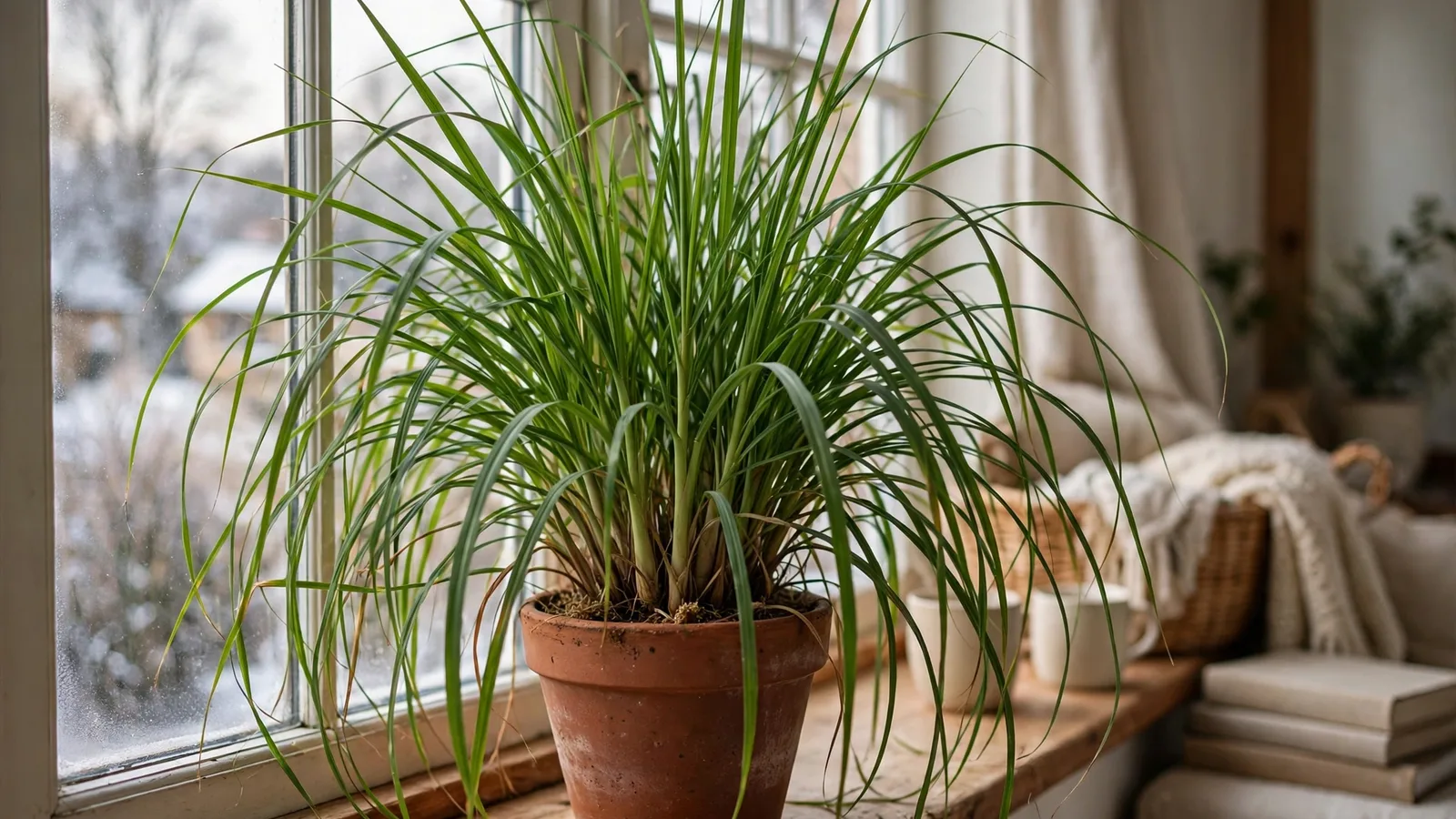
Lemongrass is a tropical plant doing its best to pretend it belongs in a temperate garden. All summer it behaves beautifully, throwing up fragrant stalks and asking for nothing but sun and water. Then the first cold night arrives and the whole plant turns to mush. Lemongrass is frost-tender, which means one hard freeze at 32°F will kill it in the ground across most of the United States. If you live in USDA Zones 8 through 11 it can often stay outside with a heavy layer of mulch, but everywhere colder, winter is a choice: dig it up and bring it in, or start over from seed or store-bought stalks next spring.
Bringing it in is worth the effort. A mature lemongrass clump is big, productive, and expensive to replace, and an overwintered plant takes off weeks earlier in spring than a new seedling. There are two good ways to do it: keep the whole plant growing slowly indoors, or divide it and store a few stalks in a smaller pot. Here is how to run both methods, plus how to wake the plant back up in spring.
Know Your Options Before the Frost
Decide what you are doing before the forecast forces your hand. Lemongrass that has been frost-bitten once is much harder to save, so aim to move it at least a week before your first expected frost, while the foliage is still green and healthy.
Method one: the whole-pot approach. If your lemongrass already grows in a container, this is simple: trim it, clean it, and move it to the brightest spot you have indoors. Plants in the ground can also be dug up and potted, though a big clump is heavy work.
Method two: divide and store. Instead of hauling a full-sized plant inside, you dig the clump, split off a handful of the thickest stalks with roots attached, and pot those up in a modest container. The rest can be harvested for the freezer. This is the better option if your indoor space is limited or your clump has outgrown every pot you own.
Either way, expect the plant to coast rather than thrive all winter. Lemongrass indoors grows slowly, the stalks thicken very little, and that is fine. The goal is a living plant in March, not a harvest in January.
Bringing the Whole Plant Indoors
Start about a week before your average first frost date. Timing matters more than any single technique: a plant moved while it is still growing happily adjusts far better than one moved in a panic after a freeze warning.
- Cut it back hard. Trim the foliage down to about 6 to 8 inches above the base. This feels drastic, but the plant cannot support all that leaf area in dim indoor light, and shorter foliage is far easier to clean and inspect. Save the trimmed leaves for tea or freeze them in bundles for soup.
- Dig or lift the plant. For in-ground plants, dig a wide circle around the clump, at least 8 to 10 inches out from the stalks, and work the root ball free. Expect a dense, tangled mass of roots. It is fine to trim the longest roots to fit your pot.
- Pot it up snugly. Choose a container at least 12 inches wide with drainage holes. Fill around the root ball with fresh potting mix, water it in well, and let the excess drain away completely.
- Clean it before it comes inside. Hose the plant down, check the leaf bases and undersides for aphids and spider mites, and wipe or spray off anything you find. Outdoor hitchhikers love a warm house in winter, and it is much easier to deal with them on the patio than on your windowsill.
- Give it the brightest spot you have. A south-facing window is ideal. Lemongrass wants direct sun, and indoor light is already a big step down from a summer garden. If your windows face east or north, a simple LED grow light running 10 to 12 hours a day makes a real difference.
For more container-herb projects that pair well with a lemongrass pot on the patio, see the container garden plan for a Vietnamese herb garden.
The Divide-and-Store Method
If your clump is huge or your windowsills are spoken for, dividing is the smarter play. You are not trying to save the whole plant, just enough healthy material to rebuild it in spring.
- Dig the clump and shake off the soil. Work on a tarp or over a wheelbarrow; the roots hold a surprising amount of dirt.
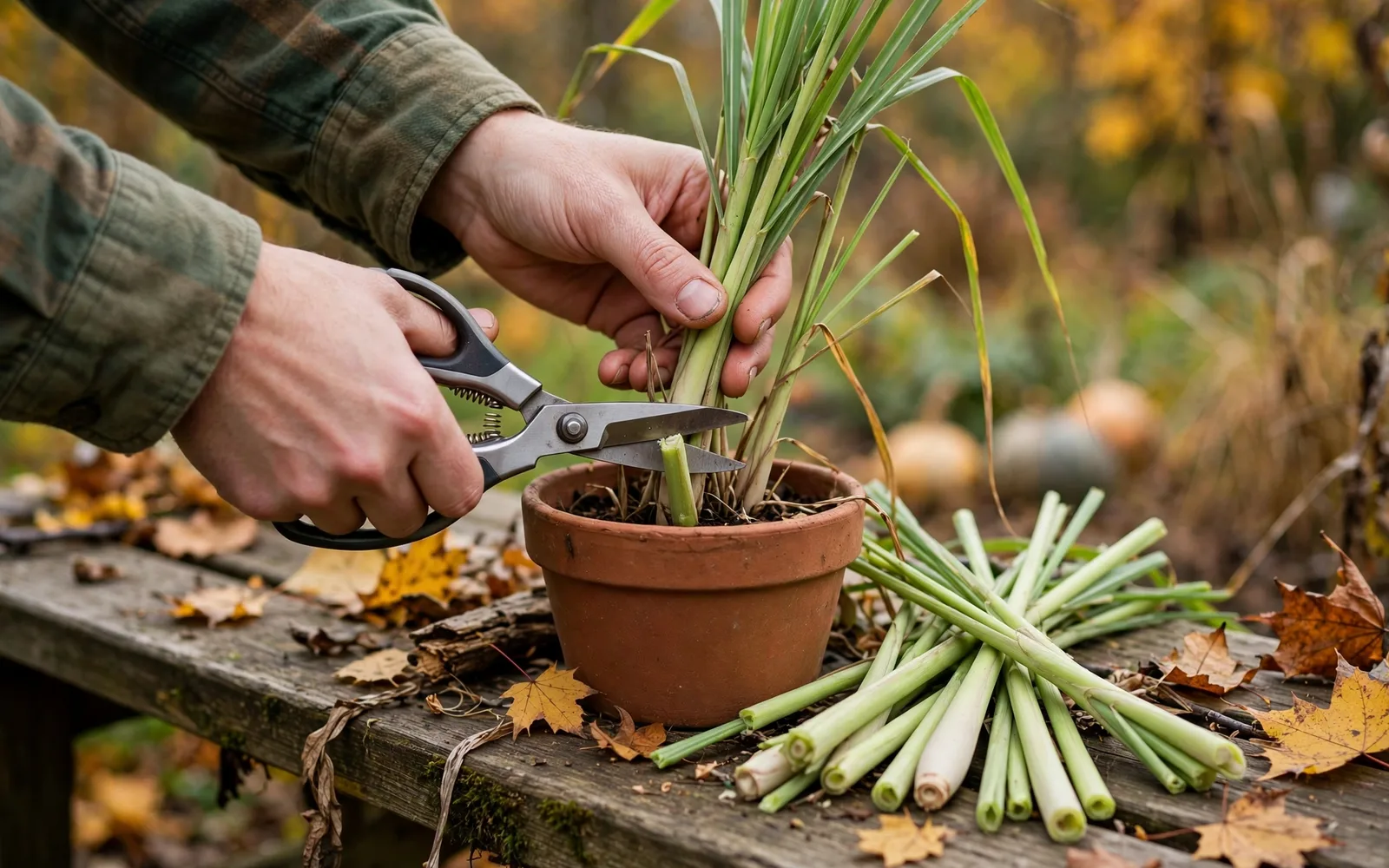
- Pick your keepers. Choose 4 to 6 of the thickest, healthiest stalks, ones with firm white or pale green bases and roots still attached. Each stalk divides away from the clump with a firm twist or a cut from a sharp knife. Discard anything soft, brown, or hollow.
- Trim the tops. Cut each stalk back to about 6 inches. The goal is a compact bundle of bases that will sit quietly all winter.
- Pot them together. Set the stalks in one 8- to 10-inch pot of fresh potting mix, firming the soil around the bases. Water once, thoroughly.
- Store them cool and bright. The divide-and-store pot does not need your best window. A bright room, a cool sunroom, or a heated garage with a window all work. Temperatures between 50°F and 65°F are perfect: cool enough to hold the plant nearly dormant, warm enough to keep the roots alive.
Winter Care: Less Water, More Light
Most overwintered lemongrass dies from kindness, meaning too much water in too little light. Here is the honest routine.
Water sparingly. Let the top half of the soil dry out between waterings, then water just enough to moisten the mix again. In a cool room, that might be once every two to three weeks. Soggy soil in winter rots the bases, and a rotted base does not recover. Empty the saucer every time; lemongrass should never sit in standing water.
Maximize light. Clean the window glass, rotate the pot a quarter turn every week or so, and keep the plant within a foot or two of the glass. Leggy, pale growth is the plant telling you it needs more light, and the fix is always light, never fertilizer.
Skip the fertilizer. Do not feed an overwintering plant. It is not building anything in winter, and fertilizer salts in dry indoor soil do more harm than good. Feeding resumes in spring when new growth shows up.
Watch for spider mites. Dry heated indoor air is spider mite weather. Check the undersides of leaves every couple of weeks, and if you see fine webbing or stippled leaves, rinse the plant firmly in the shower and repeat a week later. Catching them early saves the plant; catching them late usually does not.
If you also grow Thai chili peppers in pots, the same bright-window, go-easy-on-the-water routine applies to both plants through the cold months.
Waking It Up in Spring
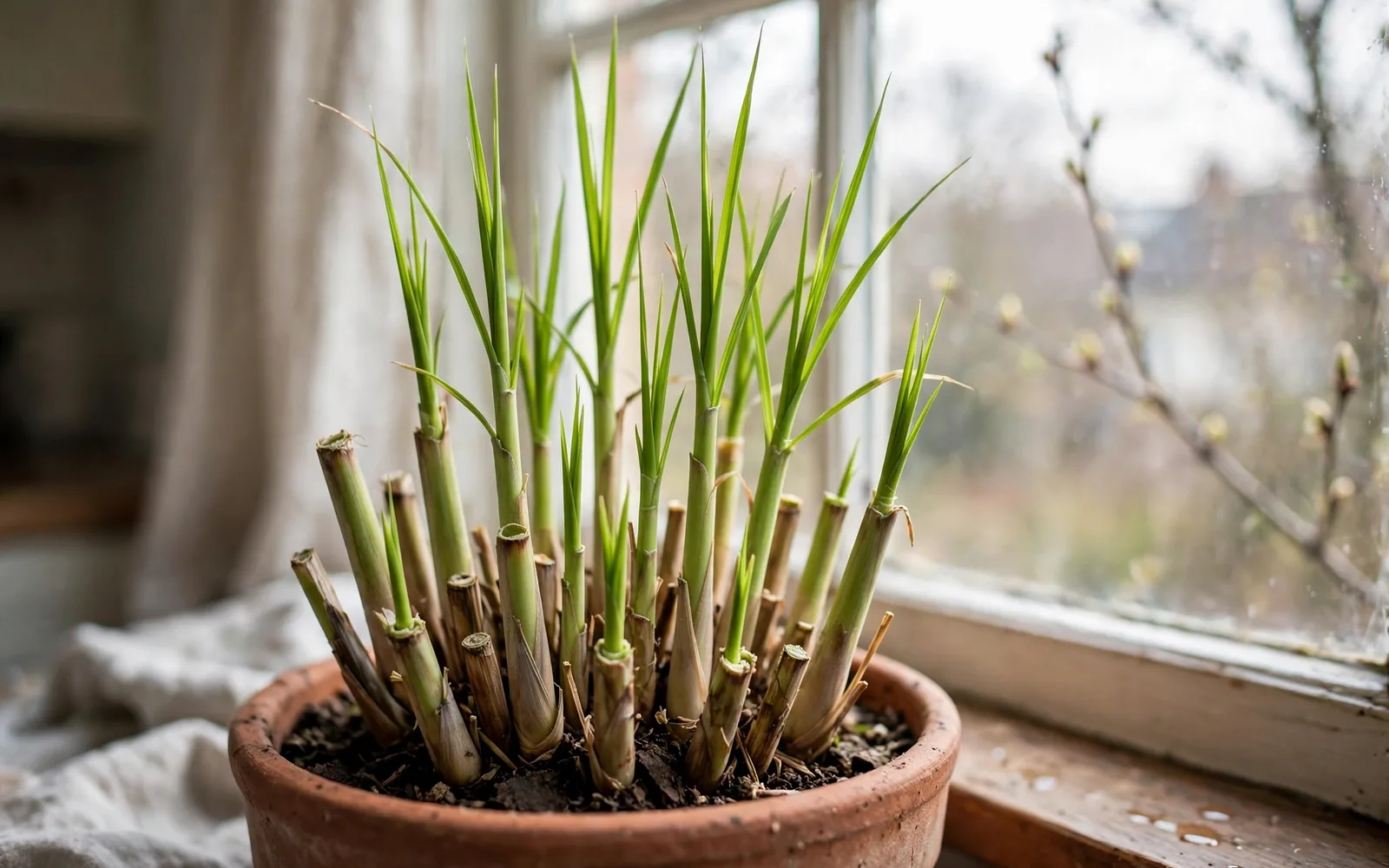
Two to three weeks before your last expected frost, start nudging the plant back into growth. Move it to your brightest spot if it is not there already, water a bit more generously, and give it a first light feeding with a balanced fertilizer at half strength. Fresh green shoots from the center of the stalks are your sign that the plant made it.
Harden the plant off before it goes back outside for good. Set it outdoors in shade for a few hours the first day, then add an hour or two of morning sun each day over the course of a week. Lemongrass leaves that have spent the winter indoors sunburn easily, and a rushed move can scorch the very growth you worked to save.
Once nights stay reliably above 50°F, plant it back in the ground or move it up to its summer container, water it in, and step back. An overwintered clump usually outgrows a new seedling within the first month, which means earlier harvests and thicker stalks for the kitchen all season long.
Quick Troubleshooting
- Mushy, browning bases in midwinter: almost always too much water. Stop watering, let the soil dry well, and remove any stalk that has gone soft all the way through.
- Long pale leaves reaching sideways: not enough light. Move the pot closer to the window or add a grow light.
- No new growth in early spring: be patient for two weeks, check that the bases are still firm, and make sure the room is warming up. Firm bases usually mean a live plant.
- White cottony patches at the leaf bases: likely mealybugs. Wipe them off with a cotton swab dipped in rubbing alcohol and check weekly.
Saving a lemongrass plant over winter takes one afternoon in the fall and a few minutes of attention each month. Come spring, you will be glad you bothered every time you reach for a fresh stalk instead of a grocery-store bundle.