
A bottle of ponzu in the fridge changes how many Japanese meals taste. A spoonful over cold tofu, a small dish beside gyoza, a splash in a salad dressing, and the meal picks up a bright, salty-sour edge that soy sauce alone never gives. Store-bought ponzu works, but it often tastes flat and sweet, and the citrus in it faded months ago. Homemade ponzu takes about five minutes of hands-on work, one jar, and a day in the fridge, and the difference is easy to taste.
If you stock it from our essential Asian pantry staples, you already have most of what this sauce needs. The only shopping trip is for citrus and, if your store carries them, a strip of kombu and a bag of bonito flakes.
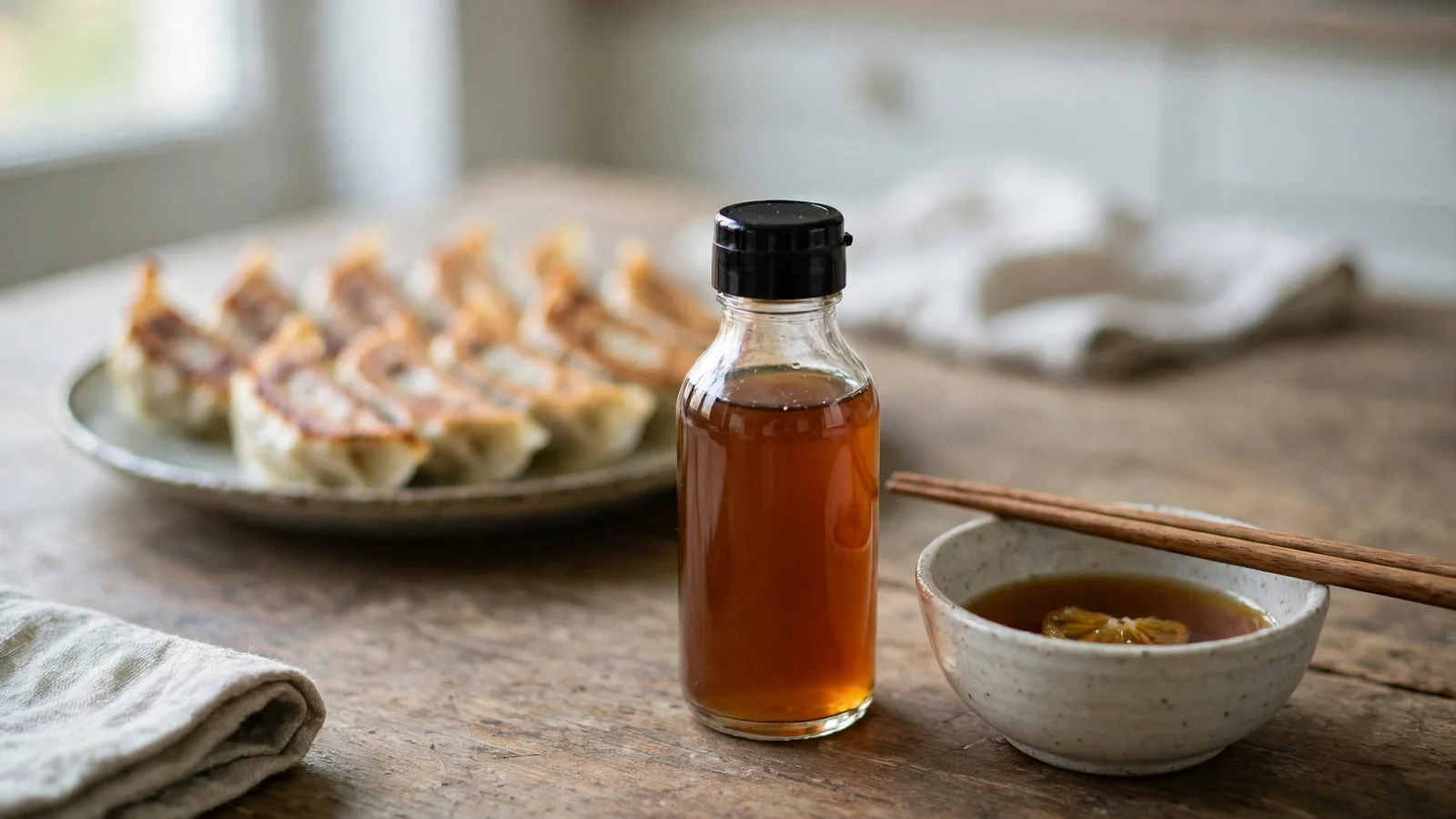
What is ponzu sauce?
Ponzu is a Japanese citrus sauce. Strictly speaking, the word ponzu means citrus juice with a little vinegar added to sharpen and preserve it. What most people mean when they say ponzu is ponzu shoyu, the sauce made by mixing that citrus juice with soy sauce, mirin, and dashi from kombu and bonito flakes. The result is thin, dark, salty, and sharply citrusy, with a savory depth underneath.
It is a dipping sauce first, but it also works as a dressing, a marinade, and a finishing splash. In Japan it shows up with sashimi, shabu-shabu, tataki, grilled fish, and cold tofu. At home I reach for it whenever a dish needs salt and acid at the same time, which turns out to be more often than I expected.
The classic ratio
Most Japanese recipes use the same proportions: soy sauce, citrus juice, and mirin in the ratio 1 : 1 : 1/2. For one batch that means 1/2 cup soy sauce, 1/2 cup citrus juice, and 1/4 cup mirin, plus a strip of kombu and a small handful of bonito flakes for the dashi note. A spoonful of rice vinegar is optional and sharpens the edge when the citrus runs mild.
That ratio is a starting point, not a law. Lemons are sharper than yuzu, so a lemon batch may want an extra teaspoon of mirin. A sweet bottled yuzu juice may want a little less. Taste the sauce after it steeps, then adjust by the teaspoon. Small changes show up fast in a sauce this thin.
What you need
- 1/2 cup Japanese soy sauce (koikuchi, the regular dark kind)
- 1/2 cup fresh citrus juice
- 1/4 cup mirin
- 1 tablespoon rice vinegar (optional, for a sharper edge)
- 1 strip kombu (dried kelp), about 2 inches long
- 1/3 cup bonito flakes (katsuobushi), about a small handful
- 1 clean glass jar with a tight lid
Use a Japanese soy sauce here if you can. Our soy sauce guide explains why: Japanese koikuchi has a rounder, less harsh salt profile than many Chinese-style soy sauces, and ponzu has nowhere to hide a sharp soy sauce. If all you have is a Chinese light soy sauce, the ponzu still works, but cut the citrus by a tablespoon and taste before you add more.

How to make it
There are two ways to make ponzu, and both start the same way: never boil the citrus juice. Heat flattens fresh citrus aroma in minutes, and a boiled ponzu tastes dull no matter how good the fruit was.
The cold steep (best flavor)
- Pour the soy sauce, citrus juice, mirin, and rice vinegar (if using) into the jar and stir.
- Add the kombu strip and the bonito flakes. They will float at first, then sink as they soak.
- Seal the jar and refrigerate for at least 24 hours. 48 hours tastes better still, as the kombu and bonito flakes give up more savory depth without any heat.
- Strain through a fine mesh strainer into a clean bottle or jar. Press the flakes gently with a spoon to get the last of the liquid out, then discard the solids.
The quick simmer (same day)
- Pour the soy sauce and mirin into a small saucepan and bring just to a boil, then take it off the heat right away. This cooks off the raw alcohol edge of the mirin.
- Add the kombu and bonito flakes while the liquid is still hot and let the pan cool to room temperature, about 30 minutes.
- Stir in the citrus juice and rice vinegar only after the pan has cooled. Then pour it all into a jar and refrigerate overnight.
- Strain before storing, the same as the cold method.
The cold steep is the one I use most. It takes no stove time at all, and the slow soak pulls flavor from the kombu and bonito flakes without any risk of bitterness from heat. The simmer method exists for the days you want ponzu tonight and are willing to trade a little brightness for speed.

Which citrus to use
Yuzu is the classic choice. It is floral, sharp, and unmistakably Japanese. It is also a poor juicer: one yuzu gives about a teaspoon of juice, so a half cup would take around twenty fruit. Outside Japan, bottled 100 percent yuzu juice is the practical way to get that flavor. Check the label for 100 percent juice with no added sugar.
Sudachi and kabosu are the other Japanese citrus used for ponzu, and both are hard to find fresh outside Japan. If your market carries them, use them the same way as yuzu.
For most home cooks, the honest answer is lemon and lime, half and half. Lemon alone is sharper and flatter than yuzu. Lime alone is too floral and a little bitter. Mixed, they land close to yuzu: bright, fragrant, and sharp enough to stand up to soy sauce. Grapefruit works in a pinch and makes a milder, rounder ponzu.
How much fruit to buy for 1/2 cup of juice:
- Lemons: about 2 1/2 to 3, since one lemon gives roughly 45 ml
- Limes: about 3 1/2 to 4
- Yuzu: about 20 fruit, which is why bottled juice exists
Squeeze the fruit by hand or with a press, then strain out seeds and pulp before measuring. Pulp left in the jar clouds the sauce and turns bitter after a few days.
How to use ponzu
Ponzu earns its fridge space fast. A few uses that come up again and again:
- Dipping sauce for gyoza and tempura. A small dish of ponzu with a drop of chili oil sits next to our homemade gyoza and our shrimp tempura more often than soy sauce does.
- Cold tofu. Pour a spoonful over hiyayakko, Japanese cold tofu, with grated ginger and scallions. The cold sauce and the cold tofu suit each other.
- Sashimi and tataki. Ponzu is the usual sauce for seared tataki and for white fish sashimi, where plain soy sauce would be too blunt.
- Salad dressing. Whisk 3 parts ponzu with 1 part neutral oil for a light dressing over greens, seaweed salad, or sliced tomato.
- Grilled fish and chicken. Brush it on after cooking, not before. The citrus burns over direct heat, so ponzu belongs on the finished plate.
- Marinade. A short 30 minute soak in ponzu seasons chicken or fish without the long cure that soy sauce alone would give.
One habit worth building: pour a small amount into a dipping dish instead of dipping straight from the bottle. Ponzu is thin and goes fast, and a shared bottle that has had food dipped in it spoils sooner.

Mistakes that make ponzu taste flat
Boiling the citrus juice. This is the big one. Citrus aroma is volatile, and a rolling boil drives it off in a couple of minutes. Add citrus only after everything else has cooled.
Skipping the steep. On day one, ponzu tastes like salty lemon water. The kombu and bonito flakes need a full day in the liquid before the sauce tastes like itself. If you need it tonight, use the simmer method and still give it overnight in the fridge.
Using bottled lemon juice from concentrate. It tastes flat and a little metallic next to fresh juice, and ponzu has only five ingredients, so each one shows. Fresh-squeezed citrus is the one place not to cut corners.
Leaving the solids in the jar. After 24 to 48 hours, strain the kombu and bonito flakes out. Left in, they keep steeping and the flavor turns murky and cloudy instead of clean.
Storing it on the shelf. Ponzu is not a shelf sauce. Fresh citrus fades fast at room temperature, and an open bottle left warm will taste tired within days.
How to store ponzu
Strain the sauce into a clean, sealed bottle or jar and keep it in the refrigerator. It keeps about 2 weeks, and it tastes best in the first week while the citrus is still bright. After that the flavor fades toward plain soy sauce, still usable, but missing the lift that makes ponzu worth making.
If you made a double batch, freeze the extra in an ice cube tray. Frozen ponzu cubes keep for about 2 months and thaw in minutes in a small dish. They are handy for salad dressing, since a cube is close to 2 tablespoons.
Smell it before you use it. Fresh ponzu smells like citrus first and soy sauce second. If the citrus has gone and the sauce smells only salty, it is past its best.
More Japanese recipes
- Chicken karaage: Japanese fried chicken
- Salmon teriyaki
- Homemade gyoza with pork and cabbage
- Tamagoyaki: Japanese rolled omelet
If you cook Japanese food at home, a jar of ponzu is one of the cheapest upgrades in the fridge. Five minutes of work, a day of waiting, and every cold dish and dumpling plate gets a little brighter.