
A carbon steel wok gets better with every stir-fry, but only if you clean it right. I have seen two camps: people who baby their wok so much it develops a rancid film, and people who attack it with scouring pads until the seasoning comes off in pale flakes. The middle ground takes about two minutes, and it is not precious. Warm water, a soft brush, fast drying on heat, and the thinnest wipe of oil. That is the whole routine.

What seasoning can and cannot take
Seasoning is a thin, hardened film of oil bonded to the steel. It shrugs off hot water and a soft brush without complaint. It does not shrug off long soaks, standing water, or harsh scouring. Water is the real enemy, not soap. A mature seasoning layer (a few weeks of regular cooking) tolerates a drop of mild dish soap. A brand-new seasoning does not, so keep soap away for the first couple of weeks and stick to hot water and a brush.
The two-minute cleaning method
Do this within about five minutes of cooking, while the wok is still warm to the touch. Food releases easily at that point, and the whole job stays easy.
Step 1: Let it cool a notch. If the wok is still smoking hot, give it two or three minutes. Pouring cold water into a blazing-hot thin pan can warp it, and a warped wok never sits flat on the burner again.
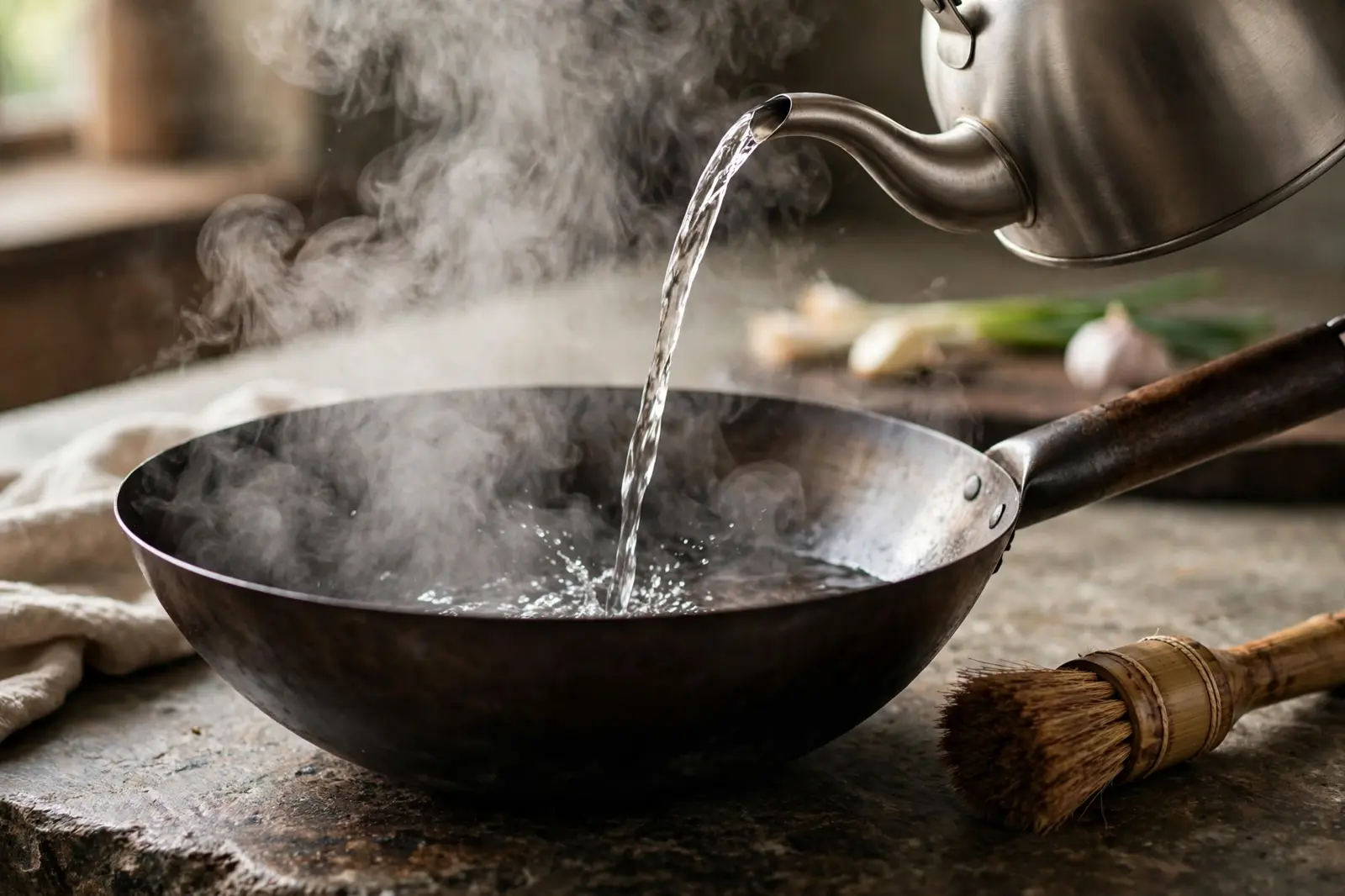
Step 2: Deglaze the stuck bits. Pour about a cup of hot water into the warm wok and set it over medium heat. In about 30 seconds the bubbling water loosens anything clinging to the surface. Scrape with a bamboo wok brush or a wooden spatula. The traditional bamboo brush, the kind sold as a coconut-fiber wok brush, is stiff enough to scrub and soft enough not to scratch the seasoning.
Step 3: Rinse and wipe. Pour out the water and rinse once more with hot tap water. Wipe the inside with a soft sponge or the brush to remove the thin cooking film. If the wok has a well-established seasoning and something greasy clings, a single drop of mild dish soap on the sponge is fine. Rinse well.
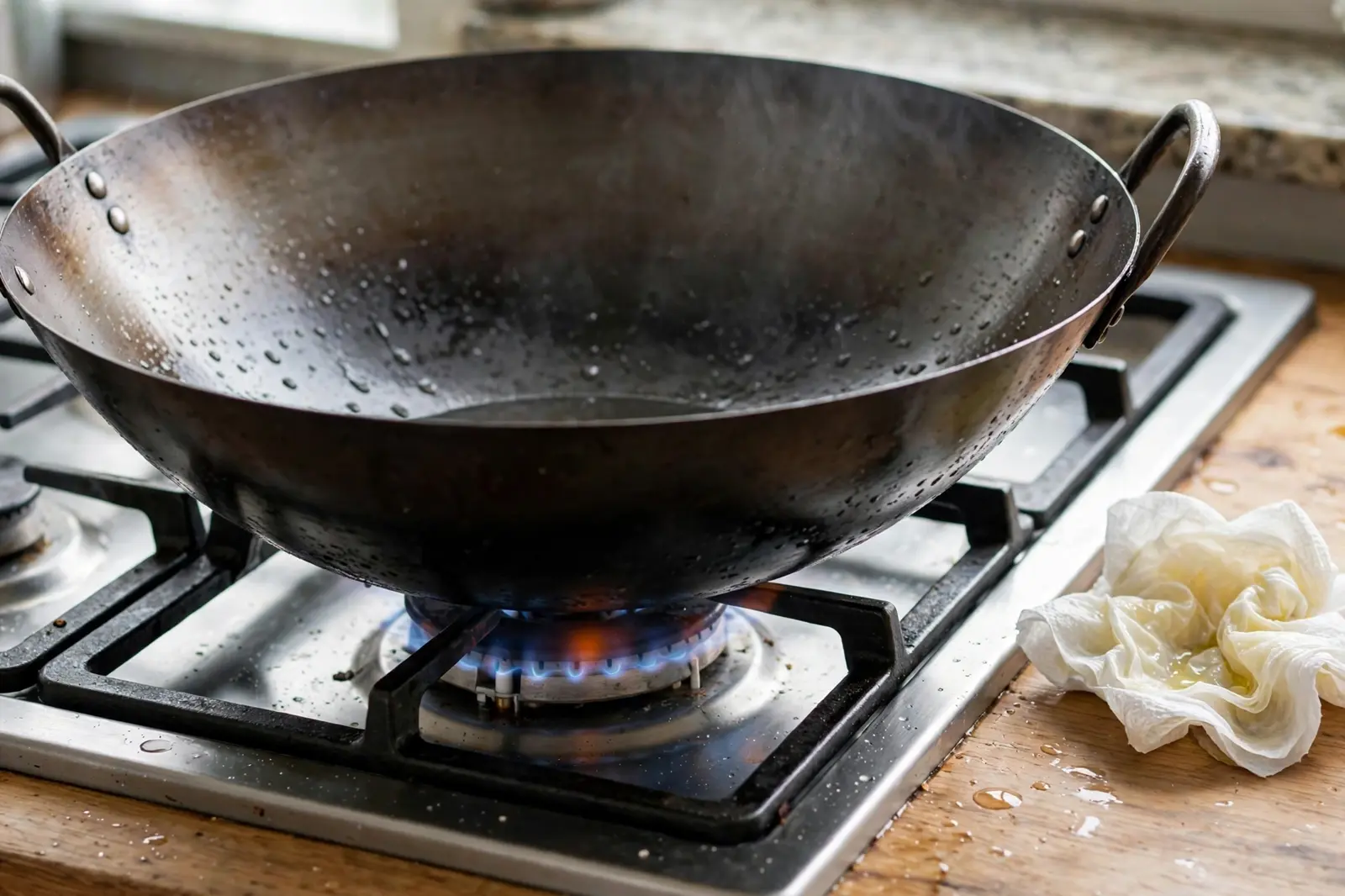
Step 4: Dry it on heat. Set the wok back on the burner over medium heat for 60 to 90 seconds, until the last water beads sizzle away and the surface looks dry. Never let a carbon steel wok air-dry. Any water left behind will find the bare spot and bloom into rust by morning.
Step 5: Oil it lightly. While the wok is still warm, put about a teaspoon of neutral oil on a folded paper towel and wipe the inside. Then take a clean towel and wipe again until the surface looks almost dry. That faint sheen is all you want.
For stubborn stuck spots: the salt scrub
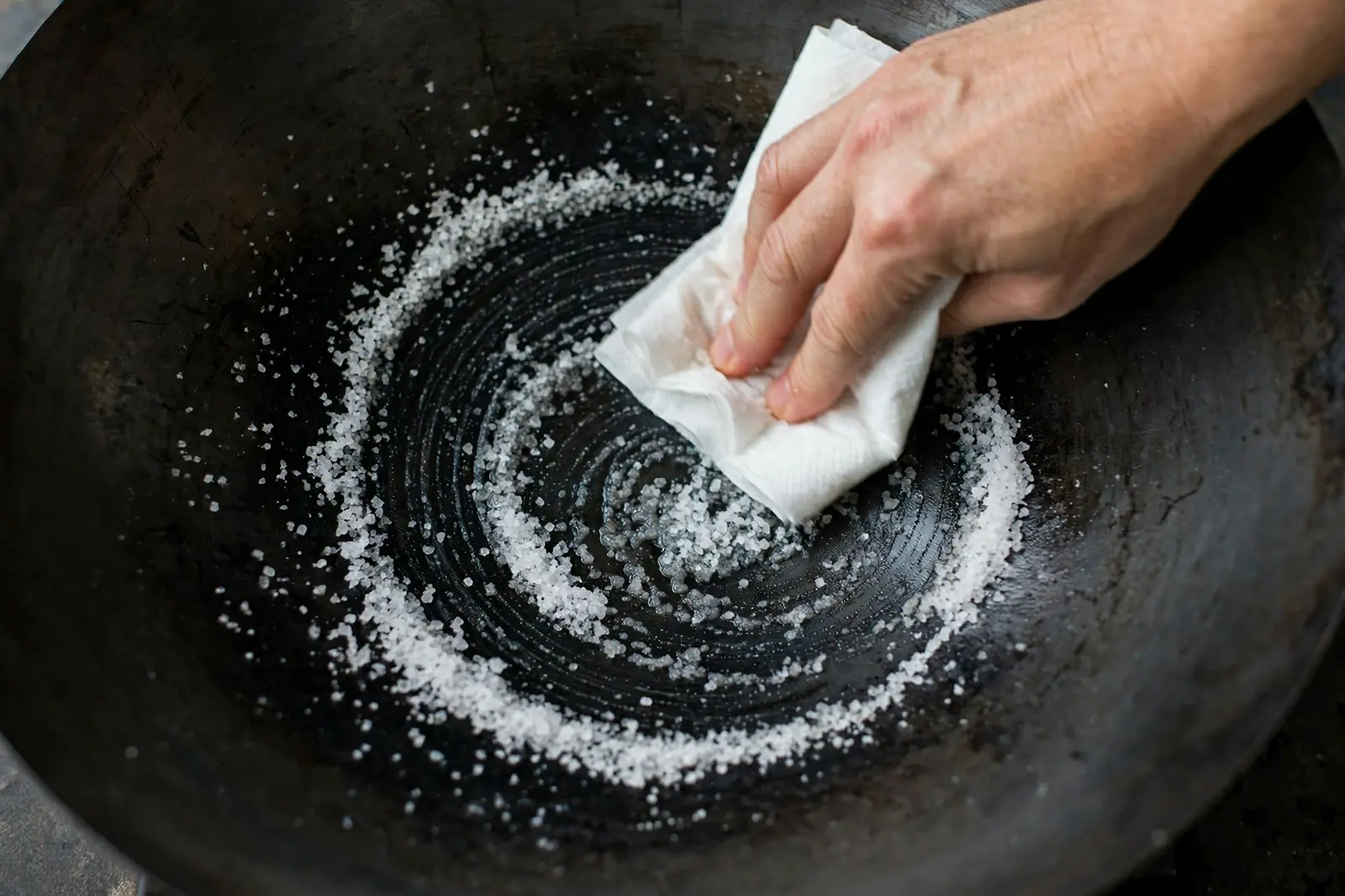
When food has genuinely glued itself on, usually proteins or sugary sauces, skip the soap and the scouring pad. Sprinkle one to two tablespoons of coarse salt into the dry wok and scrub in circles with a folded paper towel or a dry cloth. The salt cuts through the residue and polishes without gouging the seasoning. Rinse with hot water, dry on heat, and re-oil. If the salt scrub does not move it, fill the wok with hot water and simmer for two or three minutes, then try again. There is no stuck spot I have met that survived that combination.
Five mistakes that strip seasoning
- Soaking the wok overnight. This is the fastest way to get rust freckles through an otherwise good seasoning. The hardened oil film handles splashes and quick rinses, not standing water. Fix: scrub the rust off with a paste of baking soda and water or a fine scouring pad, rinse, dry on heat, and add one thin seasoning coat.
- Cold water into a ripping-hot wok. Thin carbon steel warps under thermal shock, and a bowed wok wobbles and cooks unevenly. Fix: wait two or three minutes, or use hot water for the deglaze. A warped pan will not flatten itself, so prevention is the whole game here.
- Leaving it to air-dry. Water pooled at the rim or sitting in the bottom seeps through microscopic gaps in the seasoning and leaves orange specks by morning. Fix: the 60-to-90-second heat dry from the method above, every time.
- Scrubbing a young seasoning with steel wool or harsh powder. In the first weeks the layer is still fragile, and aggressive scouring leaves pale patches where steel shows through. Fix: switch to a soft brush and salt, and rebuild the thin spots with a few rounds of thin seasoning coats. If you have not seasoned yet, my guide to how to season a carbon steel wok covers the full process.
- Oiling it too thickly for "protection." A heavy coat of oil does not harden properly. It turns gummy and sticky, then smokes and smells at the next preheat. Fix: wipe until the pan looks almost dry before it cools. If it is already gummy, scrub it back with salt, rinse, dry on heat, and start over with the thin coat.
I reach for carbon steel over cast iron for stir-frying because it heats and cools fast enough to control wok hei, and none of that matters if the surface is gummy or rusty. For how the two pans compare at the stove, see my wok vs cast-iron skillet comparison.
Storing a carbon steel wok
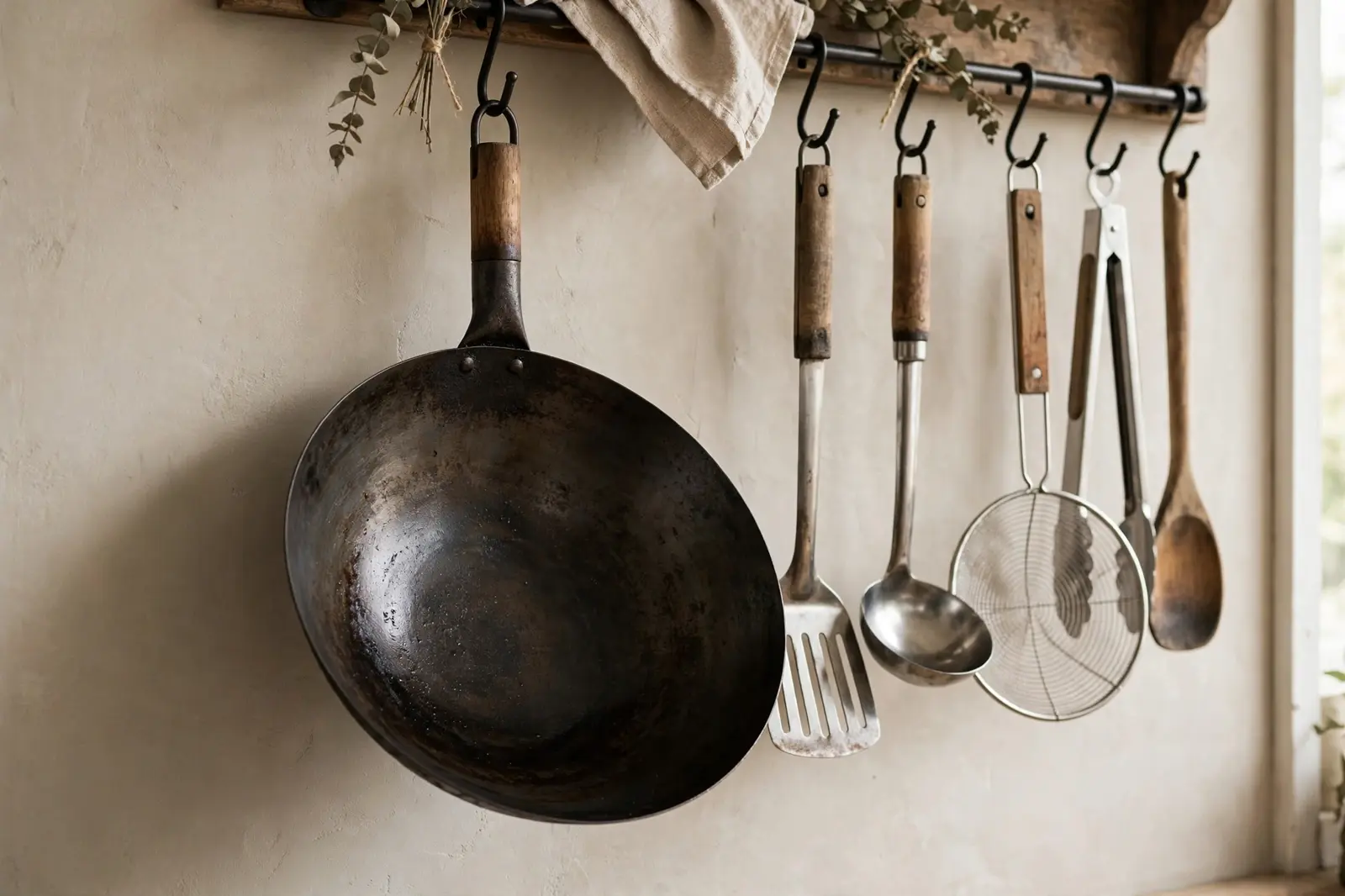
Hang it if you can. A wall hook keeps the cooking surface from touching anything, which is how seasoning gets chipped. If you have to stack it, lay a paper towel or a cloth inside first so the next pan does not grind against the seasoning. Store it dry, always. If you live somewhere humid, the thin oil wipe matters even more. I keep mine on a hook by the stove, and the paper towel between stacked pans has saved me from re-seasoning more than once.
More kitchen guides
- >How to Season a Carbon Steel Wok: the full seasoning process, including fixing a patchy first layer
- >How to Use a Bamboo Steamer: set it up, line it, and steam without sticking
- >How to Use a Spider Strainer for Frying and Blanching: the one tool that keeps frying and blanching clean