
# How to Store Fresh Ginger and Galangal So They Last
A knob of ginger looks indestructible on the shelf, and galangal looks even tougher. Both fool you. Within two weeks in a fridge crisper, ginger turns soft and wrinkly; galangal shrivels into something that smells like wood shavings. If you are unsure which is which when you buy them, start with my ginger vs galangal comparison, then come back. Stored well, fresh ginger lasts a month in the fridge and months in the freezer, and galangal does even better because it is drier and woodier.
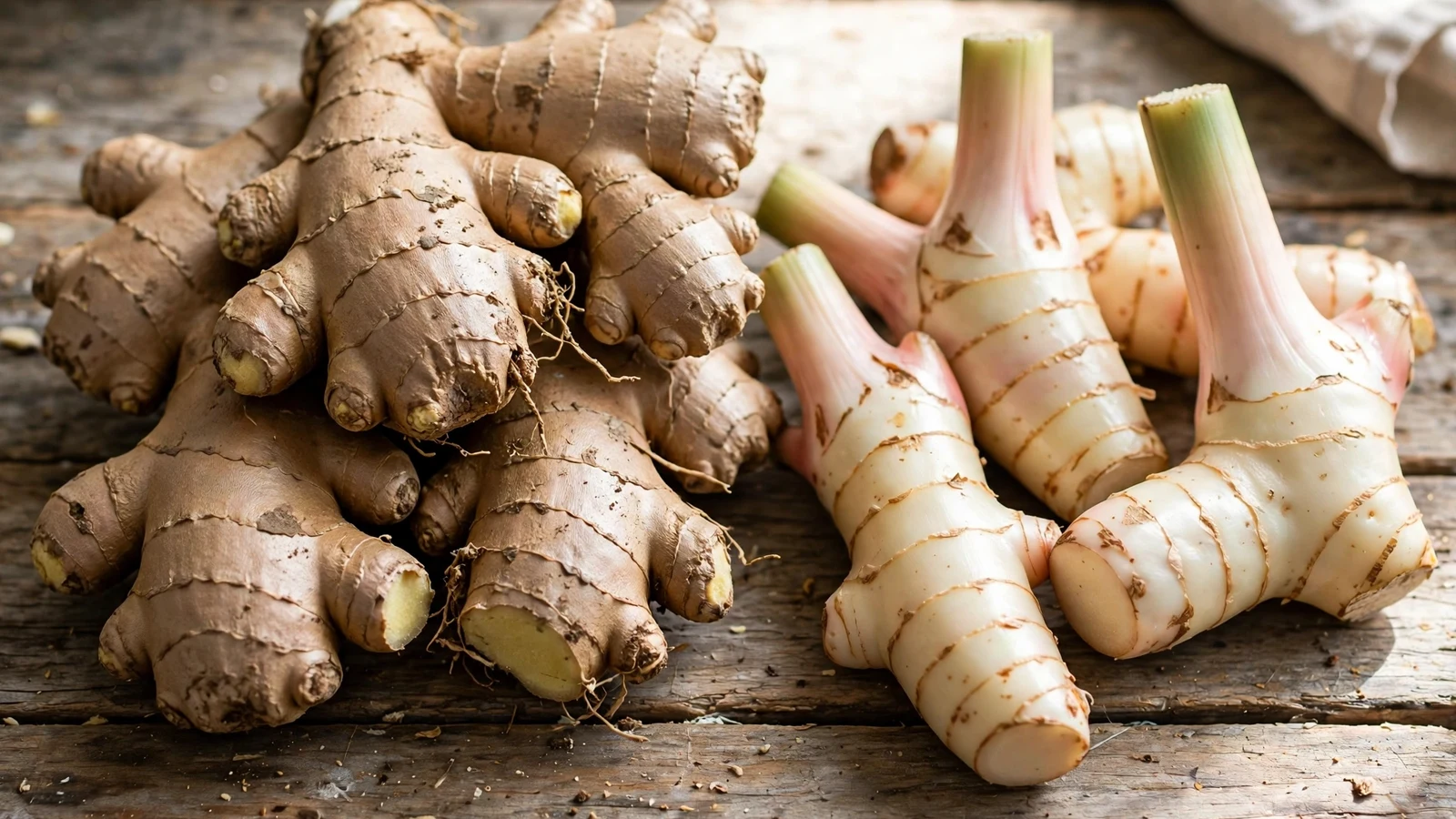
Why ginger and galangal spoil so fast
Rhizomes lose moisture through their thin skin the whole time they sit in the fridge, and the fridge itself is a dry place. Two things finish them: dehydration, which shrivels and softens them, and trapped moisture, which grows mold at the cut ends. Every good storage method solves for both at once. It keeps the humidity close so the flesh does not dry out, and keeps liquid water away so mold does not move in.
Storing ginger in the fridge
The method that works best for whole, unpeeled ginger is a dry paper towel inside a zip-top bag. Wrap the piece loosely in the paper towel, squeeze out most of the air, seal the bag, and put it in the crisper drawer. The towel absorbs condensation that would otherwise sit on the skin, and the bag keeps the fridge’s dry air from pulling moisture out of the flesh.
In my fridge this keeps ginger firm for four to five weeks. Left loose in the crisper with no bag, the same piece starts to wrinkle and go soft in about two weeks. Check the paper towel once a week and swap it if it feels damp. A damp towel against the skin is exactly how mold starts.
If you have cut the ginger and only need to store the remaining half, wrap the cut end in the towel especially well. The exposed flesh molds first, usually a fuzzy blue-green patch within a week if you leave it bare.

Storing galangal in the fridge
Galangal behaves differently because it is denser and drier than ginger, with harder skin and less juice. It keeps longer in the fridge with less fuss. Wrap whole galangal the same way, towel and zip bag, and it holds for six to eight weeks in the crisper. I have had pieces stay firm past two months.
The one thing galangal dislikes is being sealed while wet. Rinse off any market dirt, then let it air-dry on the counter for an hour before bagging it. I once bagged a still-damp piece and found white fuzz on the cut end five days later. Drying first fixed the problem completely.
Freezing ginger and galangal: the method I actually use
When I bring home more than I can use in a month, I freeze it. This is the method that changed how I cook, because frozen ginger grates straight from the freezer with no thawing at all.
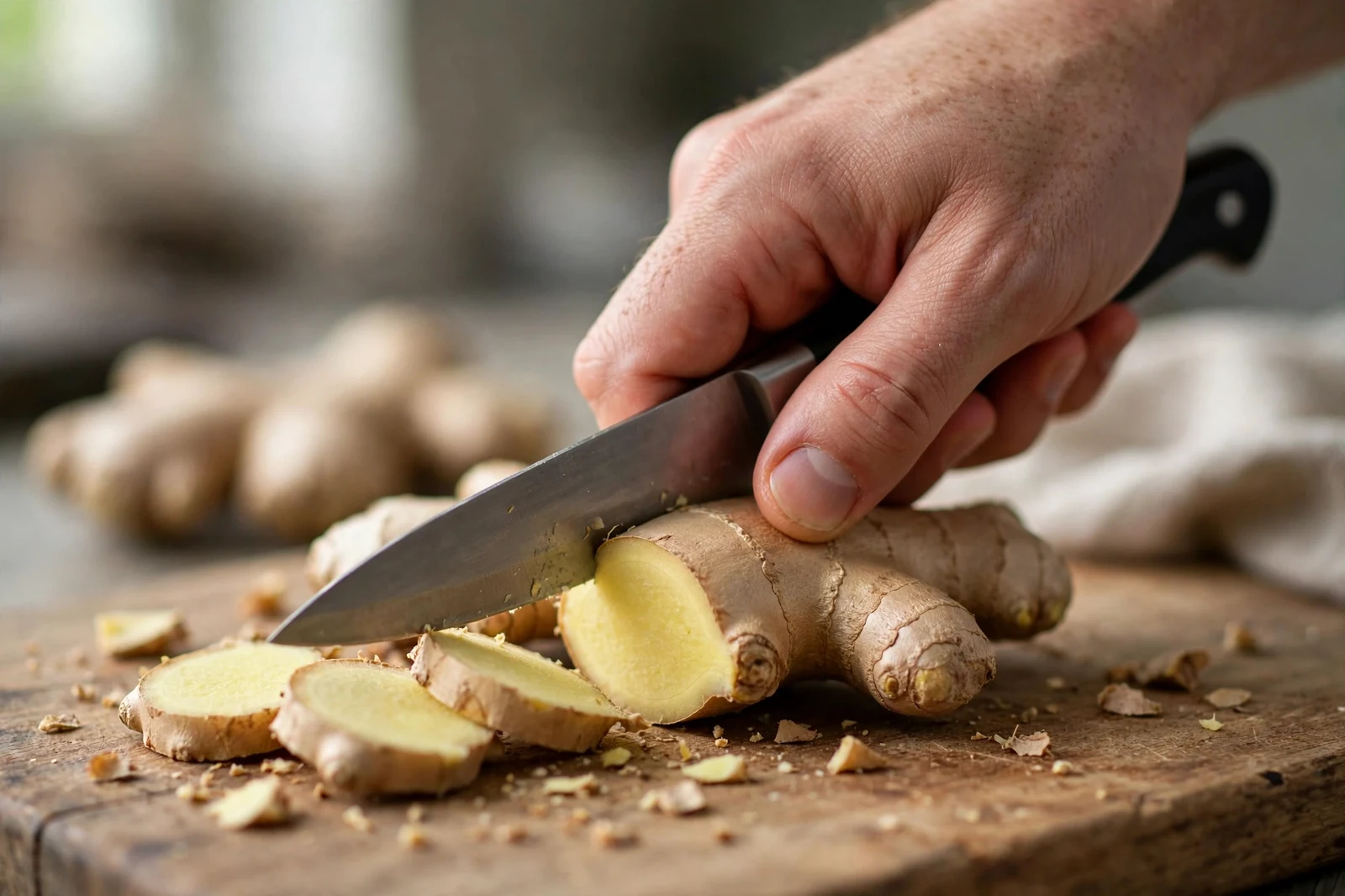
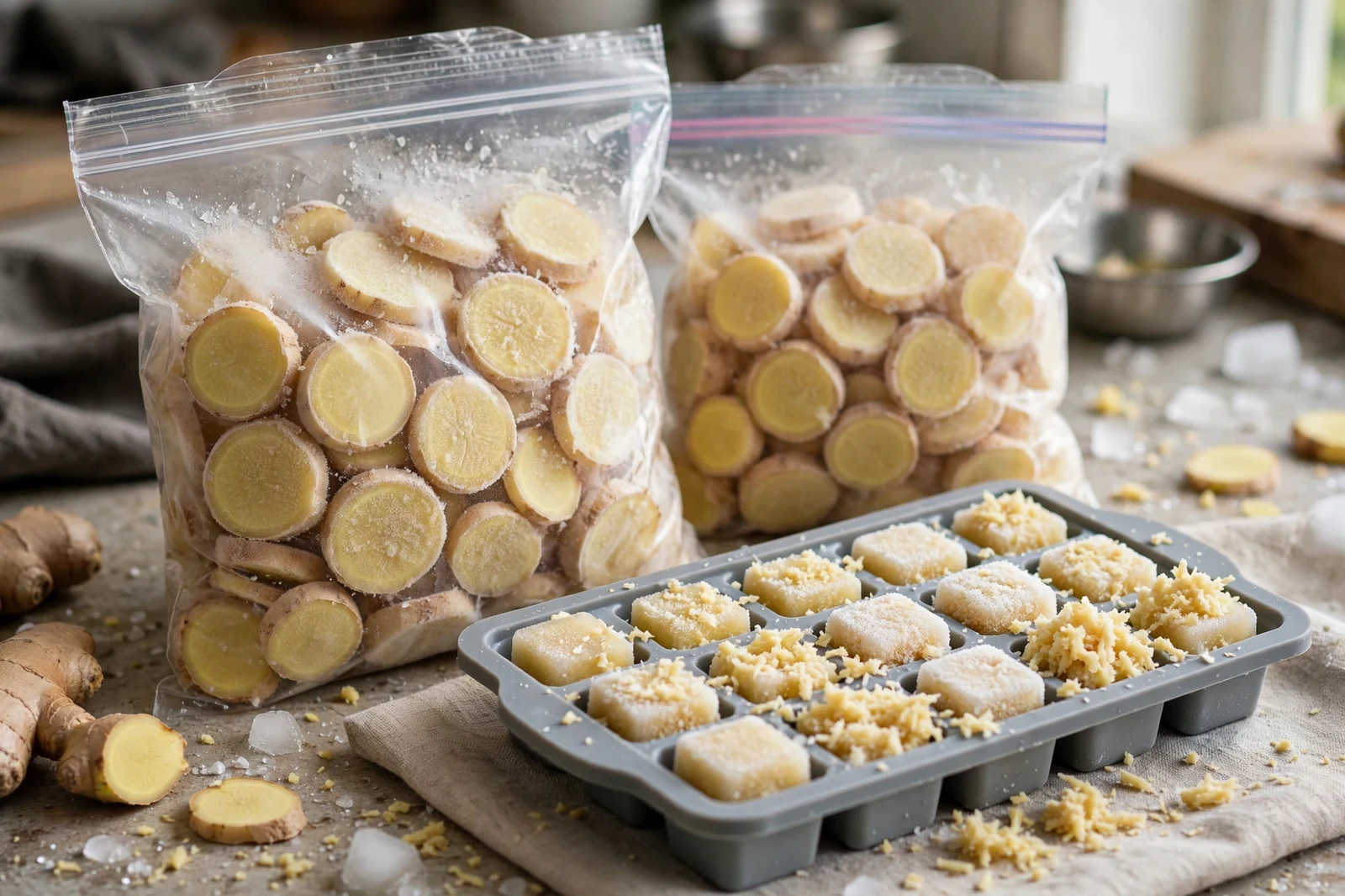
For ginger, peel it and cut it into coins about as thick as a pencil, roughly a quarter inch. Spread the coins on a plate or small tray in a single layer and freeze them for two hours, then move them to a zip-top freezer bag. The pre-freeze stops them sticking together, so you can grab two or three coins at a time. When a recipe calls for grated ginger, press a frozen coin against a microplane. It shreds into a fine, fluffy pile in seconds, and you never have to fight the fibrous strings that make fresh ginger hard to grate.
For galangal, slice it thin before freezing, no thicker than an eighth of an inch, or cut it into thin half-coins. Frozen galangal turns rock-hard, and slicing a whole frozen piece is nearly impossible without a heavy cleaver. Thin slices go straight into curry paste or simmering broth from frozen. There is no need to thaw, and the woodier galangal flesh takes freezing with almost no loss of aroma.
Grated ginger freezes well too. Pack grated fresh ginger into a silicone ice cube tray, one tablespoon per pocket, and freeze solid, then pop the cubes into a labeled bag. One cube is one tablespoon, ready for stir-fries and sauces. Frozen ginger and galangal keep their full strength for about three months and are still fine at six, though the ginger starts tasting a little flat past that point.
Room temperature, fridge, or freezer
At room temperature, ginger keeps for about a week in a dry basket before the ends dry and curl, and galangal for about two. I only do this when I know I will use the whole piece within days.
The fridge is the right home for any whole piece you will use within a month: towel-wrapped, bagged, in the crisper. Four to five weeks for ginger, six to eight for galangal.
The freezer wins for anything beyond a month or for pieces you only use by the teaspoon. Sliced, tray-frozen, and bagged, both keep for three to six months. The texture of thawed ginger turns soft and spongy, so frozen ginger is for cooking, not for anything where you need crisp bite. If you need ginger for pickling or candying, start with a fresh piece.

How to tell ginger and galangal have gone bad
Squeeze the rhizome. Fresh ginger is firm and snaps cleanly; galangal should feel dense and solid. If either feels soft or spongy, it is done. A wrinkled skin with firm flesh underneath is still usable for cooking, but a wrinkled piece that also feels light in the hand has lost too much moisture to be worth much.
Smell tells the rest. Fresh ginger smells sharp and bright; galangal smells piney and peppery. A musty or sour smell means mold is already working even if you cannot see it. Any visible fuzz, even a small patch, means the whole piece goes in the compost. Mold in a rhizome’s dense flesh can spread deeper than the surface shows.
The same storage thinking applies to other aromatics. My guide to how to store fresh herbs so they last longer covers the paper towel trick in more detail, and the logic is the same: keep moisture close, keep liquid water away.
More recipes using ginger and galangal
- Tom Kha Gai: Thai Coconut Chicken Soup: galangal is the backbone of the broth, simmered with lemongrass and lime leaves
- Thai Green Curry with Chicken: galangal goes into the curry paste, giving it that sharp piney note
- Pho Ga: Vietnamese Chicken Noodle Soup: charred ginger in the stock is what makes the broth taste like pho
- Vietnamese Ginger Chicken (Ga Kho Gung): julienned ginger caramelized in fish sauce until sweet and sharp
From the garden
I grow ginger in pots on my patio, and the homegrown rhizomes are thinner-skinned and more delicate than the store kind. They lose moisture even faster, so I never store a fresh-dug piece without the towel-and-bag treatment. If you want to try it, my how to grow ginger in pots guide covers planting through harvest.