
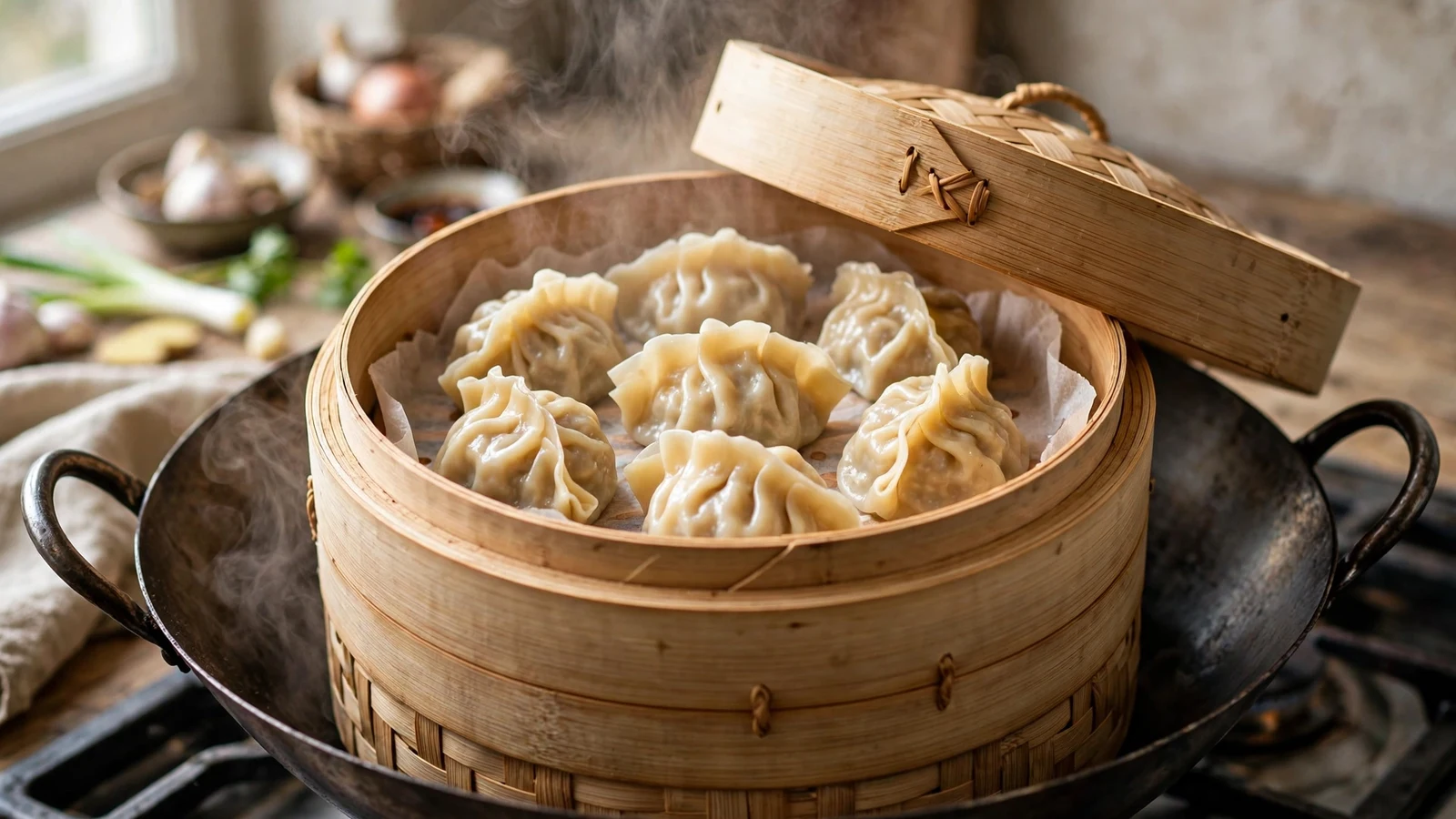
Why a Bamboo Steamer Still Earns Its Cabinet Space
A bamboo steamer is just woven baskets that stack over simmering water, but that simple design solves problems a metal steamer basket can't. Steam circulates gently around the food instead of blasting it from below, the bamboo absorbs excess condensation so dumpling wrappers don't go soggy, and you can cook two or three tiers at once and carry the whole stack straight to the table.
You don't need a wok to use one. Any pot wide enough to hold the basket with a little room around the edge works, as long as you can keep the bamboo off the bottom of the pot and the lid on tight.
What You Need Before the Water Boils
- A pot or wok: Pick one where the steamer sits at least 1/2 inch inside the rim, not teetering on top of it. A wok cradles the basket naturally; a straight-sided stockpot works if you set the basket on a heatproof ring or an upside-down small bowl so it stays above the water.
- Water, 1 to 2 inches deep: Enough to simmer for 20 minutes without boiling dry, shallow enough that it never touches the bottom basket. Check the level every 10 minutes during long cooks and top up with hot water, never cold.
- A liner for every tier with food: See the liner table below. Unlined bamboo will grab onto dumpling dough and bun dough the first time, every time.
- Tongs and a plate lifter or two towels: The stack comes off the pot hot and dripping. Have a dry plate ready to land it on.
Size matters less than fit. A 10-inch steamer is the home-kitchen workhorse: it holds 8 to 10 dumplings per tier without crowding and fits over most woks and 5- to 6-quart pots. A 12-inch is worth it only if your pot is wide and you regularly steam a whole fish.
Setup, Step by Step
1. Fill and heat. Add water to your pot, set the steamer ring or bowl in place if you're using a flat-bottomed pot, and bring the water to a steady simmer over medium-high heat. You want active steam, not a rolling boil that spits water into the bottom tier.
2. Line each basket. Lay your chosen liner flat, then arrange the food in a single layer with at least 1/2 inch between pieces. Dumplings swell as they cook; crowding is how they fuse into one giant dumpling.
3. Stack and lid. Set the loaded baskets over the simmering water, place the bamboo lid on top, and start your timer. The lid should sit flat with no gaps. If steam is escaping around the base of the stack, your pot is a touch too small or the basket is warped.
4. Keep hands clear when you check. Lift the lid away from you, tilted so the condensed water runs off the back edge, not onto the food or your wrist. Steam burns are fast and they are the main injury risk with this tool.
5. Rest before serving. Turn off the heat and let the stack sit, still lidded, for 1 minute. That short rest lets delicate wrappers firm up so they release from the liner instead of tearing.
For foods that start with soaked grains, the steamer is the finishing tool, not the whole method. Our Sticky Rice 101 guide walks through the soak and the steam, and the same basket setup below applies once the rice goes in.
Liners: What Goes Between Food and Bamboo
| Liner | Best for | Watch out for |
|---|---|---|
| Parchment rounds (perforated) | Dumplings, buns, anything doughy | Buy the pre-cut rounds with holes; solid parchment blocks steam |
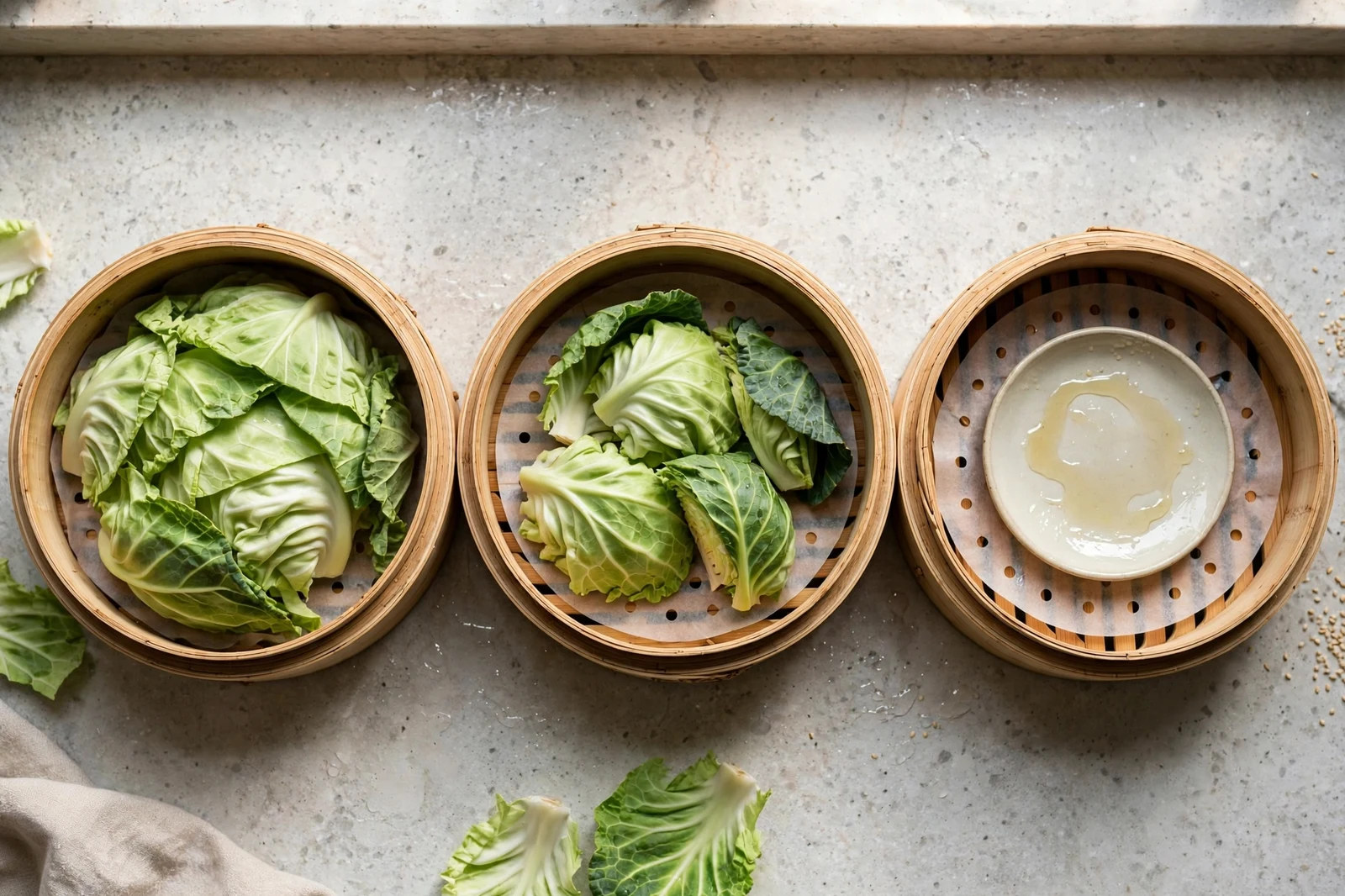
| Cabbage or lettuce leaves | Dumplings, fish, vegetables | Leaves wilt and can tear when you lift sticky food off |
| Cheesecloth | Loose rice, small vegetables | Needs a light rinse and shake; can stick to soft dough |
| Silicone steamer mats | Everyday dumplings and buns | Rinse well; strong garlic and chile flavors can linger |
| A lightly oiled plate | Fish, custards, anything in sauce | The plate blocks steam from below, so add 2 to 3 minutes |
The plate method is the one to reach for when the food cooks in its own liquid. It's exactly how the fish in our Steamed Fish with Ginger and Scallions stays in its ginger-scallion juices instead of losing them through the bamboo slats.
Stacking Rules That Actually Matter
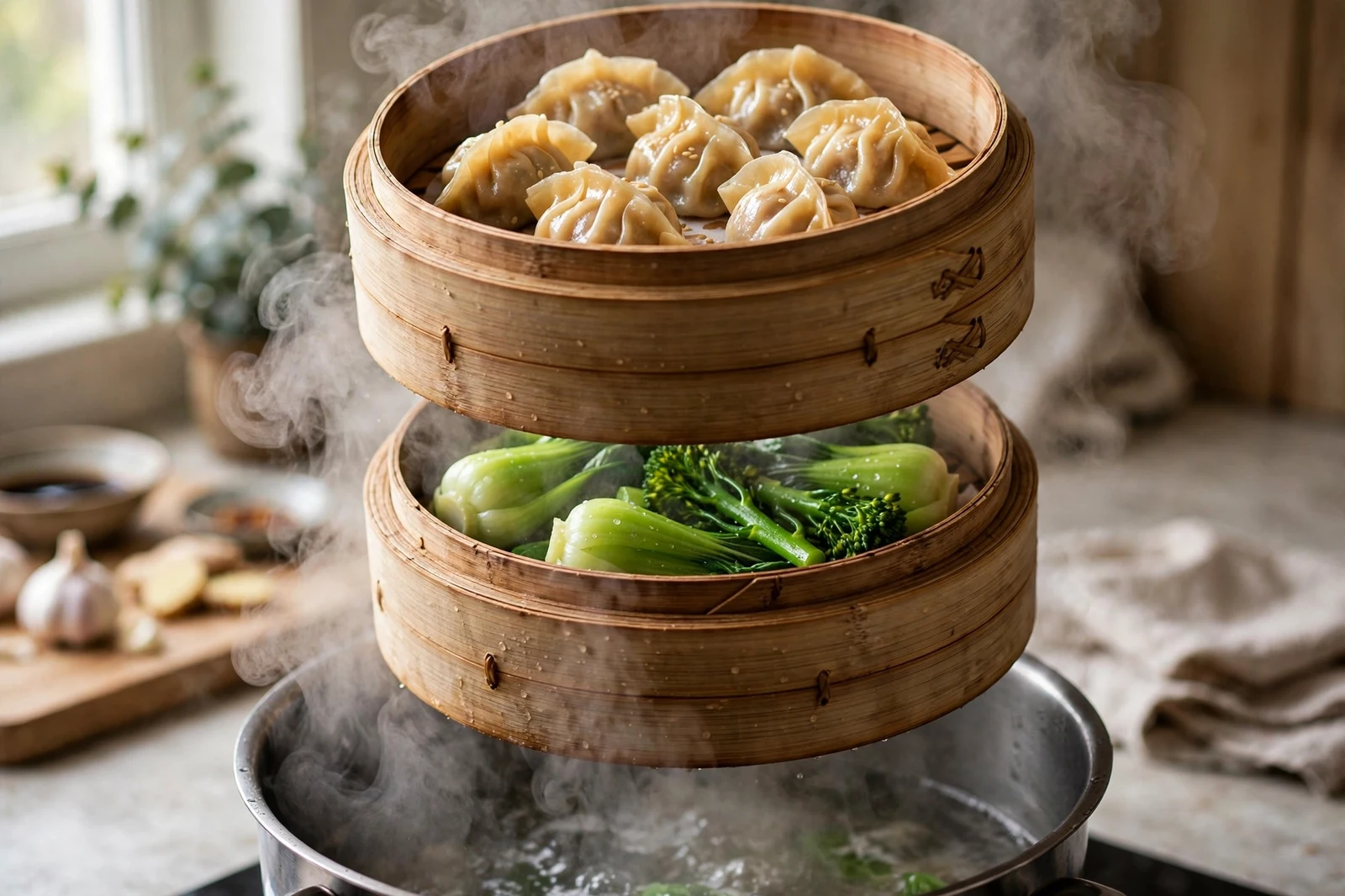
- Strong flavors go on the bottom. Garlic, chile, and fermented flavors drip down as they steam. Put plain rice or mild vegetables on top and pungent items lowest, or everything will taste like the bottom tier.
- Dense food goes closest to the steam. Root vegetables and thick pieces of squash take the longest, so they belong in the bottom basket where the steam is hottest. Leafy greens and herbs go on top, where the heat is gentlest.
- Swap tiers halfway on long cooks. Anything steaming longer than 15 minutes cooks more evenly if you lift the stack and exchange the top and bottom baskets at the halfway point. Work quickly and keep the lid on the top basket while you swap.
- One sauce per stack. Two different broths or marinades in one stack will cross-flavor through the steam. If the menu needs two sauces, run two shorter steams instead of one mixed stack.
Steaming Times to Start From
Times below assume the water is already simmering and the food is in a single layer. Thicker pieces and a fuller basket both add time, so treat the first cook as a range and check early.
| Food | Time | Done when |
|---|---|---|
| Pork or shrimp dumplings (fresh) | 8 to 10 minutes | Wrappers turn translucent and the filling is hot through |
| Frozen dumplings (no thaw) | 11 to 13 minutes | Same as fresh, with no cold center when cut open |
| Yeasted buns (bao) | 12 to 15 minutes | Buns spring back when pressed lightly |
| Fish fillets, 1 inch thick | 8 to 10 minutes | Flesh flakes and turns opaque to the center |
| Broccoli or green beans | 5 to 7 minutes | Bright green and tender with a little bite left |
| Sweet potato or squash chunks | 15 to 20 minutes | A chopstick slides in with no resistance |
| Soaked sticky rice | 20 to 25 minutes | Grains turn translucent and tender, no chalky core |
Sticky rice is the timing people most often undercook. If the grains still show a white, opaque center, keep steaming and splash a tablespoon of hot water over the top before re-lidding. The full soak-to-serve sequence is covered in the Sticky Rice 101 guide linked above.
Four Problems and Their Fixes
- Dumplings stick and tear. The liner was skipped, or the basket came off the heat too fast. Line every tier, let the stack rest 1 minute before opening, and lift dumplings with a thin spatula rather than pulling them by the pleats.
- Wrappers are soggy on top. Condensation is dripping from a metal pot lid or the bamboo lid is saturated. A bamboo lid absorbs most of it; if you are using a metal lid over a single basket, wrap the lid in a clean kitchen towel to catch the drip.
- The bottom burns or smells scorched. The pot boiled dry. The bamboo darkens first, then chars. Keep 1 to 2 inches of water in the pot and listen: a quiet pot during steaming usually means the water is gone.
- Food cooks unevenly, raw in the middle of the basket. The pieces are crowded or piled. Steam needs a path around every piece. Cook in two tiers or two batches rather than one packed layer.
Heat control is the other half of gentle cooking. A steamer runs at the temperature of simmering water no matter how high you turn the burner, which is the opposite problem from a wok, where the whole point is ramping the heat up. If you cook both ways in the same kitchen, our guide to seasoning a carbon steel wok covers the setup that pairs with a steamer basket most naturally.
Cleaning and Storage
Rinse the baskets in hot water as soon as they cool enough to handle, and scrub stuck food off with a soft brush. Soap is fine for a quick wash if something greasy cooked in the basket, but rinse thoroughly and never soak the bamboo; prolonged soaking loosens the weave and warps the rings.
Dry the stack completely before you put it away. Stand the baskets on their sides or stack them with the lid ajar in a dry cabinet for at least 24 hours after washing. Trapped moisture is the one reliable way to grow mold on bamboo, and mold woven into the strands does not scrub out. A basket with a faint bamboo smell is normal; a basket with dark spots or a musty odor should be replaced.
With that basic care, a bamboo steamer lasts for years of regular use. The weave loosens slowly over time, and a slightly loose basket still steams perfectly well. Replace a tier when the bottom slats sag or crack, since a sagging base lets food sit in the water instead of above it.
A Short First-Cook Plan
If the steamer is new, start with a forgiving load: frozen dumplings on a parchment round in the bottom tier, green beans with a pinch of salt in the top tier, 12 minutes over a steady simmer. That single cook teaches you your pot's water level, your stove's simmer point, and the rest-and-lift routine, and dinner is ready at the end of the lesson.