
Katsudon is the bowl I make when someone needs feeding fast: a crisp panko pork cutlet, simmered just long enough in sweet-savory dashi with sliced onion, draped in soft-set egg, and slid over hot rice. It looks like a project and eats like comfort food, but the whole thing runs about 30 minutes, and most of that is the cutlet frying while you slice the onion.

What is katsudon?
The name is literal. “Katsu” is the breaded pork cutlet, tonkatsu, and “don” is short for donburi, a rice bowl. Katsudon is the bowl version: tonkatsu sliced into strips, warmed through in a simmer of dashi, soy sauce, and mirin with onion, with beaten egg poured over and just set, the whole pan slid over a bowl of rice.
That simmer is what separates katsudon from a plain tonkatsu rice plate. The sauce soaks into the underside of the coating while the top keeps some crunch, and the egg turns the broth into something you want over rice. My tonkatsu post covers the cutlet on its own if you want the plain version first, and it uses the same frying method this recipe does.
The 2-2-1 sauce ratio
Per serving, the simmering liquid is 2 tablespoons soy sauce, 2 tablespoons mirin, 1 tablespoon sugar, plus half a cup of dashi. That 2-2-1 ratio is the part worth memorizing. Two parts soy gives the savory backbone, two parts mirin rounds the edges with sweetness, one part sugar pushes the broth toward the sweet-savory balance the egg needs. The dashi carries it all.
Doubling for two bowls is straightforward: one cup of dashi, and the same 2-2-1 multiplied by two. I simmer each serving in its own small skillet so the egg sets in one even layer, but a large skillet works if you keep the cutlets in a single layer.
Pound and bread the pork
Start with two boneless pork loin chops, about 3/4 inch thick. Pound them to an even 1/2 inch. Even thickness means even cooking and no curled edges, and it stops the meat from shrinking in the oil, which is what tears the coating loose. Salt and pepper both sides, then move through flour, beaten egg, and panko in that order.
Brush off the excess flour and egg before the crumbs go on. Thick under-layers are what make breading slide off the meat in the pan. Press the panko on firmly so it grips.

Fry at 170 degrees
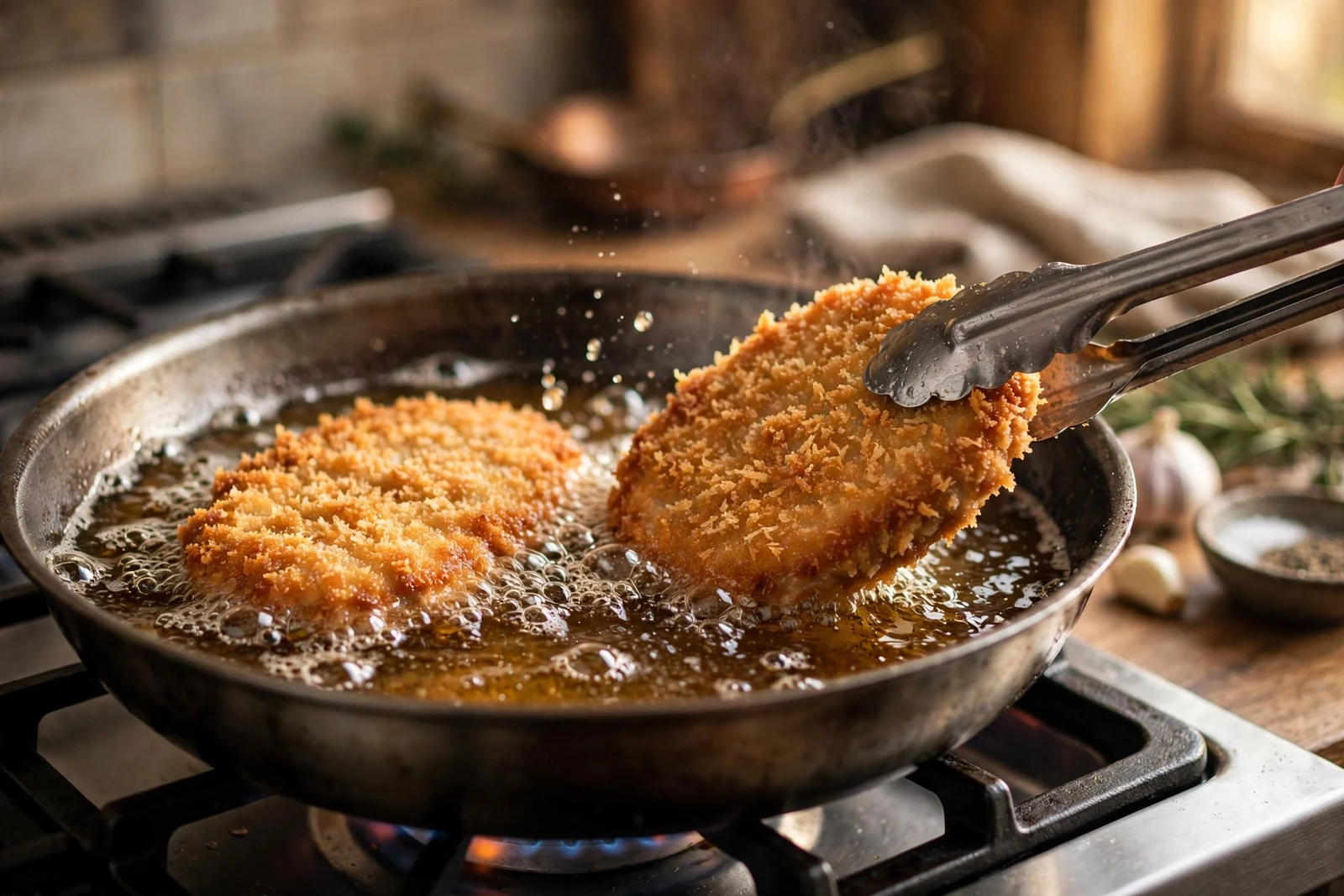
Heat about an inch of neutral oil to 170 C (340 F). A panko crumb dropped in should sizzle and turn golden within seconds. Below that temperature the coating drinks oil instead of crisping, and you get a greasy cutlet. Fry 3 to 4 minutes per side until deep golden, then lift the cutlets onto a wire rack, not a plate, so steam escapes instead of softening the crust.
Cut each cutlet into 3/4-inch strips with one firm press of the knife. Sawing back and forth pulls the breading away; a single press keeps it attached.
The 45-second egg
This is the part that decides the bowl. In a small skillet, about 8 inches, simmer the sliced onion in the sauce mixture until translucent, about 3 minutes, with the lid on. Lay the cutlet strips over the onion, then pour the lightly beaten eggs over everything in two or three passes. Cover and cook on high for 20 to 30 seconds, then turn off the heat while the egg still looks runny in the center. It finishes setting from the pan’s own heat.
Do not wait for the egg to look done in the pan. By the time it does, carryover heat has taken it past soft. Slide the whole thing over a bowl of hot rice and finish with sliced green onion.

Troubleshooting: Fix My Katsudon
Most katsudon problems come down to the egg or the coating, and both are fixable on the next round. Pick what went wrong below for a concrete next step.
HERB & LIME · KITCHEN HELP
Fix My Katsudon
Choose what went wrong to see a practical next step.
Possible cause
What to try next
For next time
From Paul's kitchen. Results vary with pork thickness, oil, and stove heat, adjust timing to your setup.
Quick reference (also works without JavaScript)
The coating went soggy in the simmer
Cause: The cutlet sat in simmering broth too long, and panko softens fast in liquid, so the deep-fried crunch disappears.
Try: Keep the simmer short: warm the cutlet through and set the egg, then lift everything out right away.
Prevent: For a crunchier bowl, place the sliced katsu on the rice first and pour the hot onion, egg, and broth mixture over it, so the coating stays crisp.
The egg turned rubbery
Cause: Beaten egg sets in under a minute over heat; anything longer turns it firm and rubbery, and over-mixing makes it lose its soft, fluffy texture.
Try: Pull the pan off the heat while the egg still jiggles in the center; the residual heat finishes the job.
Prevent: Beat the egg lightly without over-mixing, distribute it over high heat, and give it only 20 to 30 seconds covered before turning off the burner.
The breading slid off the pork
Cause: Excess flour or egg under the panko keeps the layers from gripping, and meat that shrinks during frying pulls the coating loose.
Try: Brush off every bit of excess flour and egg before the panko goes on, and press the crumbs on firmly so they grip.
Prevent: Pound the chops to an even thickness first; this stops the curling and shrinking in hot oil that tears the coating away from the meat.
The cutlet came out greasy instead of crisp
Cause: Oil below about 160 to 175 C lets the panko drink oil instead of crisping, since the coating needs heat to seal.
Try: Drain the cutlet on a wire rack, not stacked on a plate, so steam escapes instead of softening the crust.
Prevent: Bring the oil to about 170 C (340 F) and test it with a breadcrumb, which should sizzle and turn golden within seconds; skim loose crumbs between batches.
The onion stayed raw and crunchy
Cause: The onion needs a few minutes of simmering to turn translucent and sweet; adding the cutlet and egg first never gives it that time.
Try: Give the onion a head start: simmer it in the dashi until fully translucent and tender before the cutlet and egg go in.
Prevent: Use a tight-fitting lid so the broth does not evaporate before the onion softens, and let it cook until fully tender for a sweet flavor.
Katsudon: Japanese Pork Cutlet Rice Bowl
Ingredients
Method
- Pound the pork: place each chop between plastic wrap and pound to an even 1/2 inch thickness. Season both sides with the salt and pepper.
- Bread: set up three shallow dishes with the flour, the beaten egg, and the panko. Dredge each chop in flour, shake off the excess, dip in egg letting the excess drip back, then press firmly into the panko so it grips.
- Fry: pour about 1 inch of neutral oil into a deep skillet and heat to 170 C (340 F). Fry the cutlets 3 to 4 minutes per side until deep golden. Lift onto a wire rack to drain. Cut each cutlet into 3/4-inch strips with one firm press of the knife, no sawing.
- Simmer: in a small skillet (about 8 inches), combine the dashi, soy sauce, mirin, sugar, and sliced onion. Bring to a simmer over medium heat, cover, and cook 3 minutes until the onion is translucent and tender.
- Finish: lay the cutlet strips over the onion in a single layer. Pour the lightly beaten eggs over everything in two or three passes. Cover and cook on high heat 20 to 30 seconds, then turn off the heat while the egg still looks runny in the center; it finishes setting from the pan's own heat. Slide the mixture over bowls of hot rice and scatter with the sliced green onion.
Notes
What to serve with it
Katsudon is a full meal on its own, but a small bowl of classic miso soup on the side makes it feel like a set meal. Something cold and sharp helps too: Japanese cucumber sunomono cuts the richness of the dashi and egg the way pickles cut a rich main everywhere else.
More Japanese recipes
If this bowl worked for you, three more from the same shelf: Oyakodon is the chicken-and-egg cousin, made the same simmer-and-slide way; Gyudon is the other fifteen-minute Japanese weeknight bowl, beef and onion over rice; and Tonkatsu is the cutlet itself, for the nights you want it plain with cabbage and rice.
From the garden
The sliced green onion on top came from a pot on my kitchen windowsill. Green onions are the easiest thing I grow: stand the cut bases in a glass of water and new shoots show up within the week. The full method is in my green onion growing guide.