
There's a reason gyudon counters in Japan are busy at 11 p.m. It's the kind of bowl that asks almost nothing of you: one pan, one simmering pot of sweet-savory broth, and dinner lands on the table in about 25 minutes. Thin slices of beef and soft onions glossed in dashi, soy, and mirin, spooned over hot rice with all that good broth soaking in. When Paul wants a weeknight dinner that tastes like takeout but costs a fraction of it, this is the one he makes.
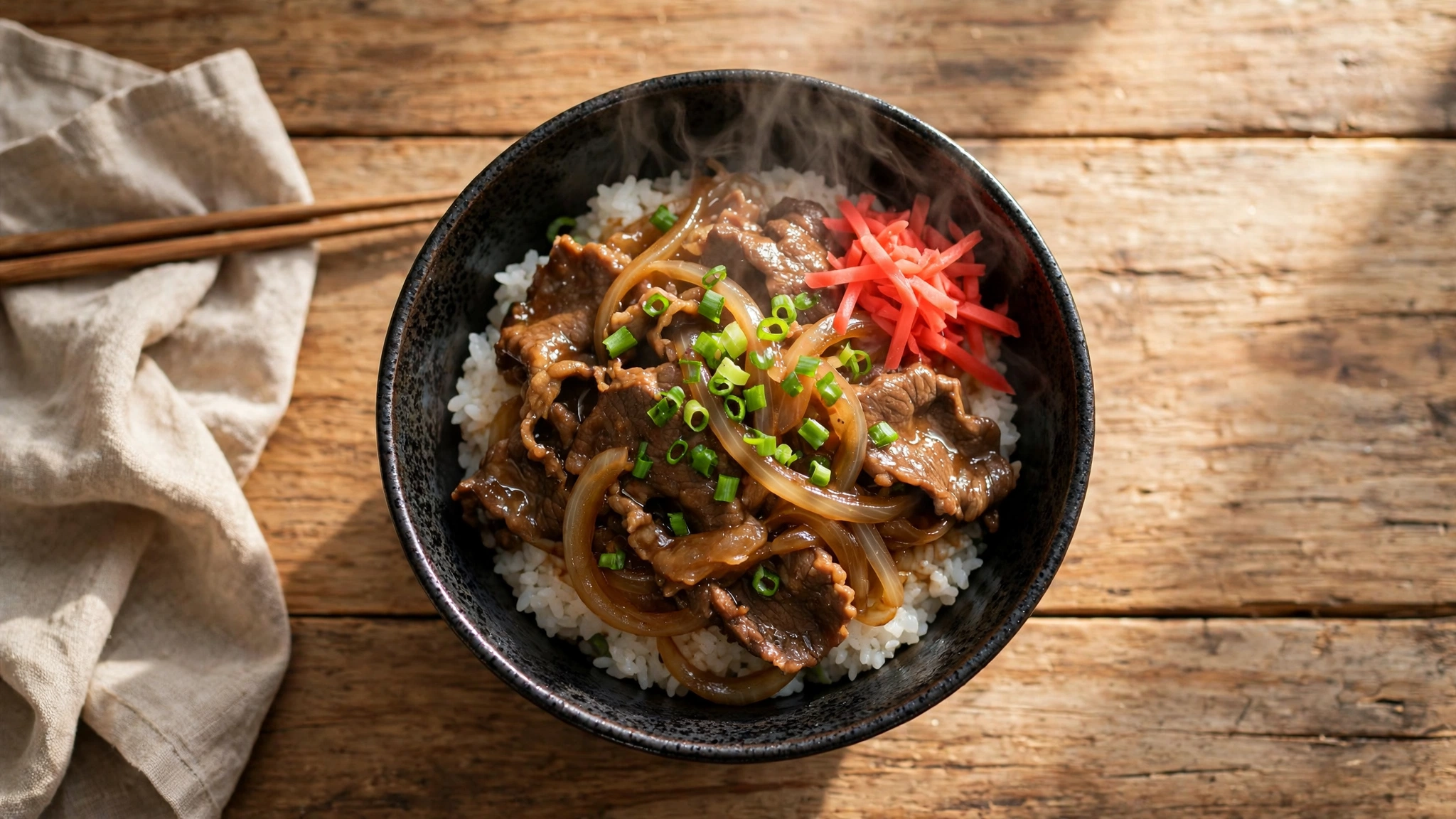
What is gyudon?
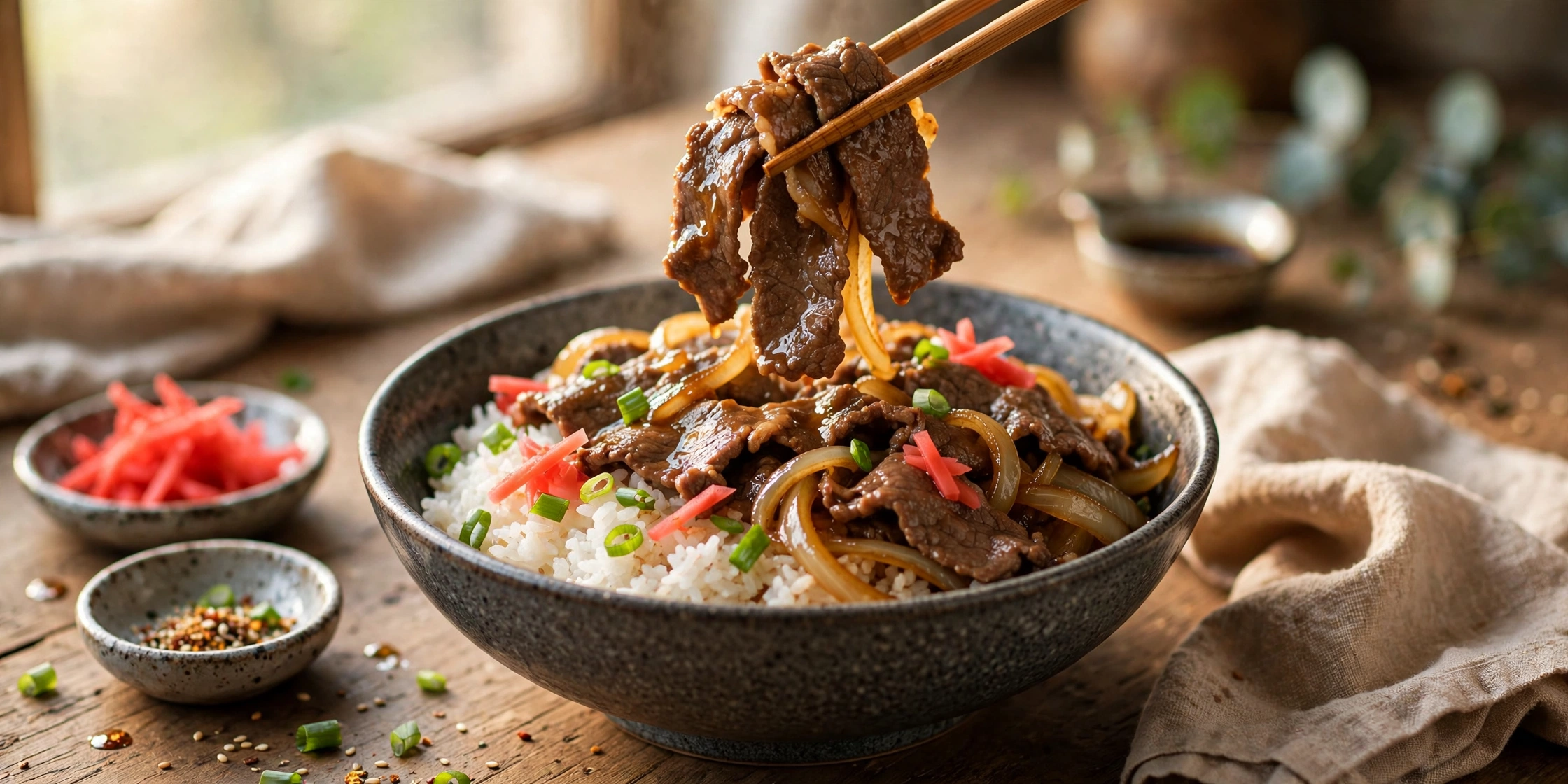
Gyudon (牛丼) is Japan's most famous beef bowl: "gyu" means beef, "don" is short for donburi, a bowl of rice with something on top. It's the signature dish of chains like Yoshinoya, where it's a quick, cheap comfort meal for office workers and students, and it has been that since Yoshinoya opened in Tokyo in 1899. The bowl is simple on purpose: paper-thin beef and sliced onion simmered in a dashi broth seasoned with soy sauce, mirin, sake, and sugar, served over steaming short-grain rice. What you taste is the broth (sweet, salty, deeply savory) and beef so thin it practically melts. A pile of beni shoga (pickled red ginger) on top cuts the richness. Crack a fresh egg over it (tsukimi, "moon-viewing" style) or pour in beaten egg at the end if raw egg isn't your thing.
The broth ratio and timing that matter
Two things decide whether your gyudon tastes like the real thing or like beef soup over rice. First, the simmering liquid: for every 1 cup of dashi, use 3 tablespoons soy sauce, 2 tablespoons mirin, 2 tablespoons sugar, and 1 tablespoon sake. That 1 cup : 3 : 2 : 2 : 1 ratio is the line between broth that sings and broth that's just salty or just sweet. Paul measures it rather than eyeballing it, because soy sauce brands vary enough that eyeballing drifts.
Second, the timing. The onion goes in first and gets a 4-minute head start in the simmering broth. The beef goes in last and needs only about 90 seconds to 2 minutes: thin slices cook almost instantly, and every minute past that tightens them up. This is the mistake that turns gyudon chewy: the beef is not a stew, it's a garnish that happens to be simmered.
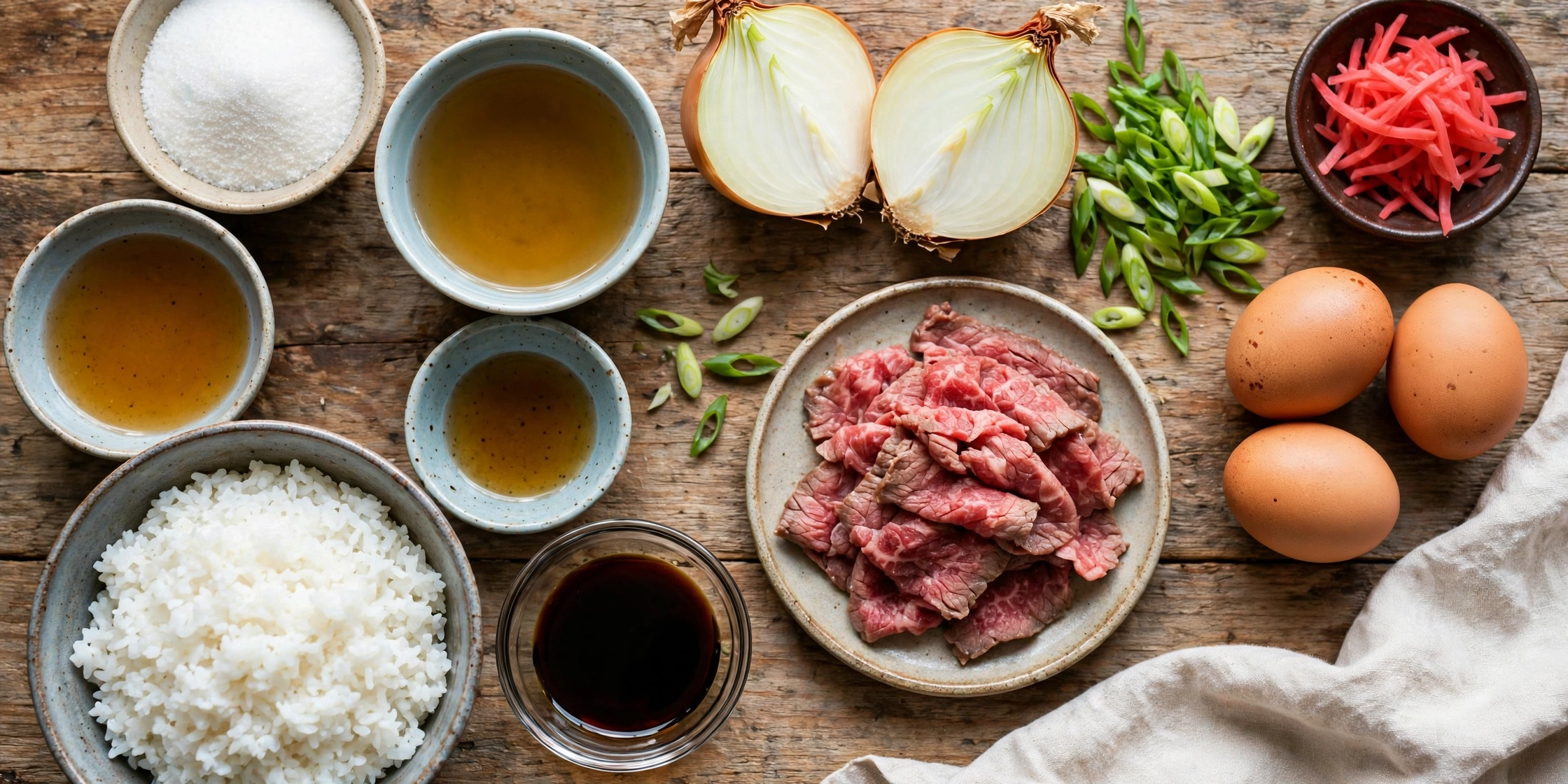
Ingredients
For the simmering broth:
- 1 cup dashi (homemade or 1 cup water + 1 teaspoon hondashi granules)
- 3 tablespoons soy sauce
- 2 tablespoons mirin
- 2 tablespoons sugar
- 1 tablespoon sake
- 1 teaspoon grated fresh ginger
For the bowl:
- 1 pound thinly sliced beef (chuck or ribeye; half-freeze it for 1–2 hours first so you can slice it paper thin (see our guide on how to slice meat paper-thin)
- 1 large yellow onion, sliced into thin half-moons
- 2 eggs, lightly beaten (optional)
- 4 cups hot steamed short-grain rice
- Beni shoga (pickled red ginger), sliced scallions, and shichimi togarashi, for serving
How to make gyudon
- Mix the broth. Combine the dashi, soy sauce, mirin, sugar, sake, and grated ginger in a large skillet or shallow pot. Bring it to a boil over medium-high heat, stirring until the sugar dissolves.
- Soften the onion. Add the sliced onion, lower the heat to a steady simmer, and cook for 4 minutes, until the onion starts to turn translucent and sweet.
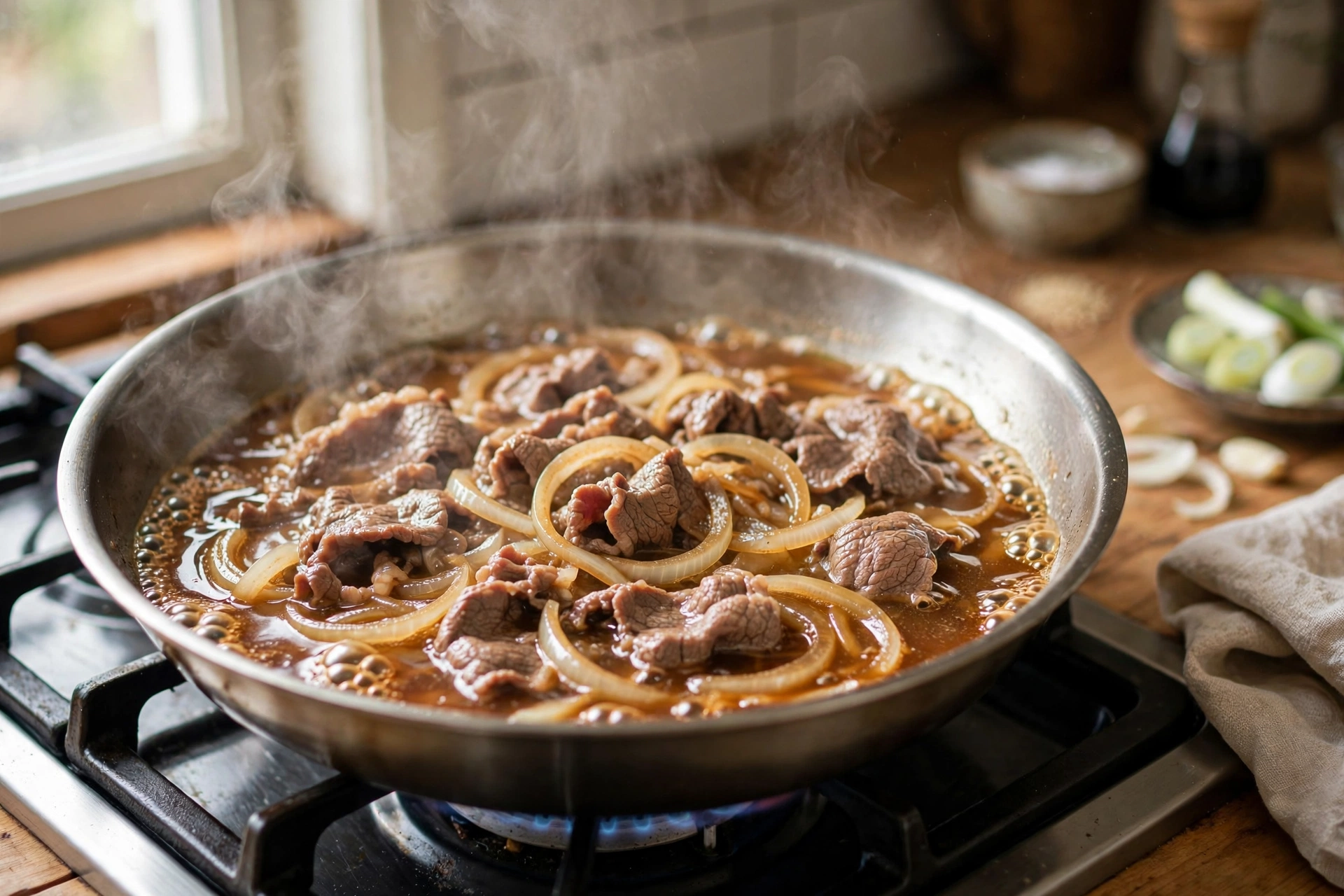
- Add the beef. Lay the beef slices into the simmering broth in a single-ish layer (it's fine if they overlap). Stir gently to separate them. Simmer for 90 seconds to 2 minutes, just until no pink remains.
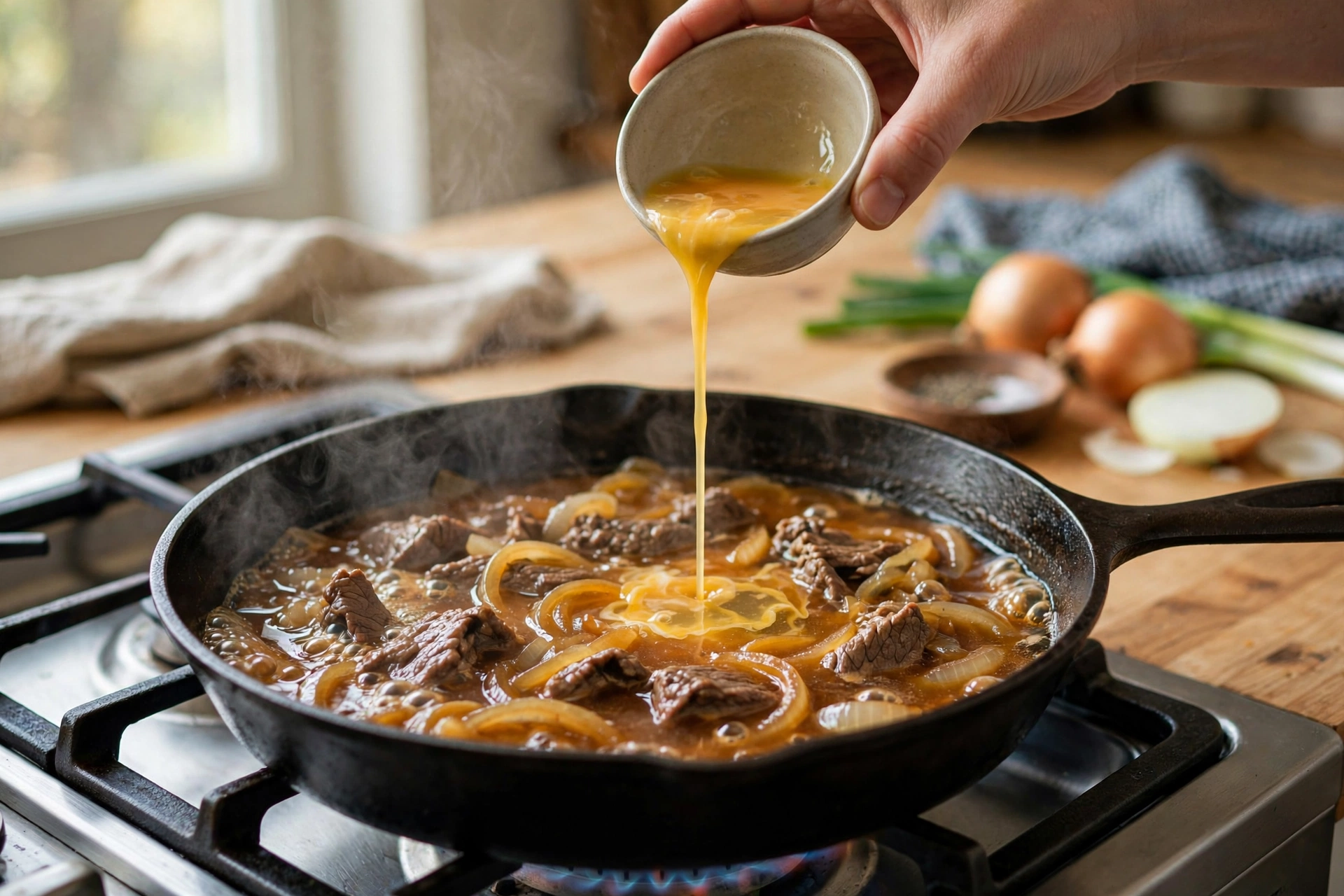
- Add the egg if you like. Pour the beaten egg in a thin stream over the beef, cover, and let it sit off the heat for 1 minute until the egg is just set but still soft.
- Serve. Divide the hot rice among 4 deep bowls. Spoon the beef and onion over the rice with a slotted spoon, then ladle over 2–3 tablespoons of broth per bowl, enough to flavor the rice without drowning it. Top with beni shoga, scallions, and a shake of shichimi.
Leftovers keep well: refrigerate the beef and onion in their broth for up to 3 days, and reheat gently on the stove without boiling, so the beef stays tender. The topping also reheats beautifully over fresh noodles for a quick niku udon.
Troubleshooting: Fix My Gyudon
The most common gyudon problems come down to two variables, time and ratio, and both are easy to fix once you know what went wrong. Pick your issue below for the cause, the fix, and how to avoid it next time.
This troubleshooting guide is not available yet.
Gyudon: Japanese Beef Rice Bowls
Ingredients
Method
- Mix the broth. Combine the dashi, soy sauce, mirin, sugar, sake, and grated ginger in a large skillet or shallow pot. Bring to a boil over medium-high heat, stirring until the sugar dissolves.
- Soften the onion. Add the sliced onion, lower the heat to a steady simmer, and cook 4 minutes, until the onion starts to turn translucent and sweet.
- Add the beef. Lay the beef slices into the simmering broth in a single-ish layer — overlapping is fine. Stir gently to separate them. Simmer 90 seconds to 2 minutes, just until no pink remains.
- Add the egg if you like. Pour the beaten egg in a thin stream over the beef, cover, and let it sit off the heat for 1 minute, until the egg is just set but still soft.
- Serve. Divide the hot rice among 4 deep bowls. Spoon the beef and onion over the rice with a slotted spoon, then ladle over 2–3 tablespoons of broth per bowl — enough to flavor the rice without drowning it. Top with beni shoga, scallions, and a shake of shichimi.
Notes
More Japanese recipes
If this bowl hit the spot, keep going with these: crispy Japanese fried chicken (chicken karaage), a fluffy Japanese rolled omelet (tamagoyaki), a bowl of classic miso soup, and our guide to making dashi from scratch, the broth that starts half of Japanese home cooking.