
Kung pao shrimp lands on the table in about 25 minutes and tastes like the best version of itself: plump shrimp with a real snap, a glossy sauce that coats instead of pools, roasted peanuts for crunch, and dried red chilies bloomed in Sichuan peppercorn oil. It is hot, sour, a little sweet, and it never lasts long in my house.

What Is Kung Pao Shrimp?
Kung pao shrimp is the seafood version of gong bao, a Sichuan stir-fry built on a sweet-sour sauce, dried red chilies, and the numbing tingle of Sichuan peppercorns. The classic version uses chicken, but shrimp cooks even faster and brings a clean sweetness that holds its own against the vinegar and heat.
Sichuan cooks describe the target flavor as “lychee flavor”: no fruit involved, just a balance of sugar and vinegar that lands sweet-tart on the tongue, with heat layered on top. Expect dried chilies for warmth, peppercorns for tingle, and peanuts for crunch. It is not a saucy dish; the glaze should cling to the shrimp rather than pool at the bottom of the bowl.
Ingredients
For the marinade:
- 1 1/2 pounds large shrimp (21/25 count), peeled and deveined, tails on or off
- 1 tablespoon Shaoxing wine
- 1 tablespoon cornstarch
- 1/2 teaspoon fine sea salt
- 1 teaspoon neutral oil

For the sauce:
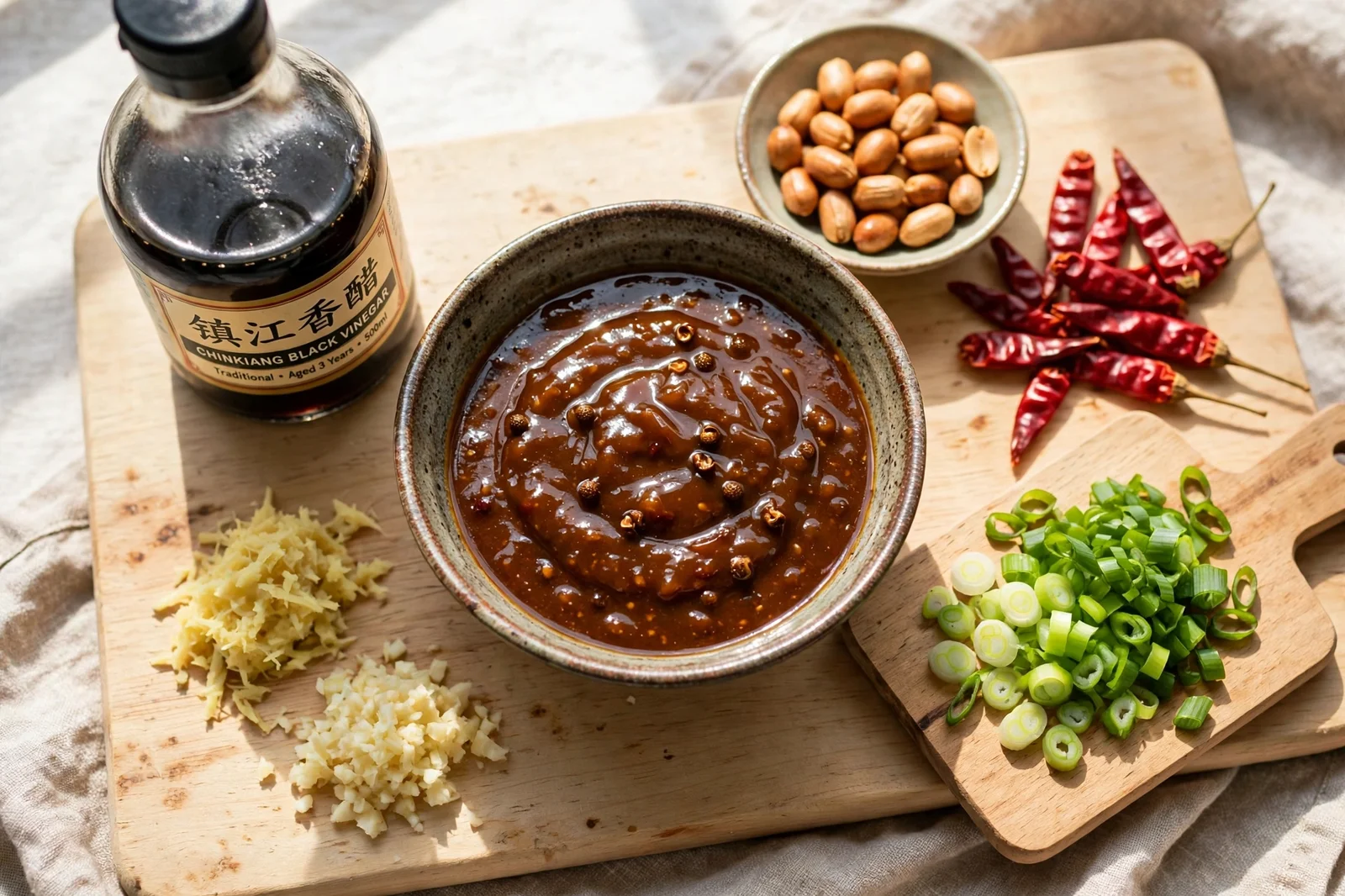
- 2 tablespoons Chinkiang black vinegar
- 2 tablespoons light soy sauce
- 1 tablespoon sugar
- 1 tablespoon Shaoxing wine
- 2 teaspoons cornstarch
- 1/2 teaspoon toasted sesame oil
For the stir fry:
- 3 tablespoons neutral oil (peanut or avocado), divided
- 1 teaspoon Sichuan peppercorns
- 8 to 10 dried red chilies, halved lengthwise with seeds shaken out
- 4 cloves garlic, thinly sliced
- 1 tablespoon minced fresh ginger
- 4 scallions, cut into 1-inch pieces (white and green parts separated)
- 1/2 cup roasted unsalted peanuts
A word on the vinegar: Chinkiang black vinegar is the malty, slightly sweet one that gives kung pao its signature tang. White vinegar is too sharp here. If black vinegar is new to your pantry, my Black Vinegar Substitutes for Every Situation guide walks through the options.
How to Make Kung Pao Shrimp
- Marinate the shrimp. Pat the shrimp dry with paper towels. Toss them with the Shaoxing wine and salt, sprinkle the cornstarch over, and toss again until every shrimp wears a thin coating. Drizzle with the oil and let them rest 15 minutes while you prep the rest. That cornstarch layer is light velveting: it seals in moisture so the shrimp stay juicy in the hot wok.
- Mix the sauce. Whisk the black vinegar, soy sauce, sugar, Shaoxing wine, cornstarch, and sesame oil in a small bowl until the sugar dissolves. It will look thin; the cornstarch thickens it in the wok. Stir the bowl again right before it goes in, because starch sinks fast.
- Bloom the spices. Heat 1 tablespoon of the oil in a wok or large skillet over medium heat. Add the Sichuan peppercorns and toast about 30 seconds until fragrant. Add the chilies and toss 15 to 20 seconds more, until they darken a shade and smell toasty. Scoop the spices out with a slotted spoon and set them aside, leaving the oil in the wok. Pulling the spices out now keeps them from burning while the shrimp sears. This one habit fixes most bitter kung pao.
- Sear the shrimp. Turn the heat to high and add 1 tablespoon of the oil. Lay the shrimp in a single layer and cook 60 to 90 seconds per side, until pink and just opaque. Do not crowd the pan; work in two batches if needed. Move the shrimp to a plate. They should be just underdone; they finish in the sauce.

- Build the base. Add the remaining tablespoon of oil to the wok. Add the garlic, ginger, and scallion whites and stir-fry 20 to 30 seconds, until fragrant but not browned.
- Glaze it. Re-whisk the sauce and pour it in. Let it simmer 30 to 60 seconds, stirring, until it turns glossy and coats the back of a spoon.
- Bring it together. Return the shrimp and the reserved chilies and peppercorns to the wok. Toss 30 seconds to coat everything in the glaze. Take the wok off the heat, fold in the peanuts and scallion greens, and serve over steamed rice.
Notes From Paul’s Kitchen
- My sauce ratio runs 2:1:2 in tablespoons: 2 black vinegar, 1 sugar, 2 light soy. That extra splash of vinegar is deliberate. The dish was built on a sweet-sour balance, and most takeout versions lean too sweet.
- Shrimp doneness you can see: pull them at the C, not the O. A loose C-curl means the proteins are set but still tender. Once the shrimp curl into a tight O, they have seized, and no sauce will bring the snap back.
- Chili heat adjusts without breaking the dish. Shake the seeds out for warmth without fire, or leave them in for the full punch. Keep the peppercorn count the same; the tingle is the soul of the dish either way.
- Dried chilies fade with age. If yours are glossy and fresh, 8 is plenty. If they have sat in your pantry for a year, use 10 to 12 and accept they will be milder.
If you enjoy this kind of numbing heat, my Mapo Eggplant leans on the same Sichuan peppercorn tingle, and Dan Dan Noodles put it over sesame noodles.
Troubleshooting: Fix My Kung Pao Shrimp
The fastest way to get good at kung pao is to cook it wrong once or twice. These are the five failures that come up most often in my kitchen, with the cause and the fix for each. If the widget below has not loaded its answer yet, the same five fixes are covered in the Notes section above.
HERB & LIME · KITCHEN HELP
Fix My Kung Pao Shrimp
Possible cause
What to try next
For next time
From Paul's kitchen. Results vary with shrimp size, oil, and stove heat, adjust timing to your setup.
Quick reference (also works without JavaScript)
The shrimp turned out rubbery
Cause: Shrimp cook in a flash, and once they curl into a tight ball the proteins have seized. Overcooking past that point turns them tough, and no sauce can undo it.
Try: Stir the shrimp hard and fast in a hot wok, about 60 to 90 seconds per side, and pull them the moment they turn opaque. Finish cooking them in the final sauce toss, not in the sear.
Prevent: Sear the shrimp first, move them to a plate, and add them back only for the last 30 seconds after the sauce thickens. Large shrimp need less than three minutes of total heat.
The sauce is thin and slides off everything
Cause: Cornstarch only thickens once it boils, and it settles in the mixing bowl. Pouring unmixed sauce into a lukewarm wok gives a watery wash instead of a glaze.
Try: Whisk 1 teaspoon of cornstarch with 1 tablespoon of cold water until smooth, stir it into the simmering sauce, and give it a full minute or two over heat until it thickens.
Prevent: Whisk the cornstarch into the sauce bowl before it ever hits the wok, and stir the bowl again right before pouring, because starch sinks to the bottom fast.
The whole dish tastes bitter
Cause: Dried chilies burn in seconds in screaming-hot oil, and burnt capsicum turns the whole dish acrid and bitter.
Try: There is no saving a burnt batch, start the chilies over. A bitter batch will never taste right.
Prevent: Warm the oil over medium-low heat, add the chilies, and toast them only about 30 seconds until fragrant, then turn the heat up for the rest of the stir fry. If the oil smokes, it is too hot.
The sauce tastes too sour or too sweet
Cause: Kung pao sauce lives on the sweet-sour balance of sugar and black vinegar. Tipping the ratio either way flattens the dish into one-note sweet or one-note sour.
Try: Taste the sauce in the wok: if it is too sweet, add a small splash of black vinegar; if it is too sour, add a small pinch of sugar. Adjust in small moves, one at a time.
Prevent: Keep the classic balance of vinegar and sugar close to the recipe on your first pass, then tune to your taste. Taste before the shrimp go back in, when a fix still works cleanly.
The peanuts went soft and chewy
Cause: Peanuts absorb moisture the longer they sit in hot sauce. Added early or stored in the leftovers, they lose their crunch.
Try: If the dish is already cooked, there is no fix for this batch, but next time add them last. For leftovers, store the shrimp and sauce separately and toss in fresh peanuts when reheating.
Prevent: Fold the peanuts in only after the wok comes off the heat, right before serving. Keep them in a separate bag for leftovers, never stored in the sauce.
Kung Pao Shrimp
Ingredients
Method
- Marinate the shrimp: pat dry, toss with Shaoxing wine and salt, sprinkle with cornstarch and toss to coat, drizzle with oil, and rest 15 minutes.
- Mix the sauce: whisk the black vinegar, soy sauce, sugar, Shaoxing wine, cornstarch, and sesame oil until the sugar dissolves. Stir again right before using, since the starch settles.
- Bloom the spices: heat 1 tablespoon oil in a wok over medium heat. Toast the Sichuan peppercorns about 30 seconds until fragrant, add the chilies and toss 15 to 20 seconds until toasty. Scoop the spices out and set aside, leaving the oil in the wok.
- Sear the shrimp: turn the heat to high, add 1 tablespoon oil, and cook the shrimp in a single layer 60 to 90 seconds per side until pink and just opaque. Move to a plate; they finish in the sauce.
- Build the base: add the remaining tablespoon of oil to the wok. Stir-fry the garlic, ginger, and scallion whites 20 to 30 seconds until fragrant but not browned.
- Glaze it: re-whisk the sauce, pour it in, and simmer 30 to 60 seconds, stirring, until glossy and coating the back of a spoon.
- Bring it together: return the shrimp and reserved spices to the wok and toss 30 seconds to coat. Take the wok off the heat, fold in the peanuts and scallion greens, and serve over steamed rice.
Notes
More Chinese Recipes
- Dan Dan Noodles: Sichuan Noodles in Spicy Sesame Sauce – another Sichuan classic built on the same peppercorn tingle.
- Mapo Eggplant (Yu Xiang Qie Zi): Sichuan Spicy Eggplant – the eggplant cousin of this dish’s flavor profile.
- Singapore Noodles: Curried Rice Vermicelli – a quick stir-fried noodle supper with curry warmth.
- Black Vinegar Substitutes for Every Situation – what to use when Chinkiang vinegar is not in the pantry.
Serve it hot, straight from the wok, with rice to catch the glaze.