
Mapo eggplant is the dish that made me stop treating eggplant as a filler vegetable. Thick chunks of Chinese eggplant get seared until golden and silky, then folded into a sauce of ground pork, fermented bean paste, and Sichuan pepper that clings instead of pooling. It eats like mapo tofu’s bolder cousin, and it goes over rice in exactly the way weeknight dinners should.

What is mapo eggplant?
The Chinese name is yu xiang qie zi, literally “fish-fragrant eggplant.” No fish is involved. Yu xiang is a Sichuan flavor profile built on fermented bean paste, pickled chiles, garlic, ginger, sugar, and vinegar: a sauce once used to cook fish, and the name stuck even as cooks applied it to everything from eggplant to shredded pork. Think of it as a sweet-sour-spicy balance rather than a single ingredient.
Mapo-style versions add ground pork and doubanjiang, borrowing the architecture of mapo tofu: seared main ingredient, pork cooked hard, bean paste bloomed in oil, finished with ground Sichuan peppercorns. The difference is in the first step. Tofu needs gentle handling; eggplant wants a hard sear, because its spongy flesh turns creamy only after it browns. Get that sear right and the eggplant drinks up the sauce instead of turning to mush in it.
Three rules from my kitchen
I have cooked this dish a dozen times this year, and three things separate the good batches from the sad ones.
1. The 2:1 ratio. One pound of eggplant to eight ounces of ground pork. Less pork and the sauce feels thin and salty; more pork and it eats like a pork dish with eggplant garnish. At 2:1 the pork seasons the eggplant instead of replacing it.
2. Sear until the edges turn glassy, not just golden. Eggplant needs about 7 minutes in a single layer, untouched, in genuinely hot oil. You are waiting for the moment the cut edges turn translucent and the surface tightens. Pull it early and the pieces steam into sponge; give them the full sear and they go creamy inside with browned skin outside.
3. Add the slurry in thirds. Do not dump the whole cornstarch slurry in at once. Drizzle a third into the simmering sauce, wait ten seconds, and look: the sauce should start to coat the wok instead of running. Stop adding the moment a lifted piece of eggplant leaves a clean trail through the sauce. Leftover slurry goes in the sink, not the wok.

Building the sauce in the right order
The sauce builds in layers, and the order matters because each ingredient burns at a different point. Ginger and garlic go in first, just until fragrant, about a minute each. Then the pork, on the highest heat you have, broken into small crumbles and cooked through. Only then the ground Sichuan peppercorns and doubanjiang, stirred for about a minute until the oil turns red and smells toasty. Peppercorns added earlier scorch and turn the whole sauce bitter, a lesson I learned once and never repeated.
Fermented black beans go in next with the chicken stock, chili oil, and sugar, then the seared eggplant returns for a covered five minutes so the pieces finish cooking through and start absorbing the sauce. The slurry thickens last. Scallions go in off the heat so they stay bright. If you already make Chinese garlic eggplant, this is the same pan, the same sear, just a louder, porkier sauce.

How to make mapo eggplant
The full quantities are in the recipe card below. Here is the flow:
- 1. Cut the eggplant into 1-inch chunks. Mince the ginger and garlic. Rinse the fermented black beans and crush them lightly with the side of a knife. Grind the Sichuan peppercorns. Stir the cornstarch with the water.
- 2. Heat 3 tablespoons of oil in a wok or large skillet over medium-high heat until it shimmers. Add the eggplant in a single layer (work in two batches if needed) and sear 7 to 8 minutes without moving the pieces until golden and glassy at the edges. Transfer to a plate.
- 3. Add the remaining oil, the ginger, and the garlic. Stir-fry about 1 minute each until fragrant but not browned. Add the pork on high heat and cook, breaking it into small crumbles, until no pink remains, about 3 minutes.
- 4. Add the ground Sichuan peppercorns and doubanjiang. Stir constantly for about 1 minute until the oil turns red and fragrant.
- 5. Add the black beans, chicken stock, chili oil, sugar, and sesame oil. Bring to a simmer.
- 6. Return the eggplant to the wok. Cover and cook 5 minutes, until the eggplant is tender and has started to absorb the sauce.
- 7. Re-stir the slurry. Drizzle in a third, simmer, and repeat until the sauce glazes the eggplant; you may not need it all. Fold in the scallions and serve.
Taste before you salt. The doubanjiang is the salt in this dish, and the soy-free sauce needs nothing more. If the sauce tastes flat, a teaspoon of Chinkiang black vinegar at the end wakes it up. For a vegetarian version, skip the pork and add a handful of diced king oyster mushrooms; use vegetable stock.
Troubleshooting: Fix My Mapo Eggplant
Most mapo eggplant failures come from three places: eggplant handling, sauce balance, or pan heat. Pick what went wrong below for a concrete next step.
HERB & LIME · KITCHEN HELP Choose what went wrong to see a practical next step. From Paul's kitchen. Results vary with eggplant size, oil, and stove heat, adjust timing to your setup. Quick reference (also works without JavaScript) Cause: Eggplant flesh is mostly water with a spongy structure; underheated or crowded pans let it soak up oil instead of searing. Try: Lift the pieces out immediately and drain on paper towels. Serve right away, or give them a 1-minute flash back in a hot pan before saucing. Prevent: Sear at genuinely high heat (oil shimmering) in a single layer, working in batches and never crowding the pan, about 7 minutes per batch, undisturbed. Cause: Polyphenol oxidase enzymes oxidize on contact with air, the same browning as cut apples. Try: Nothing is needed, the browning does not affect taste and disappears once the eggplant is cooked. Prevent: Cut the eggplant right before it goes into the pan. If prepping ahead, toss the pieces with a few drops of lemon juice or vinegar. Cause: Doubanjiang is intensely salty on its own (about 200 mg sodium per teaspoon), combining it with full soy sauce and added salt double- or triple-counts the salt. Try: Do not add more paste. Brighten the sauce with a splash of black vinegar and a pinch of sugar, and thin it with a little stock or water. Prevent: Treat doubanjiang as the salt of the dish: reduce added salt and go easy on soy sauce until you have tasted the finished sauce. Cause: Doubanjiang scorches quickly over high heat, and scorched bean paste turns bitter; burnt Sichuan peppercorns add bitterness too. Try: Bitter paste cannot be rescued, discard the sauce and start over. Serving it will taint the whole dish. Prevent: Bloom the doubanjiang over moderate heat with constant stirring, only until the oil turns red and fragrant (about 1 minute). Add the Sichuan peppercorns after the pork is cooked so they do not burn. Cause: Too much liquid for the starch, the slurry dumped in all at once or added off the boil, the eggplant shedding water, or excess frying oil left in the wok never emulsified. Try: Skim the visible oil with a spoon. Re-stir the cornstarch slurry, drizzle it into the simmering sauce, and simmer uncovered until it glazes the eggplant. Prevent: Measure the stock (about 1 cup per pound of eggplant), pour off extra frying oil before building the sauce, and add the slurry in stages, a third at a time, until the sauce clings.Fix My Mapo Eggplant
Possible cause
What to try next
For next time
The eggplant came out soggy and oil-logged
The cut eggplant browned before it hit the pan
The sauce is too salty
The sauce tastes bitter
The sauce is thin and watery with oil floating on top
Mapo Eggplant (Yu Xiang Qie Zi): Sichuan Spicy Eggplant
Ingredients
Method
- Cut the eggplant into 1-inch chunks. Mince the ginger and garlic. Rinse the fermented black beans and crush them lightly with the side of a knife. Grind the Sichuan peppercorns. Stir the cornstarch into the cold water and set the slurry aside.
- Heat 3 tablespoons of the oil in a wok or large skillet over medium-high heat until shimmering. Add the eggplant in a single layer, working in two batches if needed, and sear 7 to 8 minutes without moving the pieces, until golden and glassy at the edges. Transfer to a plate.
- Add the remaining 2 tablespoons of oil to the wok with the ginger and garlic. Stir-fry about 1 minute each until fragrant but not browned. Add the pork on high heat and cook, breaking it into small crumbles, until no pink remains, about 3 minutes.
- Add the ground Sichuan peppercorns and doubanjiang. Stir constantly for about 1 minute, until the oil turns red and smells toasty.
- Add the black beans, chicken stock, chili oil, sugar, and sesame oil. Bring to a simmer, about 1 minute.
- Return the eggplant to the wok. Cover and cook 5 minutes, until the eggplant is tender and has started to absorb the sauce.
- Re-stir the slurry, then drizzle in a third and simmer 10 seconds. Repeat until the sauce glazes the eggplant — you may not need it all. Fold in the scallions and serve immediately over steamed rice.
Notes
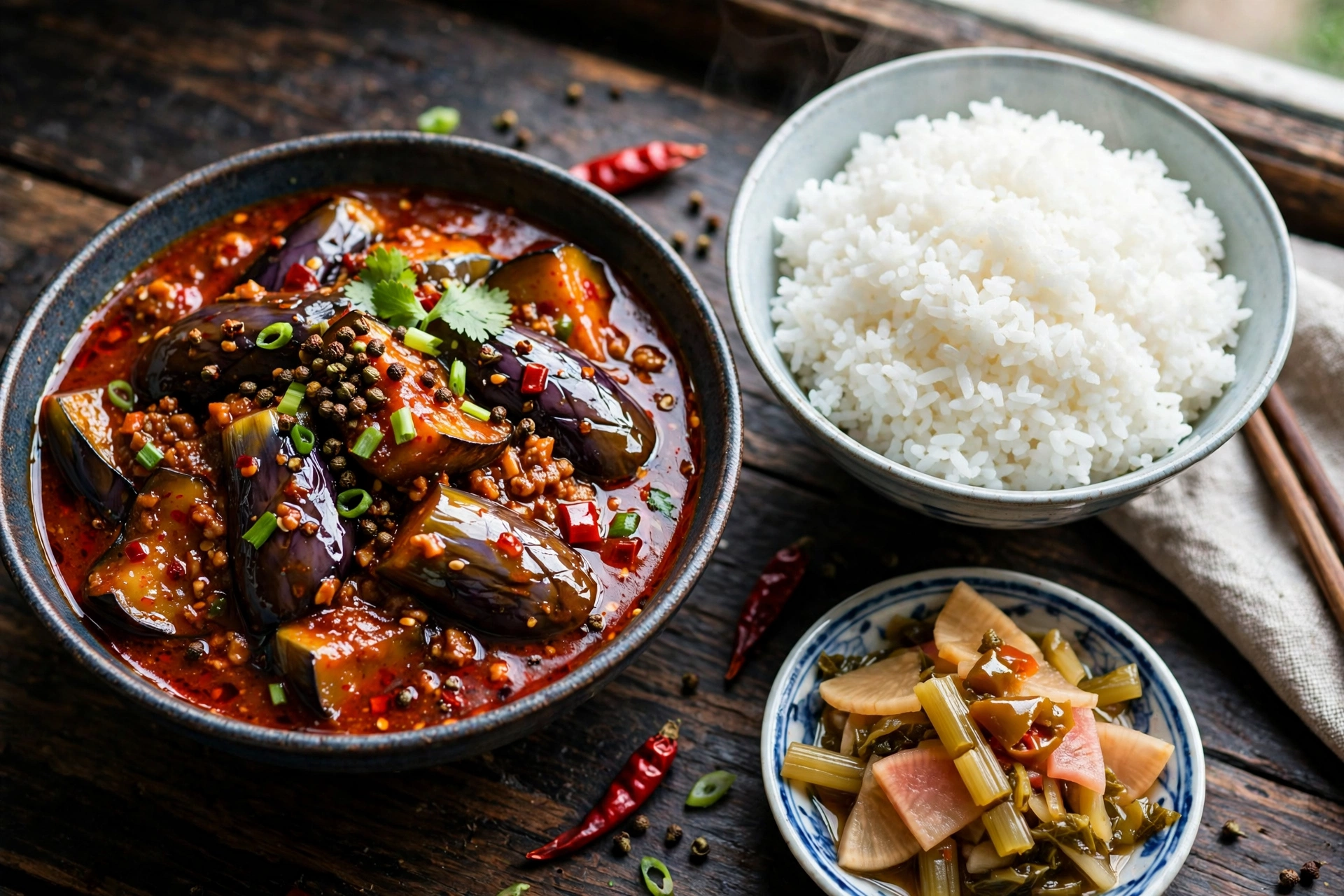
What to serve with it
Mapo eggplant belongs over steamed rice. The sauce is the point, and plain jasmine rice is the vehicle. A cold, sharp side balances the heat: my smashed cucumber salad takes five minutes and cuts the richness the way it should. Serve the dish straight from the wok; it holds heat well but loses its gloss after about fifteen minutes on the table.
More Chinese recipes
If this one worked for you, three more from the same shelf: Mapo Tofu is the original that this dish borrows its architecture from; Kung Pao Chicken is the other Sichuan weeknight classic built on the same doubanjiang base; and Chinese Smashed Cucumber Salad is the cold counterpoint both dishes deserve beside them.
From the garden
The scallion greens on top came from a pot on my kitchen windowsill. Green onions are the easiest thing I grow: set the cut bases in a glass of water and they send up new shoots within a week. The full method is in my green onion growing guide.