
A mortar and pestle does two jobs that look simple and are hard to fake: it crushes dry spices into a coarse powder, and it bruises wet ingredients into a paste. No single substitute does both jobs equally well. The trick is to match the tool to the job at hand, not to force one tool to do everything. A spice grinder beats a mortar for dry spices. A knife flat beats a grinder for garlic. Pick by the ingredient, and the result comes out close to the original.

The short answer
- Dry spices: use a small electric spice grinder, or a coffee grinder kept only for spices. Grind in 2 to 3 second pulses and shake the jar between pulses.
- Garlic and ginger: use the flat side of a large knife. Smash, then chop, then drag the flat side across the pile with a pinch of salt.
- Small amounts of paste: use a sturdy mug or a small bowl with the end of a rolling pin. Work in small batches and scrape the sides often.
- Herbs and soft ingredients: use a knife and a pinch of salt, or a fork in a shallow bowl. Do not use a blender for a small amount: the blades spin without catching it.
- A mortar stays strongest for: Thai curry pastes and sambals, where pounding in stages builds texture that a grinder flattens. Our method for those pastes is in how to use a mortar and pestle for curry pastes.
Dry spices: spice grinder
A spice grinder is the best substitute for dry spices, and in one way it is better than a mortar: it grinds faster and more evenly. Toast whole spices in a dry pan first until they smell fragrant, usually 1 to 2 minutes over medium heat, shaking the pan often. The toasting and grinding steps are laid out in how to toast and grind whole spices. Cool them fully before grinding. Hot spices clump and steam in the jar.
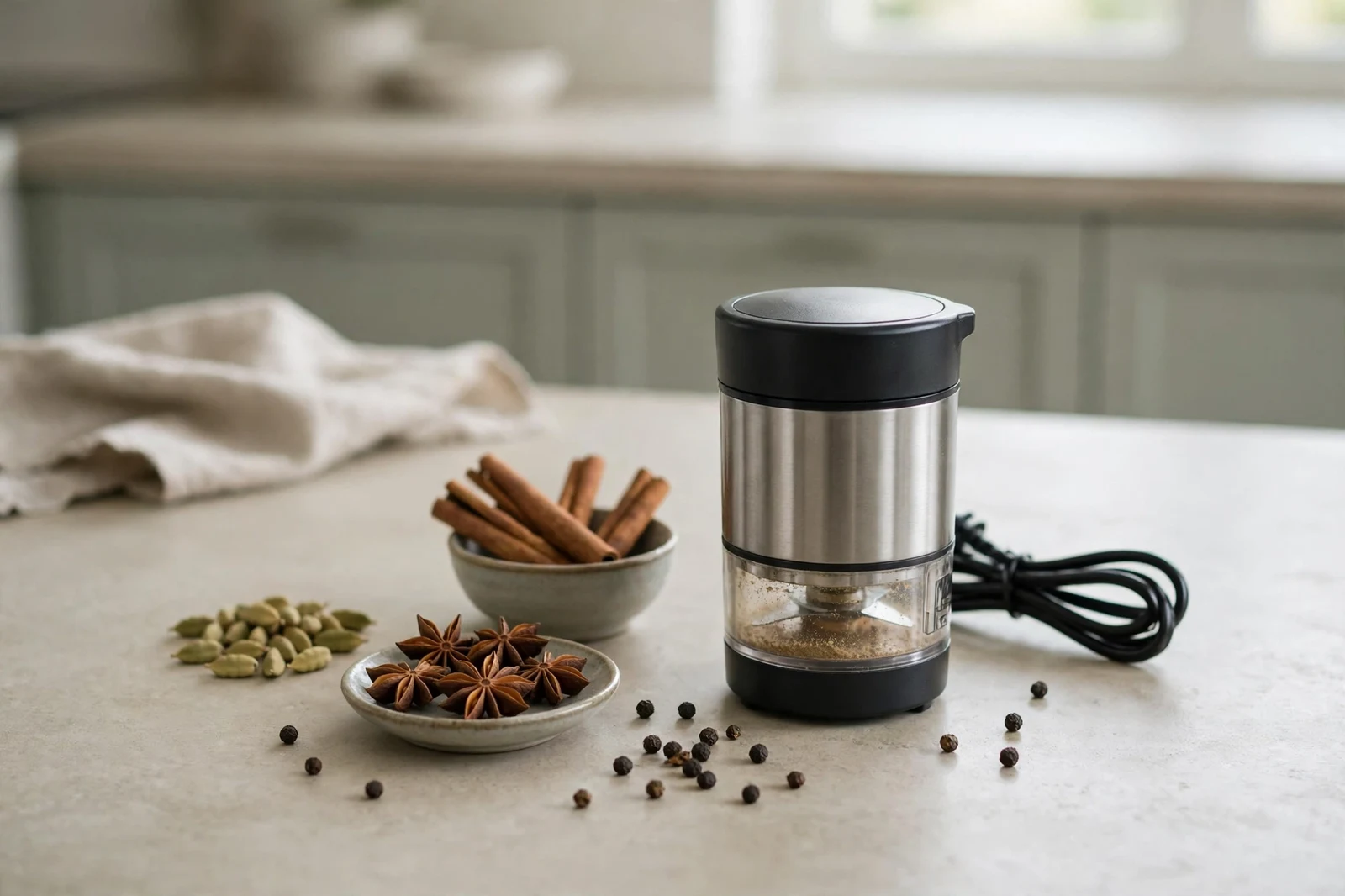
Grind in short pulses, not one long run. A long run heats the spices and turns them dusty instead of coarse. For a curry powder, 4 to 6 pulses of 2 seconds each, shaking the jar between pulses, gives a coarse grind close to a mortar’s. For a fine powder, keep pulsing and check every 3 pulses, since a grinder goes from coarse to fine fast.
One rule keeps the grinder useful: never grind coffee in the same grinder. Coffee oils coat the jar and flavor the next batch of spices. If you only have one grinder, wipe the jar with a dry cloth and grind a tablespoon of dry rice first to pick up residue, then wipe again.
If you have no grinder, a zip bag and a rolling pin work for dry spices. Put the spices in a bag, press out the air, lay it flat, and roll firmly, then gather the bag and roll again. It takes longer and the grind stays coarser, which suits rustic rubs and whole-spice curries better than fine powders.
Garlic and ginger: knife flat
For garlic, a knife flat beats every other substitute. Lay a clove flat on a board, set the flat side of a large knife over it, and press down with the heel of your hand. The skin slips off, and the clove flattens. Chop it, add a pinch of salt, then drag the flat side across the pile, pressing and scraping, until it turns to paste. The salt acts as grit and helps break the fibers down.

Ginger works the same way, with one change: peel it first, slice it thin across the grain, then smash and chop. Unpeeled ginger skin stays stringy in a paste. For a small amount of ginger paste, a fine grater also works, but grate onto a board, not into a bowl, so you can scrape up the juice with the pulp.
Pastes in small amounts: mug and rolling pin
A sturdy mug, used upside down, or a small heavy bowl with the end of a rolling pin, handles a small paste. Put the hardest ingredients in first: chilies and lemongrass, then garlic and shallots, then soft herbs last. Pound in short bursts, scrape the sides with a spoon, and add a splash of water only if the paste will not move. Too much water turns a paste into a sauce that will not fry properly in a curry.
Work in batches no bigger than 2 to 3 tablespoons at a time. A mug has no room to move, so a large batch stays chunky at the edges and mushy in the center. Two small batches, pounded one after the other and mixed together, beat one large batch every time.

For a larger paste, a food processor works, but it needs a minimum amount to catch the blades, usually at least 1 cup of ingredients. Below that, the blades spin air. Add a tablespoon of oil or water to help it move, and stop often to scrape the sides. A processor paste tastes fine, but it stays smoother and wetter than a pounded paste, so fry it a minute or two longer to drive off the extra liquid.
Herbs: knife and salt
Soft herbs do not need pounding. For basil, mint, or cilantro that will go into a salad or a finishing sauce, chop with a knife and a pinch of salt, then let the salt sit for a minute before chopping again. The salt draws out moisture and softens the leaves without turning them black, which is what happens when herbs are overworked in a blender.
For a pesto-style sauce, a fork in a shallow bowl works for a single serving: tear the leaves, add garlic paste made with a knife flat, add oil a little at a time, and mash with the fork until it holds together. It will not be as smooth as a mortar version, but for one serving the difference is small.
What not to use
- A blender for a small amount: the blades miss it, and you end up scraping the jar for a teaspoon of paste.
- A pepper mill for wet ingredients: it clogs, and the wet paste rusts the mechanism.
- A plastic bag with a hammer for garlic: it works, but the bag often splits and the mess is worse than the time saved. A zip bag with a rolling pin, kept flat on a board, is the safer version of the same idea.
1 thought on “Mortar and Pestle Substitutes for Every Situation”