
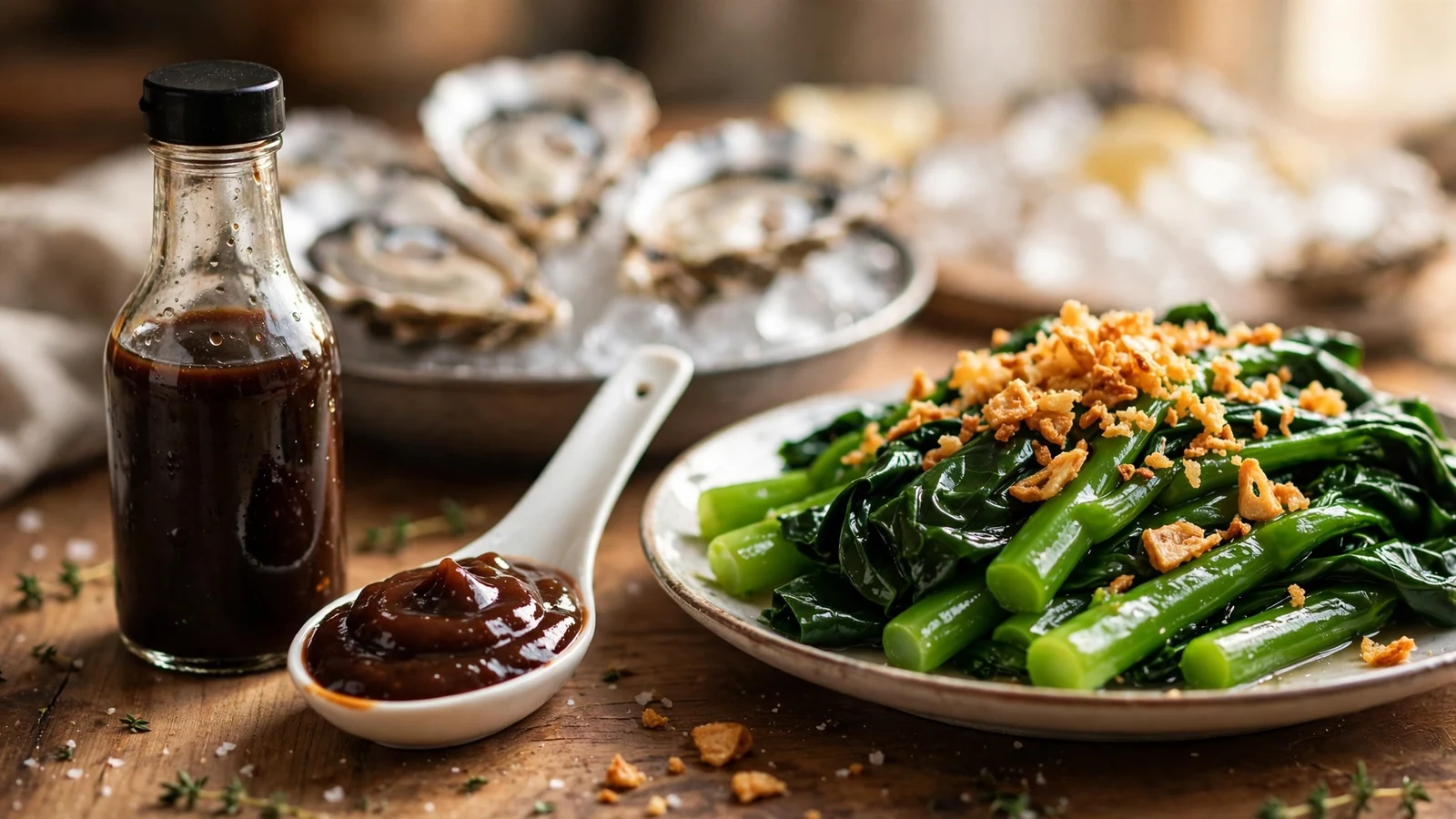
Open a Cantonese home fridge and you will almost always find a bottle of oyster sauce next to the soy sauce. It is thick, dark, glossy, and a little mysterious if you grew up sprinkling it only from takeout packets. What is it actually made of? Why do some bottles cost two dollars and others twelve? And why does a teaspoon of it make a plain plate of greens taste like it came from a restaurant wok?
This guide answers all of that: how oyster sauce is made, how to read a label and pick a good bottle, how it differs from the sauces it sits beside, when a vegetarian version is the better call, and how to use it at home without turning every dish sweet or muddy.
What Oyster Sauce Actually Is
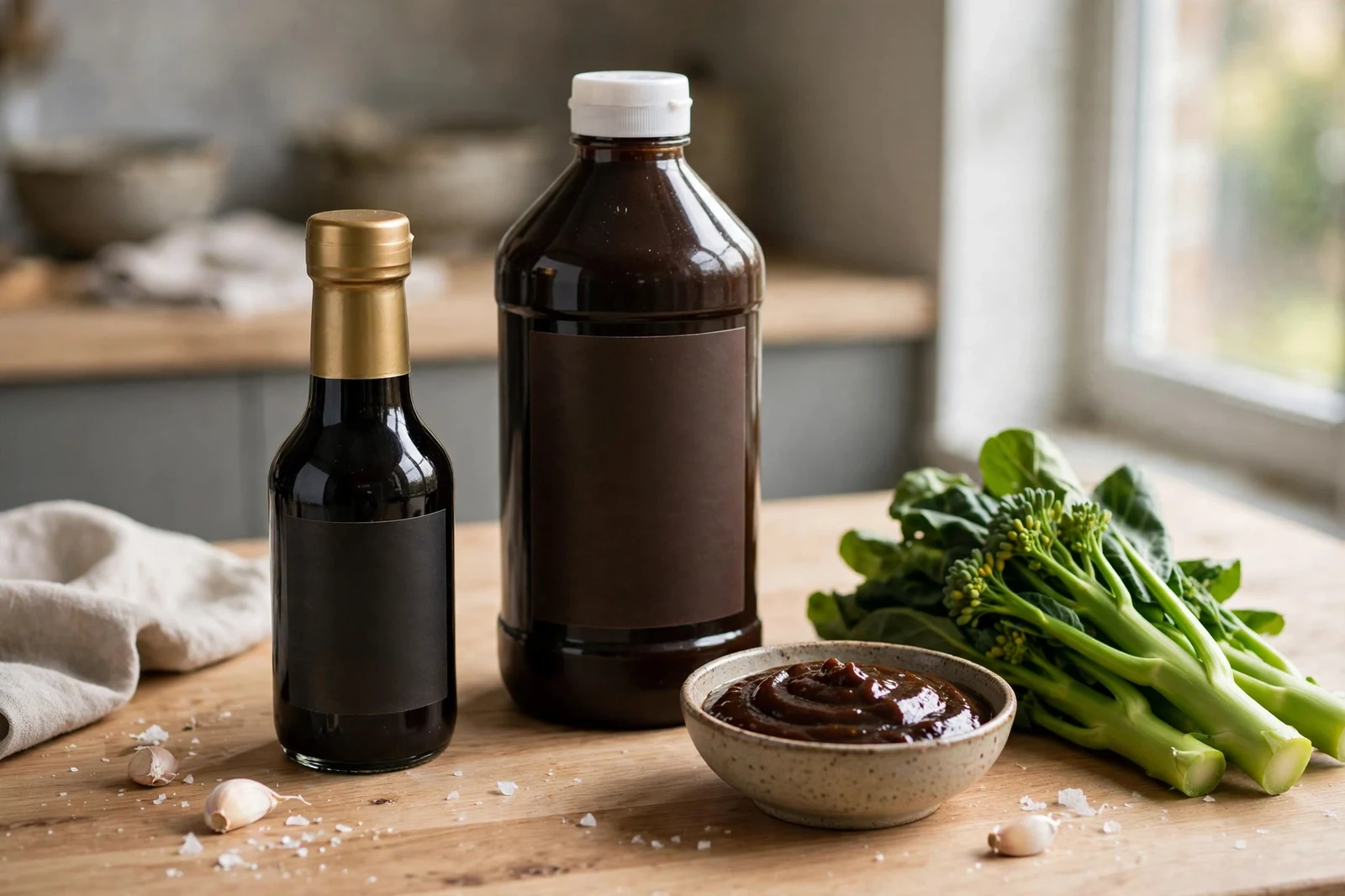
Traditional oyster sauce starts as oyster extract — the cooking liquid from shucked oysters, simmered down until it concentrates into something deeply savory and slightly sweet. That extract is then seasoned with salt, a little sugar, and usually a starch thickener so it coats food with a glossy sheen.
That sheen is the point. Oyster sauce is not mainly a salt bomb like soy sauce. A good one tastes round and rich first: a deep savory body, a gentle sweetness underneath, and just enough salt to season. It should pour slowly, look dark mahogany in a spoon, and smell faintly of the sea without smelling fishy.
A quick history note helps explain the price spread. The sauce was popularized in Guangdong in the late 1800s, reportedly after oyster soup was left simmering until it reduced into a thick, flavorful liquid. Premium brands still start with real oyster extract as the first ingredient. Budget bottles often start with water, sugar, and flavorings, with only a small amount of oyster extract — or in the cheapest cases, oyster “flavor” that never met an oyster. Both have their place, but they do not taste the same, and the label tells you which one you are holding.
How It Tastes, and How It Differs from Its Neighbors
If you have only had the thin, very sweet sauce from a squeeze packet, the real thing is a pleasant surprise: less candy, more depth.
Compared with light soy sauce: Soy sauce is thin, sharp, and salty. Oyster sauce is thick, smooth, and savory-sweet. Soy sauce seasons. Oyster sauce seasons and finishes — it adds body and gloss at the end of cooking that soy sauce alone cannot give.
Compared with dark soy sauce: Both are dark, but they do different jobs. Dark soy sauce is mostly about color and a caramel note, and you use a teaspoon at a time. Oyster sauce brings its own savory flavor to the dish, so you can use it by the tablespoon, especially in sauces and marinades.
Compared with hoisin sauce: Hoisin is sweeter, spicier, and made from fermented soybeans with garlic and spices — think of it as a barbecue-style sauce. Oyster sauce is quieter and more savory. They are not interchangeable, though a little hoisin can stand in for oyster sauce in a glaze if you cut back any sugar in the recipe.
Compared with fish sauce: Fish sauce is thin, pungent, and intensely salty-savory. Oyster sauce is milder, sweeter, and thick. Southeast Asian dishes usually want the bright punch of fish sauce. Cantonese stir-fries and braises usually want the round, glossy finish of oyster sauce. Some cooks use a splash of both; neither replaces the other cleanly.
How to Read a Label and Pick a Good Bottle
You do not need the most expensive bottle on the shelf. You need one where oyster extract is doing the work, not sugar and color.
Look for these signs of a good bottle:
- Oyster extract (or oyster juice) high on the ingredient list — ideally the first ingredient, right after or before water. This is the single clearest sign of a sauce made from the real thing.
- A short, recognizable list: oyster extract, water, salt, sugar, and a starch like cornstarch for body. A preservative such as sodium benzoate is common and fine at normal use levels.
- A price that matches the process. A sauce built on real, reduced oyster extract costs more to make. Mid-range bottles from established brands are usually the sweet spot for home cooking.
Be more cautious when you see:
- Sugar or glucose syrup as the first ingredient — the sauce will taste sweet first and savory second, and it can throw off savory dishes.
- Caramel color and hydrolyzed protein up front with extract near the end — flavor is being assembled rather than extracted.
- A very long list of flavor enhancers trying to imitate depth that real extract provides naturally.
One practical tip: if your household cooks a lot of Cantonese food, keep a premium bottle for finishing and a standard bottle for big marinades. If you cook with it twice a month, one good mid-range bottle is plenty — oyster sauce is potent, and a bottle lasts a long time in the fridge.
The Vegetarian Version: Mushroom Sauce
Vegetarian “oyster sauce” skips oysters entirely and builds the same thick, savory-sweet body from mushroom extract — often shiitake — plus soy-based seasoning. You will see it labeled as vegetarian oyster sauce or mushroom-flavored sauce.
Does it work? In most cooked dishes, honestly, yes. Mushrooms bring their own deep savory flavor, and in a stir-fry sauce with garlic and soy sauce, most eaters cannot tell the swap. Use it one-for-one in recipes like Chinese garlic eggplant or a vegetable stir-fry, and it is also the right choice when cooking for vegetarian or shellfish-allergic guests.
Where the mushroom version falls slightly short is in very simple dishes — plain blanched greens with a drizzle on top — where the oyster sauce itself is the main flavor. There, the real sauce has a subtle marine sweetness that mushrooms mimic but do not fully copy. That is a small difference, and for many home cooks the convenience and inclusivity of the vegetarian bottle wins.
How to Use Oyster Sauce at Home
Oyster sauce is forgiving, but a few habits separate a glossy, balanced dish from a sticky, too-sweet one.
The three classic jobs
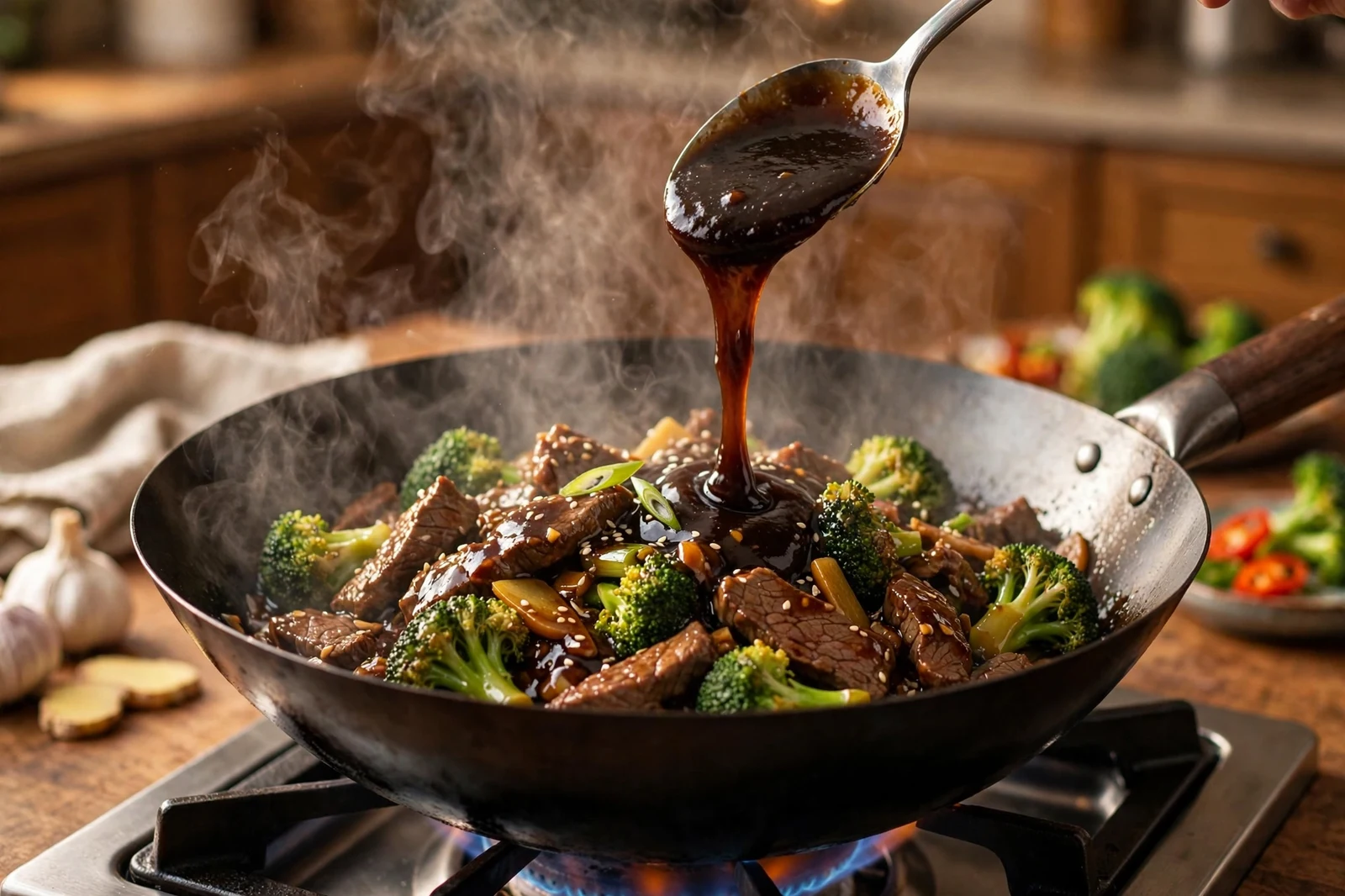
1. Finishing stir-fries. This is its home turf. Stir-fry your protein and vegetables, then add a tablespoon of oyster sauce (often with a splash of soy sauce and a pinch of sugar) in the last minute. It coats everything in a thin, savory glaze. It is the quiet backbone of dishes like pad see ew, where dark soy gives the color and oyster sauce rounds out the flavor.
2. Sauces for blanched and steamed vegetables. The most famous Cantonese use: blanch Chinese broccoli (gai lan) or lettuce, drain well, then spoon over a warm sauce of oyster sauce thinned with a little water or stock, a drizzle of sesame oil, and fried garlic on top. The sauce does all the talking, so this is where a good bottle earns its price.
3. Marinades and braises. A tablespoon in a marinade adds depth and helps grilled meats brown and shine — it pairs naturally with char siu, where it works alongside soy sauce and honey. In braises, add it midway rather than at the very start; a long boil dulls its flavor.
Habits that keep it balanced
- Add it late. Heat is fine, but prolonged high heat flattens the flavor and can turn the sugars bitter. Stir it in near the end, or warm it gently in a sauce.
- Balance the sweet. Oyster sauce already brings sugar. If a recipe has both oyster sauce and added sugar, taste before adding the full amount of sugar — many home cooks find they can cut it by a third.
- Thin it for drizzling. Straight from the bottle it can land in gloopy streaks. Whisk it with a teaspoon or two of water or stock and it pours like a sauce.
- Do not use it as a table condiment by the spoonful. It is concentrated. As a dip, blend a little into soy sauce or use it as the base of a noodle sauce with chili oil and vinegar, the way scallion oil noodles balance rich and bright.
Quick Reference: When to Reach for It
- Leafy greens and broccoli: blanch, drain, warm oyster sauce drizzle with garlic oil
- Beef and broccoli or chicken stir-fry: 1 tablespoon oyster sauce + 1 teaspoon soy sauce + pinch of sugar, added at the end
- Fried rice and noodle sauces: a tablespoon for body, alongside soy sauce for salt
- Marinades for grilled pork or chicken: a tablespoon with soy sauce, garlic, and a sweetener
- Dumpling dipping sauce: equal parts oyster sauce and black vinegar, plus chili oil to taste
- Vegetarian stir-fries: mushroom-based vegetarian oyster sauce, one-for-one
When a recipe just says “oyster sauce,” any decent mid-range bottle works. When the dish is mostly vegetables and sauce — especially blanched greens — that is the moment the better bottle shows.
Storage: It Belongs in the Fridge
This is the step many home cooks skip, and it matters. Oyster sauce is a seafood-based product, and once opened it keeps best refrigerated.
- Opened: refrigerate and use within about six months for the best flavor. It will not spoil overnight on the counter, but the flavor fades faster at room temperature and the risk is not worth it.
- Unopened: a cool, dark pantry shelf is fine until the printed date.
- Signs it is past its best: a sour or off smell, mold at the neck of the bottle, or a distinctly sharp taste that was not there before. Discard it — a fresh bottle costs little and an off one can ruin a whole pan of food.
- Thick syrup at the bottom of an old bottle is mostly concentrated sugars; if the sauce smells and tastes fine, a good shake restores it.
Putting It Together
Oyster sauce earns its fridge space by doing something no other bottle quite does: it adds a thick, glossy, savory-sweet finish that makes simple food taste complete. Pick a bottle with real oyster extract near the top of the label (or a mushroom-based one for vegetarian cooking), add it late, balance its sweetness, and keep it cold once opened.
Building your sauce shelf from scratch? This bottle belongs on the starter list in our essential Asian pantry guide, right between the soy sauces covered in our soy sauce guide and the fish sauce. Learn what each one does, and the sauce aisle stops being a wall of mystery and starts being a toolbox.