
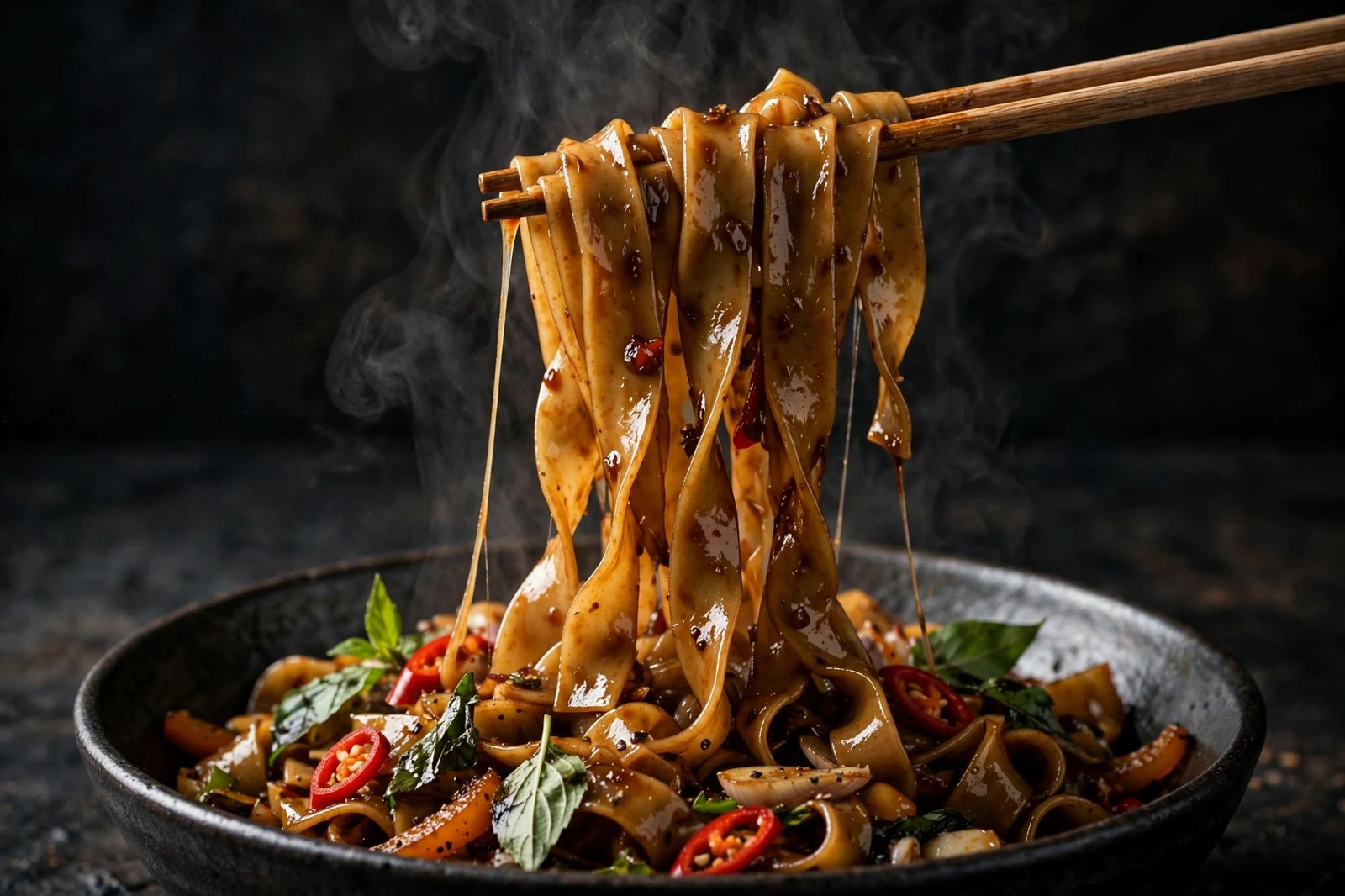
Pad kee mao is the stir-fry I order when I want dinner to wake me up. Wide, chewy rice noodles slicked in a dark soy-and-fish-sauce coating, torn with holy basil and enough Thai bird chilies to clear your head. It cooks in about ten minutes once the wok is hot, and it tastes like the loudest street stall on the block.
What is pad kee mao?
Pad kee mao translates roughly to “drunkard’s stir-fry.” Despite the name, there is no alcohol in the dish. The name’s origin is one of those street-food stories nobody agrees on. The version I hear most often: this is the dish someone throws together after a late night out, with whatever is in the fridge and a reckless hand with the chilies. Another version says the flavor is so intense it would sober you up. Nobody can prove either one, and honestly the debate is part of the fun.
What is not up for debate is the formula. Pad kee mao is always built on wide rice noodles (sen yai), a savory sauce of oyster sauce, fish sauce, and soy sauce, fresh chilies, garlic, and a big handful of holy basil. It is close kin to pad see ew, which uses the same noodles but goes sweet and mellow, where pad kee mao goes loud and peppery. If pad see ew is a conversation, pad kee mao is an argument.
Holy basil vs Thai basil: which one?
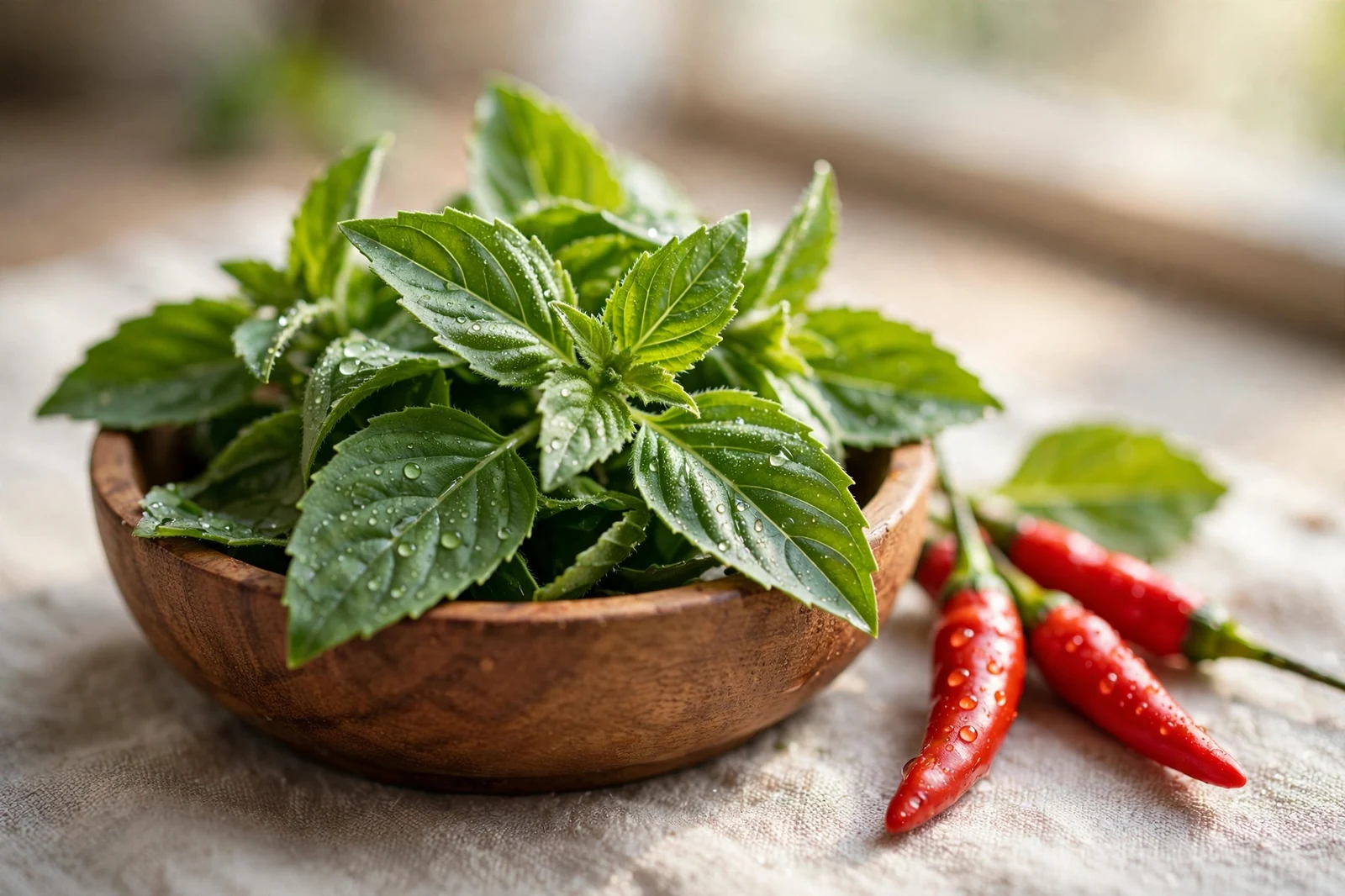
Traditional pad kee mao uses holy basil (kaphrao), which has a peppery, almost clove-like bite that stands up to the heat. Thai basil (horapha) is sweeter and anise-like. In most American kitchens, holy basil is hard to find, and Thai basil is the practical buy. Use whichever you can get fresh; what matters is that it is a Thai basil variety, not Italian sweet basil, which tastes like a different dish entirely. If you want the full rundown, see Thai basil vs Italian basil.
The sauce ratio that works
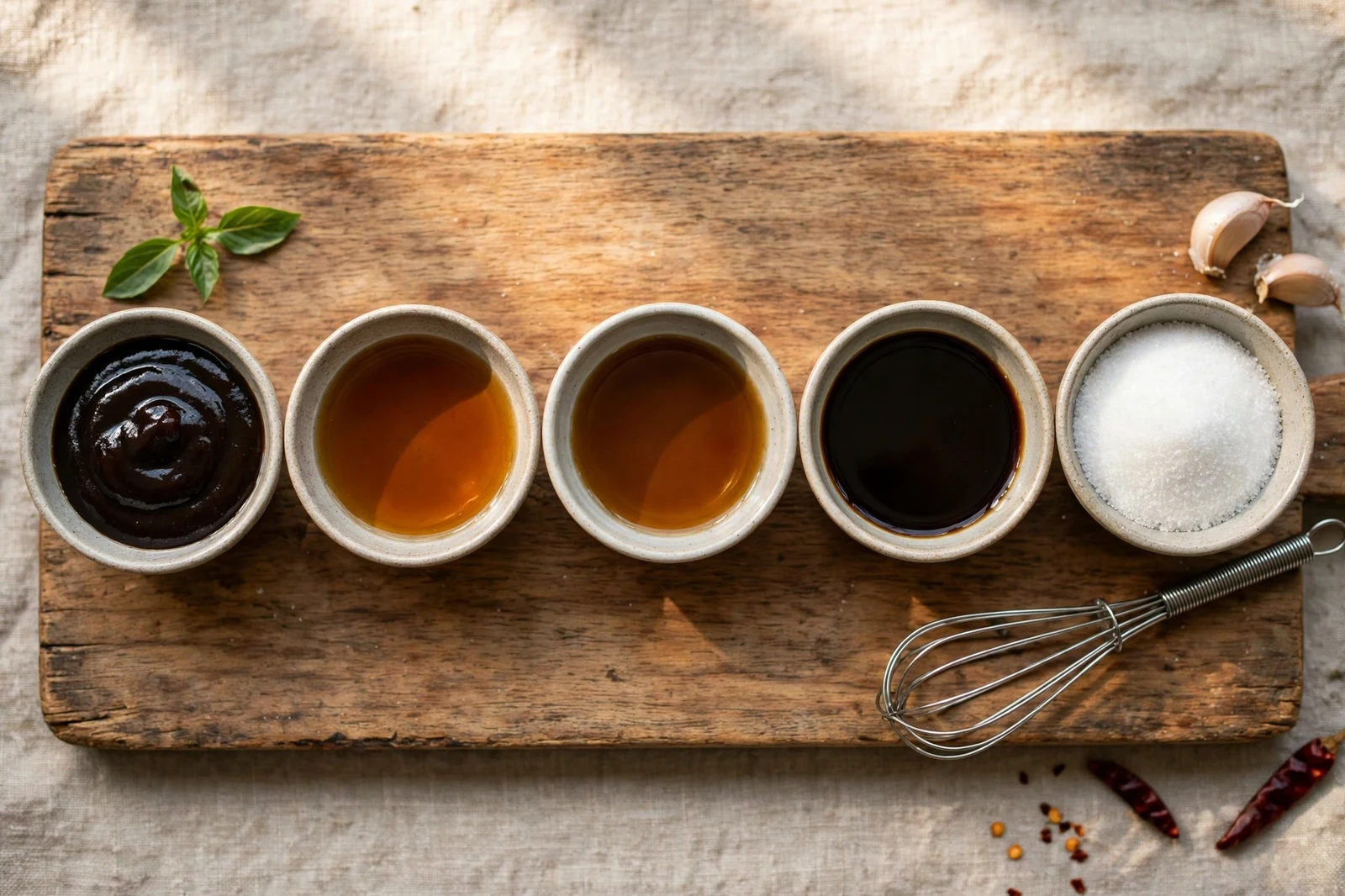
The sauce is five ingredients and it needs no tweaking once you lock the ratio. For two generous servings: 2 tbsp oyster sauce, 1 tbsp fish sauce, 1 tbsp light soy sauce, 2 tsp dark soy sauce (for color only), and 2 tsp sugar. That is a 2:1:1 ratio of oyster sauce to fish sauce to light soy. Dark soy sauce is here for color, not salt, which is why it is measured in teaspoons while everything else is in tablespoons. Whisk it all together in a small bowl before the wok gets hot, because once the noodles go in there is no time to measure anything.
For the stir-fry
8 oz dried wide rice noodles (sen yai), or 1 lb fresh wide rice noodles; 1 lb boneless chicken thigh, sliced thin (or shrimp, pork, or firm tofu); 3 tbsp neutral oil, divided; 5 garlic cloves, smashed; 3 to 5 Thai bird chilies, sliced (use 2 for gentle heat); 1 small onion, sliced; 1 red bell pepper, sliced; 1 cup holy basil leaves, packed (or Thai basil).
How to make pad kee mao
- Soak the dried noodles in hot (not boiling) water for 8 to 10 minutes, until pliable but still firm in the center. They finish cooking in the wok, so underdone is correct. Drain thoroughly and spread them out so they steam dry; wet noodles clump and kill the sear.
- Whisk together the sauce ingredients in a small bowl and set it beside the stove.
- Smash the garlic and slice the chilies. Slice everything else and keep it within arm’s reach. This dish moves fast.
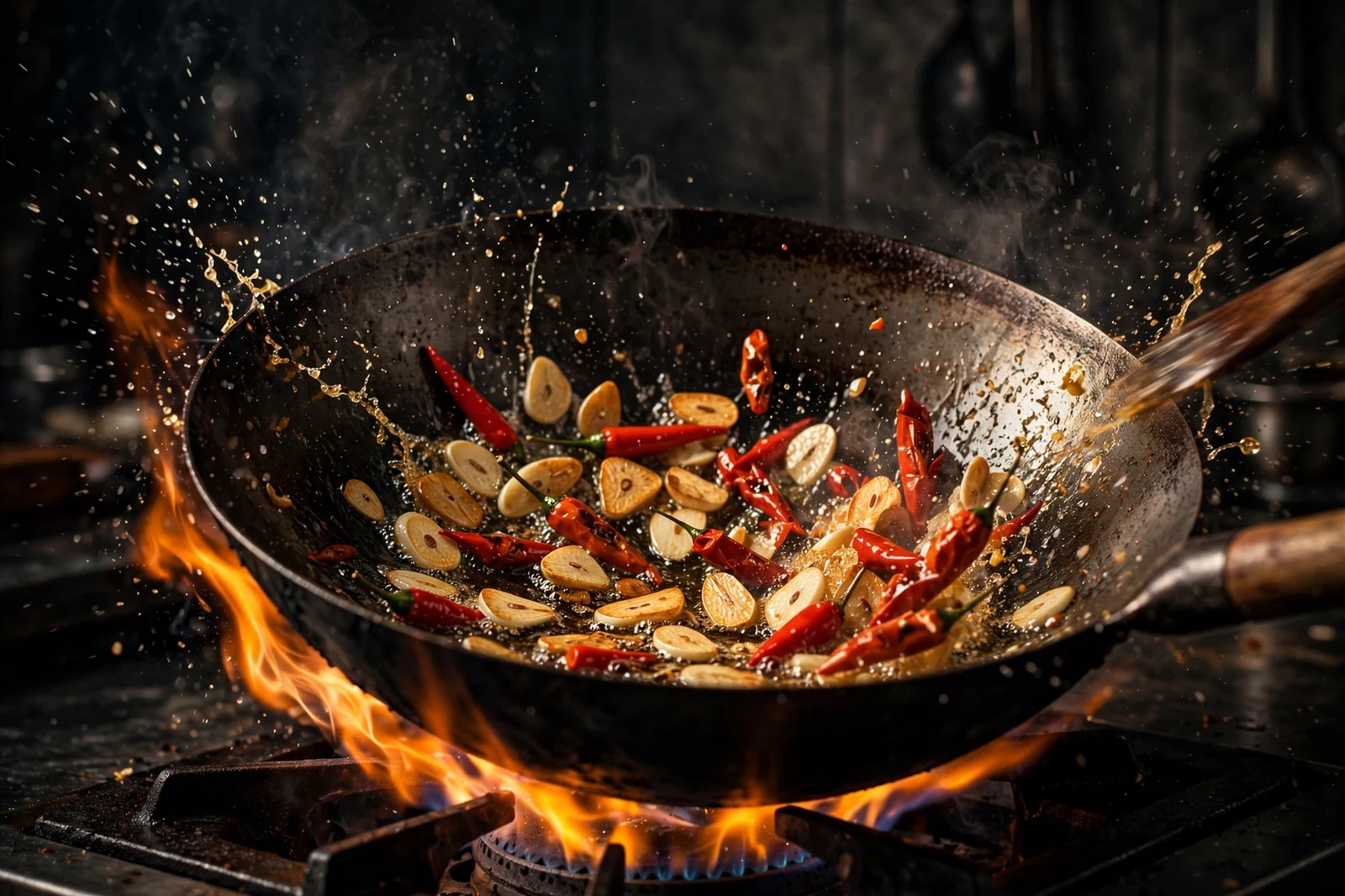
- Heat your wok over the highest heat until it just starts to smoke. Add 1 tbsp oil, swirl, and sear the chicken in a single layer for 2 to 3 minutes, until just cooked through. Scoop it out and set aside.
- Add the remaining oil. Stir-fry the garlic and chilies for 30 seconds until fragrant, then the onion and bell pepper for 1 to 2 minutes. They should stay crisp.
- Add the noodles and pour in the sauce. Toss for 2 to 3 minutes so every strand is coated. Then let the noodles sit undisturbed for 45 to 60 seconds, until the edges touching the wok pick up a few dark charred spots. That is the flavor you are after. For the science of that smoky edge, see what wok hei is.
- Return the chicken, toss once more, then take the wok off the heat and fold in the basil. The residual heat wilts it without turning it black.
- Serve immediately, straight from the wok.
Tips and variations
Cook one or two servings at a time. A home wok loses heat fast when it is crowded, and crowded pad kee mao steams instead of fries. Making a second batch takes five extra minutes and tastes twice as good.
If you can only find pad thai-width noodles, they work, but the wide ones are worth hunting down at an Asian grocery. The chew is the whole point.
For shrimp, cut the sear to 90 seconds per side and pull them early. For tofu, press it first (see how to press tofu) and sear until golden before anything else goes in.
A squeeze of lime is not traditional, but nobody will arrest you. A drizzle of homemade chili oil on top is for the brave.
Troubleshooting: Fix My Pad Kee Mao
Every wok cook has had a batch go sideways. Here are the most common ways this dish fails and what to do about each one. If your specific problem is not on the list, the widget below covers more.
HERB & LIME · KITCHEN HELP
Fix My Pad Kee Mao
Choose what went wrong to see a practical next step.
Possible cause
What to try next
For next time
From Paul's kitchen. Results vary with noodle brand, wok, and stove heat — adjust timing to your setup.
Quick reference (also works without JavaScript)
The noodles clumped into one sticky mass
Cause: The noodles went into the wok too wet, or they were cooked fully tender before stir-frying, so they overcooked and fused.
Try: Loosen the noodles with a drizzle of neutral oil and toss over high heat to separate them; accept a softer texture this time.
Prevent: Soak dried noodles only until pliable but still firm in the center, drain thoroughly, and spread them out so they steam dry before they touch the wok.
Pale, soft noodles with no charred edges
Cause: The wok was not hot enough, or it was overcrowded, so everything steamed instead of frying.
Try: Turn the heat to full, spread the noodles into a single layer, and let them sit undisturbed 45 to 60 seconds so the edges catch.
Prevent: Heat the wok until it just starts to smoke before any food goes in, and cook only one or two servings at a time so the temperature stays high.
The noodles are swimming in sauce
Cause: Too much sauce went in; pad kee mao should be lightly coated, not drowned.
Try: Crank the heat and keep tossing so the excess reduces and clings to the noodles; next time, measure the sauce in advance.
Prevent: Whisk the oyster sauce, fish sauce, light soy, dark soy, and sugar together in a small bowl before the wok goes on, and pour in only that bowlful.
The basil went black and bitter
Cause: Basil added too early burns in the hot oil, and wet leaves drop the wok temperature and scorch.
Try: Pick out any scorched bits; the rest is still edible but will not have fresh basil flavor — finish with fresh leaves at the table.
Prevent: Keep the basil leaves dry, pick them from the stems, and add them all at once at the very end, off the heat.
It tastes flat, not like the restaurant version
Cause: Sweet (Italian) basil was used instead of holy or Thai basil, or the noodles never got their smoky char.
Try: Season at the table with extra sliced chilies in fish sauce and fresh holy or Thai basil; it will not fully rescue a flat base, but it helps.
Prevent: Use holy basil or Thai basil, and make sure the noodles pick up a few dark charred edges in a smoking-hot wok — that char is the flavor.
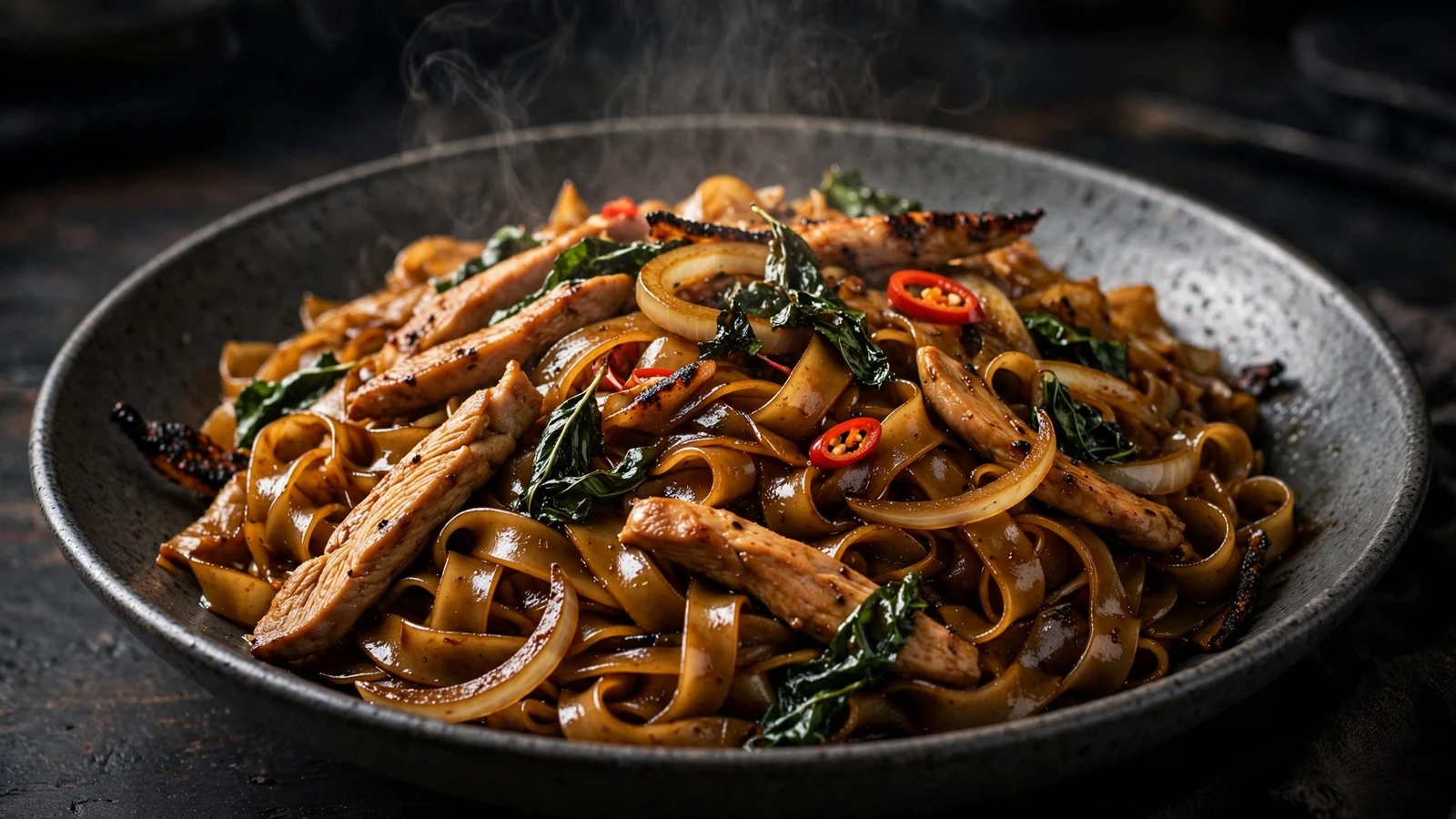
Pad Kee Mao: Thai Drunken Noodles
Ingredients
Method
- Soak the dried noodles in hot (not boiling) water for 8 to 10 minutes, until pliable but still firm in the center. They finish cooking in the wok, so underdone is correct. Drain thoroughly and spread them out so they steam dry; wet noodles clump and kill the sear.
- Whisk together the oyster sauce, fish sauce, light soy sauce, dark soy sauce, sugar, and white pepper in a small bowl. Set it beside the stove, because once the noodles go in there is no time to measure anything.
- Smash the garlic and slice the chilies. Slice everything else and keep it within arm's reach. This dish moves fast.
- Heat your wok over the highest heat until it just starts to smoke. Add 1 tablespoon oil, swirl, and sear the chicken in a single layer for 2 to 3 minutes, until just cooked through. Scoop it out and set aside.
- Add the remaining oil. Stir-fry the garlic and chilies for 30 seconds until fragrant, then the onion and bell pepper for 1 to 2 minutes. They should stay crisp.
- Add the noodles and pour in the sauce. Toss for 2 to 3 minutes so every strand is coated. Then let the noodles sit undisturbed for 45 to 60 seconds, until the edges touching the wok pick up a few dark charred spots. That is the flavor you are after.
- Return the chicken, toss once more, then take the wok off the heat and fold in the basil. The residual heat wilts it without turning it black. Serve immediately, straight from the wok.
Notes
Note 2: Noodle prep decides everything. Soak dried sen yai only until pliable-but-firm in the center and drain them bone dry; noodles that go in wet will clump no matter how hot the wok is.
Note 3: Cook one or two servings at a time. A home wok loses heat fast when crowded, and crowded pad kee mao steams instead of fries. A second batch takes five extra minutes and tastes twice as good.
Note 4: Keep the basil leaves dry and add them all at once at the very end, off the heat. Wet basil splatters, drops the wok temperature at the worst moment, and scorches.
Note 5: The charred edges are not a mistake. If your noodles come out uniformly soft and pale, the wok was not hot enough — push the heat and let the edges catch slightly.
More Thai recipes
- Thai basil chicken: the same holy-basil fire, no noodles
- Tom yum fried rice: another loud one-pan dinner
- Khao soi: coconut curry noodles, Northern Thai style
- Pad see ew: the sweet, mellow cousin of this dish
From the Garden
Holy basil is the traditional leaf here, but it is fussy in pots and bolts fast. Thai basil is the one that actually thrives on a sunny balcony, and it is the basil our garden guides are built around, so that is what usually ends up in Paul’s wok too. Pick the top leaves in the morning and they will be at their most fragrant by dinner.