
Raw garlic bites back. Pickled garlic does not. After a week in vinegar brine, the cloves turn mellow, tangy, and firm enough to slice, and the sharp edge that overpowers a dressing fades into something you can eat straight from the jar. The whole job takes about 20 minutes of hands-on time, plus waiting. This guide covers one refrigerator method, the brine ratio that works for a pint jar, and the two things that ruin a batch: warm storage and cloves left above the brine.
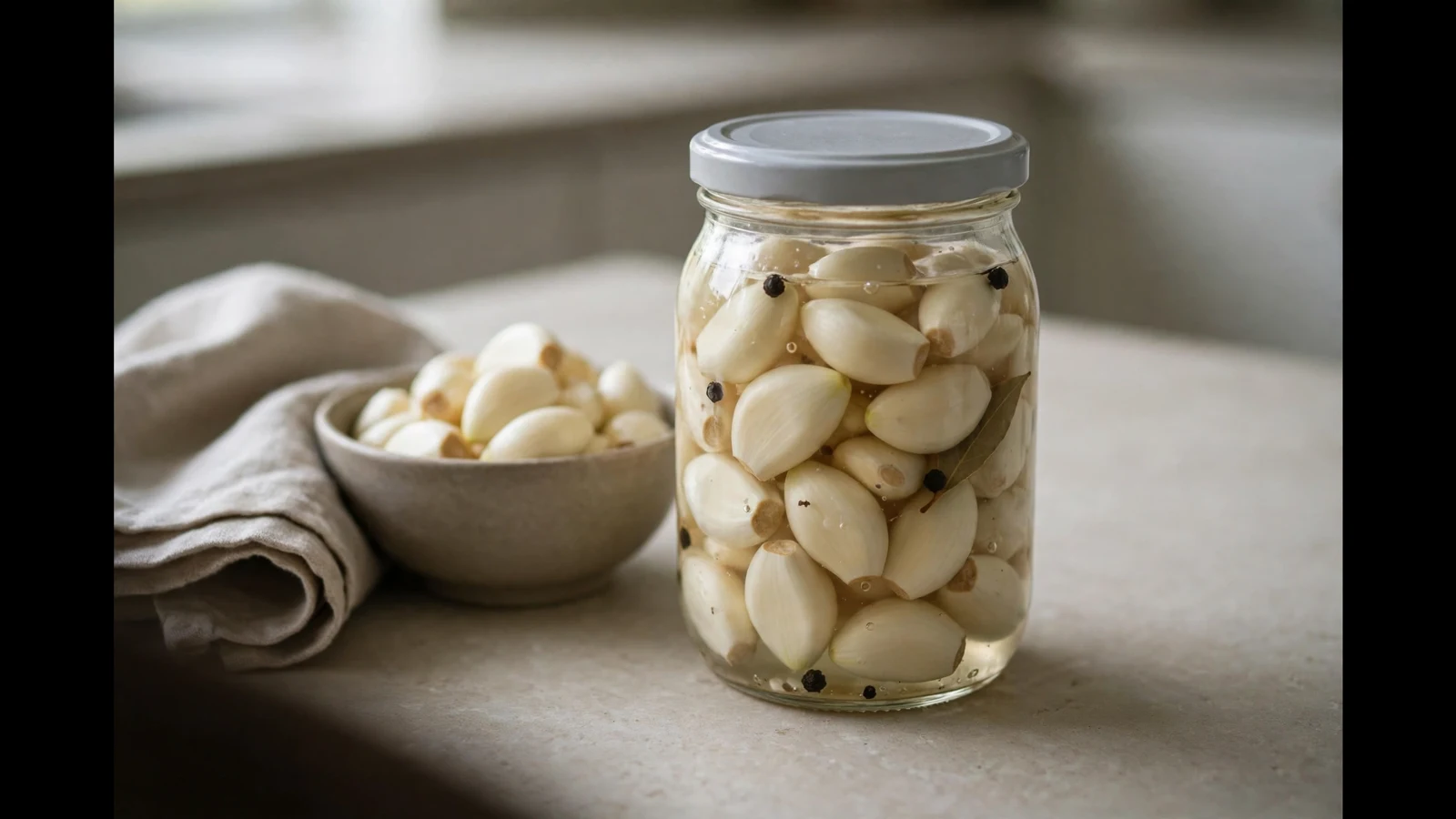
What you need
Start with firm, heavy heads of garlic. Light heads with loose skins often hold cloves that are already drying out, and those cloves go soft in brine. You need 3 to 4 heads, peeled, to fill a pint jar loosely. For the brine, use 1 cup vinegar at 5 percent acidity, 1/2 cup water, 1 tablespoon sugar, and 1 teaspoon kosher salt. Use a glass jar with a tight lid, a small non-reactive saucepan, and a clean fork for tasting. Do not use an aluminum or copper pot for the brine. Acid reacts with those metals and can give the pickles an off taste and a cloudy look. Stainless steel, enamel, and glass all work. My guide to Asian vinegars covers how rice vinegar, white vinegar, and black vinegar differ in flavor, and that choice matters here: white vinegar gives the cleanest tang, rice vinegar gives a softer finish, and either one works as long as the label says 5 percent acidity.
Peel without crushing the cloves
Peeling 3 to 4 heads by hand takes too long and leaves your fingers smelling for hours. Put the separated cloves in a large metal bowl, set a second bowl of the same size on top as a lid, and shake hard for about 30 seconds. Open the bowls and pick out the peeled cloves. Repeat once for the cloves that still hold skin. The shake method works because the cloves knock against each other and the bowl walls, and the skins split and fall away. It leaves most cloves whole, which is what you want. Crushed cloves soak up brine too fast and turn mushy at the edges before the center mellows. If a clove has a green sprout in the middle, cut the clove in half and pull the sprout out. Sprouts taste bitter, and that bitterness stays in the brine. Trim any brown spots at the root end, rinse the cloves, and pat them dry before they go in the jar.

Make the brine and fill the jar
Pack the peeled cloves into a clean pint jar. Do not press them down hard. A loose pack lets brine reach every clove, and a tight pack leaves dry pockets where mold can start. Add 1 teaspoon black peppercorns if you want a plain batch with a little warmth, or 1/2 teaspoon chili flakes for a spiced batch. Put the vinegar, water, sugar, and salt in the saucepan and warm it over medium heat, stirring, just until the salt and sugar dissolve. Take it off the heat as soon as it is clear. Pour the warm brine over the cloves until they are covered by at least 1/2 inch of liquid, then tap the jar gently on the counter to release trapped air bubbles. If a clove floats above the surface after tapping, push it down with a clean spoon or add a small glass weight. Every clove must stay under brine for the whole storage time. Wipe the rim, close the lid, and let the jar cool to room temperature before it goes in the fridge.

Wait, taste, and use within three months
Refrigerate the jar right away. This is a refrigerator pickle, not a canned pickle, and it must stay in the fridge from day one. Taste one clove after 3 days. It will still taste sharp at that point, but the vinegar will have started to work. Taste again at 7 days, when most batches turn mellow enough for salads and dressings, and again at 14 days, when the flavor settles and the cloves taste best for eating whole. Keep the jar in the fridge and use the garlic within 3 months. Always take cloves out with a clean fork, never with fingers, and push the rest back under the brine before you close the lid. A batch that stays submerged and cold keeps its crunch. A batch left on the counter for a day, or with cloves poking above the brine, is a batch to throw out. The same rule applies to my Vietnamese pickled carrots and daikon: cold storage and full submersion do more for safety than any extra spice.
Why some cloves turn blue or green
Sometimes a jar of pickled garlic turns blue, green, or a mix of both, usually in the first week. That color change is safe to eat. It happens when sulfur compounds in the garlic react with acid, and it shows up more often in young garlic and in garlic that sat in water before pickling. It does not mean the batch spoiled, and it does not change the flavor much. If the color bothers you, use fully mature heads next time, use kosher salt instead of iodized table salt, and keep the jar in a dark spot in the fridge. Cloudiness from iodized salt is a separate issue from the blue-green color, and it also does not mean spoilage on its own. Throw a jar out only for real warning signs: mold on the surface, a slimy feel on the cloves, or a smell that is sour in a rotten way rather than vinegary. When in doubt, throw it out and start a fresh jar. Garlic is cheap, and a new batch costs less than a ruined week of meals.
If it goes wrong
If the cloves go mushy, the brine was too hot when you poured it, or the garlic was old before you started. Next time, pour the brine warm, not boiling, and pick heavy, firm heads. If the flavor stays too sharp after two weeks, the cloves were packed too tight or the brine was too weak for the jar size. Give the next batch the full ratio in this guide and pack the jar loose so brine reaches every clove. If the brine turns cloudy, check your salt first. Iodized table salt clouds brine because of its anti-caking additives, so switch to kosher salt or pickling salt. If a jar smells fine but the cloves taste flat, use them in cooking instead of eating them raw. Chopped pickled garlic wakes up fried rice, noodle bowls, and pan sauces, and heat covers a flat edge that raw eating would show. My guide to homemade chili oil pairs well here: a spoonful of chopped pickled garlic plus chili oil over noodles gives heat and tang in one bowl.
How to use pickled garlic
Slice pickled garlic thin for salads and grain bowls, where raw garlic would be too strong. Chop it fine for dressings and dipping sauces, and use a little of the brine in place of plain vinegar in the same dressing. The brine itself is useful: a tablespoon in a stir-fry sauce adds tang without extra salt. Eat whole cloves beside grilled pork, roast chicken, or fried fish, where the tang cuts through fat. For a fast snack, mash two cloves with a fork, stir in a spoonful of the brine, and spread it on toast with a drizzle of oil. If you grow your own garlic or buy it in bulk, my guide to storing fresh herbs covers a different storage habit, but the same idea applies: label the jar with the date you made it, so you never guess how old a batch is.
