
They sit on the same menu page, they often share the same fish, and people use the two words as if they meant the same thing. They do not. Sushi is seasoned rice paired with toppings or fillings. Sashimi is sliced raw fish or seafood served with no rice at all. Once you see the rice, you know which one you are eating.

The quick answer
Sushi always involves rice: short-grain rice seasoned with vinegar, sugar, and salt, shaped or rolled with fish, seafood, egg, or vegetables. Sashimi never involves rice: it is the fish itself, sliced and served plain with soy sauce, wasabi, and garnishes like shiso leaf and shredded daikon. All sashimi-grade fish can appear in sushi, but most sushi is not sashimi. A California roll is sushi with no raw fish in it at all, and a plate of salmon sashimi has no rice anywhere near it. If you are counting rice, ordering sashimi skips it entirely. If you want the full Japanese restaurant experience for a first visit, sushi is the easier start.
What sushi is
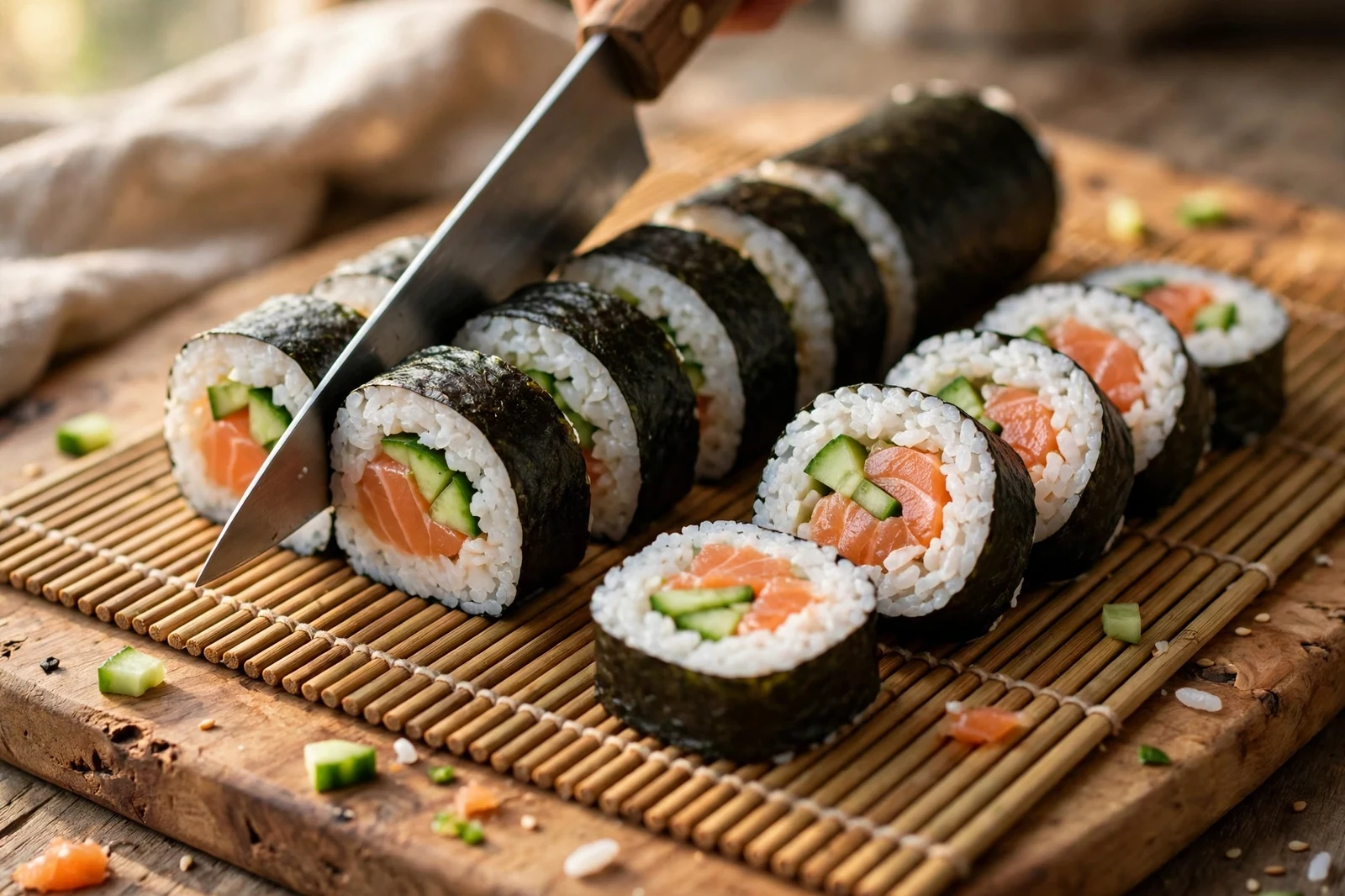
Sushi starts with the rice, not the fish. Cooked short-grain rice gets folded with a vinegar, sugar, and salt seasoning while it is still warm, then cooled to near body temperature. That seasoned rice, called shari, is the base for everything that follows. Nigiri is a small hand-pressed mound of shari with a slice of topping draped over it, often with a dab of wasabi between rice and topping. Maki rolls the rice and fillings inside a sheet of nori seaweed, then slices the roll into pieces. Uramaki, the inside-out roll common in American restaurants, puts the rice on the outside and the nori inside.
The topping does not have to be raw. Cooked shrimp, sweet rolled omelet (tamago), grilled eel, and imitation crab all appear in sushi, and vegetable rolls with cucumber, avocado, or pickled radish are sushi too. That is the part first-timers get wrong: sushi is a rice dish first, and raw fish is only one of its possible toppings. If you want to make the rice at home, start here: How to Make Sushi Rice.

What sashimi is
Sashimi is sliced raw fish or seafood, served on its own. There is no rice, no nori, and no roll. The cut matters as much as the fish: most sashimi is sliced against the grain, about a quarter inch thick, so the slice feels tender instead of chewy. Salmon, tuna, yellowtail, and sea bream are the usual fish, and scallop, sweet shrimp, and octopus show up as seafood options. It arrives with soy sauce for dipping, a mound of wasabi, and garnishes that clean the palate between bites, usually shiso leaf and shredded daikon radish.
Because nothing hides the fish, sashimi is the strictest test of quality in a Japanese restaurant. Rice can forgive a middling piece of fish in a roll. A bare slice cannot. That is also why sashimi usually costs more per piece than sushi: you are paying for fish alone, with no rice to fill the plate. And one label to read with care: there is no official “sushi-grade” stamp. Fish sold for raw eating is typically frozen first to deal with parasites, and a good fishmonger will tell you which fish they would eat raw and which they would not.

Sushi vs sashimi at a glance
| Sushi | Sashimi | |
|---|---|---|
| Has seasoned rice | Always | Never |
| Fish | Raw, cooked, or none at all | Raw fish or seafood only |
| Form | Nigiri mounds, maki rolls, inside-out rolls | Slices served flat on a plate |
| What you taste first | Vinegared rice, then topping | The fish itself, nothing else |
| Soy sauce dipping | Fish side down for nigiri, so the rice stays intact | A light dip; a soak drowns the flavor |
| Price per piece | Lower, since rice fills part of it | Higher, since it is fish alone |
| Takeout | Travels well; rolls hold up best | Travels poorly; it needs to stay cold and fresh |
A side-by-side tasting
Order the same salmon two ways and the difference shows up in the first bite. As sashimi, a quarter-inch slice tastes clean and rich, with the fish’s own fat doing all the work. As nigiri, the same salmon over warm seasoned rice tastes rounder: the vinegar in the rice cuts the richness, and the bite has two textures instead of one. Neither is better in the abstract. Sashimi shows you the fish. Sushi shows you the pairing.
The eating rules differ too. Dip nigiri fish-side down into the soy sauce, just enough to wet the topping. If you dip rice-side down, the mound soaks up sauce and falls apart in the dish. Sashimi takes a lighter touch than most people expect: a quick dip of one corner, not a soak, and mix the wasabi into the soy only if that is how you like it. Purists will say wasabi belongs on the fish, not in the dish, but restaurants expect both habits.
Which one to order when
First time at a Japanese restaurant: start with sushi, not sashimi. A maki roll or a piece of cooked-shrimp nigiri lets you get used to the rice, the nori, and the soy sauce before you face a bare slice of raw fish. Then try one piece of salmon nigiri, then one slice of salmon sashimi, and you will feel the difference yourself.
Watching carbs or rice portions: sashimi, or naruto rolls, which wrap the filling in cucumber instead of rice. Eating with kids: sushi with cooked fillings, like tamago or a California roll, while sashimi stays an adults-only plate. Ordering takeout: sushi rolls, which hold their shape and temperature far better than bare fish slices. Celebrating good fish: sashimi, because it puts the fish front and center with nothing in the way.
One mix-up to drop for good: nigiri is not sashimi. It looks like a slice of fish on a plate, but the mound of rice underneath makes it sushi. And a chirashi bowl, with sashimi-style slices scattered over seasoned rice, is a sushi dish too, because the rice is doing half the work.
More Japanese recipes
Try both sides at home: How to Make Sushi Rice for the seasoned rice every sushi dish needs, How to Roll Sushi at Home for maki technique, Classic Miso Soup for the bowl that opens most Japanese meals, and Onigiri: Japanese Rice Balls Three Ways for seasoned rice you can pack and carry.
Rice or no rice: that is the whole difference, and now you can order with confidence either way.
1 thought on “Sushi vs Sashimi: What’s the Difference?”