
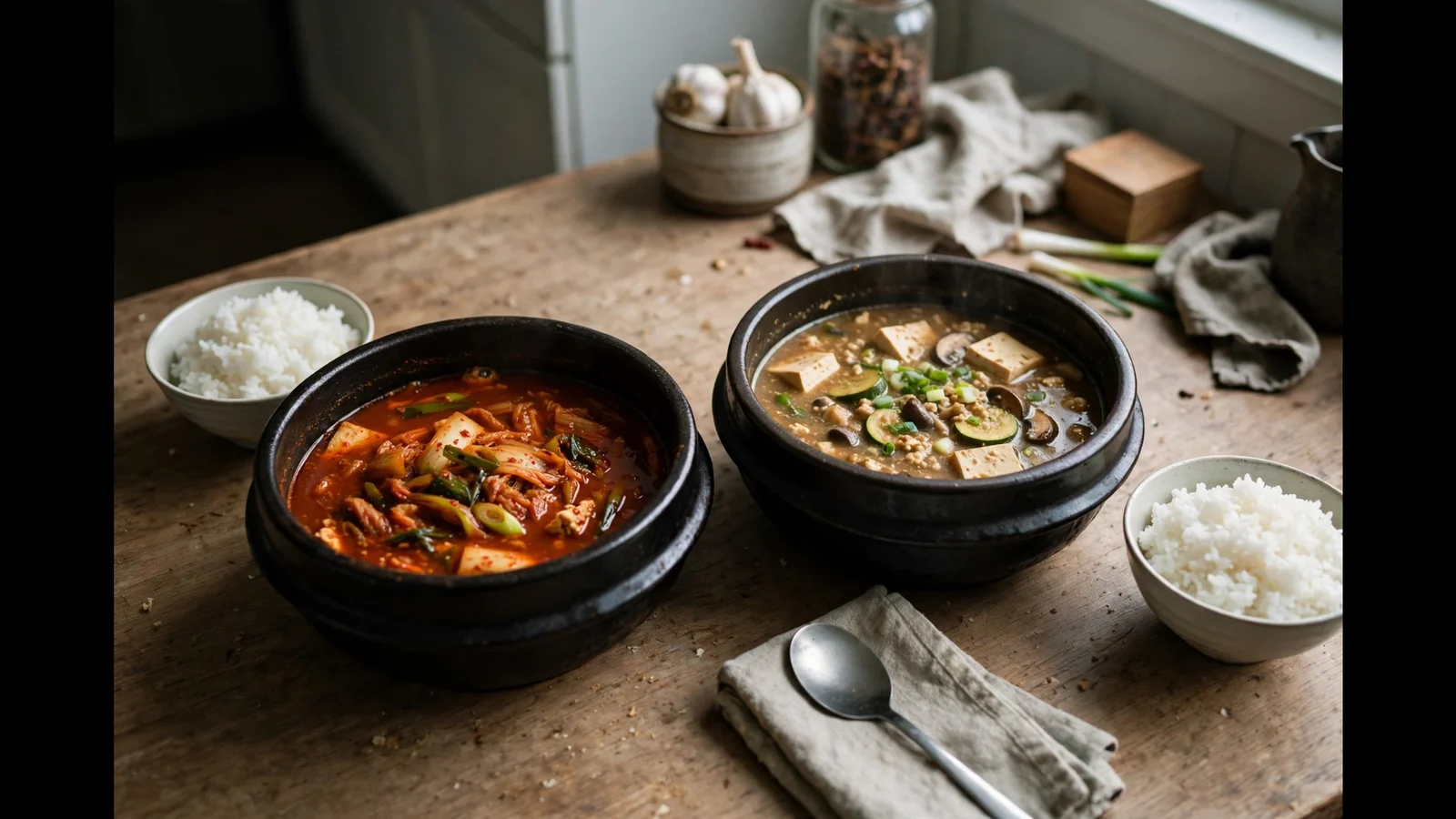
Both stews come out of the same Korean kitchen, both arrive at the table bubbling in a stone pot, and both get eaten with rice. After that, they split. One is sour and fiery, driven by fermented cabbage. The other is mellow and earthy, driven by fermented soybean paste. If you have only one pot and one evening, the choice comes down to what you have in the fridge and what kind of heat you want.
What each stew is
Kimchi jjigae starts with aged kimchi, the kind that has gone properly sour in the jar, and cooks it down with pork, tofu, and scallions until the broth turns deep red. The full version is on our Kimchi Jjigae: Korean Kimchi Stew page. Doenjang jjigae starts with doenjang, Korean fermented soybean paste, thinned into water or anchovy stock with tofu, zucchini, onion, and greens. Our Doenjang Jjigae: Korean Soybean Paste Stew page has the full version. Same pot, same rice, two very different broths.
The base flavor
The base is the whole difference. Kimchi jjigae tastes sour first, then spicy, then savory. The sourness comes from kimchi that has fermented for weeks, and no amount of gochujang can fake it. Fresh kimchi makes a flat, thin stew. Doenjang jjigae tastes earthy and salty with a mild sweetness from the vegetables cooked in it. It is not spicy by default, though many cooks add a fresh chili or a spoon of gochujang at the end.
In my kitchen, the rule is simple. If the kimchi in the jar smells sharply sour and the leaves have gone soft, it goes into kimchi jjigae. If the jar is still fresh and crisp, it stays a side dish, and doenjang jjigae goes on the stove instead.
Heat and spice
Kimchi jjigae runs hot. The kimchi itself carries chili, and most cooks add gochugaru or gochujang on top of that. The heat builds as you eat, and the sourness keeps it from feeling heavy. Doenjang jjigae runs mild. Its warmth comes from the hot broth and the chili served beside it, not from the broth itself. That makes it the easier pot for a table where one person eats no spice at all, since the chili can stay in a small dish on the side.
What goes in the pot
Kimchi jjigae leans on a short list: aged kimchi and its juice, pork belly or shoulder, tofu, scallions, and sometimes mushrooms. The kimchi does most of the work, so the rest stays simple. Doenjang jjigae takes a wider mix: tofu, zucchini, onion, potato, spinach or chard, and mushrooms, with clams or shrimp in some versions. The paste seasons the broth, and the vegetables fill it out.
One practical difference: doenjang jjigae forgives a thin pantry. Three to four tablespoons of doenjang in four cups of water gives a full broth even with only tofu, zucchini, and onion. Kimchi jjigae with no aged kimchi is not kimchi jjigae at all, so it waits until the jar is ready.

Time on the stove
Kimchi jjigae needs time for the kimchi to soften and give up its flavor. I give it 25 to 30 minutes at a low simmer after the pork has browned, and I do not rush it. Shorter cooking leaves the kimchi still crunchy and the broth thin. Doenjang jjigae is faster. The vegetables need about 15 to 20 minutes, and the tofu goes in for the last 5 minutes so it stays in clean cubes instead of breaking apart. If dinner has to be ready in half an hour, doenjang jjigae wins.
Side-by-side comparison
| Kimchi jjigae | Doenjang jjigae | |
|---|---|---|
| Main seasoning | Aged kimchi and its juice | Doenjang soybean paste, 3 to 4 tablespoons per 4 cups water |
| Flavor | Sour, spicy, savory | Earthy, salty, mild |
| Heat | High, built into the broth | Low, chili served on the side |
| Usual protein | Pork belly or shoulder, tofu | Tofu, sometimes clams or shrimp |
| Vegetables | Scallions, mushrooms | Zucchini, onion, potato, spinach |
| Simmer time | 25 to 30 minutes | 15 to 20 minutes |
| Needs on hand | Sour aged kimchi | A tub of doenjang |
| Best for | Cold nights, spicy food lovers | Weeknight dinners, mixed-spice tables |
Which one to cook tonight
Pick kimchi jjigae when you have a jar of sour kimchi and you want something bold. It suits a cold evening, a table that likes heat, and a night when you have half an hour for the pot to simmer down. Pick doenjang jjigae when you want something gentle and fast, when the table includes someone who eats no spice, or when the fridge holds tofu and a few vegetables but no aged kimchi. Both are everyday food in Korea, not special-occasion dishes, and both taste best with plain rice and one or two small side dishes.
If you want a third stew in the same family, Sundubu Jjigae: Korean Soft Tofu Stew sits between the two, soft tofu in a spicy broth, and it cooks even faster than either pot here. And if your kimchi jar is not sour enough yet for kimchi jjigae, our How to Make Easy Napa Cabbage Kimchi at Home guide covers how to get a batch going.

Cooking notes from my kitchen
Two habits changed both stews for me. First, I stopped adding the tofu early in kimchi jjigae. Tofu added with 10 minutes left keeps its shape and soaks up broth without turning to mush. Second, I stopped boiling doenjang jjigae hard. A rolling boil turns the broth cloudy and dulls the paste, so I hold it at a gentle simmer and stir the paste in off the boil, then bring it back to a bare simmer for the vegetables.
One more test worth doing: cook both pots in the same week with the same rice and the same side dishes. The difference stops being abstract after that. You will know which broth you reach for on a tired night, and that answer is the right one for your kitchen.
More Korean recipes
- Kimchi Fried Rice
- Bibimbap: Korean Mixed Rice Bowl
- Korean Bulgogi Chicken
- Japchae: Korean Glass Noodle Stir-Fry
