
Tortang talong is the dish Paul makes when dinner needs to be on the table in half an hour and the fridge holds little more than eggplants and eggs. A whole eggplant goes over an open flame until the skin turns black and the flesh turns soft and smoky. Paul peels it, fans it flat with a fork, dips it in beaten egg seasoned with fish sauce and green onions, and fries it until the edges turn golden and crisp. Four eggplants feed four people, with rice and banana ketchup on the side.
It is one of the simplest dishes in Filipino cooking, and the one where small choices show up at once. The char has to go all the way, the eggplant has to be dry before it meets the egg, and the heat has to sit at medium. Get those three right and the omelet holds together, tastes smoky, and stays crisp at the edges instead of turning soft in the pan.
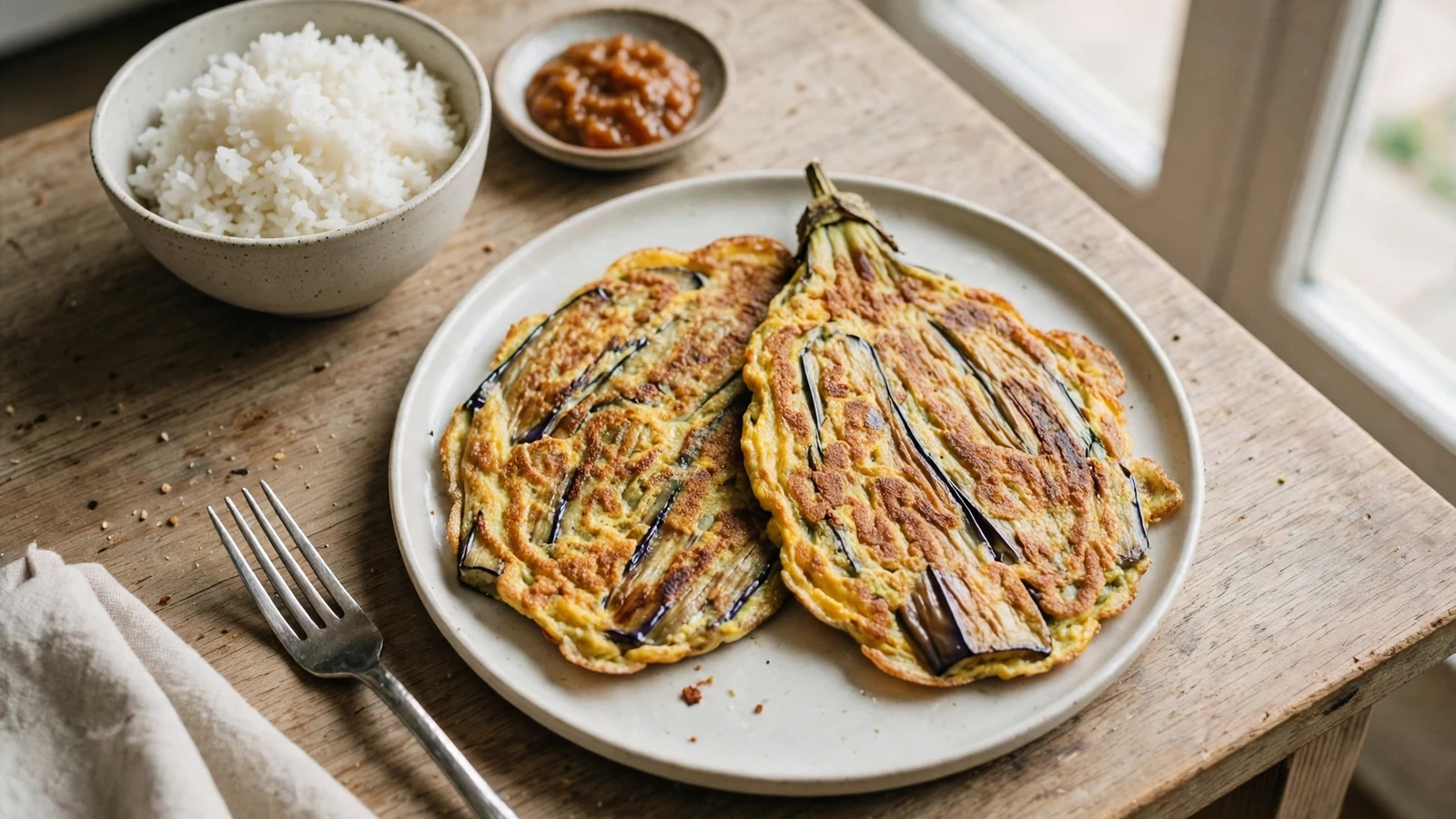
What is tortang talong?
Tortang talong is a Filipino eggplant omelet. Tortang means omelet, and talong means eggplant. The dish starts with a whole long eggplant grilled over an open flame or under a broiler until the skin chars and the flesh softens. The cook peels the skin, flattens the flesh into a fan shape with a fork, dips it in beaten egg, and pan-fries it until golden on both sides.
It shows up at Filipino tables for breakfast, lunch, or dinner, usually with sinangag, garlic fried rice, and a bottle of banana ketchup. Some versions add ground pork or tomatoes and onions to the egg. This recipe keeps the plain version, which is how Paul likes it: eggplant, egg, fish sauce, and green onions, with the smoke from the char doing most of the work.
Expect a soft, smoky center with a thin egg coat that turns golden and lightly crisp at the edges. The fish sauce seasons the egg from the inside, and the green onions give each bite a fresh edge. It is a quiet dish, and that is the point: nothing in it shouts, and nothing in it is wasted.
Ingredients
For the eggplant:
- 4 medium Chinese or Filipino eggplants
- 2 tablespoons vegetable oil, for frying, plus more as needed
For the egg coating:
- 5 large eggs
- 1 teaspoon fish sauce
- 1/2 teaspoon salt
- 1/4 teaspoon ground black pepper
- 2 green onions, thinly sliced
- 1 small red chili, thinly sliced (optional)
For serving:
- Cooked jasmine rice
- Banana ketchup
Steps
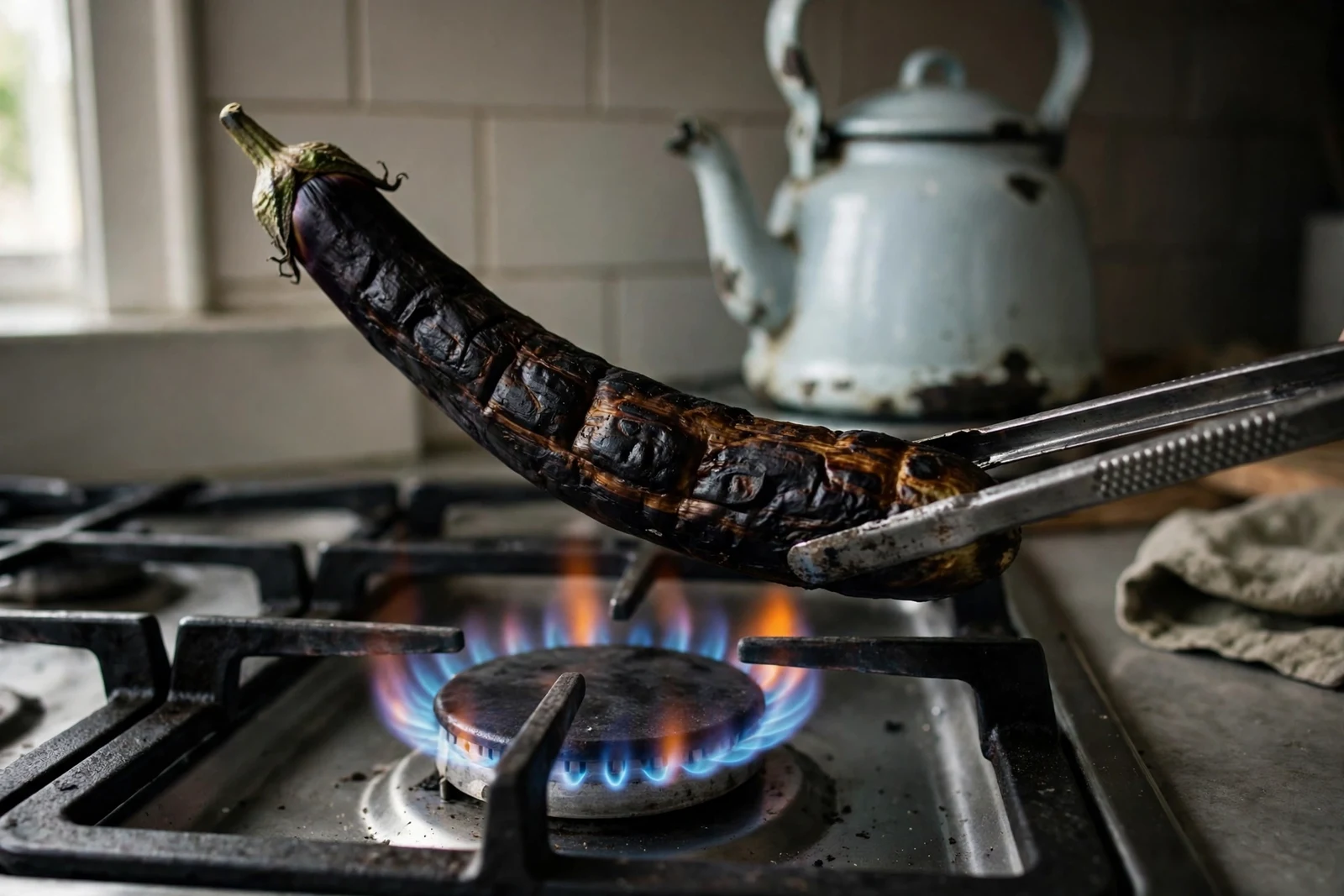
- Prick each eggplant 4 or 5 times with a fork. Set it over a medium-high gas flame, or under a hot broiler, turning with tongs every 2 to 3 minutes, until the skin is blackened all over and the flesh feels soft when pressed, 8 to 10 minutes.
- Move the eggplants to a bowl, cover, and rest 5 minutes. Peel off the charred skin, keeping the stem attached. Pat each one dry with a paper towel.
- Set a peeled eggplant on a plate and press it flat with a fork, fanning the flesh out to about 1/4 inch thick. Keep the stem on. It holds the shape together while you fry.
- Beat the eggs in a wide, shallow bowl with the fish sauce, salt, pepper, green onions, and chili until frothy.
- Heat 2 tablespoons of oil in a wide skillet over medium heat until it shimmers. Dip a flattened eggplant in the egg, coat both sides, and lay it in the pan. Spoon a little extra egg over the top. Fry 2 to 3 minutes, until the bottom is golden and set.
- Flip with a wide spatula and fry the second side 2 to 3 minutes, until golden and the egg is cooked through. Drain on a paper towel. Repeat with the rest, adding oil as needed. Serve hot with rice and banana ketchup.

The char is the flavor
The open flame does two jobs at once. It cooks the flesh soft, and it gives the dish its smoke. Paul turns the eggplant every couple of minutes so the skin blackens evenly instead of burning on one side while the other stays raw. The eggplant is done when the neck feels limp and the whole thing gives easily under a gentle press. If the skin is only browned in patches, the flesh underneath stays firm and tastes flat.
A broiler works when there is no gas flame. Set the eggplants on a tray 4 to 6 inches from the heat, turn them every 5 minutes, and give them 20 to 25 minutes. Either way, cover the hot eggplants for 5 minutes after they come off the heat. The steam loosens the skin so it peels off in strips instead of tearing the flesh with it.
Use long, slender Chinese or Filipino eggplants, not the wide Italian kind. The wide ones hold more water and more seeds, and they turn soft and heavy in the pan instead of holding a flat shape. One egg per eggplant, plus one extra for spooning over the top, gives a coat thick enough to hold together without drowning the eggplant.
The flip
The flip is the only moment that asks for patience. Wait until the edges look set and golden, then slide a wide spatula all the way under the omelet and turn it in one motion. A narrow spatula lifts only the middle, and the omelet folds or tears. If the bottom is still pale and wet at the edges, it is not ready. Give it another minute.
Keep the heat at medium, about 325°F. High heat burns the egg before the middle sets, and low heat lets the omelet sit in oil and turn soft. Fry one omelet at a time in a wide skillet so the pan stays hot and each one gets the same heat. Drain each one on a paper towel for a minute before it goes on the plate.

Tips and variations
For a heartier version, cook 1/2 pound of ground pork with a diced onion and a diced tomato until the liquid evaporates, let it cool, and stir it into the beaten egg before dipping. Keep the layer thin, since a heavy filling makes the omelet hard to flip. The plain version stays the weeknight one in Paul’s kitchen.
Banana ketchup is the classic partner, and tomato ketchup works when that is what the pantry holds. A spoonful of chili vinegar on the side gives a sharp bite against the smoke. Serve it with chicken adobo and rice for a full Filipino plate, or keep it on its own with sinangag for breakfast.
Leftovers keep in the fridge for 2 days. Reheat them in a skillet over medium heat for 2 minutes per side. The microwave turns the egg coat soft, so skip it.
Troubleshooting: Fix My Tortang Talong
If your omelet came out soggy, fell apart on the flip, or the egg slid off the eggplant, the section below walks through the common fixes. Pick what went wrong to see a practical next step.
HERB & LIME · KITCHEN HELP Choose what went wrong to see a practical next step. From Paul's kitchen. Results vary with eggplant size, oil, and stove heat, adjust timing to your setup. Quick reference (also works without JavaScript) Cause: The heat was too low, or the eggplant sat in the egg mixture too long and soaked up liquid. Try: Drain the soft omelet on a paper towel, then re-crisp it in a dry skillet over medium heat for 1 to 2 minutes per side. Prevent: Fry over medium heat with oil that shimmers, and dip the eggplant in the egg right before it goes in the pan instead of letting it soak. Cause: The egg coating was too thin, or the omelet was flipped before the bottom had set. Try: Slide a wide spatula under the broken pieces, press them back together in the pan, and leave them alone until the bottom firms up. Prevent: Spoon extra egg over the top before frying, wait until the edges look set and golden, and flip with a wide spatula that supports the whole omelet. Cause: The heat was too high, so the egg browned fast while the middle stayed raw. Try: Pull the pan off the heat for a minute, then finish the omelet over medium heat until the egg is cooked through. Prevent: Keep the heat at medium, about 325F, and add a little more oil if the pan looks dry instead of turning the heat up. Cause: Steam built up inside the unpricked eggplant and split the skin open. Try: The burst eggplant still works. Peel it, fan it flat as usual, and spoon extra egg over the torn spot to hold it together in the pan. Prevent: Prick each eggplant 4 or 5 times with a fork before it goes over the flame, so steam can escape instead of building up inside. Cause: The eggplant was not grilled long enough, so the skin stayed pale in patches and the flesh stayed firm. Try: There is no fix for this batch, the flavor stays. Char the next eggplant longer, until the skin is black all over and the flesh feels soft when pressed. Prevent: Grill until the skin is completely blackened and the neck feels limp, about 8 to 10 minutes over an open flame, before peeling.Fix My Tortang Talong
Possible cause
What to try next
For next time
The omelet came out soggy, not crisp
The omelet fell apart when I flipped it
The egg burned before the middle set
The eggplant burst while I was grilling it
The middle tastes bitter and firm
Tortang Talong: Filipino Eggplant Omelet
Ingredients
Method
- Prick each eggplant 4 or 5 times with a fork. Set it over a medium-high gas flame, or under a hot broiler, turning with tongs every 2 to 3 minutes, until the skin is blackened all over and the flesh feels soft when pressed, 8 to 10 minutes.
- Move the eggplants to a bowl, cover, and rest 5 minutes. Peel off the charred skin, keeping the stem attached. Pat each one dry with a paper towel.
- Set a peeled eggplant on a plate and press it flat with a fork, fanning the flesh out to about 1/4 inch thick. Keep the stem on. It holds the shape together while you fry.
- Beat the eggs in a wide, shallow bowl with the fish sauce, salt, pepper, green onions, and chili until frothy.
- Heat 2 tablespoons of oil in a wide skillet over medium heat until it shimmers. Dip a flattened eggplant in the egg, coat both sides, and lay it in the pan. Spoon a little extra egg over the top. Fry 2 to 3 minutes, until the bottom is golden and set.
- Flip with a wide spatula and fry the second side 2 to 3 minutes, until golden and the egg is cooked through. Drain on a paper towel. Repeat with the rest, adding oil as needed. Serve hot with rice and banana ketchup.
Notes
More Filipino recipes
- Chicken Adobo
- Sinangag: Filipino Garlic Fried Rice
- Lumpia: Filipino Spring Rolls
- Ukoy: Filipino Shrimp Fritters
From the garden
The green onions in the egg come from the pots by the kitchen door, and Paul snips only the tops, leaving the white base in the soil so the plant keeps growing. A fresh snip tastes sharper than a bunch that has sat in the fridge for a week, and it is the one garnish this dish should never skip. The steps are in the guide on how to grow green onions in pots.