
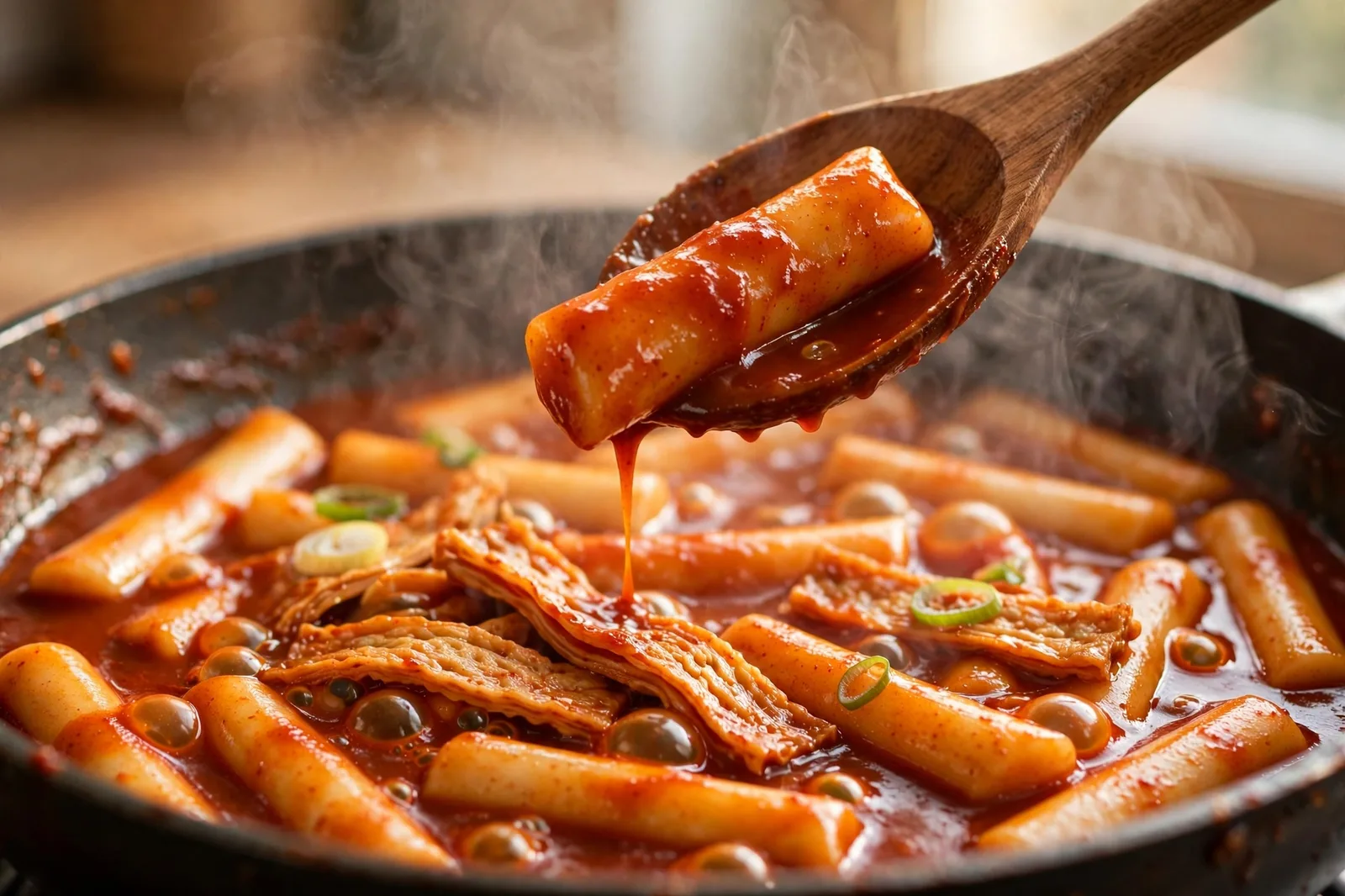
Tteokbokki is the taste of Korean street food in its purest form: chewy rice cakes bathed in a glossy, brick-red sauce that is sweet, spicy, and savory all at once. The sauce clings to every piece, the rice cakes go soft and bouncy in the middle, and the whole pan smells of garlic, gochujang, and toasted sesame before you even take a bite.
You will find it everywhere in Korea — at pojangmacha tents, in food courts, and simmering in shallow pans at the center of tables where everyone reaches in with chopsticks. It is casual food, built for sharing, and it is also one of the easiest Korean dishes to make well at home. The ingredient list is short, the method is mostly simmering, and the result is hard to mess up once the sauce balance clicks.
What Tteokbokki Is
At its heart, tteokbokki is just two things: garaetteok (cylinder-shaped rice cakes made from pounded short-grain rice) and a sauce built from gochujang, the fermented Korean chili paste. Everything else — fish cakes, boiled eggs, ramen noodles, cheese — is an addition that vendors and home cooks layer on over the years.
The original version of the dish was not spicy at all. In the Joseon dynasty, tteokbokki was a savory royal-court dish flavored with soy sauce. The spicy red version everyone knows today showed up in the 1950s, when a vendor in Seoul started cooking rice cakes in gochujang, and it never looked back.
The Rice Cakes
Look for garaetteok at Korean or pan-Asian markets, sold fresh in vacuum packs, frozen, or occasionally dried. Fresh and frozen both work well. Frozen rice cakes should be soaked in warm water for 15 to 20 minutes to soften before cooking, which helps them cook evenly and stay tender rather than tough at the center.
If you can only find the sliced oval rice cakes (tteokguk tteok), they will work in a pinch, but the thick cylinders are the real thing — their chew is what makes the dish.
Tteokbokki
Chewy Korean rice cakes simmered with fish cakes in a sweet-spicy gochujang sauce, finished with sesame seeds.
Prep time: 10 minutes
Cook time: 20 minutes
Total time: 30 minutes
Servings: 4
Ingredients
- 1 pound (450 g) Korean rice cakes (garaetteok), fresh or frozen
- 3 cups water or low-sodium chicken stock
- 3 tablespoons gochujang (Korean chili paste)
- 1 tablespoon gochugaru (Korean chili flakes), plus more to taste
- 2 tablespoons sugar
- 1 tablespoon soy sauce
- 2 cloves garlic, minced
- 8 ounces Korean fish cakes (eomuk), cut into bite-size strips or triangles
- 1/2 small yellow onion, sliced
- 3 scallions, cut into 2-inch lengths
- 2 hard-boiled eggs, halved (optional)
- 1 teaspoon toasted sesame oil
- 1 tablespoon toasted sesame seeds
Instructions
- If your rice cakes are frozen, soak them in warm water for 15 to 20 minutes while you prep everything else, then drain. Fresh rice cakes can go straight into the pan.
- Combine the water or stock, gochujang, gochugaru, sugar, soy sauce, and garlic in a wide, shallow pan or skillet. Stir until the gochujang dissolves, then bring to a boil over medium-high heat.
- Add the rice cakes and onion. Reduce the heat to medium and simmer, stirring often so the rice cakes do not stick, for 8 to 10 minutes. The sauce will thicken and the rice cakes will soften.
- Stir in the fish cakes and simmer 5 to 7 minutes more, until the sauce is glossy and thick enough to coat a spoon and the rice cakes are tender all the way through. Taste the sauce: add more sugar for sweetness, more gochugaru for heat, or a splash of soy sauce for salt.
- Fold in the scallions and the halved eggs, if using, and simmer for 1 minute more. Drizzle the sesame oil over the top, scatter with sesame seeds, and serve straight from the pan while the sauce is bubbling.
Notes
- Keep stirring, especially in the last few minutes. The rice starch thickens the sauce fast, and it can catch on the bottom of the pan.
- Gochujang brands vary in sweetness and heat. Start with the amounts above and adjust — that is how the street vendors do it.
- The sauce should be thick enough to cling, not watery. If it looks thin, simmer a few minutes longer. If it gets too thick, add a splash of water.
Getting the Sauce Right
The sauce is the whole dish, so it is worth getting the balance right. Gochujang brings deep fermented flavor and moderate heat; gochugaru brings a brighter, sharper heat on top. Sugar rounds everything out — tteokbokki is noticeably sweeter than many Western palates expect, and that sweetness is not optional. It is what makes the sauce glossy and what keeps the heat from being one-dimensional.
Taste before the rice cakes go in, and taste again at the end. The rice cakes are fairly neutral, so the sauce should taste a little too bold on its own — it mellows once everything comes together.
Stock makes a richer sauce than water, but plenty of vendors use water and it still turns out great. What matters most is the simmer: giving the rice cakes time to absorb the sauce while the sauce reduces down to a coating.
Serving and Add-Ins
Tteokbokki is traditionally served straight from the pan, bubbling, with everyone eating together. A bowl of steamed rice alongside is common, and the extra sauce over plain rice is one of the great low-key pleasures of the dish.
Street vendors are famous for their add-ins, and you can borrow freely:
- Ramen noodles: add a block of instant ramen in the last 3 minutes (rabokki, the classic mashup).
- Cheese: scatter shredded mozzarella over the top, cover for a minute, and let it melt into the sauce.
- Cabbage: shredded napa cabbage folded in with the fish cakes adds sweetness and bulk.
- Perilla leaves: torn fresh leaves stirred in at the end bring a minty, aromatic lift.
- Bacon or spam: browned first, then simmered with the rice cakes for a savory twist.
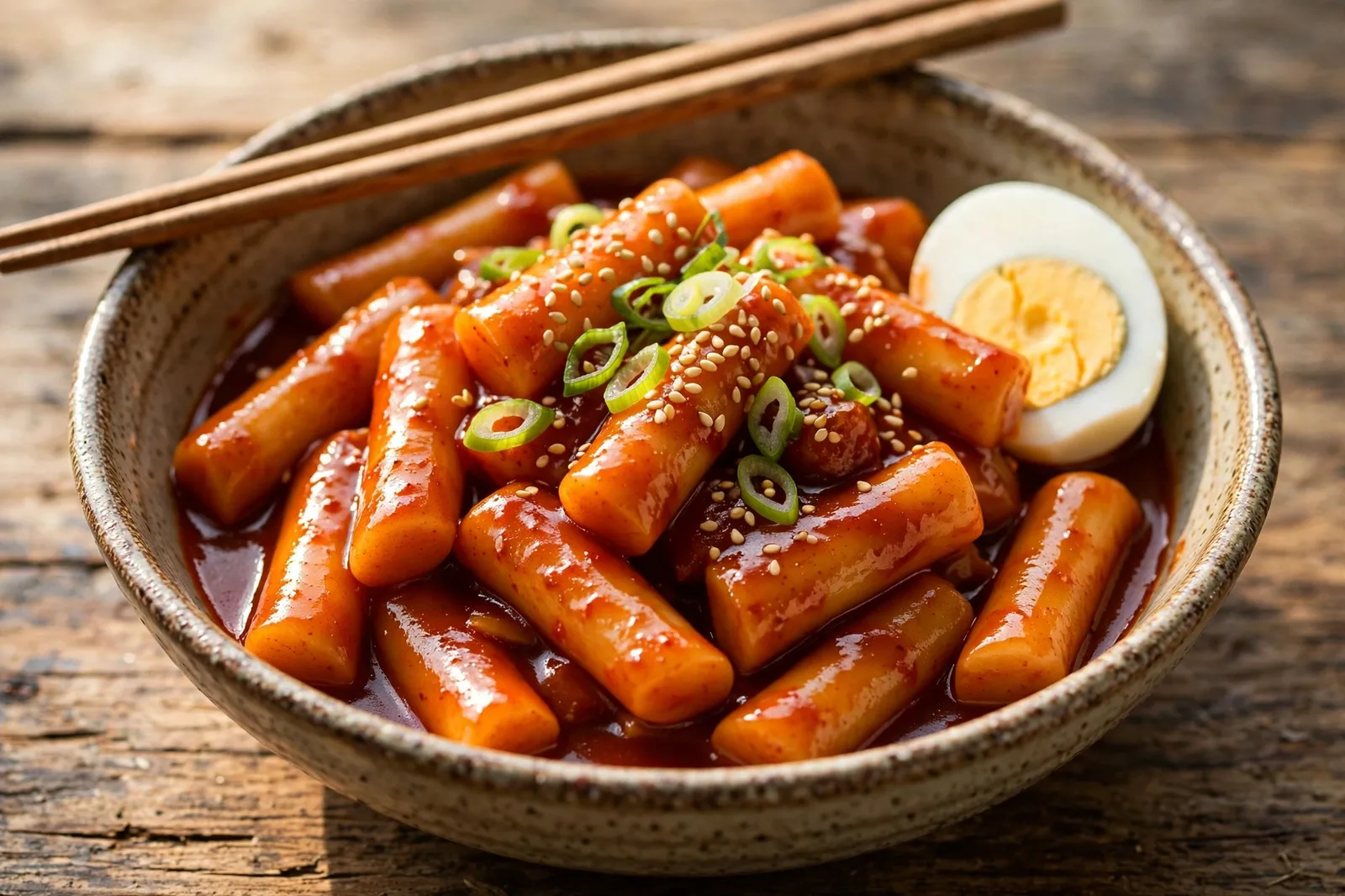
For a meal that hits the Korean comfort-food trifecta, serve tteokbokki alongside kimchi fried rice — those two are a natural pair — or start with a crisp side like Oi Muchim: Korean Cucumber Salad to cut through the richness. The same sweet-savory balance runs through japchae, the Korean glass noodle stir-fry, which makes a milder companion dish when you want contrast at the table.
Storing and Reheating
Tteokbokki is best eaten fresh — the rice cakes keep firming as they cool and never quite return to their original bounce. That said, leftovers keep in the fridge for up to 2 days. Reheat gently in a pan with a splash of water, stirring until the sauce loosens and the rice cakes are hot through. Do not freeze it; the rice cakes turn grainy.
Final Thoughts
Tteokbokki asks almost nothing of you: a pan, a handful of pantry staples, and twenty minutes of simmering. Keep the sauce balanced, stir so nothing sticks, and pull it off the heat when the sauce is glossy and clinging. What lands on the table is street food the way it should be — hot, spicy-sweet, and meant to be shared.
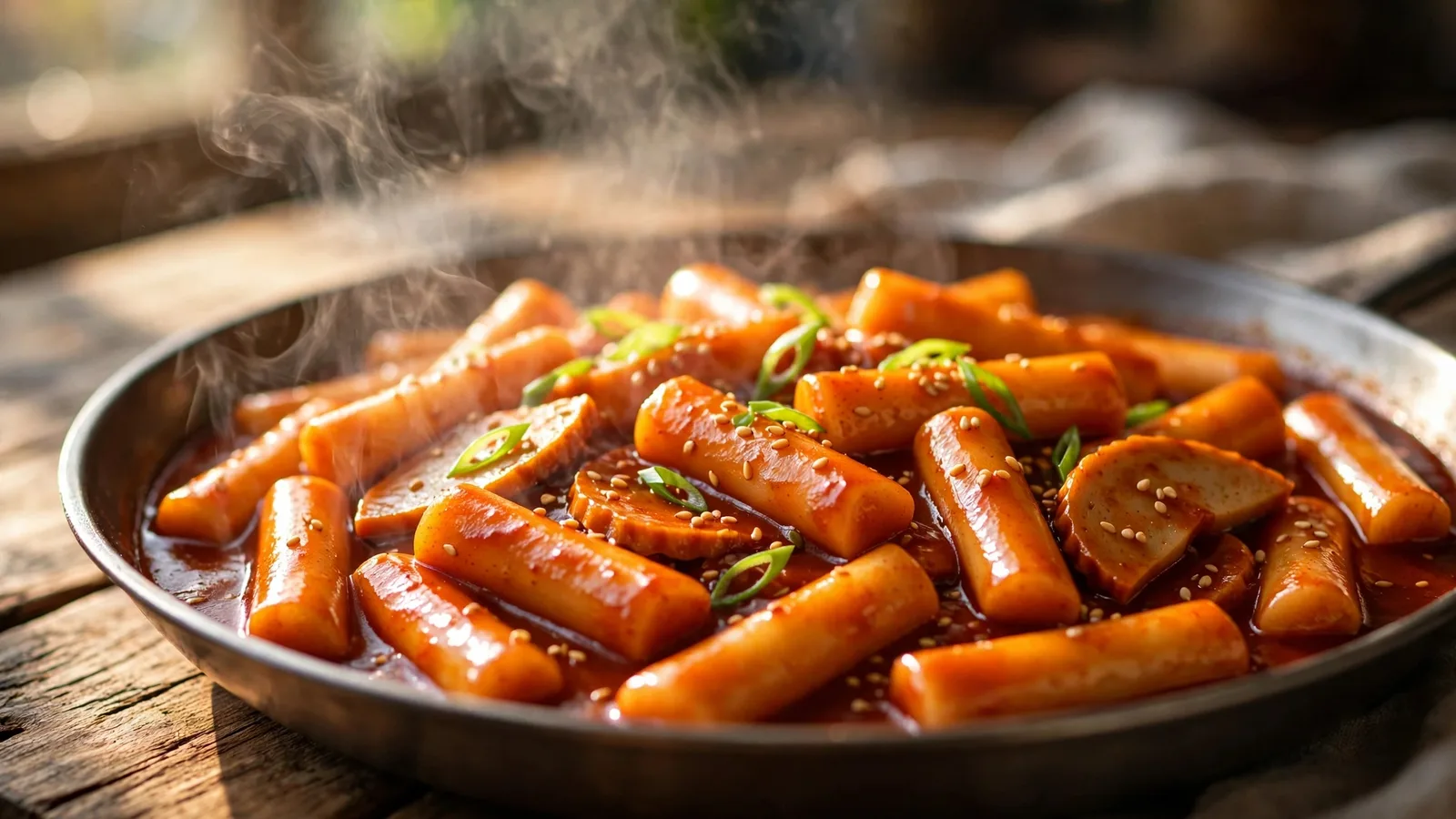
Tteokbokki: Spicy Korean Rice Cakes
Ingredients
Method
- If your rice cakes are frozen, soak them in warm water for 15 to 20 minutes while you prep everything else, then drain. Fresh rice cakes can go straight into the pan.
- Combine the water or stock, gochujang, gochugaru, sugar, soy sauce, and garlic in a wide, shallow pan. Stir until the gochujang dissolves, then bring to a boil over medium-high heat.
- Add the rice cakes and onion. Reduce the heat to medium and simmer, stirring often so the rice cakes do not stick, for 8 to 10 minutes. The sauce will thicken and the rice cakes will soften.
- Stir in the fish cakes and simmer 5 to 7 minutes more, until the sauce is glossy and thick enough to coat a spoon and the rice cakes are tender all the way through. Adjust sugar, gochugaru, or soy sauce to taste.
- Fold in the scallions and the halved eggs, if using, and simmer for 1 minute more. Drizzle the sesame oil over the top, scatter with sesame seeds, and serve straight from the pan while bubbling.