
Dak galbi is the pan I put in the middle of the table when dinner needs to feed four people without a second pot. Chicken thighs, sweet potato, cabbage, and rice cakes all cook in one wide skillet, and the sauce that coats them turns into fried rice at the end. One pan, two courses, and no one has to wait for a side dish to catch up.

What is dak galbi?
Dak means chicken, and galbi here is a name borrowed from grilled ribs, even though this dish has no ribs in it. Dak galbi is a spicy stir-fried chicken dish from Chuncheon, a city in South Korea, where restaurants cook it on a large flat pan at the table. Boneless chicken thighs marinate in a gochujang sauce, then cook with cabbage, sweet potato, onion, and rice cakes until the sauce thickens and clings to everything.
Expect heat that builds rather than hits all at once, sweetness sitting under the spice, and a mix of textures in every scoop: soft sweet potato, wilted cabbage, chewy rice cakes, and chicken that stays tender because thighs forgive a few extra minutes in the pan. It is a sharing dish by design. Set the pan on a trivet, hand out bowls, and let people pick from it while it stays warm.
The same gochujang family drives my Korean Fried Chicken (Yangnyeom), but there the sauce is a glaze on a crisp crust. Here the sauce is the cooking liquid, so it needs water, a lid, and time to reduce, or it burns before the sweet potato softens.
The 3-1 sauce ratio
The sauce for 1 1/2 pounds of chicken thighs is 3 tablespoons of gochujang to 1 tablespoon of gochugaru, with 2 tablespoons of soy sauce, 1 tablespoon of mirin, 1 tablespoon of sugar, 1 tablespoon of minced garlic, 1 teaspoon of grated ginger, 1 teaspoon of curry powder, 1 tablespoon of sesame oil, and 2 tablespoons of water. That 3-1 gochujang to gochugaru ratio is the number to keep. Gochujang alone gives body and sweetness but a flat kind of heat; the gochugaru adds the sharper chili edge on top.
Stir the sauce until the gochujang loosens into a smooth paste, then toss the chicken in it and let it sit for at least 30 minutes. The sugar in the sauce is the part that burns, so do not cook this on high heat with a dry pan. Medium heat, a lid, and a splash of water when the pan looks dry will keep the sauce glossy instead of scorched. If you need a stand-in for the paste, my gochujang substitutes post covers the swaps that hold up in a sauce like this one.
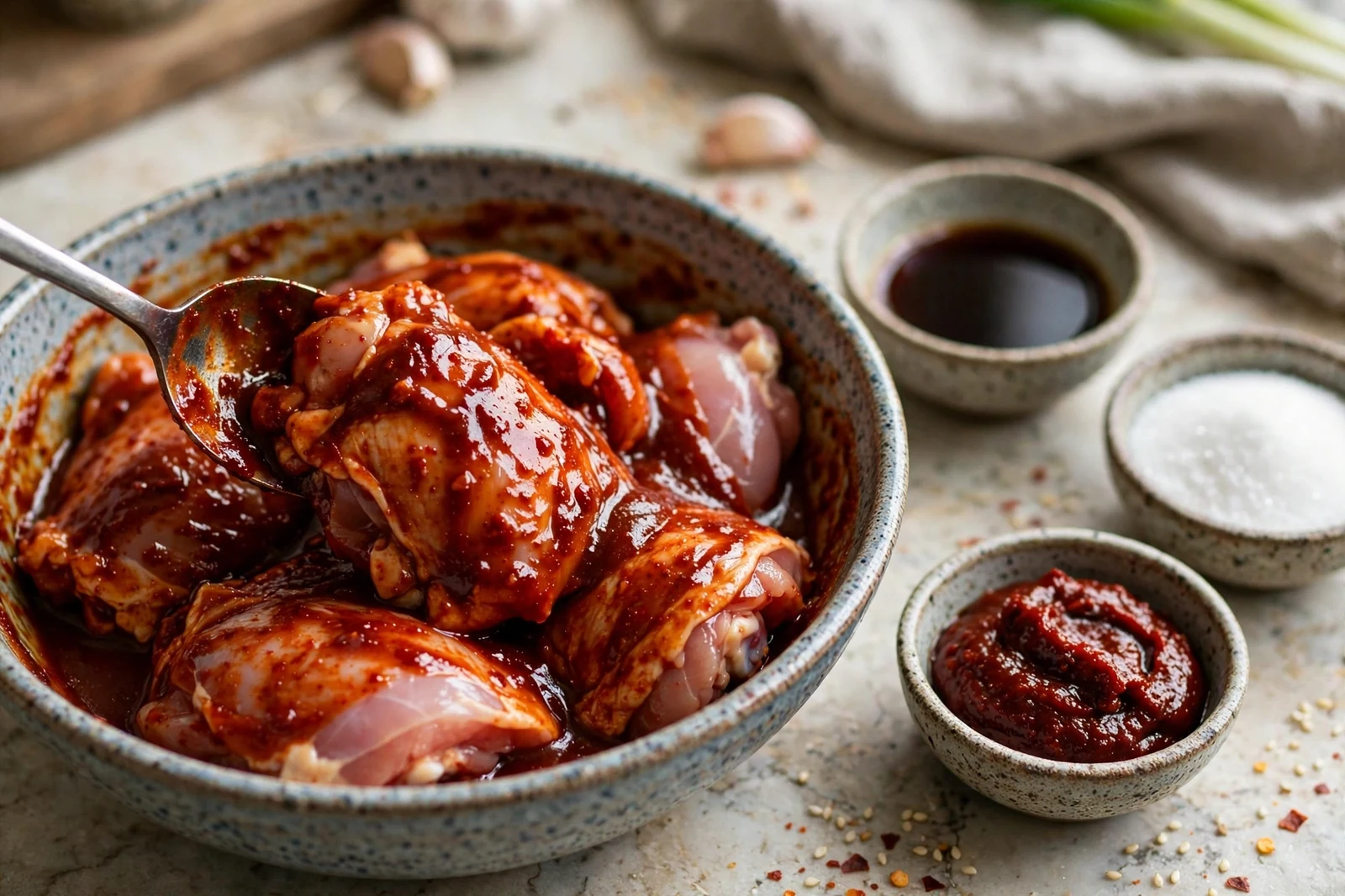
Cut the sweet potato thin, soak the rice cakes
Two prep steps decide whether this dish finishes at the same time. Slice the sweet potato into rounds no thicker than 1/4 inch, then cut the rounds in half. A 1/2-inch round stays hard in the center long after the chicken is done, and by the time it softens, the chicken has dried out and the sauce has reduced too far. Thin rounds turn tender in the same 20 minutes the chicken needs.
Soak the rice cakes in cold water for 20 minutes while the chicken marinates, then drain them. Dry rice cakes from the fridge go straight into a hot pan and glue themselves to it, and once they stick they tear when you stir. Soaked cakes stay separate, turn soft in the last few minutes, and keep their chew instead of turning to paste.
Layer the pan, then let the lid do the work
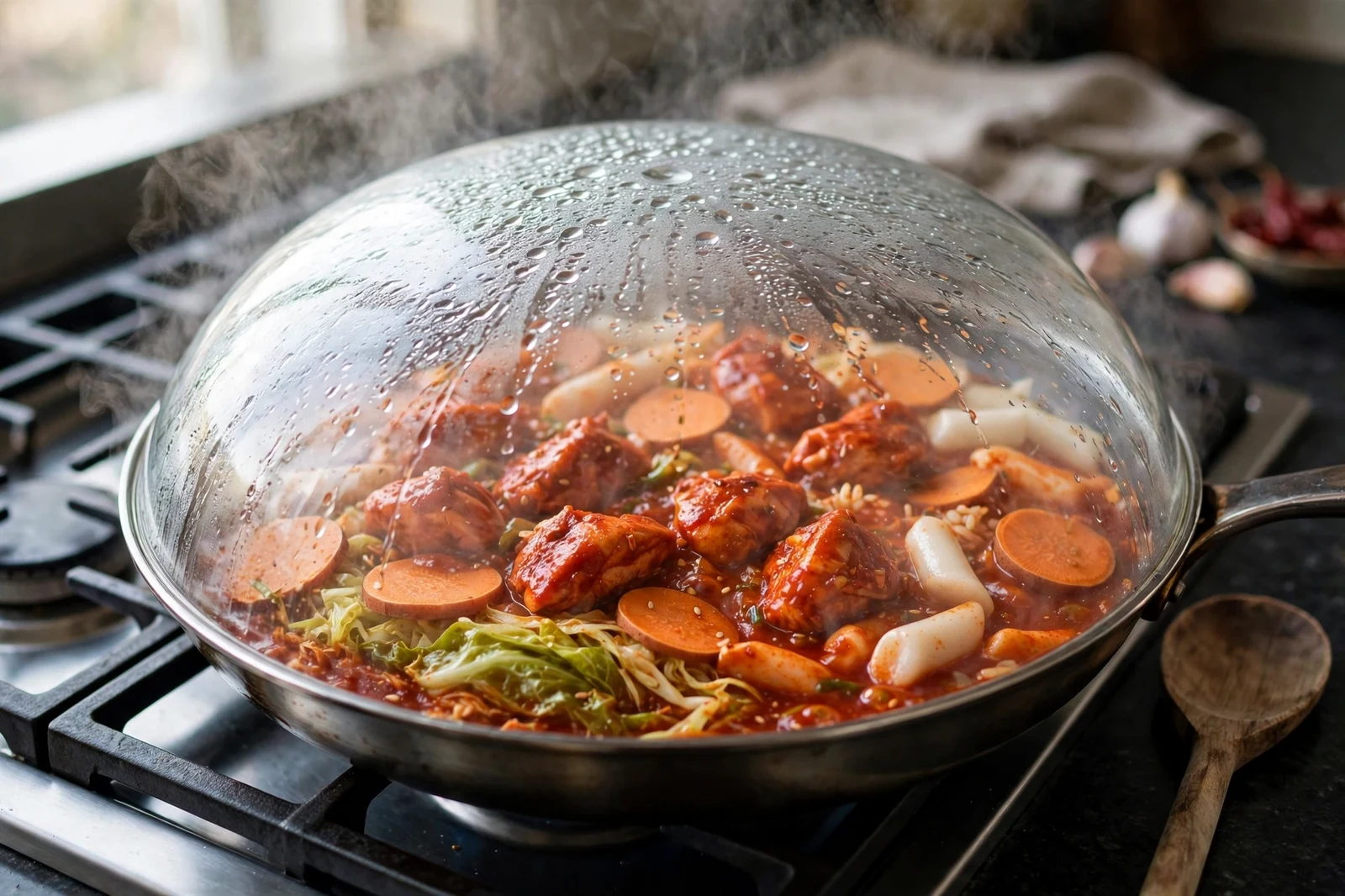
Use the widest skillet you own, at least 12 inches, and layer it in this order: cabbage on the bottom, onion over it, sweet potato rounds next, then the marinated chicken and rice cakes on top. Pour the 2 tablespoons of water around the edge, not over the chicken, and put the lid on. The cabbage on the bottom protects the sauce from the direct heat, and the steam from the vegetables cooks the chicken from above while the bottom simmers.
Cook covered over medium heat for 5 minutes, then stir everything together and cook uncovered for 10 to 15 minutes more, stirring every few minutes. The uncovering step matters. Cabbage gives off a lot of water, and if the lid stays on for the whole cook, that water thins the sauce into a soup. Uncovered, the extra liquid cooks off and the sauce thickens until it coats a spoon. The chicken is done when it reaches 165 degrees Fahrenheit at the thickest piece and the sweet potato yields to a fork.
The fried-rice finish
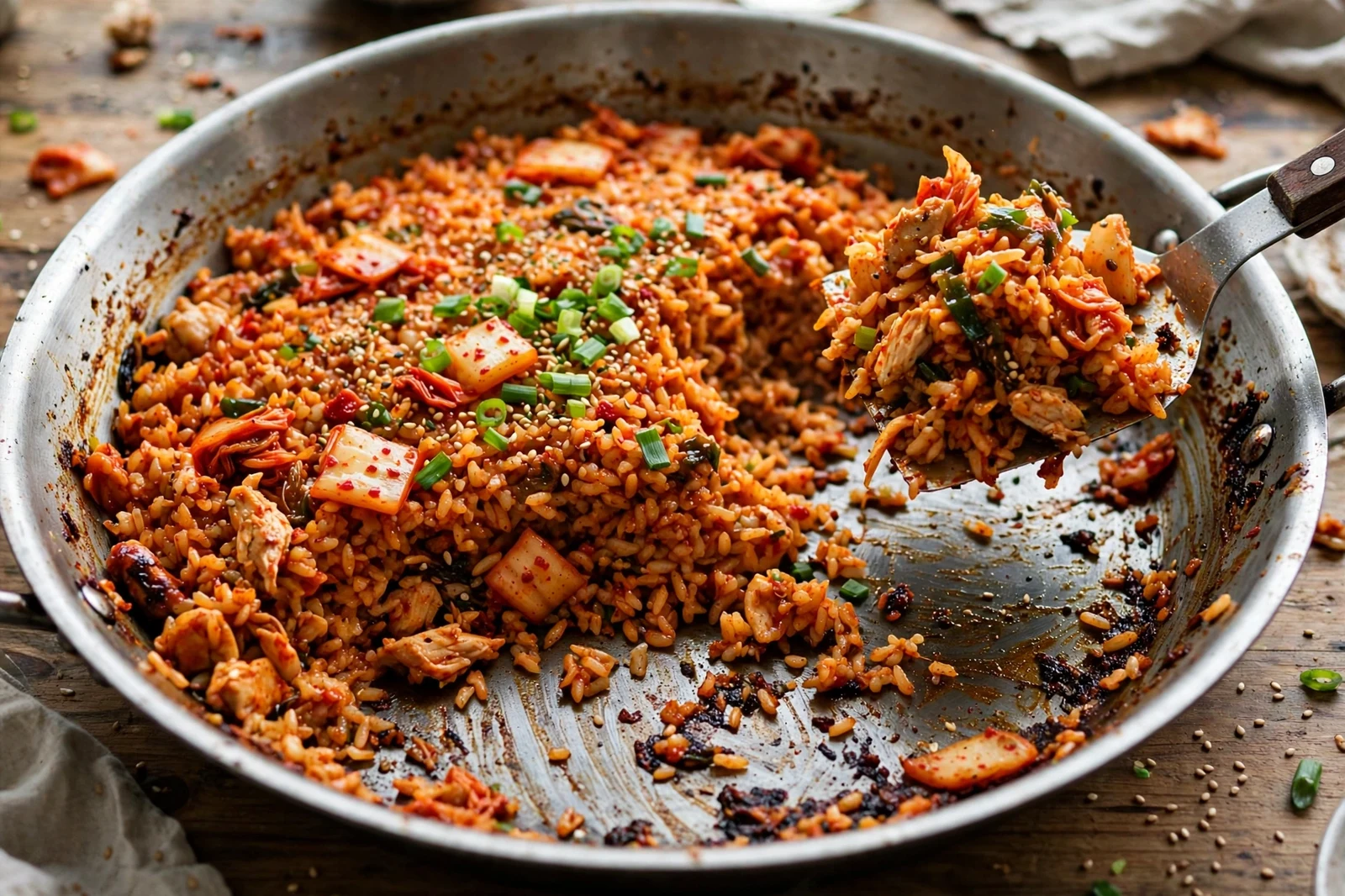
Do not wash the pan when the chicken is gone. If a few spoonfuls of sauce and some stray bits of chicken and cabbage are left, that is the start of the second course. Add 2 cups of cooked, cooled rice and 1/4 cup of chopped kimchi to the pan with 1 teaspoon of sesame oil, press the rice down flat, and leave it alone for 2 to 3 minutes over medium heat. Then stir, press again, and cook 2 minutes more.
The press-and-wait step is what makes this fried rice instead of warmed rice with sauce on it. Rice that is stirred nonstop never touches the hot pan long enough to crisp. Rice that sits undisturbed forms a thin crisp layer on the bottom, and folding that layer back through the rest gives you the contrast that makes people go back for a second bowl.
Cheese, perilla, and udon: three ways to change the pan
Taste the sauce before the chicken goes in. It should read spicy first, then sweet, with salt behind it. If your gochujang runs hot, pull the gochugaru back to half a tablespoon; the gochujang alone carries plenty of heat. The full spoon ratio is 3 of gochujang to 1 of gochugaru to 2 of soy sauce to 1 of sugar, plus that teaspoon of curry powder, which is a common Chuncheon touch you will not taste as curry. The sauce just tastes flat without it. Marinate for at least 30 minutes, and up to overnight in the fridge; a short marinade leaves the flavor on the surface, while a longer one lets the sauce soak into the thigh meat. Thighs are the right cut here, since breast meat dries out over the same cooking time.
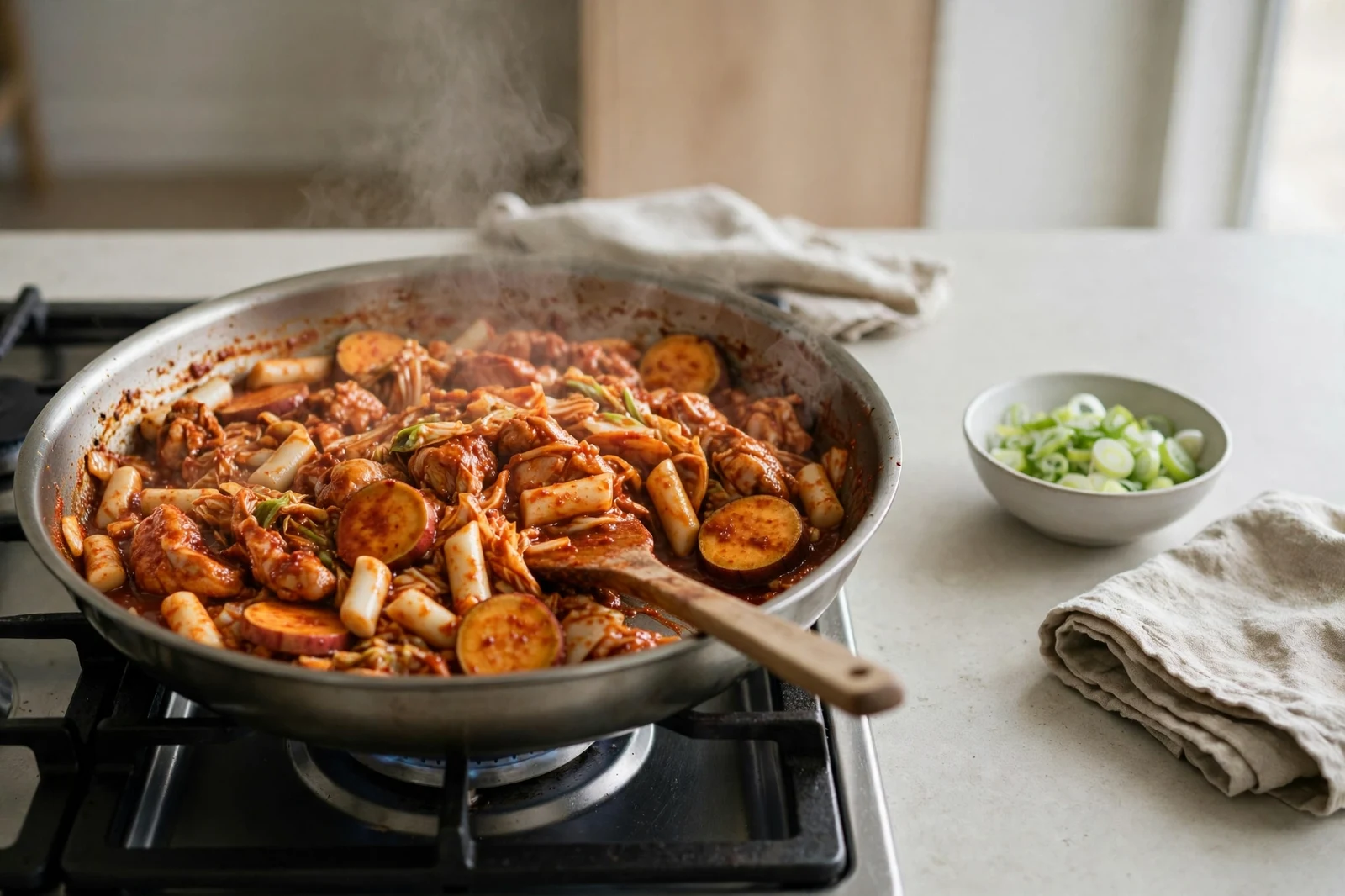
For cheese dakgalbi, push the cooked chicken to the edges of the pan, pile a cup of shredded mozzarella in the center, and put the lid on for 2 minutes until it melts, then pull the chicken through the cheese to eat it. The cheese tames the heat, which makes it a good move when the table has mixed spice tolerance.
Perilla leaves are another Chuncheon addition: tear a handful over the pan in the last 2 minutes so they wilt but keep their scent. Udon noodles work in place of the rice cakes if you want a softer bite; add them cooked, in the last 3 minutes, so they soak up sauce without going mushy. A bowl of kimchi jjigae on the side also fits, since the same kimchi goes into the fried-rice finish.
Leftovers keep in the fridge for 2 days, but the cabbage and rice cakes soften as they sit, so reheat them in a pan over medium heat with a splash of water rather than in the microwave. The fried-rice finish is best made the same night, while the sauce is still in the pan, and day-old rice works better than fresh, since the drier grains fry instead of clumping; my guide to cooking jasmine rice covers the cooling step that makes the difference. If the sweet potato is still hard when the chicken is done, add a splash of water, put the lid back on for 3 minutes, and check again, and if the pan looks dry at any point, add water 2 tablespoons at a time.
Troubleshooting: Fix My Dak Galbi
Most dak galbi trouble comes from the sweet potato, the rice cakes, or a pan that runs dry. Pick what went wrong below for a concrete next step.
HERB & LIME · KITCHEN HELP
Fix My Dak Galbi
Choose what went wrong to see a practical next step.
Possible cause
What to try next
For next time
From Paul's kitchen. Results vary with chicken size, oil, and stove heat, adjust timing to your setup.
Quick reference (also works without JavaScript)
The sweet potato is still hard in the center
Cause: Sweet potato rounds cut thicker than 1/4 inch need more time than the chicken, so they stay hard while the chicken finishes first.
Try: Lift the chicken out, add 2 tablespoons of water, cover, and cook the sweet potato alone for 5 more minutes until a fork goes in easily, then return the chicken to the pan.
Prevent: Slice the sweet potato into rounds no thicker than 1/4 inch and cut the rounds in half, so they turn tender in the same 20 minutes the chicken needs.
The rice cakes stuck to the pan and turned gluey
Cause: Dry rice cakes from the fridge go into a hot pan with no surface moisture, so their starch bonds to the pan and tears when stirred.
Try: Leave the stuck pieces where they are and add a splash of water, cover for 2 minutes to loosen them, then stir gently instead of scraping hard.
Prevent: Soak the rice cakes in cold water for 20 minutes and drain them before cooking, and add them late in the cook so they heat through without sitting in the pan too long.
The sauce burned and tastes bitter
Cause: The sugar in the gochujang sauce scorches when the pan runs dry on high heat, and scorched sugar turns bitter fast.
Try: Move everything to a clean pan, add a fresh spoonful of gochujang mixed with 2 tablespoons of water, and finish on medium heat.
Prevent: Cook on medium heat with the lid on for the first 5 minutes, and add water 2 tablespoons at a time whenever the pan looks dry.
The sauce is watery instead of thick and glossy
Cause: Cabbage gives off a lot of water as it cooks, and a lid left on for the whole cook traps that water in the sauce.
Try: Take the lid off and cook uncovered over medium heat for 5 minutes, stirring every minute, until the sauce coats a spoon.
Prevent: Cook covered for the first 5 minutes only, then uncover and stir regularly so the extra liquid cooks off while the chicken finishes.
The chicken came out dry and tough
Cause: Chicken breast dries out in this kind of covered simmer, and thighs left past 165 degrees Fahrenheit also tighten up and lose moisture.
Try: Slice the dry chicken thin and toss it back through the sauce for a minute so the pieces pick up moisture from the pan, then serve at once.
Prevent: Use boneless chicken thighs, not breast, and pull the pan off the heat when the thickest piece reaches 165 degrees Fahrenheit.
Dak Galbi: Korean Spicy Stir-Fried Chicken
Ingredients
Method
- Make the sauce: stir the gochujang, gochugaru, soy sauce, mirin, sugar, garlic, ginger, curry powder, sesame oil, and water until smooth. Toss the chicken pieces in the sauce and let them sit for at least 30 minutes. Soak the rice cakes in cold water for 20 minutes while the chicken marinates, then drain.
- Layer the pan: in a wide 12-inch skillet, layer the cabbage on the bottom, then the onion, then the sweet potato rounds, then the marinated chicken and drained rice cakes on top. Pour the water around the edge of the pan, not over the chicken, and put the lid on.
- Cook covered over medium heat for 5 minutes, then stir everything together. Cook uncovered for 10 to 15 minutes more, stirring every few minutes and adding water 2 tablespoons at a time if the pan looks dry, until the chicken reaches 165 degrees Fahrenheit and the sweet potato yields to a fork.
- Serve: scatter the scallions and sesame seeds over the pan. Serve straight from the pan with steamed rice or lettuce leaves for wrapping.
- Fried-rice finish: when the chicken is gone and sauce remains in the pan, add the cooked rice, kimchi, and sesame oil. Press the rice flat and leave it alone for 2 to 3 minutes over medium heat, then stir, press again, and cook 2 minutes more until some bits crisp.
Notes
What to serve with it
Steamed rice is the plain match, and it soaks up sauce the fried-rice finish does not get. Lettuce leaves work for wrapping, and a small dish of kimchi on the side cuts through the sweetness of the sauce. If you want a second Korean dish on the table, Pajeon gives you a crisp, savory pancake next to a saucy pan.
More Korean recipes
Four more from the same shelf: Japchae is the glass noodle stir-fry for nights you want noodles instead of rice; Korean Bulgogi Chicken uses a soy-based marinade with no chili heat at all; Tteokbokki puts the same rice cakes in a sauce of their own; and Kimchi Fried Rice is the everyday version of the fried-rice finish here.
From the garden
The scallions scattered over the finished pan came from a pot by the kitchen window. Green onions regrow from their cut bases in water, which is why they are the one garnish I almost never buy. My green onion growing guide has the whole method.
1 thought on “Dak Galbi: Korean Spicy Stir-Fried Chicken”