
What Gochujang Actually Brings to a Dish
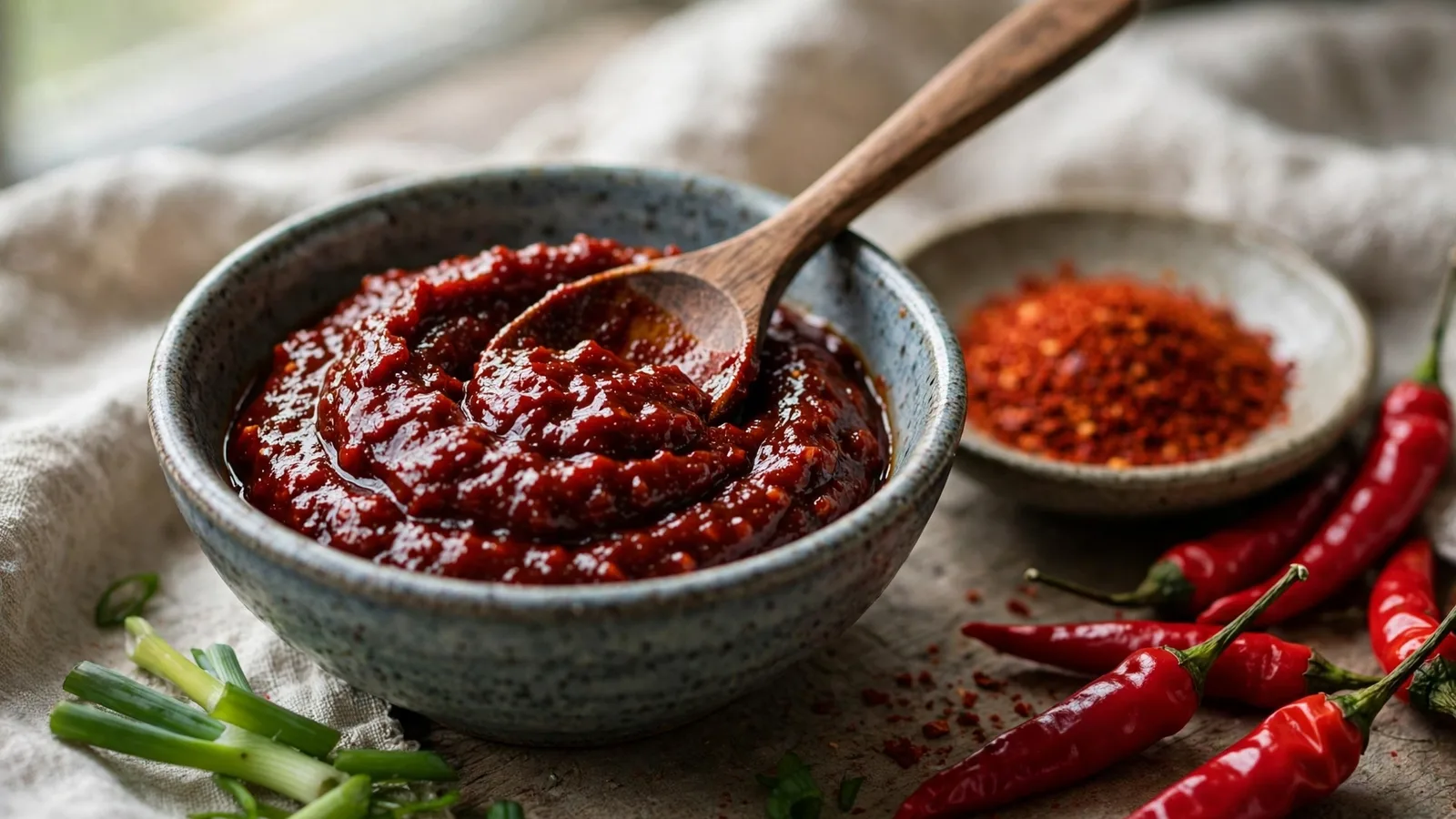
Gochujang is a fermented Korean chili paste made from gochugaru (Korean chili flakes), glutinous rice, fermented soy, and salt. That short ingredient list gives it four jobs at once: gentle sweetness from the rice, steady heat from the chili, savory depth from fermentation, and a thick body that coats rice cakes, chicken, and vegetables instead of running off them. It also brings the deep red color that makes a bowl of bibimbap or a pan of tteokbokki look right.
That is also why there is no perfect one-bottle swap. Gochujang is at its strongest when a dish needs all four things together — sweet, spicy, savory, and thick — especially in sauces that simmer, like the one in Tteokbokki: Spicy Korean Rice Cakes. Every substitute below rebuilds that balance from parts: something hot, something fermented or savory, something sweet, and enough body to hold it together. Pick by the job, not by whatever red jar is closest in the fridge.
Quick Picker: Match the Swap to the Dish
| Substitute | Swap for 1 Tbsp gochujang | Best for | Watch out for |
|---|---|---|---|
| DIY gochugaru-miso paste | 2 tsp miso + 1 tsp gochugaru + 1 tsp sugar or honey + 1/2 tsp soy sauce, splash of water | Bibimbap, tteokbokki, glazes — closest overall | Gochugaru heat varies by brand; start mild and add |
| Sambal oelek blend | 2 tsp sambal oelek + 1 tsp miso + 1 tsp sugar | Stews, stir-fries, noodle sauces | Fresher and brighter than gochujang, less sweet body |
| Sriracha blend | 2 tsp sriracha + 1 tsp miso + 1/2 tsp sugar | Marinades, dipping sauces, fried rice | Thin and vinegary; simmer briefly to thicken |
| Doubanjiang + sugar | 1 Tbsp doubanjiang + 1/2 tsp sugar, cut other salt | Stews and braises with big flavors | Saltier and more bean-forward; see the comparison below |
| Nam prik pao (Thai chili jam) | 1 Tbsp, plus a pinch less sugar elsewhere | Stir-fries, fried rice, noodle soups | Sweet, oily, and distinctly Thai; not for Korean stews |
| Chipotle in adobo, minced | 2 tsp chipotle + 1 tsp sugar + 1 tsp miso | Grilled-chicken marinades, fusion tacos, mayo | Smoky first, Korean second — a detour, not a copy |
| Harissa + sugar | 2 tsp harissa + 1 tsp sugar + 1/2 tsp soy sauce | Marinades and roasted vegetables | Cumin/caraway notes move the dish toward North Africa |
| Tomato paste emergency paste | 2 tsp tomato paste + 1 tsp chili flakes + 1 tsp sugar + 1 tsp miso | Tteokbokki-style sauces when color and body matter most | Tomato flavor is faint but present; keep amounts small |
| Non-spicy miso blend | 1 Tbsp miso or doenjang + 1 tsp sugar + 1/2 tsp sesame oil | Mild bibimbap, kids' portions, soups | No heat and no red color; doenjang runs saltier than miso |
If you only remember one swap, remember the first row. The DIY paste is the only option that hits sweet, heat, fermentation, and thickness at the same time, and you control the heat instead of inheriting it from a bottle.
The Closest Swap: Mix Your Own
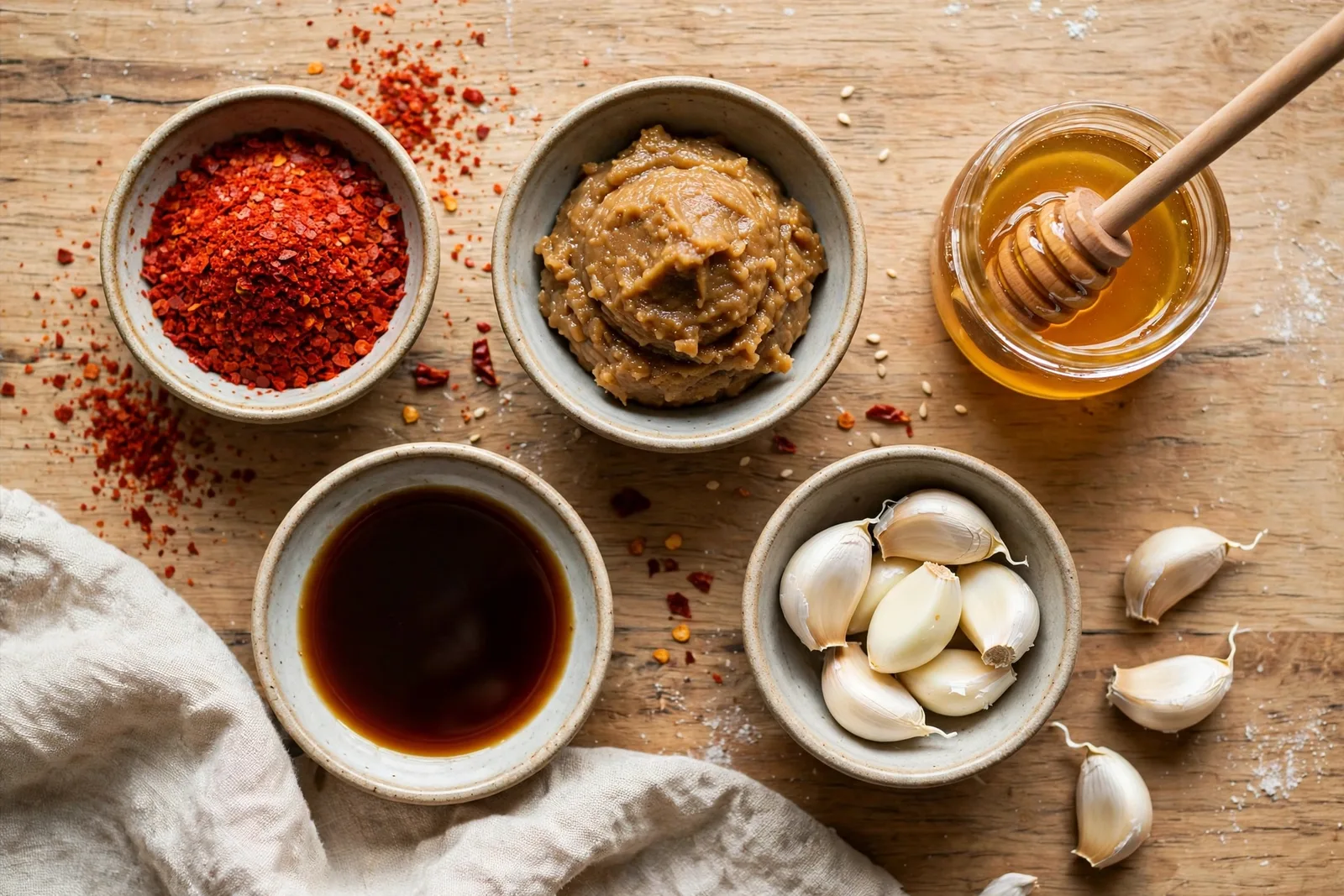
For about 1/3 cup of substitute paste — enough for a family-size bibimbap sauce or a pan of tteokbokki — stir together:
- 3 tablespoons miso (white for mild, red for deeper), or doenjang for a funkier, saltier paste
- 2 tablespoons gochugaru
- 1 tablespoon sugar or honey
- 2 teaspoons soy sauce
- 1 to 2 tablespoons warm water, added a spoonful at a time until it drops off a spoon in a thick ribbon
- 1 small clove garlic, grated (optional, best when the paste will not be cooked long)
Each part has a role. The miso stands in for the fermented soy base and brings the savory depth. The gochugaru is the actual chili in gochujang, so this mix tastes closer than any hot-sauce swap. Sugar or honey replaces the sweetness that glutinous rice gives the real paste, and the water rebuilds the body. If all you have is generic red pepper flakes, use half the amount to start — they are usually sharper and seedier than gochugaru — then add more in small pinches. Leftover paste keeps in a small sealed jar in the fridge for about a week.
Swap by Situation
For Bibimbap
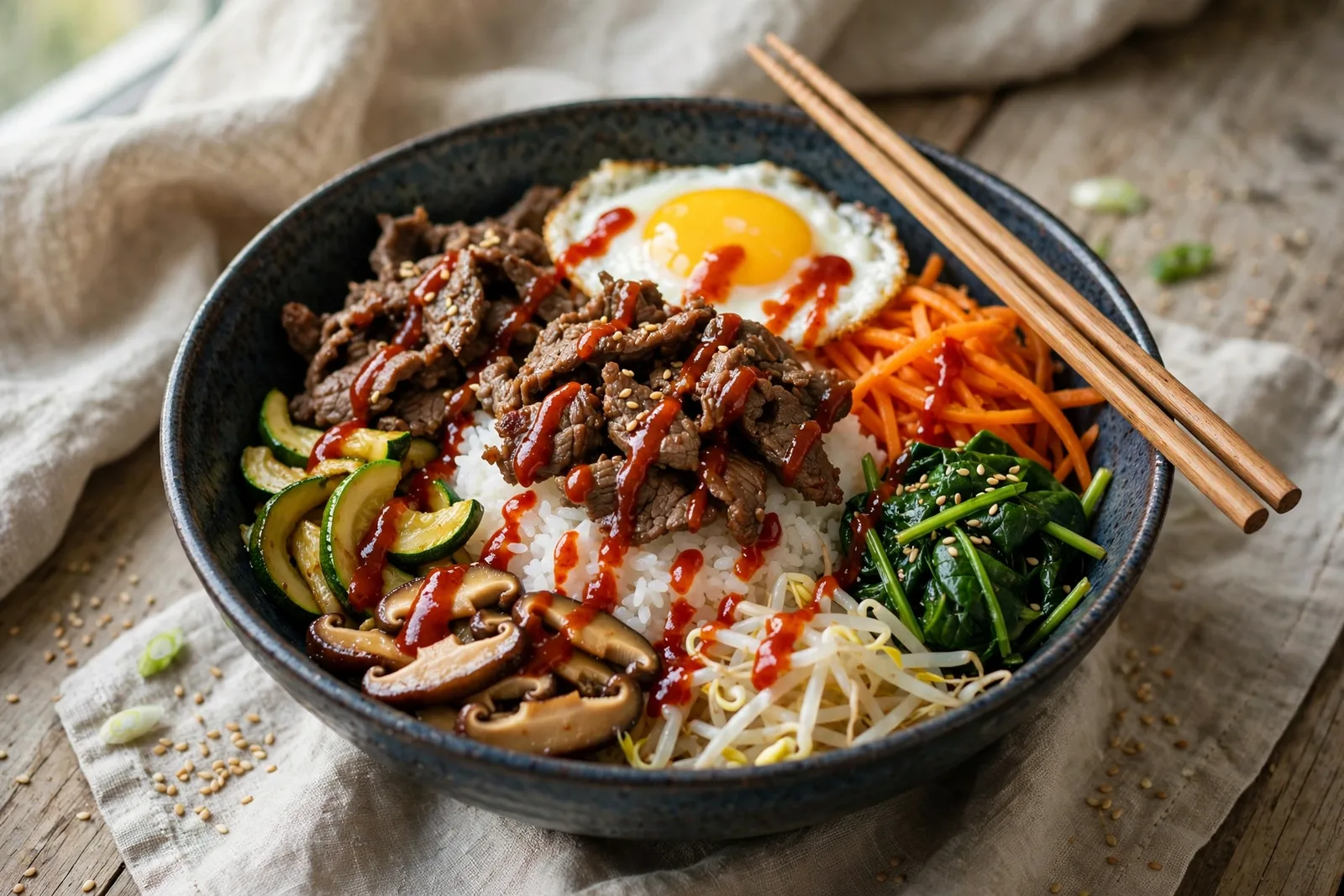
Bibimbap sauce needs to be loose enough to drizzle and mix through hot rice, not a stiff paste sitting in one spot. Thin the DIY paste with 1 tablespoon of water and 2 teaspoons of sesame oil per 2 tablespoons of paste, then add grated garlic and a pinch more sugar if your toppings are mostly plain vegetables. The sriracha blend also works here because bibimbap gets mixed hard — the thin texture disappears into the rice, and the vinegar reads as brightness. Spoon the sauce over each bowl separately so everyone gets the amount of heat they want.
For Tteokbokki and Other Simmered Sauces
A simmered sauce needs body that survives 10 minutes of bubbling without turning watery or splitting. The DIY paste is the first choice, with doubanjiang plus sugar as the backup when the sauce has other strong flavors around it. Stir the paste in early with the stock so the miso melts fully, and keep the sugar in — tteokbokki sauce is supposed to be sweet-spicy, and a substitute that skips the sugar tastes harsh. If color and thickness matter more than heat, the tomato paste emergency paste gets the look right; add extra chili flakes a little at a time rather than all at once.
For Stews: Kimchi Jjigae and Budae Jjigae
In Kimchi Jjigae: Korean Kimchi Stew, gochujang rounds out sour, well-fermented kimchi and adds body to the broth. The sambal-miso blend fits best because the stew is already assertive and does not need much sweetness. In Budae Jjigae: Korean Army Stew, the paste has to stand up to spam, sausage, and cheese, so doubanjiang plus sugar can hold its own — but go easy on added soy sauce, because the processed meats and kimchi brine already bring plenty of salt.
For Marinades, Glazes, and Fried Rice
Marinades and glazes forgive thinner substitutes because the sauce cooks down and clings as it heats. The sriracha blend is the easy reach here, and chipotle or harissa blends are fair game when you are happy for the dish to travel a little — a gochujang-style chicken marinade with chipotle becomes smoky rather than Korean, which is fine as long as that is the plan. For fried rice, whisk any of the paste blends with a teaspoon of oil and toss it in off the heat at the end so the sugars do not scorch; the method sits naturally next to Kimchi Fried Rice, where the chili paste goes in as a seasoning rather than a sauce.
When You Want It Not Spicy
A non-spicy swap cannot copy the color or the heat, so aim for the other two jobs: fermented depth and gentle sweetness. Use the non-spicy miso blend from the table — miso for a milder, sweeter base, or doenjang if you want the stronger fermented flavor and will cut salt elsewhere. Stir in sesame oil and a little grated garlic, and for bibimbap add a splash of water so it still mixes through the rice. The practical move for a mixed table is to make the mild base for everyone, keep the paste mild at the stove, and put gochugaru or sliced fresh chilies at the table for the people who want heat.
What Not to Swap 1:1
Hot sauce alone. A straight tablespoon of hot sauce gives heat and acid but no sweetness, no fermentation, and no body. The sauce turns thin and sharp. If hot sauce is what you have, it has to become the sriracha blend above — miso and sugar are not optional extras.
Gochugaru alone. The flakes are a dry seasoning, not a paste. Sprinkled in 1:1 by volume, they deliver heat with nothing to carry it, and the raw flakes can taste gritty in a sauce. Gochugaru works when miso, sugar, and water turn it back into a paste.
Doubanjiang without adjusting. Chinese doubanjiang is fermented and spicy like gochujang, but it is saltier, often oilier, and built on broad beans rather than rice, so it reads earthier and less sweet. The full side-by-side is in Gochujang vs Doubanjiang: A Chili Paste Showdown — for a swap, add the sugar and pull back other salty seasonings.
Ketchup. On its own it is sweet tomato with no fermentation and no real heat. It only earns a place inside the small tomato paste emergency paste, where miso and chili flakes supply what it lacks.
If You Cook Korean Food Often
If Korean recipes show up in your week more than once or twice a month, a tub of real gochujang is worth the fridge space. It keeps for months refrigerated, and a spoonful at a time covers stews, sauces, and marinades without mixing a substitute each time. Check the label before you buy: traditional styles list chili, rice, fermented soy, and salt up front, while some sweetened brands lean heavily on corn syrup and read much sweeter — cut the sugar in your recipe a little if yours is one of those. Gochugaru is the second bottle worth owning, since it powers the closest substitute above and seasons half the Korean dishes you will make. Both sit comfortably in the core pantry covered by The Essential Asian Pantry: 20 Staples to Start With.
1 thought on “Gochujang Substitutes”