
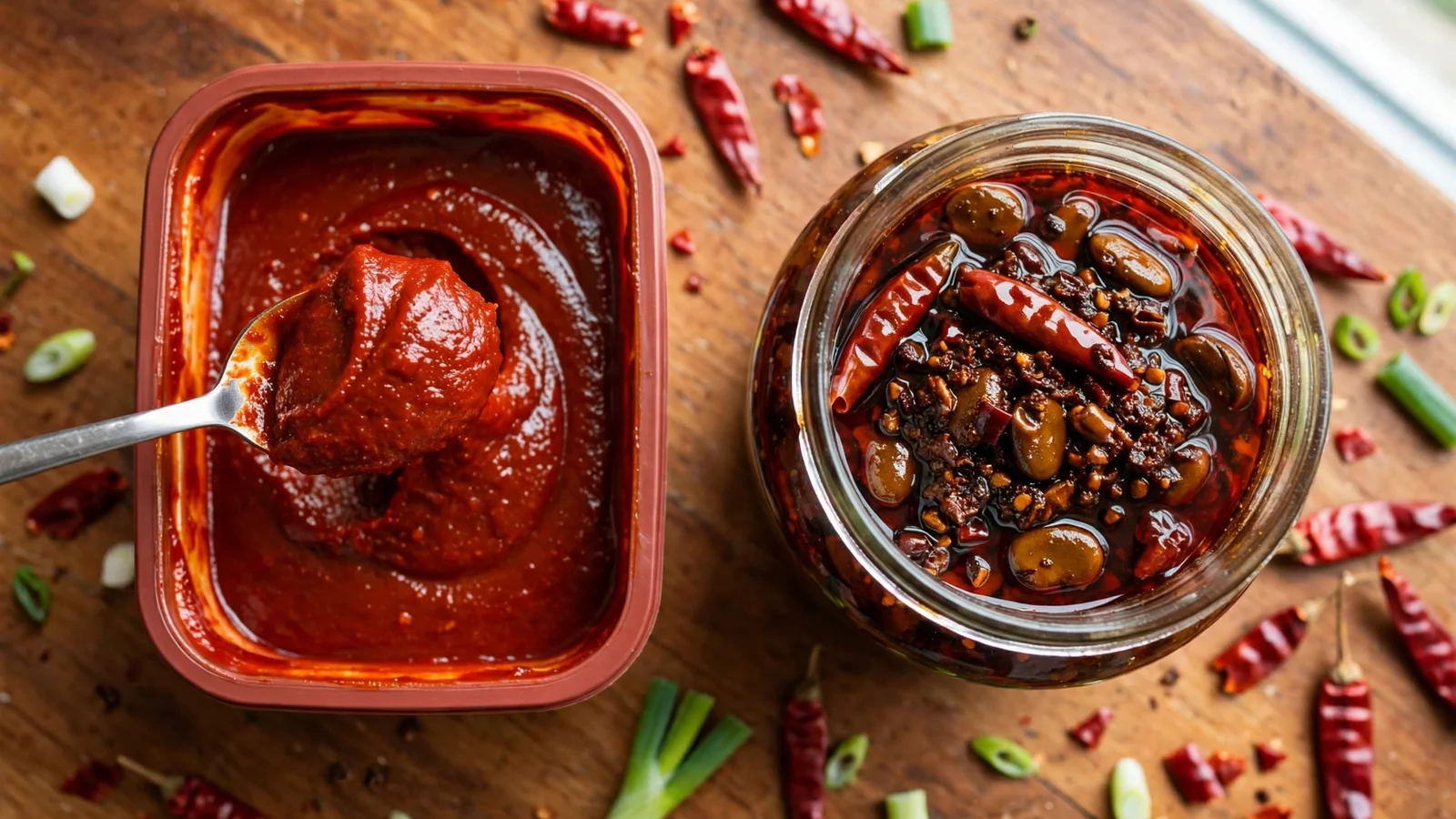
Open the fridge door in a lot of pan-Asian home kitchens and you'll find both jars sitting side by side: a brick-red Korean tub and a darker, oil-flecked Sichuan jar. They look like cousins. They are not interchangeable. Gochujang brings sweet, rounded heat that wants to coat and glaze. Doubanjiang brings salty, fermented depth that wants to bloom in hot oil and disappear into a sauce. Use the wrong one and the dish still tastes fine — it just stops tasting like itself.
Both are fermented chili pastes with long histories, and both earn their shelf space. The useful question is never "which paste is better." It's "which job is this dish asking the paste to do?"
The Quick Verdict
- Reach for gochujang when the paste is the sauce: glazes, marinades, rice-cake sauce, bibimbap-style bowls, anything that should taste sweet first and hot second.
- Reach for doubanjiang when the paste is the base: mapo tofu, twice-cooked pork, Sichuan braises and stir-fries where salt, funk, and chili oil matter more than sweetness.
- If you only stock one, stock the one that matches the cuisine you cook most. A Korean-leaning kitchen feels gochujang's absence every week. A Sichuan-leaning kitchen runs out of doubanjiang first.
Gochujang vs Doubanjiang at a Glance
| Detail | Gochujang (Korean) | Doubanjiang (Sichuan) |
|---|---|---|
| Base | Chili flakes (gochugaru), glutinous rice, fermented soy | Broad (fava) beans, chili peppers, salt, wheat flour |
| Texture | Thick, smooth, glossy paste, like tomato paste | Chunkier, with bean pieces and a layer of red oil on top |
| First flavor | Sweet, then warm heat | Salty, then fermented depth, then heat |
| Heat character | Steady, rounded, builds slowly | Sharper up front, carries a numbing partner well (Sichuan pepper) |
| Sweetness | Noticeable — rice and malt syrup are part of the recipe | Minimal — any sweetness comes from the dish, not the paste |
| Funk level | Mild, clean ferment | Pronounced, aged, almost cheese-like depth in good Pixian jars |
| Best role | Sauce, glaze, marinade, dip base | Stir-fry base, braise base, hot-pot and noodle foundation |
| Salt level | Moderate | High — season the dish around it |
| Fridge life after opening | 12 months or more, flavor mellows | 12 months or more, oil layer helps protect it |
The table tells the real story: gochujang is built to be tasted. Doubanjiang is built to be cooked.
What Gochujang Actually Is
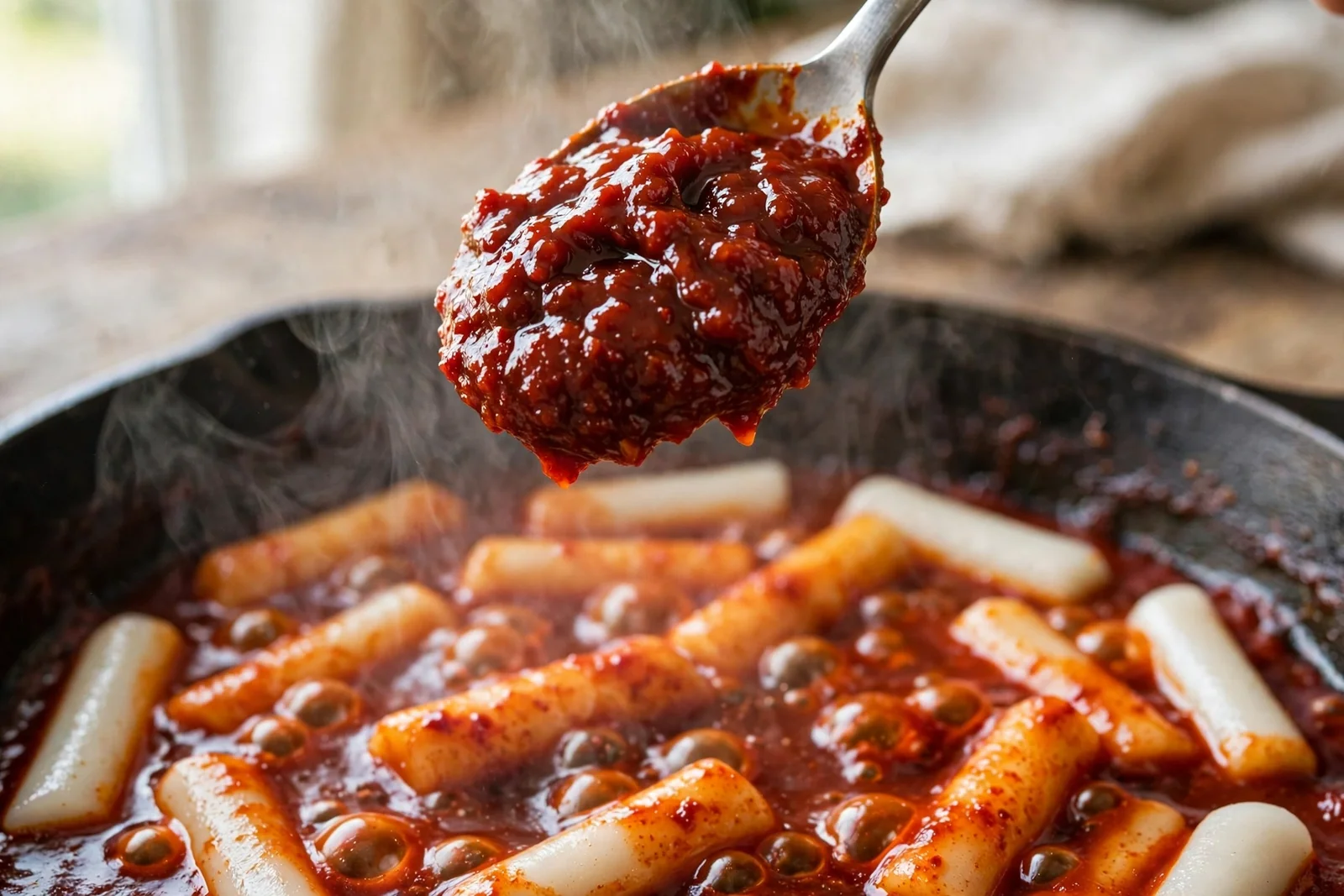
Gochujang starts with gochugaru, the Korean chili flake that gives kimchi its color, mixed with glutinous rice flour, fermented soybean powder (meju), malt, and salt. The mixture ferments and thickens into a paste so dense a spoon stands up in a fresh tub.
That rice base is why gochujang tastes sweet before it tastes hot. The heat is real — tubs are graded, often from mild (level 1) to very hot (level 5) — but it arrives wrapped in starch and sugar. Cooked briefly, it loosens into a shiny glaze. Diluted with soy sauce, vinegar, and sesame oil, it becomes the sauce spooned over rice in bibimbap or whisked into a quick noodle dressing.
You see it doing that sauce work all over Korean home cooking. The braising liquid in Tteokbokki: Spicy Korean Rice Cakes is basically gochujang thinned with stock and simmered until the rice cakes drink it in. In Budae Jjigae: Korean Army Stew, it melts straight into the broth and gives the whole pot its sweet-red backbone. In both cases, the paste never meets screaming-hot oil first. It dissolves, it coats, it sweetens as it heats.
A practical buying note: most grocery-store tubs sit at a middle heat level and work fine for general cooking. If a recipe was written with a specific brand's level-3 tub in mind and yours is level 5, cut the amount by about a third and add a pinch of sugar back — you want to lower the heat without losing the glaze.
What Doubanjiang Actually Is
Doubanjiang — most famously Pixian doubanjiang from Pixian County in Sichuan — ferments broad beans with chili peppers, salt, and a little wheat flour for months, sometimes years. The result is darker, looser, and far saltier than gochujang, with visible bean chunks and a cap of red chili oil.
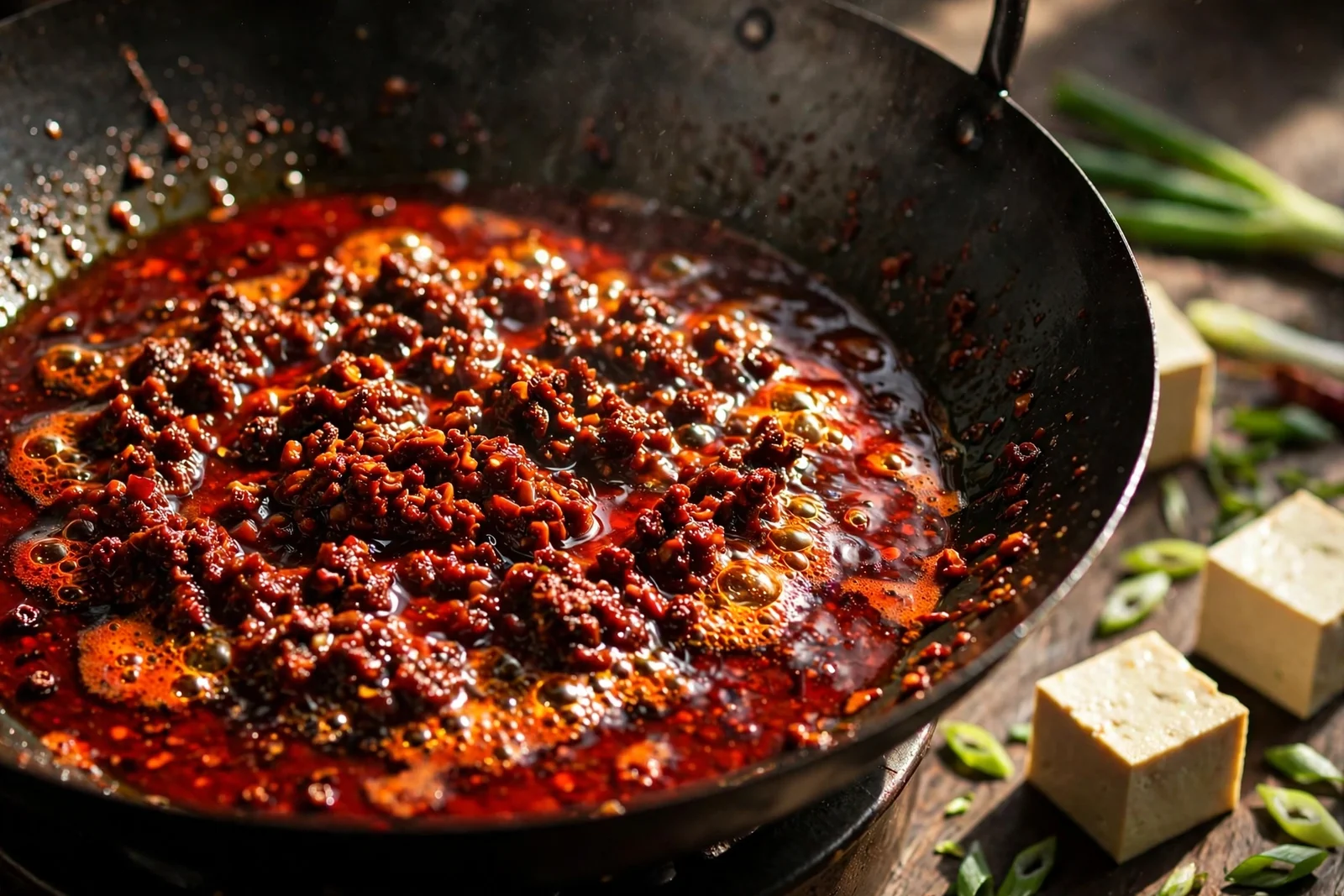
The defining move with doubanjiang is to fry it. Spoon it into warm oil at the start of a stir-fry and stir for 30 to 60 seconds, until the oil turns red and the raw, beany edge cooks off. That step — blooming the paste — is what gives Mapo Tofu its ruddy, savory base and Dan Dan Noodles the deep-red oil that clings to every strand. Skip the bloom and the paste tastes harsh and flat. Give it that minute in oil and it turns into the background hum the whole dish stands on.
Not every jar labeled doubanjiang is the same paste. Pixian broad-bean versions are the classic for mapo tofu. Some jars, especially those labeled as chili bean paste with no mention of Pixian, are thinner and saltier with less bean depth. For Sichuan cooking, the aged Pixian style is the one to seek out; if your jar lists broad beans first and pours with a dark red oil, you're in the right place.
Because doubanjiang is so salty, treat it as part of the salt budget. A tablespoon can carry as much salt as a light hand of soy sauce. Add the paste first, taste, and only then decide whether the dish still wants soy sauce at all.
Flavor, Side by Side
Taste both straight off a spoon — a small one — and the difference is instant.
Gochujang reads sweet, then warm, then mildly fermented, like a spicy, savory jam. You could thin it with water and vinegar and serve it as a dip and no one would flinch.
Doubanjiang reads salty, then deeply fermented, then hot, with a lingering bean richness that stays after the heat fades. Straight, it's aggressive. Cooked in oil, that aggression turns into depth.
Heat timing matters too. Gochujang's heat builds as you eat and mellows the longer it simmers, which is why it suits long glazes and braises that need to stay pleasant. Doubanjiang's heat stays brighter and pairs naturally with Sichuan pepper's tingle — the classic ma-la combination, where the chili brings the fire and the peppercorn brings the buzz. If you're stocking a small pantry from scratch, our guide to The Essential Asian Pantry: 20 Staples to Start With puts both pastes in context alongside the soy sauces, vinegars, and oils they work with every day.
Which Paste for Which Dish?
| Dish or job | Better pick | Why |
|---|---|---|
| Mapo tofu | Doubanjiang | The dish is built on bloomed bean paste and red oil; gochujang makes it taste sweet and Korean-leaning |
| Tteokbokki sauce | Gochujang | Needs a sweet, glossy sauce that coats rice cakes; doubanjiang turns it salty and thin |
| Bibimbap sauce | Gochujang | Sweet heat thinned with sesame oil is the classic profile |
| Twice-cooked pork | Doubanjiang | Salty ferment stands up to fatty pork and leeks |
| Korean fried chicken glaze | Gochujang | Sugar in the paste helps the glaze set shiny and sticky |
| Sichuan dry-fried green beans | Doubanjiang | A teaspoon bloomed in oil seasons the whole pan without a sauce |
| Quick noodle dressing (cold) | Gochujang | Dissolves with vinegar and soy into a balanced, spoonable sauce |
| Hot-pot broth base | Doubanjiang | Holds up to a long simmer and fatty dipping meats |
| Marinade for grilled pork or chicken | Gochujang | Sweet paste caramelizes at the edges on the grill |
| Eggplant or tofu stir-fry base | Either, by cuisine | Doubanjiang for a Sichuan profile, as in our garlic eggplant; gochujang for a Korean-style sweet glaze |
The pattern: if the paste should be tasted as a sauce, it's probably gochujang. If the paste should vanish into oil and broth as depth, it's probably doubanjiang. Our Chinese Garlic Eggplant is a good example of the second job — a small spoon of bean paste in the base makes the whole pan taste more savory without anyone naming the ingredient at the table.
Can You Swap One for the Other?
Yes, with adjustments. No, not spoon for spoon.
Doubanjiang standing in for gochujang: the swap runs salty and thin. For every 1 tablespoon of gochujang a recipe asks for, use 2 teaspoons of doubanjiang, fry it briefly in a little oil first if the dish allows, then add 1 teaspoon of sugar or honey and a splash of water to rebuild the glaze. Expect a darker, funkier result. It works in a pinch for marinades and braises. It does not work for a bibimbap sauce you plan to taste raw — the salt and ferment sit too far forward.
Gochujang standing in for doubanjiang: the swap runs sweet and thick. For every 1 tablespoon of doubanjiang, use 1 tablespoon of gochujang plus 1/2 teaspoon of soy sauce for salt, and cut any other sugar in the dish by about a teaspoon. Bloom it gently — gochujang scorches faster than doubanjiang because of its sugars, so keep the oil warm rather than smoking and stir constantly for 20 to 30 seconds. The dish will taste rounder and sweeter than the Sichuan original. In mapo tofu, that reads as a Korean-style mapo — pleasant, but a different dish.
Heat is the easy part to fix. Funk and sweetness are the hard part. If the recipe's identity depends on aged bean depth (mapo tofu, twice-cooked pork), a gochujang swap changes the dish's accent, not just its volume. If the recipe's identity depends on a sweet glaze (tteokbokki, yangnyeom chicken), a doubanjiang swap changes it just as much. Swap when you're cooking for yourself on a weeknight. Buy the right jar when you're cooking the dish to learn it.
Storage and Buying Notes
- Fridge, always, after opening. Both pastes keep a year or more refrigerated. Gochujang darkens and mellows over time; doubanjiang's oil layer rises and protects the paste below it — stir it back in as you use it.
- Watch the salt, then the heat. With doubanjiang, brands vary more in salt than in heat. With gochujang, brands vary more in heat than in salt. Read the tub's heat level before assuming a recipe's tablespoon matches yours.
- Vegan note. Traditional gochujang and Pixian doubanjiang are both plant-based pastes, built on beans, rice, and chili. Some flavored or seasoned variants add extras, so check the label if that matters for your table.
- Small jars are fine. A little goes far. A tablespoon seasons a family stir-fry; a tub lasts months for most home cooks.
The One-Minute Test
Next time you're holding both jars, ask one question: should this paste be the sauce, or should it be the base? Sauce — shiny, sweet, tasted at the table — is gochujang. Base — bloomed in oil, salty, gone into the background by the time you eat — is doubanjiang. Pick by the job, and both jars earn their spot in the door.
1 thought on “Gochujang vs Doubanjiang: A Chili Paste Showdown”