
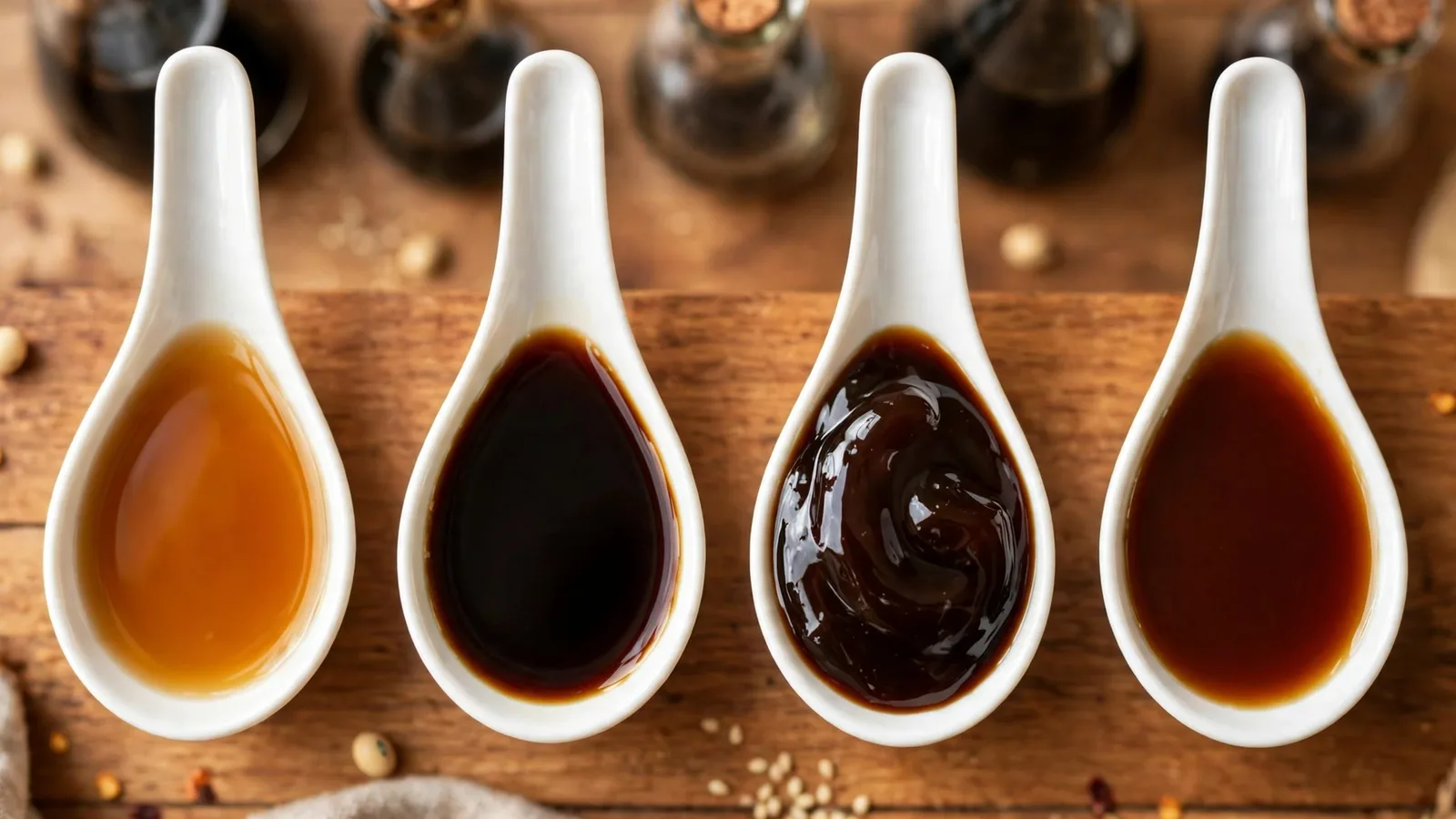
Walk into any Asian market and you will find an entire aisle of soy sauce: tall bottles, short bottles, red caps, gold caps, labels in four languages, prices from two dollars to twenty. They all look like the same dark liquid. They are not. Pour light soy sauce where a recipe wanted dark and your noodles come out pale and salty. Splash dark soy sauce into a dipping bowl and the flavor flattens into something heavy and sweet. The good news: each type has a clear job, and once you know the four main ones, the whole aisle makes sense.
This guide breaks down light, dark, sweet, and tamari soy sauce — how each is made, how it tastes, and when to reach for it — plus the Japanese and Korean styles you will see on shelves, how to read a label, and how to store a bottle so the last pour tastes as good as the first.
How Soy Sauce Is Made (and Why It Matters)
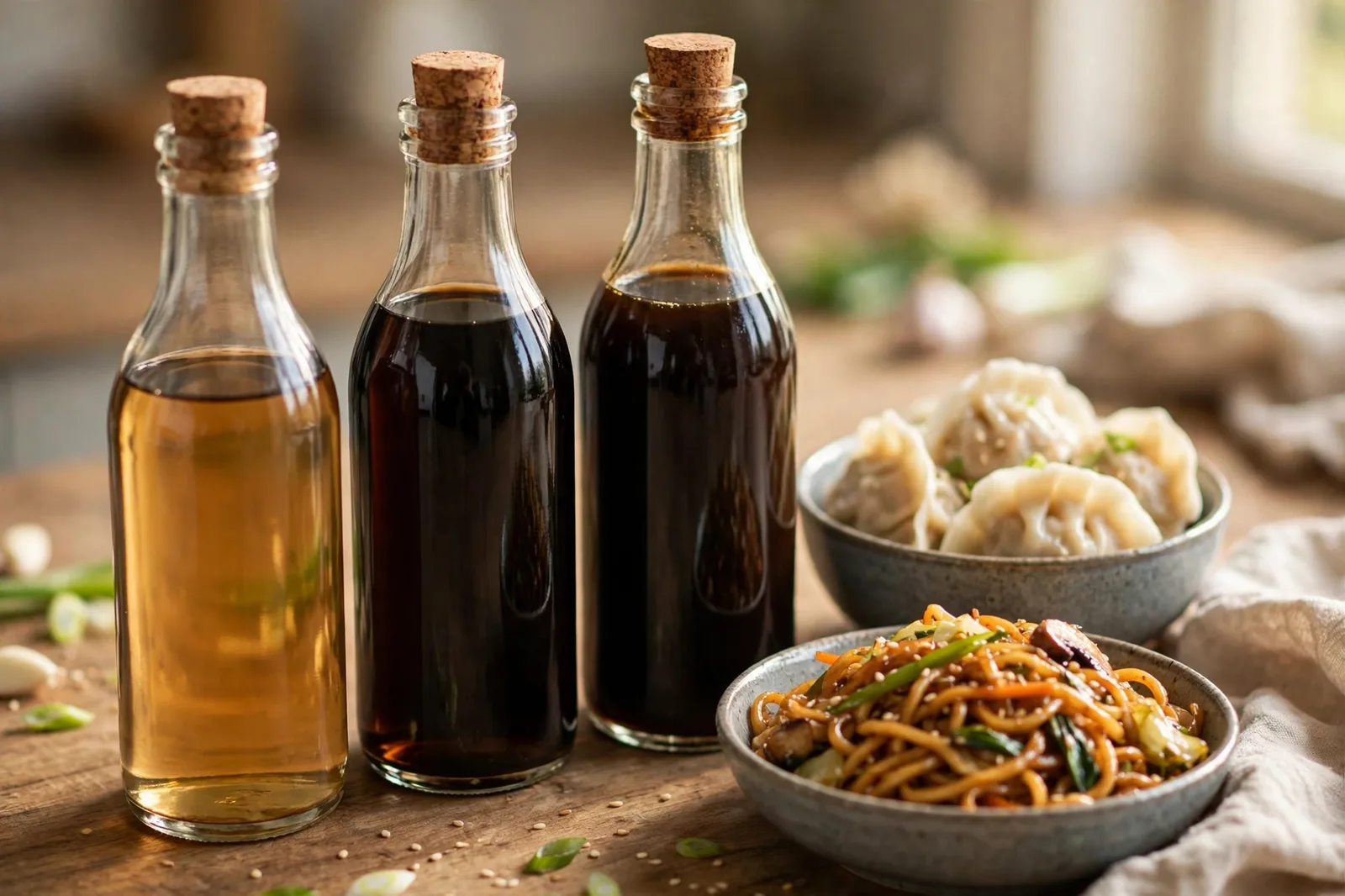
Traditional soy sauce starts with soybeans and wheat. The soybeans are steamed, the wheat is roasted, and the mixture is inoculated with a mold culture called koji. That moldy grain then goes into salt water brine, where it ferments for months. Enzymes break the soy proteins down into amino acids, and that breakdown creates the deep, savory flavor cooks call umami. After fermentation, the liquid is pressed, pasteurized, and bottled.
Two details on that journey explain almost everything about flavor differences:
Fermentation length. A short ferment gives a sharper, saltier sauce. A long ferment gives rounder, deeper, slightly sweet flavor. Dark soy sauce often gets extra time plus a sweetener, which is why it pours thicker.
The wheat ratio. Wheat adds a gentle sweetness and aroma. Tamari, a Japanese style, is made with little to no wheat, which makes it taste richer and less bright — and makes it the usual pick for people avoiding gluten, though you should always check the label because not every tamari is certified gluten-free.
Cheap shortcut sauces skip fermentation entirely. They are made by chemically breaking down soy protein with acid, then adding caramel color, corn syrup, and salt. They taste harsh and one-note, and a side-by-side sip makes the difference obvious. The buying section below shows how to spot them on a label.
Light Soy Sauce: The Everyday Workhorse
Light soy sauce — sometimes labeled “thin” soy sauce, or just “soy sauce” on a Chinese bottle — is the default seasoning bottle in most Chinese home kitchens. Despite the name, “light” refers to color and body, not sodium. It is actually the saltiest of the group.
What it tastes like: Bright, sharp, salty, with a clean savory finish. It pours thin and looks reddish-brown in a white spoon.
Use it for:
- Seasoning stir-fries, fried rice, and noodle dishes as they cook
- Marinades where you want salt and umami without darkening the food
- Dipping sauces, especially with a splash of vinegar and chili oil
- Soups and braising liquids that should stay light in color
If a Chinese recipe just says “soy sauce,” this is the bottle it means. It is the sauce doing the seasoning work in dishes like scallion oil noodles and most everyday stir-fries — it salts, it adds depth, and it stays out of the way visually.
Watch out: Because it is thin and salty, it is easy to overdo. Add it by the teaspoon, taste, then add more. You can always add salt at the end; you cannot take it back out.
Dark Soy Sauce: Color and Caramel Depth
Dark soy sauce is light soy sauce’s older sibling — fermented longer, slightly sweetened (often with molasses or sugar), and noticeably thicker. It pours slower, coats a spoon, and looks almost black until light hits it.
What it tastes like: Less aggressively salty than light soy sauce, with a mellow, caramel-like sweetness and a deeper, almost smoky finish.
Use it for:
- Giving braised dishes their signature mahogany color, like red-braised pork or char siu glazes
- Noodle dishes that should look rich and glossy — pad see ew gets its color from this bottle
- Marinades for grilled meats where a deep color sells the char
- Any recipe that lists “dark soy sauce” by name, in small amounts, usually a teaspoon or two
The key thing to understand: dark soy sauce is mostly a coloring and flavor-rounding tool, not your main salt source. A tablespoon of dark cannot replace a tablespoon of light. Use both together the way many Chinese recipes do — light for seasoning, dark for color — and dishes suddenly look like the photos.
Watch out: Too much dark soy sauce turns food muddy and slightly bitter-sweet. Start with less than the recipe suggests if your bottle is a thick, premium one; brands vary a lot.
Sweet Soy Sauce: The Syrupy One
Sweet soy sauce — kecap manis in Indonesia and Malaysia — is soy sauce thickened and heavily sweetened, usually with palm sugar. It has the consistency of thin syrup and tastes like it.
What it tastes like: Sweet first, savory second, with warm molasses and caramel notes. Very little sharp salt bite.
Use it for:
- Indonesian and Malaysian stir-fried noodles like mee goreng, where it provides both color and sweetness
- Glazes for grilled chicken, satay, and roasted meats
- Fried rice in the Indonesian style (nasi goreng)
- A quick dipping sauce, straight or with sliced chilies and lime
Sweet soy sauce is not a substitute for dark soy sauce, even though they look similar in the bottle. Kecap manis is far sweeter and will throw off a Chinese braise. If a recipe calls for dark and you only have sweet, use half the amount, skip any sugar in the recipe, and add a pinch of salt — it is a workable patch, not an equal swap.
Tamari: Rich, Smooth, and (Usually) Wheat-Free
Tamari comes from Japan, where it began as the liquid that pooled on top of fermenting miso paste. Modern tamari is brewed mostly from soybeans with little or no wheat.
What it tastes like: Richer and smoother than standard soy sauce, less sharp, with a deep umami body and a gentle sweetness. Many people find it tastes “rounder” and less harsh when used raw.
Use it for:
- Table-side dipping, especially with sashimi, where its smoothness shines
- Gluten-free cooking — check the label for certification if that matters for your health
- Finishing sauces and dressings where you want depth without a salty edge
- Any dish where you would use Japanese soy sauce but want a slightly richer result
Tamari can replace light or Japanese soy sauce one-for-one in most cooking, though the flavor will be a touch deeper and less bright. In delicate dishes, that difference is a matter of taste.
The Other Bottles You Will See
A few regional styles are worth knowing so the shelf labels stop being a mystery:
Japanese usukuchi (light) and koikuchi (regular). Koikuchi is Japan’s all-purpose soy sauce — balanced, slightly sweeter than Chinese light soy sauce, and the bottle to use for Japanese recipes like classic miso soup or teriyaki. Usukuchi is paler and saltier, used in Kansai cooking to season without darkening clear soups and simmered vegetables.
Korean soy sauce (ganjang). Korean kitchens keep two: a soup soy sauce (guk-ganjang) that is light and very salty for seasoning broths, and a regular aged soy sauce (jin-ganjang) for braises and marinades. Chinese light soy sauce works in a Korean soup in a pinch, though guk-ganjang has a cleaner, briny sharpness.
Mushroom-flavored dark soy sauce. A popular Chinese variation infused with straw mushroom extract. It behaves like regular dark soy sauce with an extra savory boost — a nice upgrade for vegetarian stir-fries and noodle sauces.
Low-sodium soy sauce. Usually about 35–40% less sodium, made by removing salt after brewing. The flavor is close but a little flatter; a squeeze of lime or rice vinegar at the end of cooking wakes it back up.
You do not need all of these. A practical home setup is one light (or Japanese koikuchi), one dark, and a tamari if your household cooks gluten-free. That trio covers the recipes on this site, including everything in our essential Asian pantry guide.
Quick Reference: Which Bottle, When
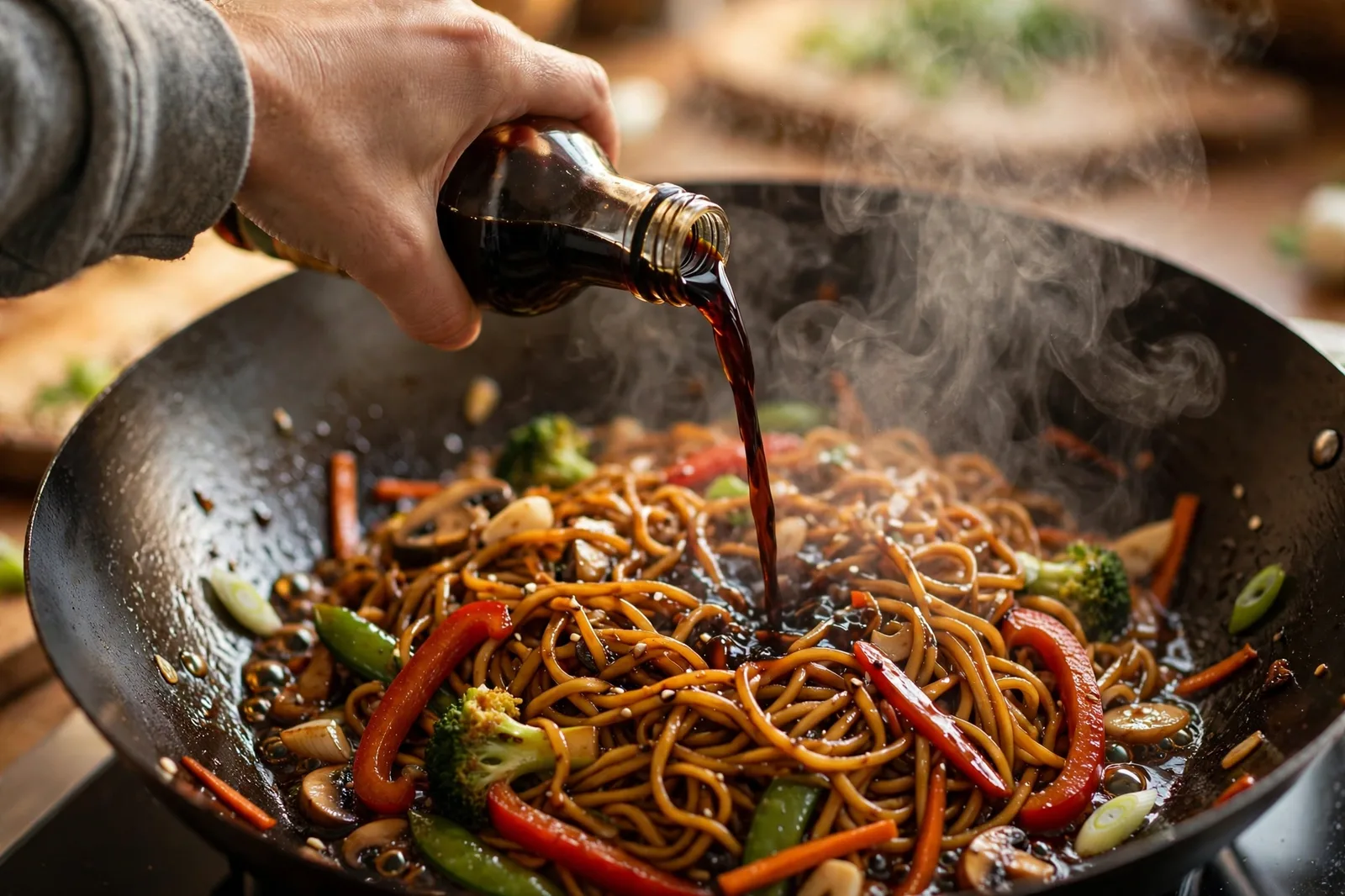
- Need salt + umami, keep the color light: light soy sauce (or usukuchi)
- Need deep color + gentle sweetness: dark soy sauce, a teaspoon at a time
- Need a sweet glaze or Indonesian/Malaysian flavor: sweet soy sauce (kecap manis)
- Need rich, smooth, usually wheat-free: tamari
- Cooking Japanese recipes: koikuchi (regular Japanese) or tamari
- Seasoning Korean soups: guk-ganjang if you have it; light soy sauce in a pinch
When a recipe from an older cookbook just says “soy sauce,” check the cuisine. Chinese, Thai, and Filipino recipes almost always mean something close to light soy sauce. Japanese recipes mean koikuchi. Korean recipes will usually specify soup or regular.
How to Buy a Good Bottle
Turn the bottle around and read the ingredients. A traditionally brewed soy sauce lists soybeans, wheat, salt, and water — sometimes alcohol as a preservative. That is the whole label, and it should be.
Be cautious when you see hydrolyzed soy protein (the shortcut chemical process; harsher flavor), caramel color and corn syrup high on the list (flavor being faked rather than fermented), or a long list of preservatives in a bargain bottle.
Price helps but is not the whole story. A solid, naturally brewed everyday bottle sits mid-range. Expensive small-batch bottles can be lovely, but save them for dipping and drizzling, not a high-heat wok where the nuance cooks off. Size matters too: soy sauce fades after opening, so if you only reach for it monthly, buy the smaller bottle — a fresh small bottle beats a tired large one.
Storage: Keep the Flavor You Paid For
Soy sauce is shelf-stable, but it is not immortal. Oxygen and heat slowly flatten its aroma after opening.
- Unopened: a cool, dark pantry shelf is fine for a year or more; check the printed date.
- Opened: the refrigerator is the best home for it. Cold storage slows the flavor fade, especially for premium and low-sodium bottles.
- Counter storage works for a bottle you will finish within a couple of months. Keep it away from stove heat and direct sunlight.
- Past its best: a dull, flat aroma or a taste that is mostly salt with no depth. Tired soy sauce will not make you sick, but it will quietly make your food taste tired too. Discard any bottle with mold on the surface.
Putting It Together
Soy sauce stops being confusing the moment you assign each bottle a job. Light seasons. Dark colors and rounds out. Sweet glazes. Tamari finishes smoothly and stays wheat-free for the people at your table who need that. Taste each one straight from a spoon once (salty, yes, but a tiny sip tells you more than any label) and you will never stand in that aisle guessing again.
Building your pantry from scratch? Pair this guide with our essential Asian pantry staples list, then put the bottles to work: light and dark together in pad see ew, dark in a char siu marinade, tamari whisked into a quick dipping sauce for dumplings. A few cooks in, reaching for the right bottle becomes habit.
1 thought on “Soy Sauce Guide: Light vs Dark vs Tamari”