
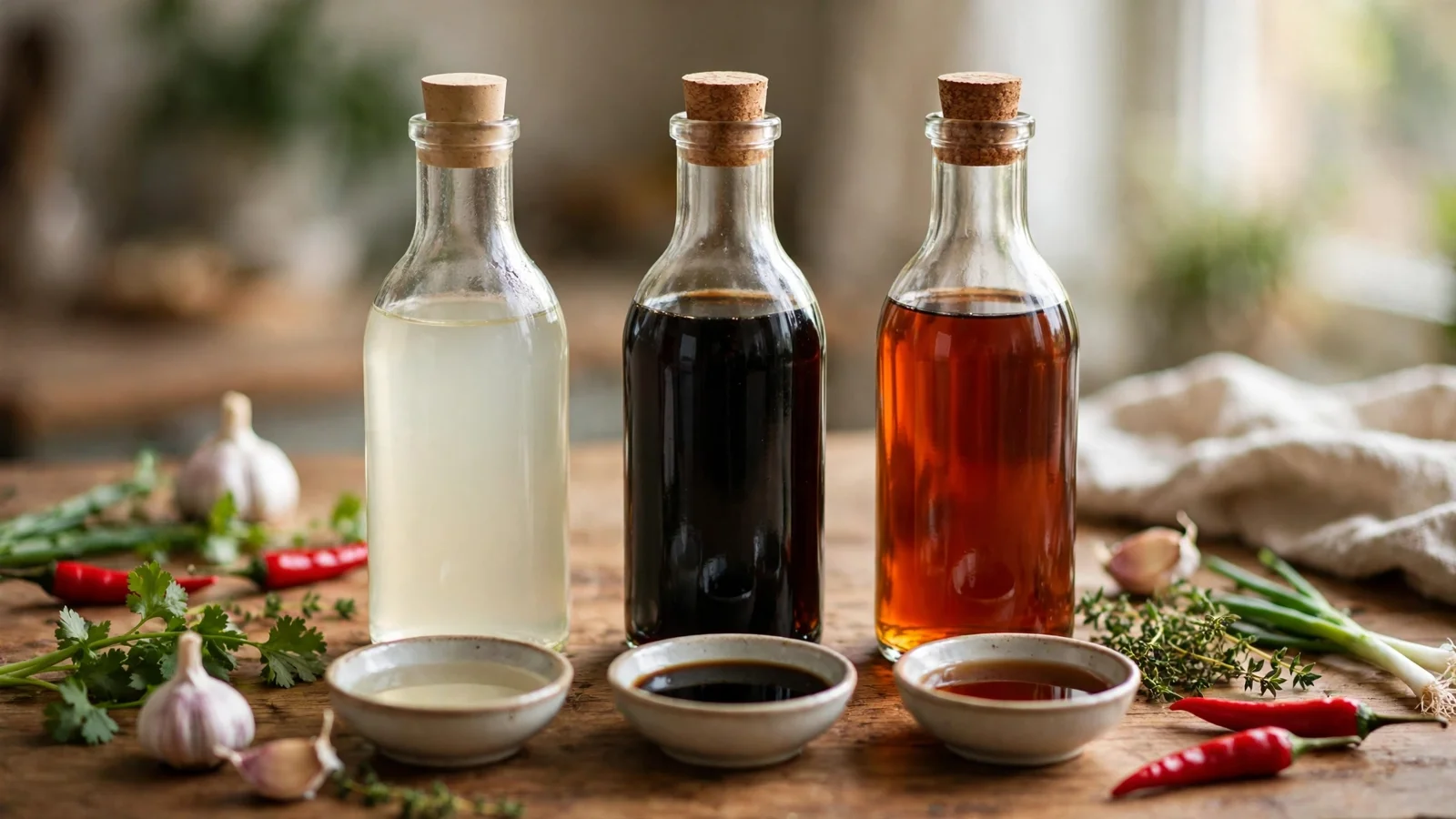
Walk down the vinegar aisle of any Asian market and you will find a whole shelf that looks, at first glance, like variations on the same bottle: pale, amber, dark brown, almost black. They are not interchangeable. Rice vinegar is soft and slightly sweet. Chinese black vinegar is malty and almost smoky. Filipino coconut vinegar is bright and funky in the best way. A spoonful of the right one lifts a dish; a spoonful of the wrong one can flatten it.
This guide breaks down the vinegars you are most likely to meet in pan-Asian home cooking — what each is made from, how it tastes, how to read the label, and exactly where to use it. By the end, that shelf stops being a wall of look-alike bottles and starts being a toolkit.
Why Vinegar Matters So Much in Asian Cooking
Heat, salt, fat, and sweetness get most of the attention in a stir-fry or braise. Acid does the quiet work. It wakes up rich dishes, cuts through oil, brightens herbs, and keeps a long-simmered sauce from tasting heavy. A dumpling without a tangy dip feels unfinished. A bowl of noodles with a splash of black vinegar tastes like it finally has a point of view.
The trick is that different cuisines built different vinegars for different jobs. Japanese cooking leans on gentle, seasoned rice vinegar for sushi rice and pickles. Cantonese and northern Chinese cooking reach for dark, grain-based vinegars for dipping and braising. Filipino cooking uses sharper cane and coconut vinegars that can stand up to garlic, soy sauce, and long marinades. Same category on the shelf, completely different personalities in the pan.
Rice Vinegar: The Gentle All-Purpose One
If you buy one Asian vinegar, make it plain rice vinegar. Made from fermented rice, it is clear to pale gold, mild, and only lightly acidic compared with distilled white vinegar. That softness is the point: it seasons without shouting.
How it tastes: clean, faintly sweet, low burn. Unseasoned rice vinegar is the most versatile. Seasoned rice vinegar (often labeled sushi vinegar) already has sugar and salt mixed in — handy for sushi rice and quick pickles, but less flexible when you want to control the seasoning yourself.
Where it shines:
- Sushi rice and Japanese pickles: the classic use, from cucumber sunomono to quick-pickled ginger
- Dressings and slaws: a softer lift than lemon alone, with no citrus flavor to clash
- Marinades and stir-fry sauces: a teaspoon brightens without turning a dish sour
- Dipping sauces: pairs cleanly with soy sauce and chili oil
Label tip: pick unseasoned for everyday cooking and add your own sugar and salt. If seasoned is all you have, cut back any sugar and salt the recipe calls for and taste as you go. Avoid bottles labeled “rice wine” — that is a cooking wine, not a vinegar, and it will not give you acid.
Chinese Black Vinegar: Dark, Malty, Deep
Black vinegar (often labeled Chinkiang or Zhenjiang vinegar) is made from glutinous rice and other grains, then aged until it turns nearly black. It smells malty, a little woody, and faintly sweet, with an acidity that feels round rather than sharp.
How it tastes: deep and mellow, with notes that remind some cooks of balsamic without the syrupy sweetness. It keeps its character in cooked dishes better than brighter vinegars do.
Where it shines:
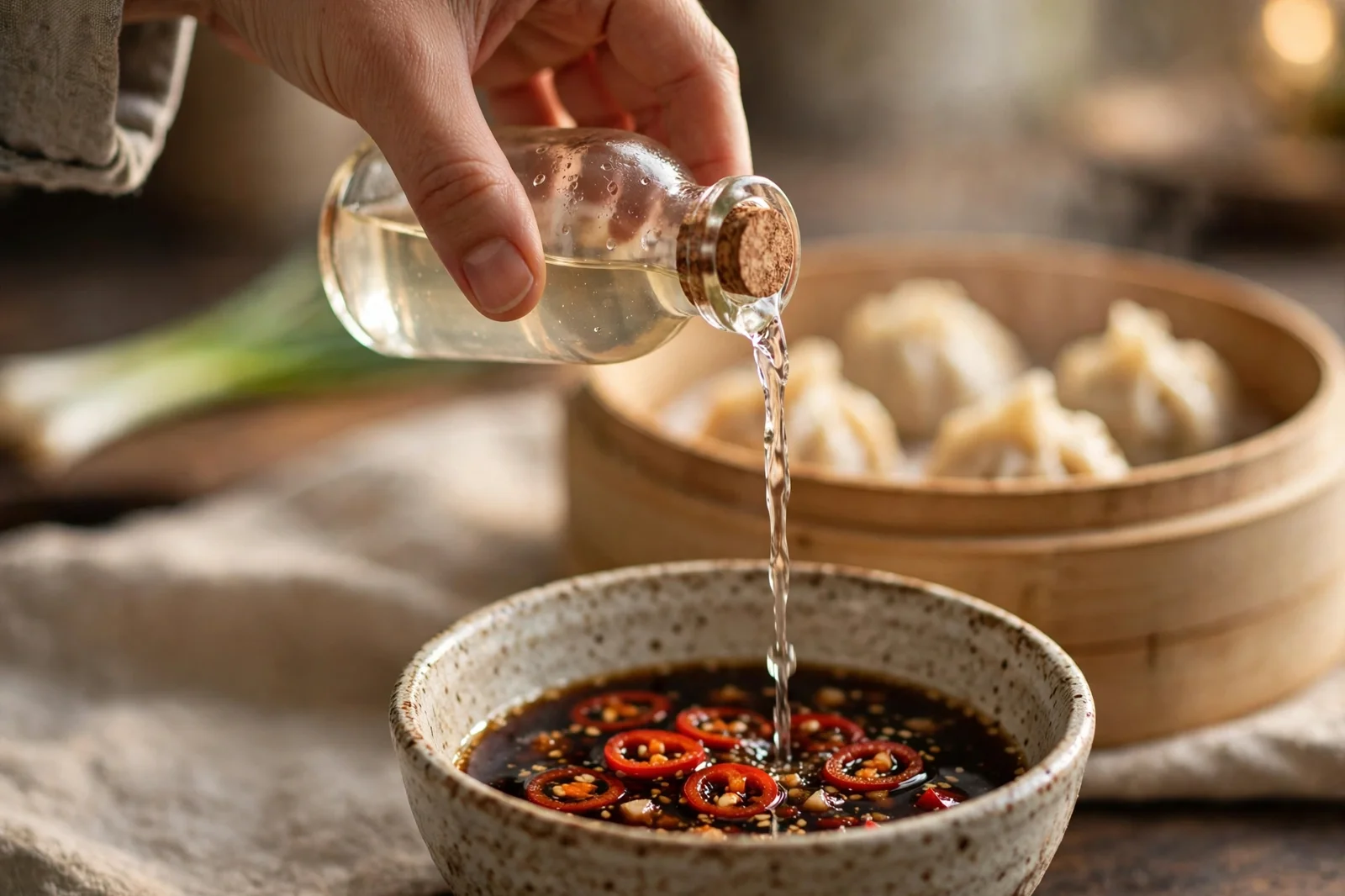
- Dumpling dipping sauce: black vinegar, soy sauce, chili oil, and slivered ginger is the classic Shanghai pairing
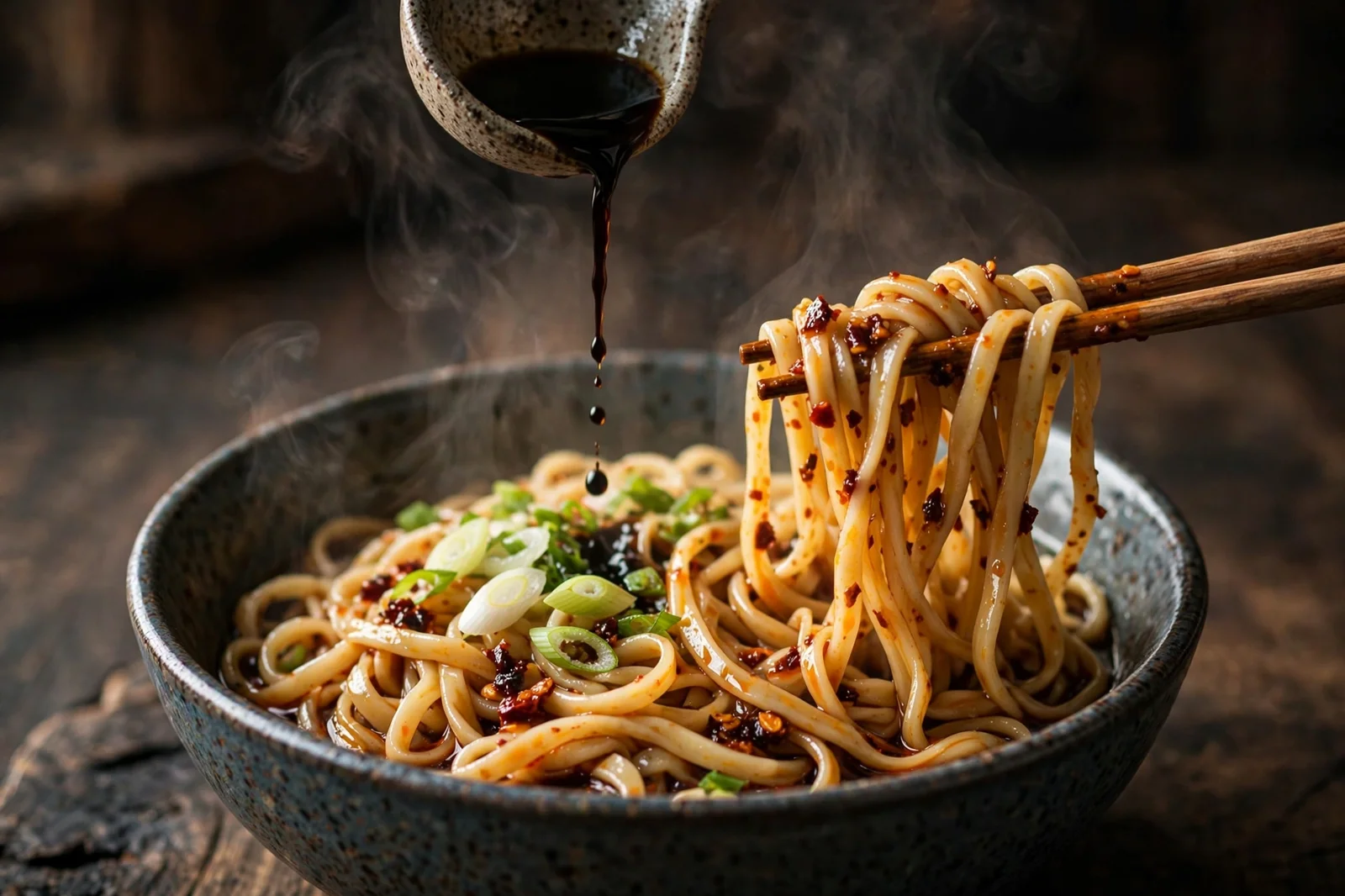
- Hot and sour soups and noodle soups: a finishing spoonful adds depth, not just tang
- Braised and stewed dishes: a splash loosens a rich braise and balances fat — the same instinct behind the balance in hot and sour soup
- Cucumber and cold dishes: tossed with garlic and sesame oil, it makes smashed cucumbers taste complete
Label tip: look for “Chinkiang” or “Zhenjiang” on the bottle and a short ingredient list built on rice or sorghum. Aged versions cost a little more and taste noticeably smoother. Store it like soy sauce: cool, dark, and tightly capped.
Red Vinegar and Cane Vinegars: The Brighter Cousins
Chinese red vinegar is made from fermented red yeast rice and grains. It is lighter in body than black vinegar, pinkish-amber in color, and notably brighter on the tongue. You will meet it most often at the table rather than in the pot.
How it tastes: lively and lightly floral, with a clean sour snap. In Cantonese seafood restaurants it is the standard dip for shark’s fin soup historically, and today for shrimp dishes and wonton soup, because it lifts delicate flavors without darkening them.
Filipino cane vinegar (sukang iloko and similar regional styles) and coconut vinegar belong in this bright family too, though each has its own character. Cane vinegar is grassy and assertive. Coconut vinegar, made from fermented coconut sap, is cloudy, slightly yeasty, and sharp with a faint tropical note. Both are built to stand up to strong partners: garlic, black pepper, soy sauce, and chili.
Where they shine:
- Table dips: red vinegar for wontons and shrimp; coconut or cane vinegar with garlic and chili for grilled meats
- Adobo-style marinades: the sharper Filipino vinegars hold their own against soy sauce and garlic over a long simmer
- Quick pickles (atchara and sawawan dips): brightness is the whole point
- Seafood: a few drops over steamed fish or shrimp keeps flavors clean
If a recipe from the Philippines calls for vinegar without specifying, cane or coconut vinegar is usually the intent. Swapping in mild rice vinegar will work in a pinch, but the dish will taste softer and less punchy. Add a small extra splash and taste before serving.
Specialty Bottles Worth Knowing
Once the big three are on your shelf, a few specialty vinegars open up specific dishes.
Shanxi aged vinegar comes from northern China and is even darker and more concentrated than Chinkiang black vinegar, with a pronounced smoky, sour depth. Cooks from Shanxi — a region famous for its noodles — use it generously over hand-pulled noodles and dumplings. A little goes a long way.
Japanese kurozu is an aged rice vinegar brewed in earthenware pots, dark and mellow with very low sharpness. It shows up in simmered dishes and as a gentle finishing acid. It is pricier and best saved for dishes where its smoothness can be tasted on its own.
Thai and Vietnamese rice vinegars tend to sit close to plain rice vinegar in profile: light, clean, and used freely in dipping sauces (nuoc cham-style blends), herb salads, and pickled vegetables for banh mi and rice plates. When a Southeast Asian recipe just says “vinegar,” a plain rice vinegar is the safe, faithful choice.
Plum vinegar (umeboshi vinegar) is not a true vinegar — it is the salty, sour brine from pickling ume plums — but it earns a mention. It is intensely salty and tangy, pink in color, and lovely in tiny amounts over rice, greens, and tofu. Treat it as a seasoning, not a one-for-one vinegar swap.
How to Choose a Bottle at the Market
You do not need ten bottles. Most home kitchens do beautifully with three: plain rice vinegar, black vinegar, and one bright bottle (red, cane, or coconut) matched to the cuisines you cook most.
A quick buying checklist:
- Start with the way you cook. Sushi, pickles, and dressings point to rice vinegar first. Dumplings, noodles, and braises point to black vinegar. Grilled meats and Filipino dishes point to cane or coconut.
- Read the first ingredients. Rice, grains, or coconut sap should lead the list. A long list of flavorings and colors usually means a sharper, flatter taste.
- Check for added sugar in rice vinegar. Seasoned bottles are fine when you want them — just know what you are buying so your seasoning stays balanced.
- Buy small if you are experimenting. Vinegar keeps well, but flavors stay freshest in the first year after opening, and small bottles let you try a regional style without committing shelf space for years.
Everything on this shelf belongs to the same starter toolkit as the bottles in our essential Asian pantry guide, and it sits right beside the sauces covered in our soy sauce guide and oyster sauce guide.
Storage and Shelf Life
Vinegar is one of the most forgiving things in your pantry, but a few habits keep it at its best.
- Store cool, dark, and capped. Heat and light dull the aroma of aged vinegars first. A pantry shelf away from the stove is ideal.
- No need to refrigerate most styles. Rice, black, and red vinegars keep at room temperature after opening. Refrigeration does not hurt them, but it is optional.
- Cloudiness in coconut vinegar is normal. A white, wispy “mother” can develop over time. It is harmless and can be strained out or left alone.
- Watch for off smells in flavored bottles. Plain vinegars almost never spoil. If any bottle smells moldy or tastes flat and cardboard-like, replace it — a fresh bottle costs little and a tired one quietly dulls good food.
Putting the Shelf to Work
A practical way to learn a new vinegar is to taste it three ways: a drop on a spoon, then in a simple dip (two parts vinegar, one part soy sauce, chili oil to taste), then as the finishing splash in a dish you already know well. You will feel the difference between gentle rice vinegar, malty black vinegar, and a bright cane vinegar faster in one evening of tasting than in a month of guessing.
Start with the bottle your cooking needs most, use it often, and add the next one when a recipe truly calls for it. That is how a vinegar shelf grows in a real kitchen: one honest bottle at a time, each with a job it does better than any other.
1 thought on “A Home Cook’s Guide to Asian Vinegars”