
Shrimp tempura looks simple — shrimp, batter, hot oil — and that is exactly why the small details decide it. When it is right, the coating is pale gold, lacy at the edges, crisp enough to hear, and thin enough that you still taste sweet shrimp first. When it goes wrong, you get a thick, bready shell, curved shrimp, and oil that soaks straight through.
The whole method rests on three things: prep the shrimp so they lie straight, keep the batter cold and barely mixed, and fry fast at a steady 350°F. None of that is hard once you set up before the oil gets hot.
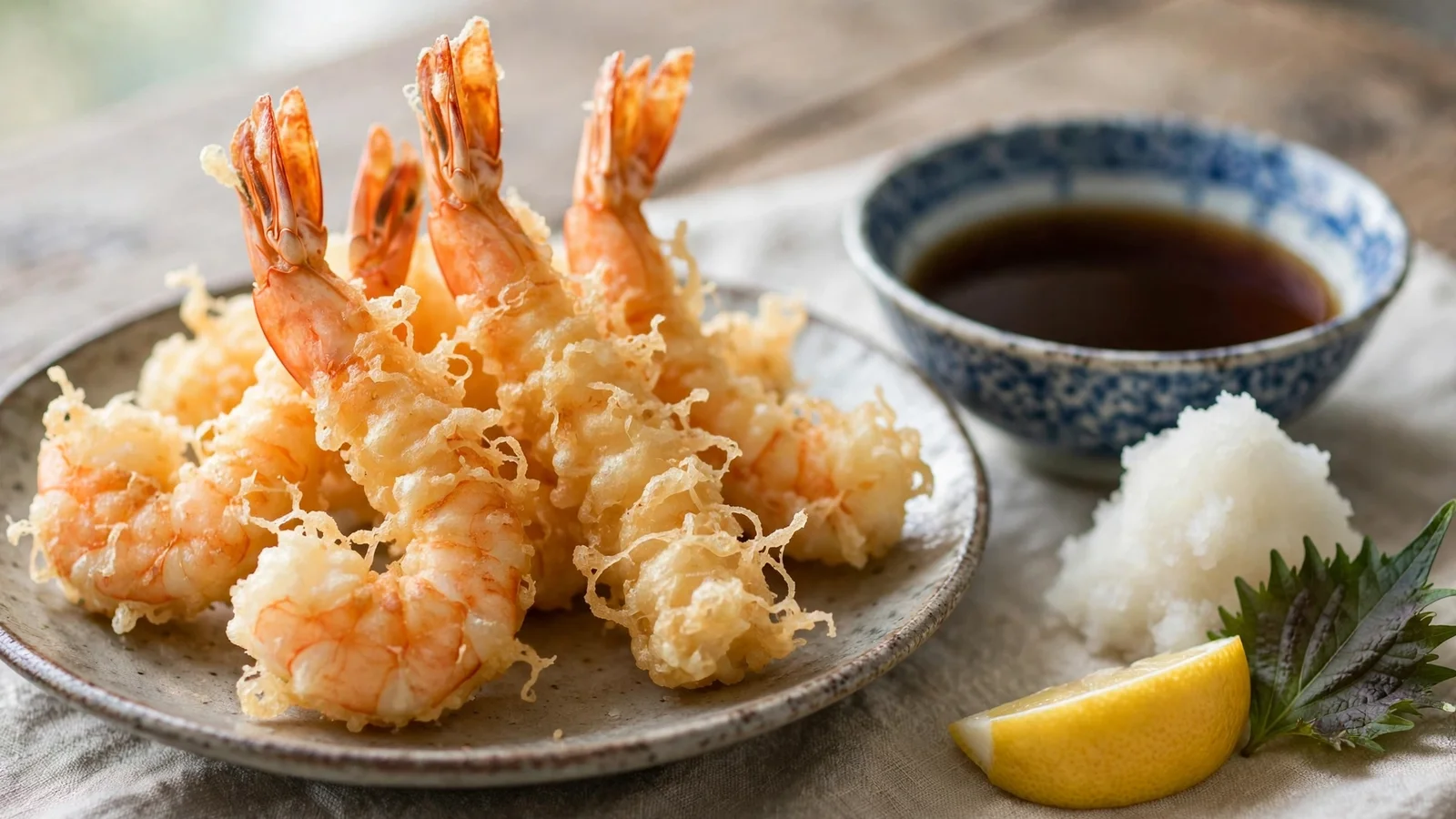
What Makes Tempura Different From Other Fried Shrimp
Tempura batter is not a seasoned breading and it is not trying to be thick. It is a thin slurry of flour, egg, and ice water that puffs into a delicate crust the second it hits oil. The lumps are left in on purpose — overmixing develops gluten and turns that lacy shell chewy.
That light touch is the same idea behind our Agedashi Tofu, where a thin starch coating fries crisp and then sits in warm dashi without falling apart. With shrimp, the stakes are higher because shrimp cook in about 2 minutes. The batter has to set and color in the same short window.
| Checkpoint | What to aim for | Why it matters |
|---|---|---|
| Shrimp prep | Straight, scored belly, dry surface | Stops curling and helps batter cling |
| Batter temperature | Ice-cold, visible small lumps | Cold batter in hot oil creates the lacy texture |
| Batter thickness | Thin cream, coats lightly | Thick batter turns bready and masks the shrimp |
| Oil temperature | 350°F (175°C), steady | Too low soaks oil, too high browns before shrimp cooks |
| Batch size | 3 to 4 shrimp at a time | Crowding drops the oil temperature fast |
| Rest after frying | Wire rack, never paper towels alone | Steam softens the crust if shrimp sit in oil |
Prepping Shrimp So They Stay Straight
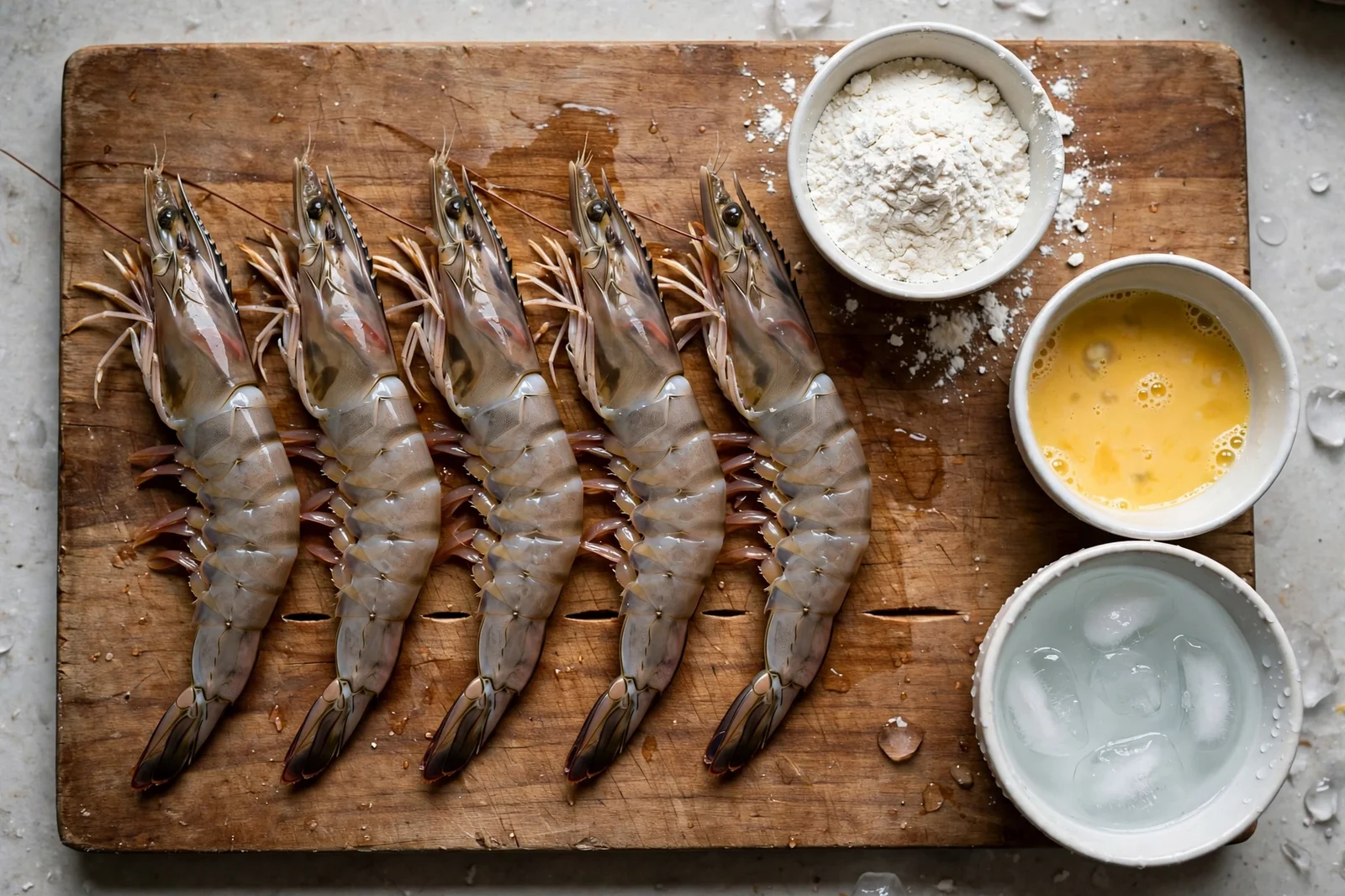
Raw shrimp curl because the muscles along the belly contract in heat. A few shallow cuts fix that and give you the straight shape you see in Japanese restaurants.
Peel the shrimp and leave the tail segment on. Devein along the back. Flip the shrimp belly-side up and make 4 to 5 shallow diagonal cuts across the belly, cutting about halfway through. Press the shrimp gently between your palms and you will feel it straighten and lengthen a little. Rinse, then pat very dry — surface water thins the batter in patches and makes hot oil spit.
Salt the shrimp lightly and dust them with a thin coat of flour right before battering. That flour layer is the glue. Skip it and the batter slides off in the pot.
If you are putting together a small Japanese meal around this, a bowl of Classic Miso Soup and plain rice are the natural partners: salty, warm, and plain enough that the tempura stays the crisp centerpiece.
The Batter Ratio to Remember
For 12 large shrimp, the working ratio is:
- 1 large cold egg
- 3/4 cup (180 ml) ice water — keep a few ice cubes in the measuring cup until you mix
- 1 cup (120 g) all-purpose flour
- 2 tablespoons cornstarch — a small addition that helps the crust stay crisp
Put the flour and cornstarch in a bowl and set that bowl over another bowl of ice if your kitchen runs warm. Whisk the egg and ice water together in a separate cup, pour it into the flour, and stir with chopsticks or a fork for only a few strokes. It should look thin and a little lumpy, like pancake batter that was not quite finished. Stop there. Use it right away; tempura batter does not improve while it waits, it just warms up and loses its edge.
Shrimp Tempura
Golden shrimp in a light, lacy batter, fried fast and served with warm tentsuyu dipping sauce, grated daikon, and ginger.
Prep time: 20 minutes Cook time: 15 minutes Total time: 35 minutes Servings: 4 servings
Ingredients
For the shrimp:
- 12 large shrimp (21/25 count, about 12 oz / 340 g), peeled and deveined, tails left on
- 1/4 teaspoon kosher salt
- 2 tablespoons all-purpose flour, for dusting
For the tempura batter:
- 1 large egg, cold from the fridge
- 3/4 cup (180 ml) ice water, with ice cubes
- 1 cup (120 g) all-purpose flour
- 2 tablespoons cornstarch
For frying:
- 4 cups (950 ml) neutral oil with a high smoke point, such as canola or grapeseed
For the tentsuyu dipping sauce:
- 3/4 cup (180 ml) dashi stock
- 3 tablespoons soy sauce
- 3 tablespoons mirin
- 1 teaspoon sugar (optional)
- 2 tablespoons grated daikon radish, lightly squeezed
- 1 teaspoon grated fresh ginger
For serving:
- Lemon wedges
- Shiso leaves (optional)
- Steamed rice
Instructions
1. Make the tentsuyu first. Combine the dashi, soy sauce, mirin, and sugar in a small saucepan and bring it just to a simmer over medium heat. Stir once, take it off the heat, and keep it warm. Stir the grated daikon and ginger in at serving time, or set them out in small piles so each person can add their own.
2. Prep the shrimp. Make 4 to 5 shallow diagonal cuts across the belly side of each shrimp, about halfway through. Press each shrimp gently flat so it lies straight. Rinse quickly, pat completely dry with paper towels, season with the salt, and dust lightly with the 2 tablespoons flour.
3. Heat the oil. Pour the oil into a heavy pot or wok and heat to 350°F (175°C). Use a thermometer if you have one; if not, a drop of batter should sink halfway, sizzle, and float back up in a few seconds, turning pale gold slowly — not brown right away.
4. Mix the batter at the last moment. Whisk the cold egg and ice water together, pour into the flour and cornstarch, and stir only a few strokes with chopsticks until just combined. Lumps are fine. Keep the bowl cold.
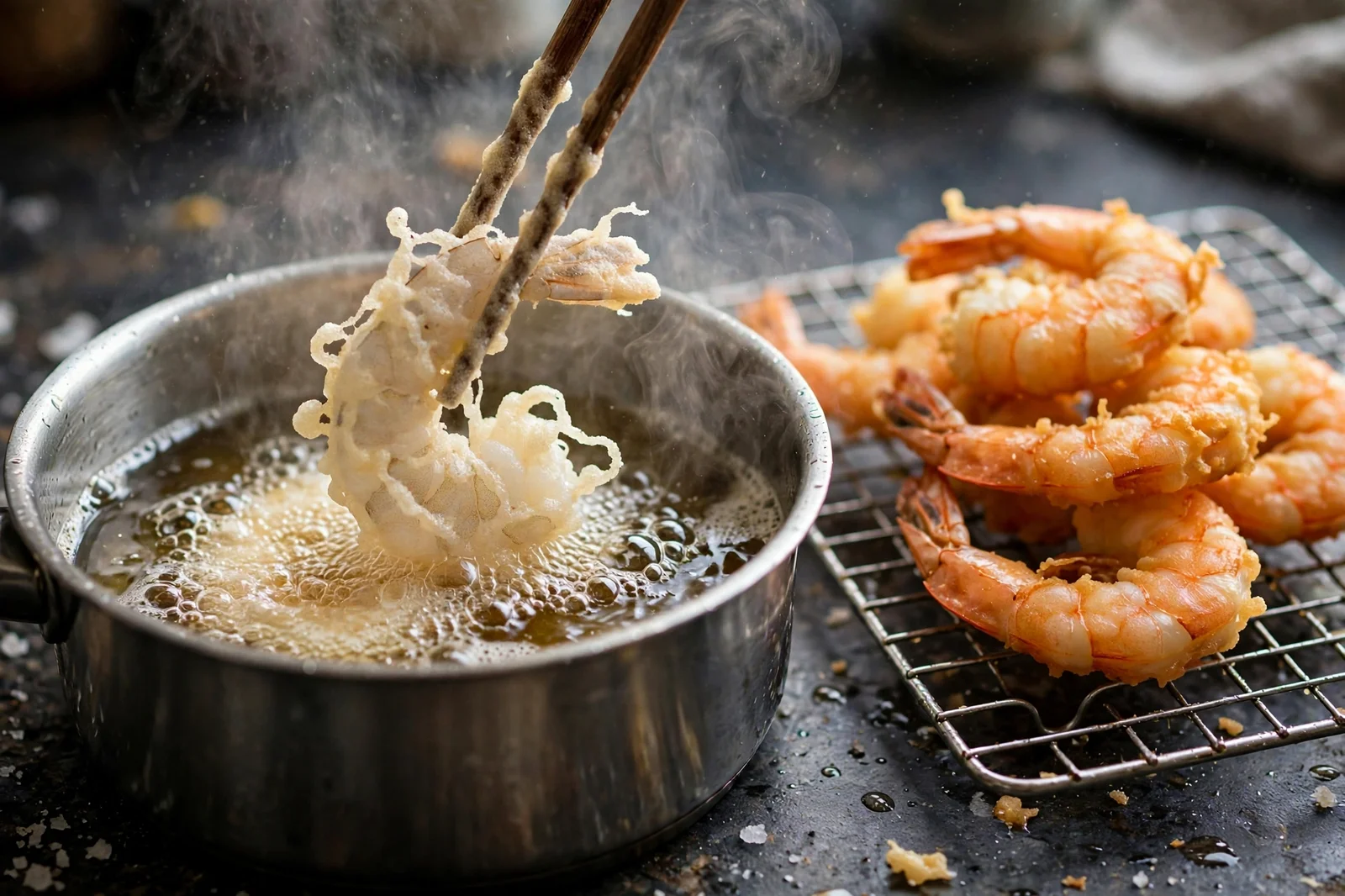
5. Batter and fry the first batch. Hold a shrimp by the tail, dip it in the batter, let the excess drip off for a second, and lay it gently into the oil away from you. Add 3 to 4 shrimp per batch, no more. For extra lacy bits, drizzle a spoonful of batter over the shrimp in the oil with your fingertips or chopsticks — a classic touch, done carefully and from a low height.
6. Fry 2 to 2 1/2 minutes, turning once, until the batter is pale golden and crisp and the shrimp is just opaque. The color stays lighter than most fried food; deep gold usually means it went too long.
7. Drain on a wire rack set over a tray. Let the oil return to 350°F between batches and skim out loose batter bits with a small strainer — those bits burn and leave dark specks on the next batch.
8. Repeat with the rest of the shrimp, mixing a quick half-batch of fresh batter if the first bowl has warmed up or turned smooth and gluey.
9. Serve right away. Arrange the shrimp on a plate lined with a shiso leaf if you have it, lemon wedges on the side, and small bowls of warm tentsuyu with daikon and ginger stirred in.
Notes
- Cold is the rule at every step: cold egg, ice water, cold shrimp, and a batter bowl set over ice if needed. Warm batter is the most common reason home tempura turns heavy.
- Dry shrimp are not a small thing. Water on the surface steams the batter from inside and leaves soft spots.
- If you do not have dashi on hand, tentsuyu still works with low-sodium chicken stock or water plus a pinch more soy sauce, though the flavor lands a little flatter. Keep the 4:1:1 ratio of stock to soy sauce to mirin as your base.
How to Tell When the Oil and Batter Are Right
Tempura gives you fast feedback, and it is worth reading it on the first shrimp before you commit the whole batch.
| What you see | What it means | Fix |
|---|---|---|
| Batter soaks up oil, pale and soft | Oil too cool, or pan crowded | Wait for 350°F, fry fewer at a time |
| Batter browns before shrimp cooks | Oil too hot | Lower the heat, let it settle, test again |
| Coating slides off | Shrimp were wet or not dusted | Pat dry, dust flour, dip again |
| Thick, chewy shell | Batter overmixed or too thick | Mix less, thin with a spoonful of ice water |
| Shrimp curl tight | Belly cuts too shallow or skipped | Cut a little deeper across the belly next time |
What to Serve With Shrimp Tempura
Tempura is rich in the mouth even though the coating is thin, so the sides should be plain and fresh. Steamed rice is the default — our method for How to Cook Perfect Jasmine Rice Every Time works well when you want distinct, fluffy grains next to fried food.
For a fuller plate, serve the shrimp over a small bowl of rice with warm tentsuyu spooned over (that is the home version of tendon), or keep the shrimp separate and let people dip as they eat so the crust stays crisp. A crisp cucumber salad or a simple bowl of miso soup rounds it out without competing.
Variations Worth Trying
- Vegetable tempura in the same batter: Sweet potato slices, zucchini half-moons, broccoli florets, and shiso leaves all fry in 2 to 3 minutes. Pat vegetables very dry, and fry the shrimp first while the oil is cleanest.
- Ten-don style: Lay 3 shrimp over a bowl of hot rice, spoon 2 to 3 tablespoons warm tentsuyu over the top, and cover for 30 seconds so the steam just softens the edge of the crust into the rice.
- Salt-and-lemon only: Skip the tentsuyu and serve with flaky salt and lemon. This is the version to choose when the shrimp themselves are especially sweet and you do not want sauce in the way.
- Mixed seafood: Add small pieces of firm white fish or squid rings, cut bite-size and dried well. Fry them in their own batches so the timing stays clean.
Storing and Reheating
Tempura is at its best in the first 10 minutes, and there is no storage trick that fully brings that back. If you do have leftovers, cool them on a rack, refrigerate in a single layer in a sealed container up to 1 day, and reheat on a rack in a 375°F (190°C) oven for 6 to 8 minutes until the crust crisps again. The microwave softens the batter, so it is the last choice.
If you are cooking for a group, the better move is to prep all the shrimp, make the tentsuyu, and hold the batter ingredients cold and separate. Mix small bowls of batter as you go and fry in steady batches, serving in rounds. Warm plates and a rack in a low oven (200°F / 95°C) will hold finished shrimp for about 15 minutes without losing much crunch.
Shrimp Tempura
Ingredients
Method
- Make the tentsuyu first. Combine the dashi, soy sauce, mirin, and sugar in a small saucepan and bring just to a simmer over medium heat. Take off the heat and keep warm. Stir in daikon and ginger at serving time.
- Prep the shrimp. Make 4 to 5 shallow diagonal cuts across the belly side of each shrimp, about halfway through. Press each shrimp gently flat so it lies straight. Rinse quickly, pat completely dry, season with salt, and dust lightly with the 2 tablespoons flour.
- Heat the oil in a heavy pot to 350°F (175°C). A drop of batter should sink halfway, sizzle, and float back up, turning pale gold slowly.
- Mix the batter at the last moment. Whisk the cold egg and ice water together, pour into the flour and cornstarch, and stir only a few strokes with chopsticks until just combined. Lumps are fine.
- Hold a shrimp by the tail, dip in batter, let excess drip off, and lay gently into the oil. Fry 3 to 4 shrimp per batch.
- Fry 2 to 2 1/2 minutes, turning once, until pale golden and crisp and the shrimp is just opaque.
- Drain on a wire rack. Let oil return to 350°F between batches and skim loose batter bits.
- Repeat with remaining shrimp, mixing fresh batter if the first bowl warms up.
- Serve right away with lemon, shiso if using, and small bowls of warm tentsuyu.