
There’s a particular kind of tired that only a big pot of spicy soup fixes. Gamjatang is the kind of soup that lands on the table still furiously bubbling — pork bones you wrestle with your chopsticks, potatoes that have soaked up two hours of broth, and perilla leaves wilting into the red soup. I’ve been making it at home for years, and the home version lets you control the two things that matter most: how spicy it is, and how clear the broth stays.
This is a project soup, not a weeknight soup. Give it an afternoon, and it gives you one of the most satisfying bowls of the year.
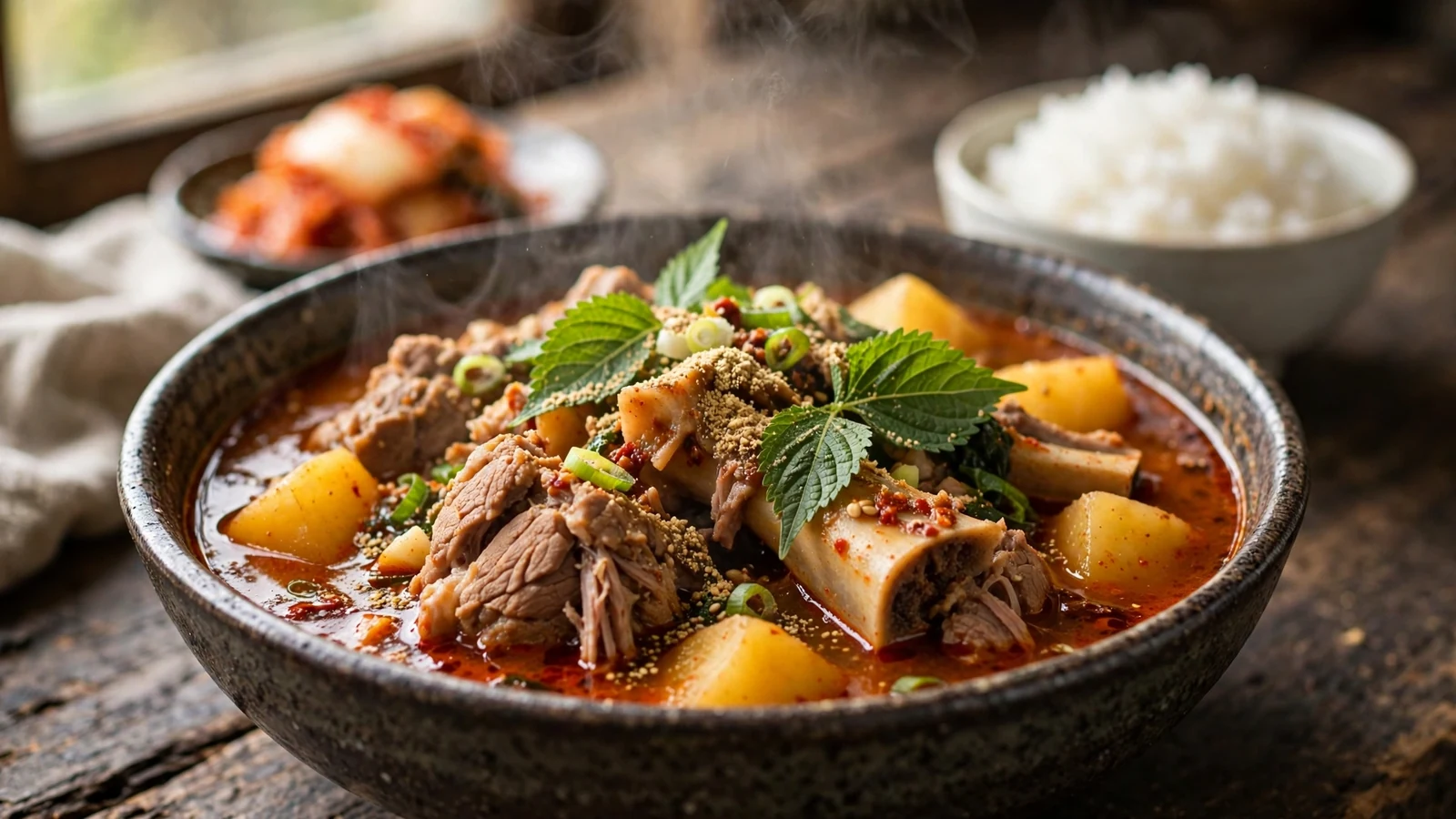
Gamjatang (Korean Pork Bone Soup)
Ingredients
Method
- Put the pork neck bones in a large pot, cover with cold water, and bring to a rolling boil. Boil 10 minutes, then drain, rinse the bones under cold water, and wash out the pot.
- Return the bones to the pot with 12 cups fresh water, the quartered onion, smashed garlic, and sliced ginger. Bring to a boil, then reduce to a gentle simmer, partially covered, for 2 hours, until the meat is nearly falling off the bones. Skim foam during the first 30 minutes.
- Fish out the onion and ginger. Stir the gochugaru, gochujang, fish sauce, doenjang, sesame oil, minced garlic, sugar, and black pepper into a paste in a small bowl, then whisk it into the pot.
- Add the potato chunks and simmer 20 to 25 minutes, until they yield easily when pierced with a fork.
- Stir in the perilla seed powder, then the perilla leaves and scallions. Simmer 5 more minutes, until the leaves wilt.
- Taste the broth and add fish sauce or salt if it tastes flat. Ladle into deep bowls and serve with steamed rice and extra perilla seed powder at the table.
Notes
What Is Gamjatang?
Gamjatang (감자탕) is a Korean pork bone soup, one of the great comfort foods of Korean home and restaurant cooking. The name trips people up: *gamja* is the Korean word for potato, and yes, potatoes are in the pot — but older cooks will tell you the name originally referred to the pork backbone (*gamja-gol*), the cut the soup was built on. These days most home versions use pork neck bones, which carry more meat and are easier to find at Asian markets and butchers.
What to expect: a rich, spicy broth colored deep red by gochugaru, with hunks of pork that slip off the bone, creamy chunks of potato, and perilla leaves lending their minty-anise edge. It’s eaten hands-on — you pick up the bones, gnaw the meat off, and chase it with rice. Gamjatang restaurants in Korea are famously open late and the soup doubles as beloved hangover food, which tells you everything about how restorative a bowl feels.
Ingredients
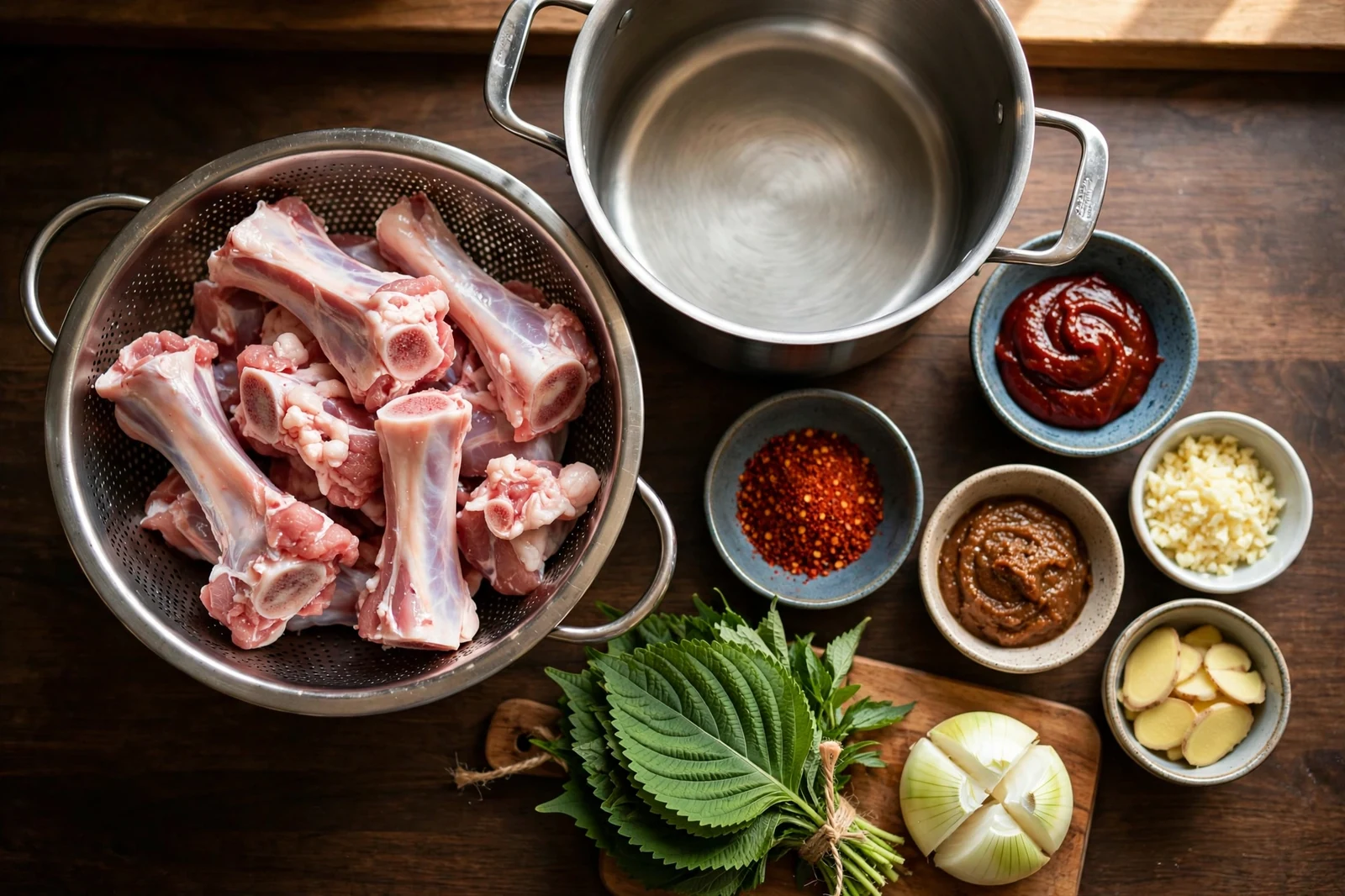
Everything here is easy to find at a Korean or well-stocked Asian grocery. Pork neck bones are sold in the meat case, usually in 2- to 3-pound packs — grab one and freeze it if you see it. Perilla leaves (kkaennip) come in plastic sleeves in the produce section; perilla seed powder (deulkkae-garu) sits with the other Korean pantry items.
- For the pork bones: 3 lb pork neck bones (about 1.4 kg), 12 cups water, 1 yellow onion quartered, 6 cloves garlic smashed, 1-inch piece fresh ginger sliced
- For the seasoning: 3 tbsp gochugaru, 2 tbsp gochujang, 2 tbsp fish sauce plus more to taste, 1 tbsp doenjang, 1 tbsp toasted sesame oil, 1 tbsp minced garlic, 1 tsp sugar, 1/2 tsp ground black pepper
- For the soup: 3 medium Yukon Gold potatoes (about 1 lb) cut into 1 1/2-inch chunks, 1 cup fresh perilla leaves roughly torn (about 15 leaves), 4 scallions cut into 2-inch pieces, 2 tbsp ground perilla seed powder plus more for the table, cooked short-grain rice for serving
How to Make Gamjatang
- Parboil the bones — don’t skip this. Put the neck bones in a large pot, cover with cold water, bring to a rolling boil, and boil for a full 10 minutes. Drain, rinse the bones under cold water, and wash out the pot. This removes the bone dust and blood that would otherwise turn your broth murky gray.
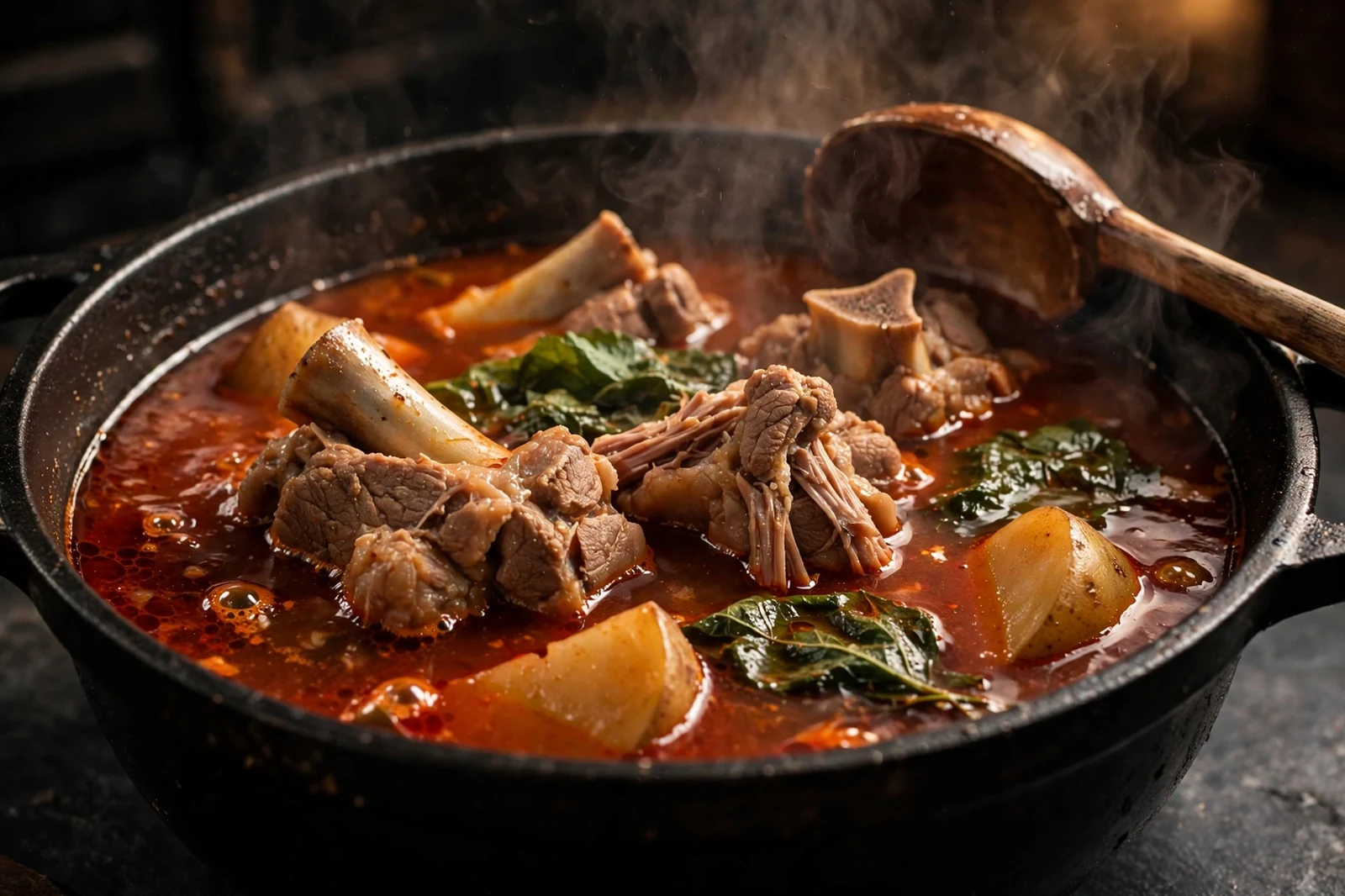
- Simmer low and slow. Return the bones to the clean pot with 12 cups fresh water, the onion, garlic, and ginger. Bring to a boil, then drop to a gentle simmer — lazy bubbles, not a rolling boil — partially covered, for 2 hours, until the meat is nearly falling off the bones. Skim the surface whenever foam appears in the first 30 minutes.
- Season the broth. Fish out the onion and ginger. Stir the gochugaru, gochujang, fish sauce, doenjang, sesame oil, minced garlic, sugar, and black pepper into a paste in a small bowl, then whisk it into the pot.
- Add the potatoes. Stir in the potato chunks and simmer 20 to 25 minutes, until they yield easily when pierced with a fork.
- Finish with perilla. Stir in the perilla seed powder, then the perilla leaves and scallions. Simmer 5 more minutes, just until the leaves wilt.
- Taste and serve. The broth should be clearly spicy and savory with sweetness behind it. If it tastes flat, add fish sauce a teaspoon at a time. Ladle into deep bowls, with steamed rice alongside and extra perilla seed powder at the table.
Tips for the Best Gamjatang
- Ten minutes on the parboil, not five. At 5 minutes, pink bits still cling to the bones and leach back into the soup; at 10 they’re gone. Past 15 you start dissolving the gelatin you actually want, so rinse promptly.
- Keep the simmer gentle. A hard boil emulsifies fat straight into the broth and turns it greasy-cloudy even after a good parboil. If the surface looks like it’s churning, your heat’s too high.
- Calibrate the heat to your gochugaru. Brands vary enormously. My ratio: 3 tablespoons in this volume of broth lands at a solid medium. Drop to 2 for mild, push to 4 for a burn that builds.
- No perilla leaves? Fresh shiso works (same family). In a pinch, use 1 cup torn spinach plus a drizzle of toasted sesame oil — you’ll miss the minty edge, but the soup still sings.
- Day two is better. Leftovers keep 4 days in the fridge and freeze for 3 months. The potatoes drink up seasoning overnight, so the second bowl is arguably the best one.
What to Serve with Gamjatang
Gamjatang is a full meal with just rice, but if you’re feeding a crowd, round it out with Korean sides. A crunchy kimchi cuts the richness — homemade napa cabbage kimchi is ideal if you have a batch going — and something fried and snacky on the side never hurts. Tteokbokki’s sweet-spicy chew plays well against the soup’s deeper heat if you’re going all out.
More Korean Recipes
- Budae Jjigae: Korean Army Stew — another bold Korean one-pot, this one built on sausage, Spam, and ramen
- Kimchi Jjigae: Kimchi Stew — the everyday Korean stew to gamjatang’s weekend project
- Tteokbokki: Spicy Korean Rice Cakes — chewy rice cakes in a sweet-spicy gochujang sauce
- Pajeon: Korean Scallion Pancakes — crisp, savory pancakes for the side of any Korean soup night
From the Garden
Perilla is one of the easiest Asian herbs to grow in a pot — it practically volunteers once it settles in. I keep a container of it on the patio through summer, and having fresh kkaennip within arm’s reach is what turned gamjatang from a special-occasion soup into a regular rotation for me. If you’ve got a sunny spot, here’s how to grow perilla (shiso) in pots.