
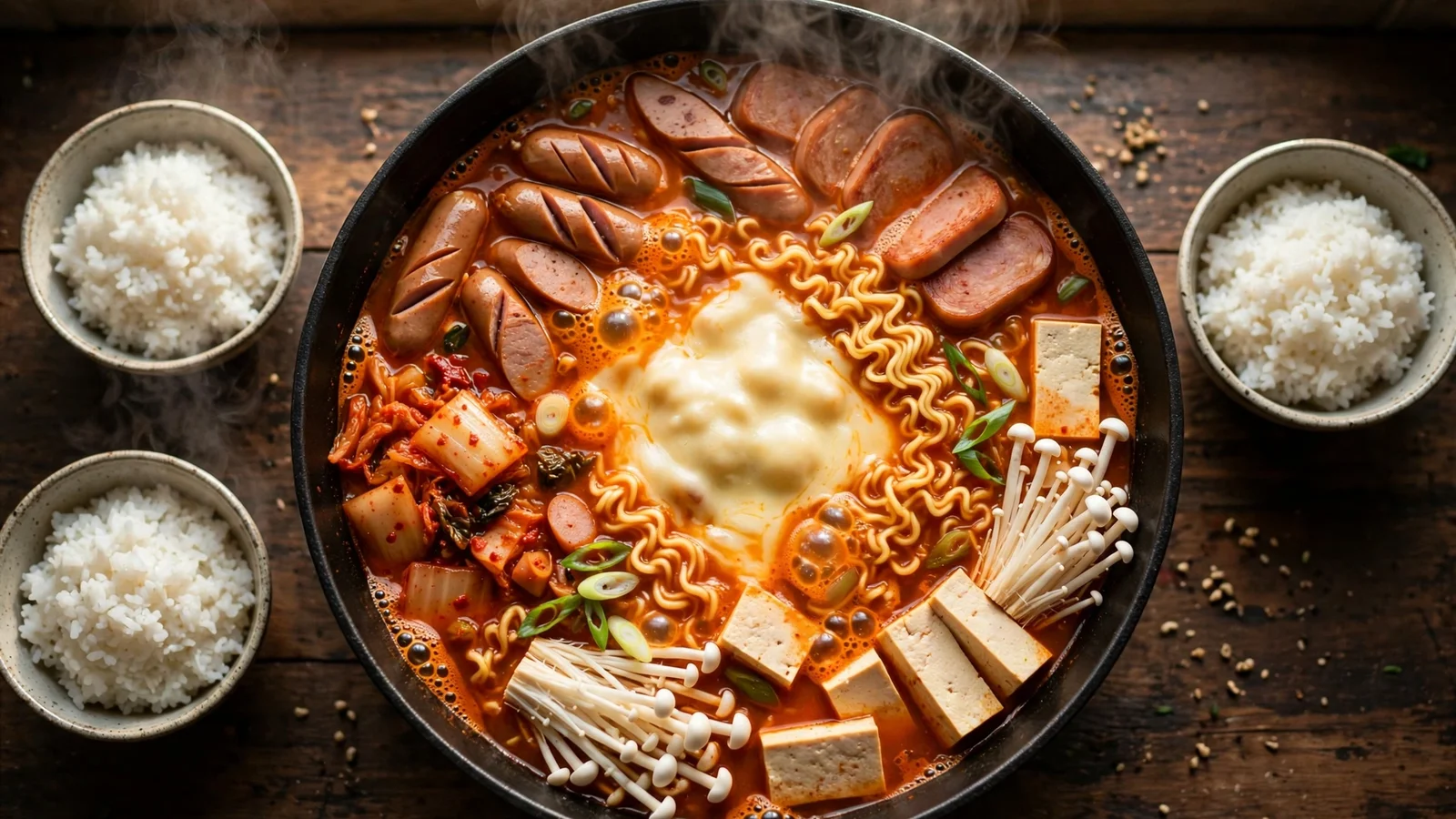
A Stew Built from Whatever Was on Hand
Budae jjigae started after the Korean War, when cooks near U.S. bases combined local staples like kimchi and gochujang with surplus foods like Spam, hot dogs, and baked beans. The result stuck because the combination works: sour, ripe kimchi and a chili-paste broth give the pot its backbone, and the processed meats add salty, smoky richness that plain broth can't.
It's a forgiving stew, but it isn't random. The broth needs enough kimchi juice and paste to stay sharp after the noodles and cheese go in, and the ingredients need to go in an order that respects how fast each one cooks. Get those two things right and the rest is assembly.
The Broth Ratio to Start With
For a pot that serves 4, start with 4 cups of liquid. Plain water works, but a light anchovy or dashi stock gives a rounder base. Season that base before anything bulky goes in, then adjust at the end after the kimchi and meats have salted the pot on their own.
| Element | Amount for 4 servings | What it does |
|---|---|---|
| Water or light stock | 4 cups (960 ml) | The base; keeps the stew soupy, not thick |
| Well-fermented kimchi, chopped | 1 1/2 cups, plus 1/2 cup kimchi juice | Sour heat and depth |
| Gochujang | 2 tablespoons | Body and rounded heat |
| Gochugaru (Korean chili flakes) | 1 tablespoon, more to taste | Clean, bright heat |
| Soy sauce | 1 tablespoon | Salt and color |
| Sugar | 1 teaspoon | Balances the kimchi sourness |
| Garlic, minced | 3 cloves | Aromatic base |
If you keep a jar of ripe kimchi for cooking rather than snacking, this is the pot for it. The same well-aged kimchi that makes strong fried rice does the heavy lifting here. Our Kimchi Fried Rice uses that same rule: older kimchi, better cooked dish.
Ingredients
For the broth
- 4 cups (960 ml) water or light anchovy stock
- 1 1/2 cups well-fermented napa kimchi, chopped into bite-size pieces
- 1/2 cup (120 ml) kimchi juice, pressed from the kimchi jar
- 2 tablespoons gochujang
- 1 tablespoon gochugaru, plus more to taste
- 1 tablespoon soy sauce
- 1 teaspoon granulated sugar
- 3 cloves garlic, minced
For the pot
- 1 can (12 oz / 340 g) Spam, sliced 1/4 inch thick
- 4 hot dogs or Vienna sausages, sliced on a diagonal
- 7 oz (200 g) firm tofu, sliced into rectangles
- 1 small yellow onion, thinly sliced
- 4 oz (115 g) enoki or oyster mushrooms, torn
- 2 scallions, cut into 2-inch pieces
- 1/2 cup canned baked beans (optional, traditional)
To finish
- 1 pack instant ramen noodles, seasoning packet discarded
- 1 to 2 slices American cheese
- 1/2 cup sliced tteok (Korean rice cakes), soaked if frozen (optional)
Prep: 15 minutes. Cook: 20 minutes. Total: 35 minutes. Serves 4.
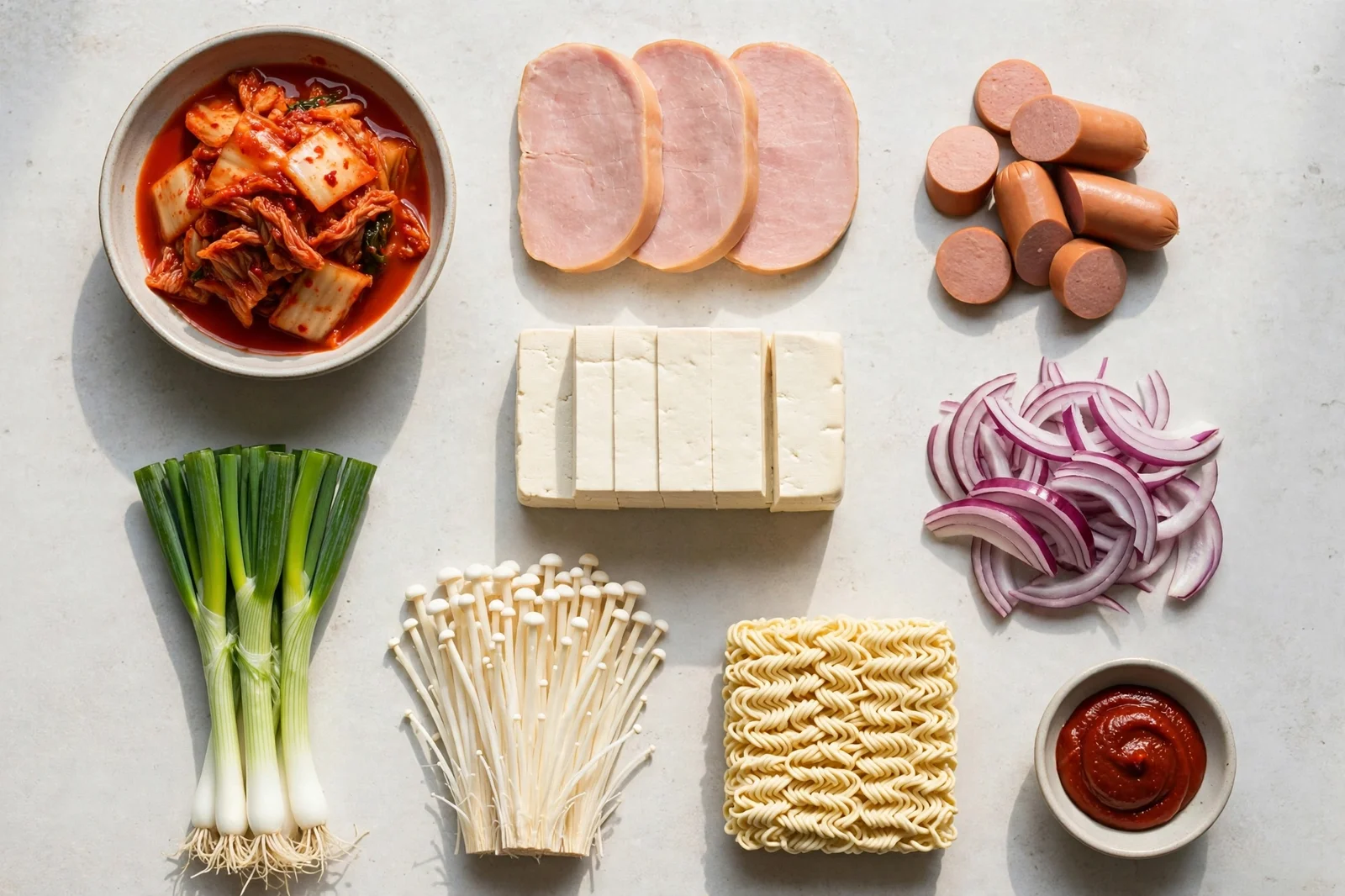
How to Make It, Step by Step
1. Mix the broth base. In a wide, shallow pot or a large deep skillet, stir together the water or stock, kimchi juice, gochujang, gochugaru, soy sauce, sugar, and garlic. This is easier before the pot is full of food.
2. Lay in the sturdy ingredients. Add the chopped kimchi, onion, Spam, sausages, tofu, mushrooms, and baked beans if using. Arrange them in sections rather than dumping them in a pile; the stew is served from the pot, and sections look and cook better. Pour the seasoned broth over everything.
3. Bring it to a boil. Set the pot over medium-high heat and bring it to a steady boil. Let it bubble for 8 to 10 minutes, until the kimchi softens and the broth turns a deep orange-red. Spoon broth over the tofu and mushrooms as it cooks.
4. Taste before the noodles. Ramyeon and cheese will mute the seasoning, so check now. The broth should taste a little too bold at this point: spicy, sour, and salty. Add gochugaru for heat or a pinch of sugar if the kimchi is very sour.
5. Add the fast ingredients. Nestle the ramen noodles and tteok (if using) into the broth, add the scallions, and cook 3 to 4 minutes, until the noodles are just tender. Keep the noodles submerged and loosen them with chopsticks so they cook evenly.
6. Finish with cheese. Lay the cheese slices over the center of the pot, put the lid on for 30 seconds, then serve right away. Stir the melted cheese through the noodles at the table.
Serve the pot in the center with bowls of rice alongside. Plain steamed rice is the classic partner because the stew is already salty and rich. If you want a refresher on ratios, our guide to how to cook jasmine rice covers the rinse and rest that keep grains separate under a saucy topping.
How It Differs from Other Jjigae on This Site
Budae jjigae shares a name with doenjang jjigae, but the pots eat differently. Doenjang leans on fermented soybean paste and vegetables for a mellow, earthy broth, while budae is sharper and richer from kimchi, chili paste, and cured meats. If you want the calmer pot, make our Doenjang Jjigae on a weeknight and save budae for a group that wants heat and noodles at the table.
Tips for a Better Pot
- Use sour kimchi. Fresh, just-made kimchi tastes flat in this stew. You want kimchi that smells tangy and has been in the fridge at least 2 to 3 weeks. If yours is mild, add 1 teaspoon of rice vinegar at the end to lift the broth.
- Don't skip the kimchi juice. It carries most of the sourness. If the jar is low on liquid, press the chopped kimchi in a bowl and pour off what collects.
- Add cheese last, and only at the end. Cheese that boils for 10 minutes disappears into the broth and turns it cloudy. Thirty seconds under a lid is enough for it to slump over the noodles.
- Keep extra broth ready. Noodles drink liquid fast. If the pot looks tight after step 5, splash in 1/2 cup of hot water rather than letting the noodles sit in a paste.
- Slice meats thick enough to find. Spam and sausage cut too thin get lost. A 1/4-inch slice holds its shape through the boil and still browns a little at the edges if you sear it first (see variations).
Variations and Swaps
- Sear the Spam first. For firmer edges, fry the Spam slices in a dry skillet 1 to 2 minutes per side before adding them in step 2. It adds a few minutes and a second pan, but the texture holds up better in the broth.
- No Spam at home. Use 8 oz of sliced pork belly, cocktail sausages, or leftover ham in the same amount. The stew needs one salty, fatty meat; it doesn't have to be Spam specifically.
- Milder pot for kids at the table. Cut the gochugaru to 1 teaspoon, add an extra teaspoon of sugar, and keep the cheese. Serve the chili flakes at the table so adults can stir in their own heat.
- Extra vegetables. Sliced zucchini, soybean sprouts, or a handful of spinach can go in with the scallions in step 5. They need only the last few minutes and stretch the pot without changing the broth.
- No baked beans. Leave them out without adjusting anything else. They add a faint sweetness and body, but plenty of home versions skip them.
Storage and Leftovers
Cool leftovers quickly and refrigerate in a sealed container for up to 3 days. The noodles will keep absorbing broth and turn soft, so if you know you'll have leftovers, cook only the noodles you need for the first meal and add a fresh handful when you reheat. Reheat gently over medium-low heat with a splash of water until it just simmers; the tofu and kimchi reheat well, while the cheese is best added fresh on top.
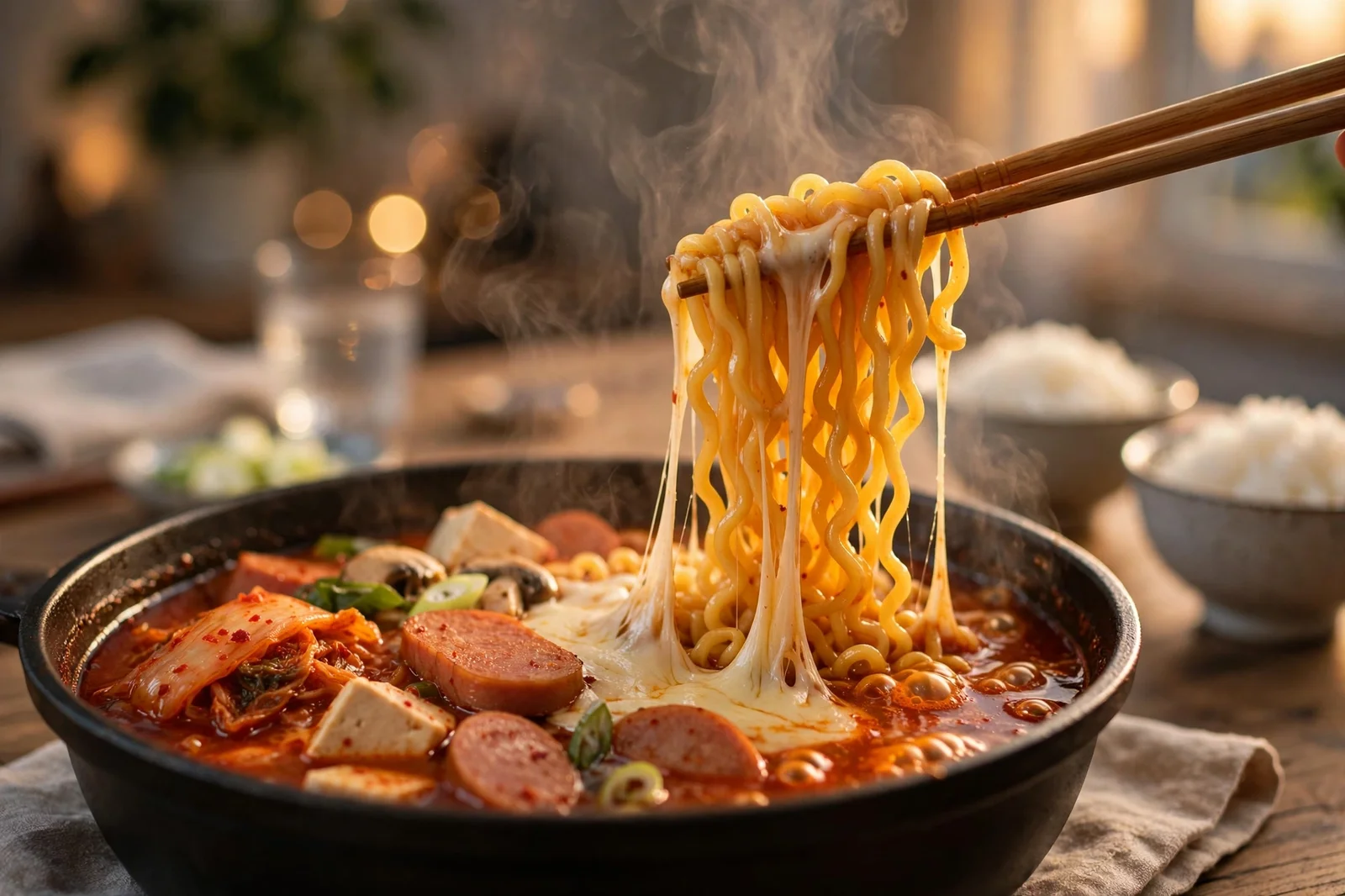
What to Serve Alongside
Budae jjigae is a main dish, not a starter. Rice is the only required side. A simple cucumber salad or plain blanched greens helps between bites, but the pot already contains meat, tofu, vegetables, and noodles. Set out small bowls, chopsticks, and spoons, keep the pot on the lowest burner or a trivet, and let everyone pull noodles straight from the center. That shared-pot style is the point of the dish.
Budae Jjigae (Korean Army Stew)
Ingredients
Method
- Mix the broth base. In a wide, shallow pot or a large deep skillet, stir together the water or stock, kimchi juice, gochujang, gochugaru, soy sauce, sugar, and garlic. This is easier before the pot is full of food.
- Lay in the sturdy ingredients. Add the chopped kimchi, onion, Spam, sausages, tofu, mushrooms, and baked beans if using. Arrange them in sections rather than dumping them in a pile, then pour the seasoned broth over everything.
- Bring it to a boil. Set the pot over medium-high heat and bring it to a steady boil. Let it bubble for 8 to 10 minutes, until the kimchi softens and the broth turns a deep orange-red. Spoon broth over the tofu and mushrooms as it cooks.
- Taste before the noodles. Noodles and cheese will mute the seasoning, so check now. The broth should taste a little too bold at this point: spicy, sour, and salty. Add gochugaru for heat or a pinch of sugar if the kimchi is very sour.
- Add the fast ingredients. Nestle the ramen noodles and tteok (if using) into the broth, add the scallions, and cook 3 to 4 minutes, until the noodles are just tender. Keep the noodles submerged and loosen them with chopsticks so they cook evenly.
- Finish with cheese. Lay the cheese slices over the center of the pot, put the lid on for 30 seconds, then serve right away. Stir the melted cheese through the noodles at the table.
1 thought on “Budae Jjigae: Korean Army Stew”