
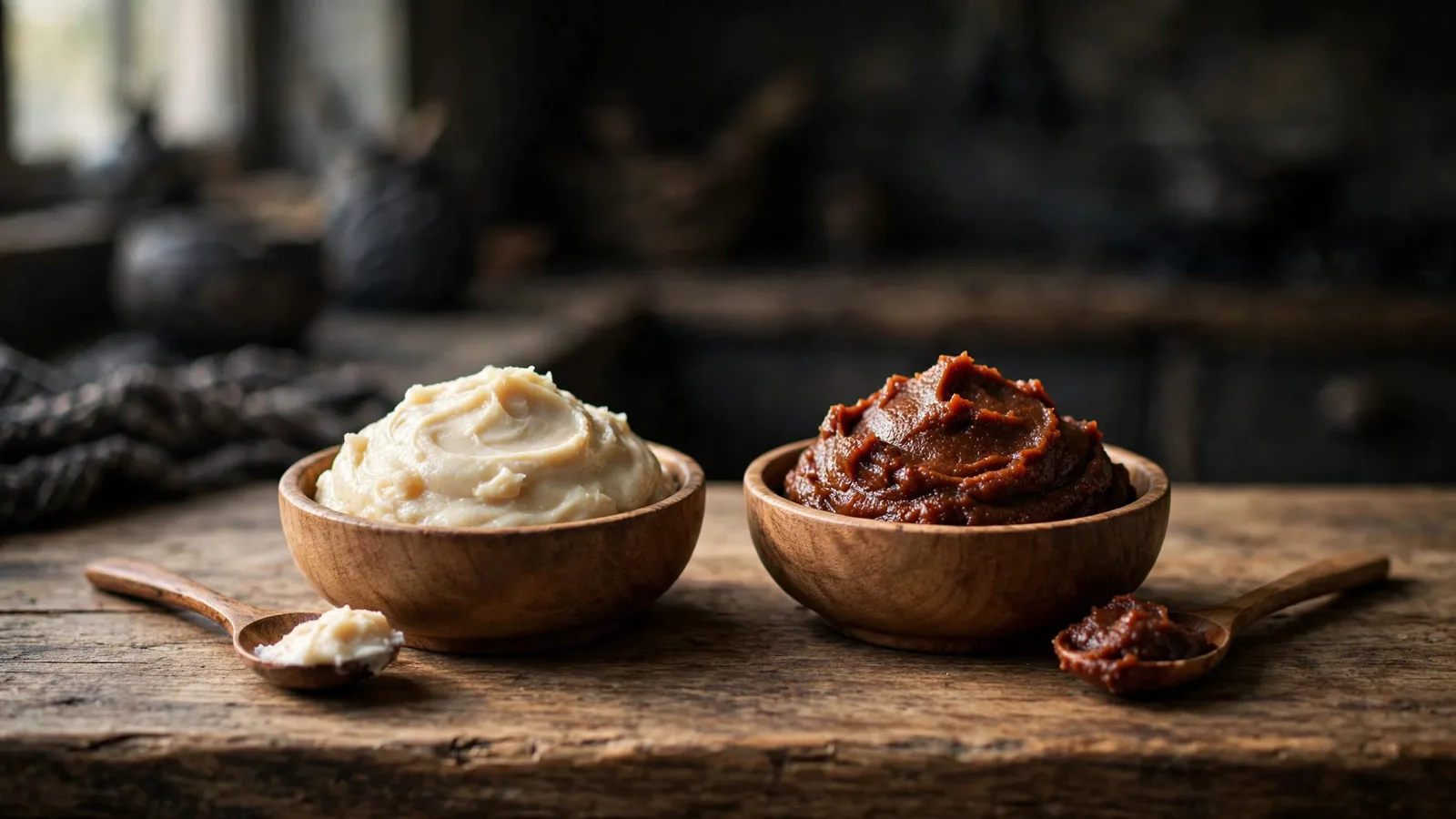
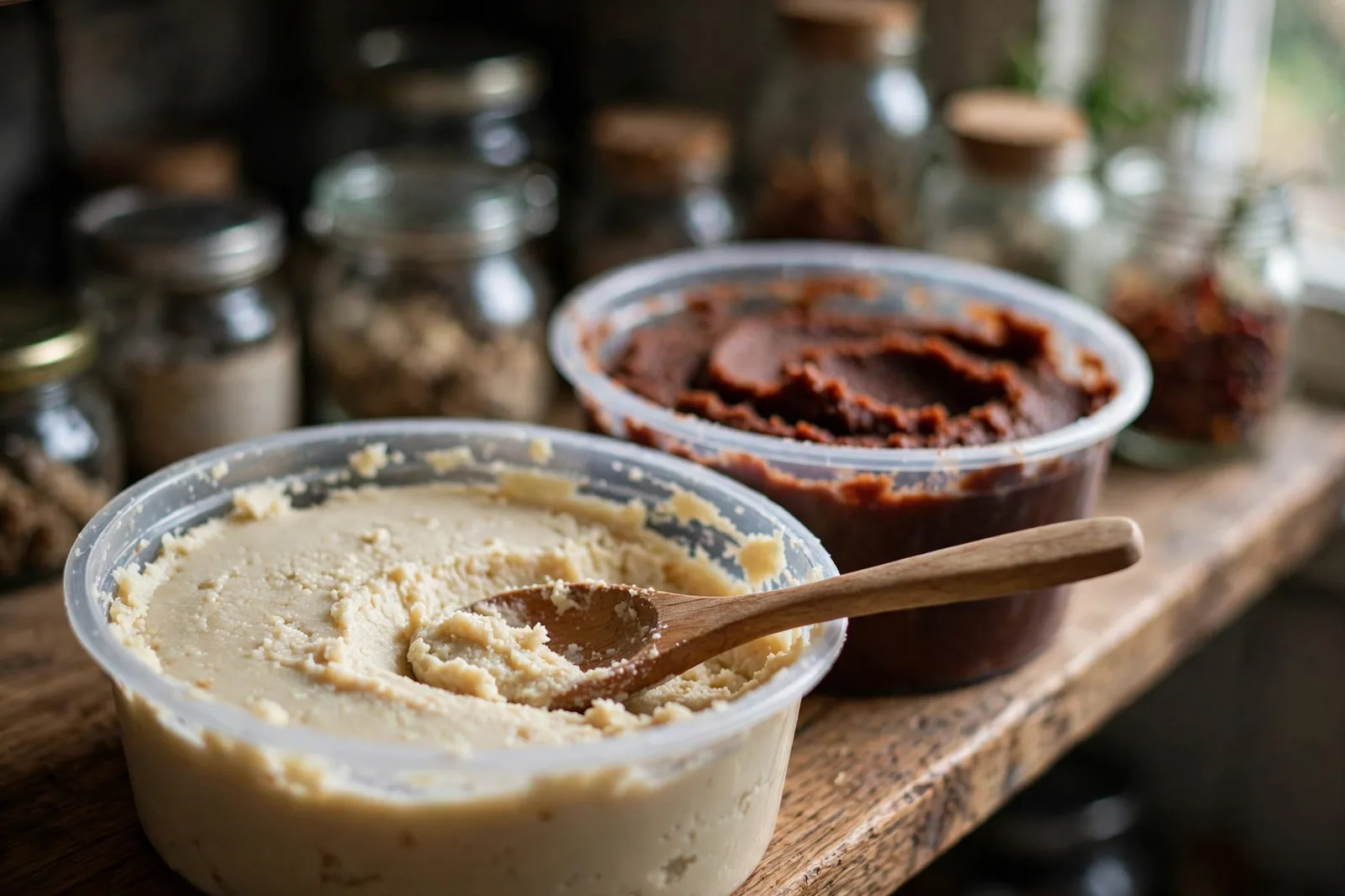
They sit side by side in the refrigerated aisle, both labeled miso, and it is tempting to treat them as one ingredient in two colors. That mistake can throw a whole dish off. White miso is sweet, mild, and lightly salted. Red miso is dark, salty, and intensely savory. I keep both tubs in my fridge and reach for them for completely different jobs.
The quick verdict
Buy white miso when a dish needs gentle seasoning and a little sweetness: salad dressings, dipping sauces, light miso soup, marinades for fish, and even desserts. Buy red miso when a dish needs deep savory punch and can handle salt: hearty miso soup, braises, roasted vegetables, and glazes. If you only want one tub in the fridge, white miso suits lighter weeknight cooking and dressings, while red miso suits stews, braises, and bold flavors. The two are not a straight one-to-one swap, but the ratios later in this post get you close.
What white miso is
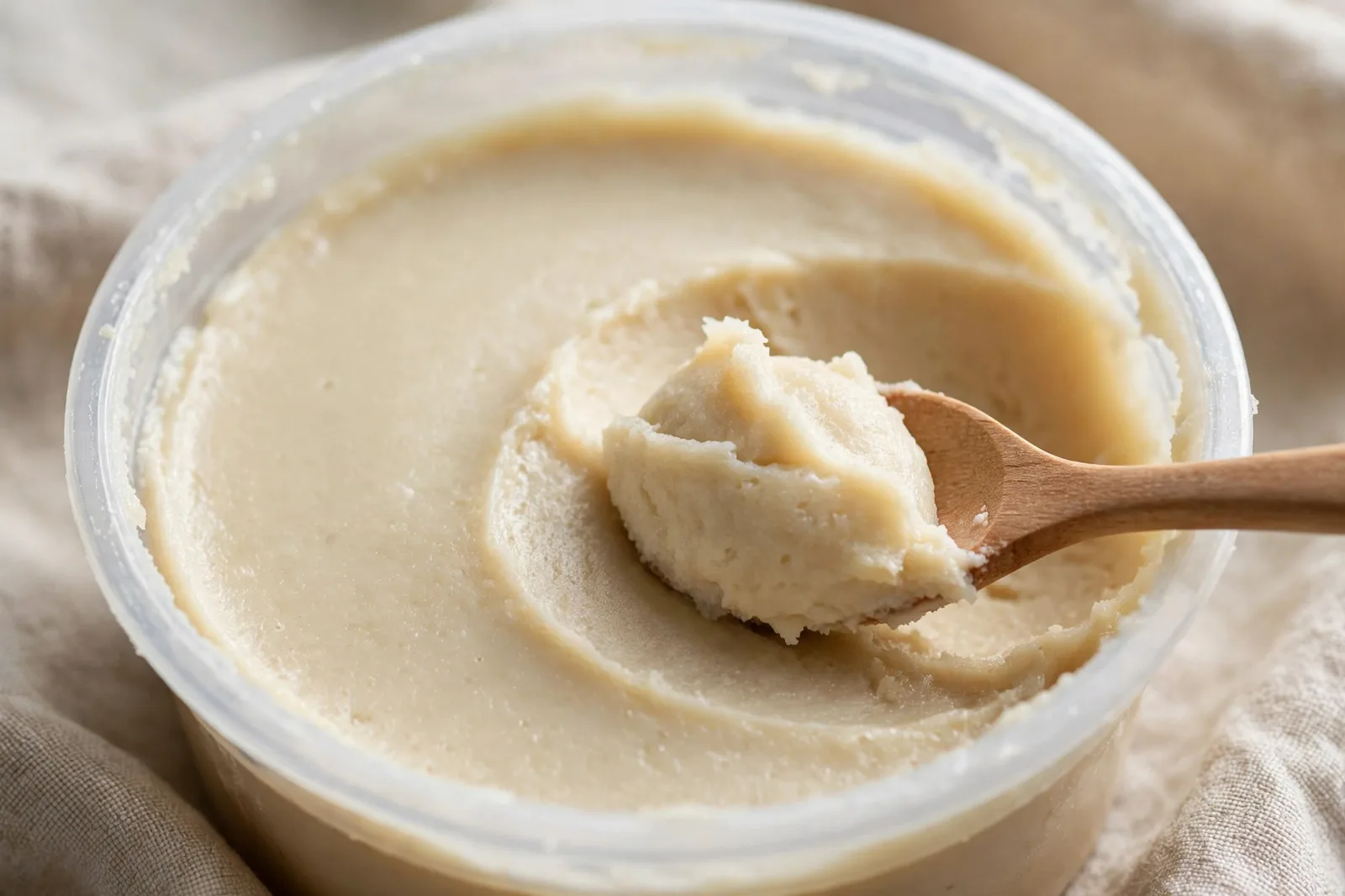
White miso, or shiro miso, ferments for a short time: weeks to a few months. It uses a high proportion of rice koji to soybeans, and that is where its sweetness comes from: the koji enzymes turn rice starches into sugars during the short rest. The result is a pale, smooth paste that tastes mild and lightly sweet, with a low salt content (about 5 to 7 percent in the sweet Kyoto style).
It does its best work where you want seasoning without weight. Whisk it into dressings, spread it thin on fish before a quick broil, or stir it into a light miso soup at the very end. Keep it away from a hard boil, since long, aggressive heat dulls its finer flavor.
What red miso is
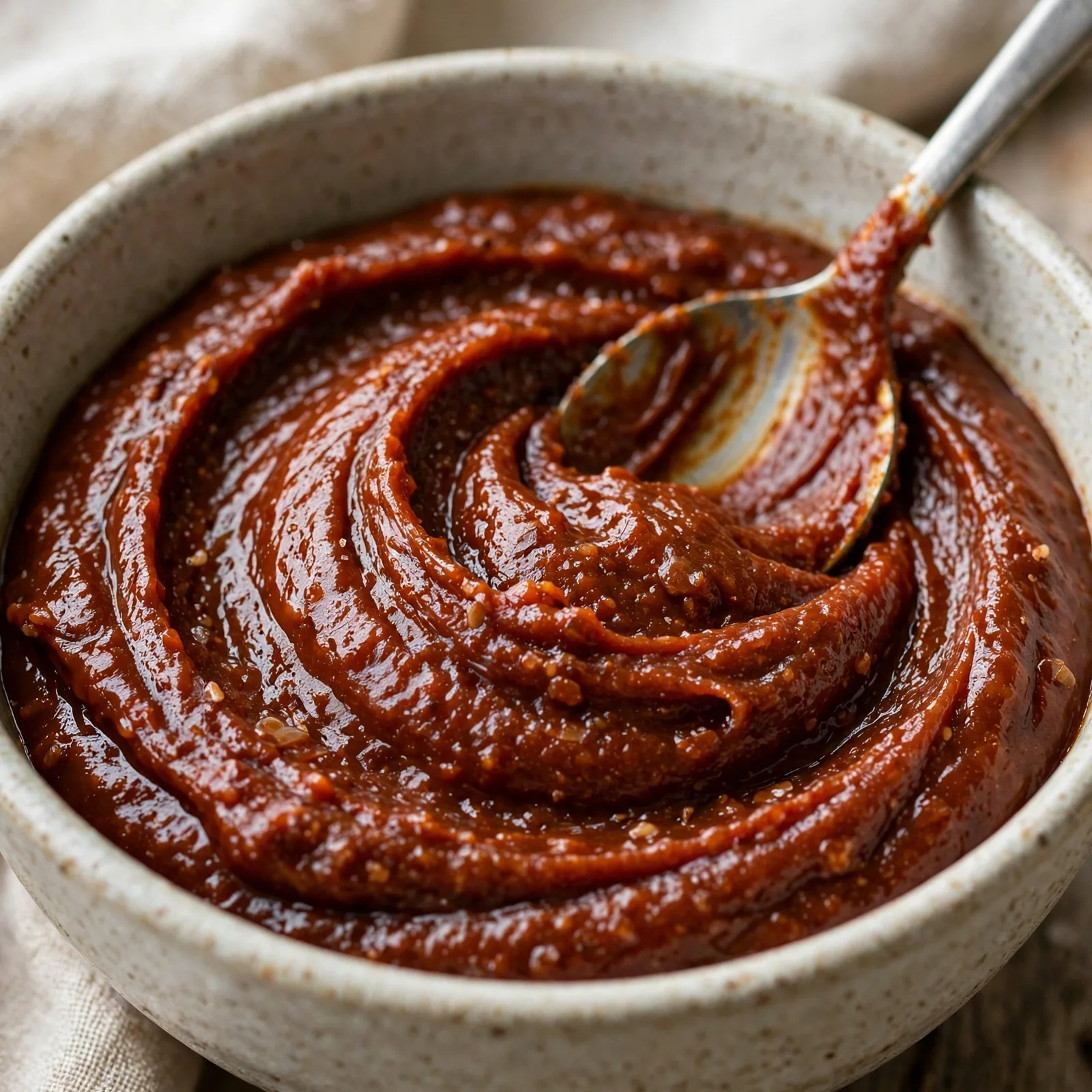
Red miso, or aka miso, is the long-aged sibling. It ferments for months to years, uses more soybeans and more salt (roughly double the salt of white miso), and darkens to a deep reddish brown as it ages. Some red miso, like Hatcho from Aichi prefecture, is made almost entirely from soybeans and aged the longest of all.
The flavor matches the color: bold, salty, and deeply savory, with a slight bitter edge that white miso never has. Red miso stands up to long cooking and strong partners (pork, eggplant, root vegetables), where white miso would disappear.
White miso vs red miso at a glance
| White miso | Red miso | |
|---|---|---|
| Japanese name | Shiro miso | Aka miso |
| Fermentation | Weeks to a few months | Months to years |
| Color | Pale beige | Deep reddish brown |
| Salt | About 5–7% | Roughly double that |
| Flavor | Mild, lightly sweet | Bold, salty, deeply savory |
| Best for | Dressings, light soups, fish, desserts | Hearty soups, braises, glazes |
A side-by-side test in my kitchen
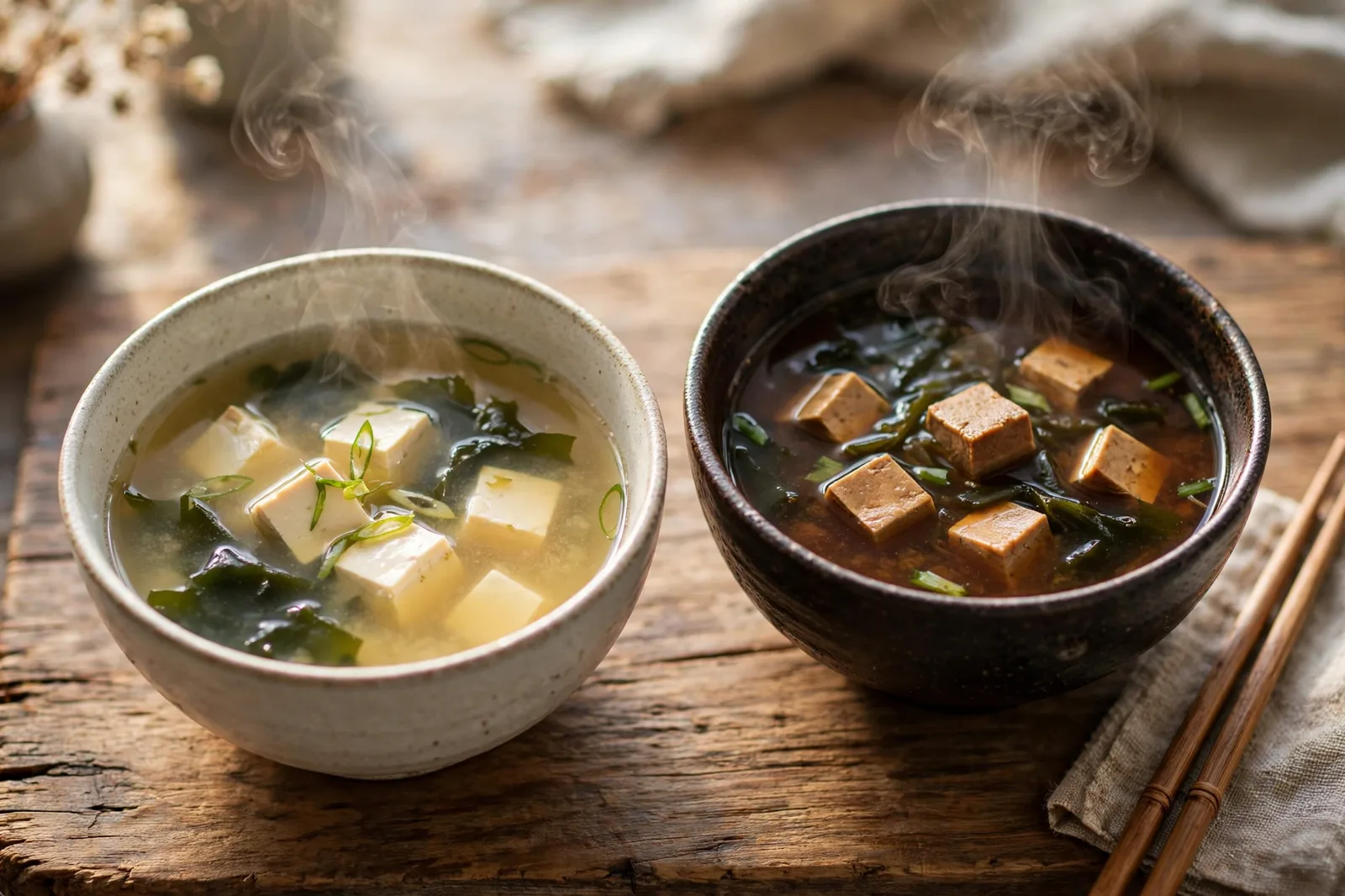
To put real numbers on the difference, I made the same soup twice: two cups of dashi each, one spooned with 1 tablespoon of white miso, the other with 1 tablespoon of red miso. The red bowl tasted about twice as salty and noticeably deeper; the white bowl was mild with a gentle sweetness. Then I made a third bowl with 2 teaspoons of red miso (about two-thirds of a tablespoon), and it landed close to the white bowl's seasoning.
Two more things came out of that test. First, the red miso took longer to dissolve: it is thicker, and it needed a full extra 30 seconds of whisking in a ladle of hot broth before it broke up. The white miso melted in almost immediately. Second, no amount of white miso reproduced red miso's depth: the long fermentation gives red miso a flavor that simply is not in the white tub. The ratios below are a good stand-in, not a clone.
How to swap one for the other
- When a recipe calls for white miso and you have red: use about half the amount, then taste and add more if needed. If the recipe relied on white miso's sweetness, add a small pinch of sugar.
- When a recipe calls for red miso and you have white: use about one and a half to two times the amount. Expect a lighter, sweeter result with less depth. A spoonful of soy sauce can add back some of the missing savor.
- Whisk either miso into a ladle of hot broth first, then stir it into the pot off the heat. Both lose their finer aroma with a rolling boil, and red miso can turn harsh if it cooks too long.
Buying and storing
Both misos live in the refrigerated section of most grocery stores, often near the tofu. Labels that say "unpasteurized" or "nama" mean the cultures are still alive, which is a plus if you care about that. For white miso, pick a pale, young-looking tub; for red miso, a darker tub usually means a longer age and a stronger flavor.
In the fridge, both keep for 6 to 12 months. Press a piece of plastic wrap directly on the surface before closing the lid to slow darkening. White miso darkens faster than red; a slightly darker white miso still tastes fine.
More Japanese recipes
Put both tubs to work: Classic Miso Soup shows white miso at its simplest, Nasu Dengaku: Miso-Glazed Eggplant is red miso's bold side at its best, Agedashi Tofu is the fried-then-simmered classic, and Chicken Karaage is what to make when you want something crisp from the fryer.
Two tubs, two jobs. Once you have tasted them side by side, you will reach for the right one without thinking.