
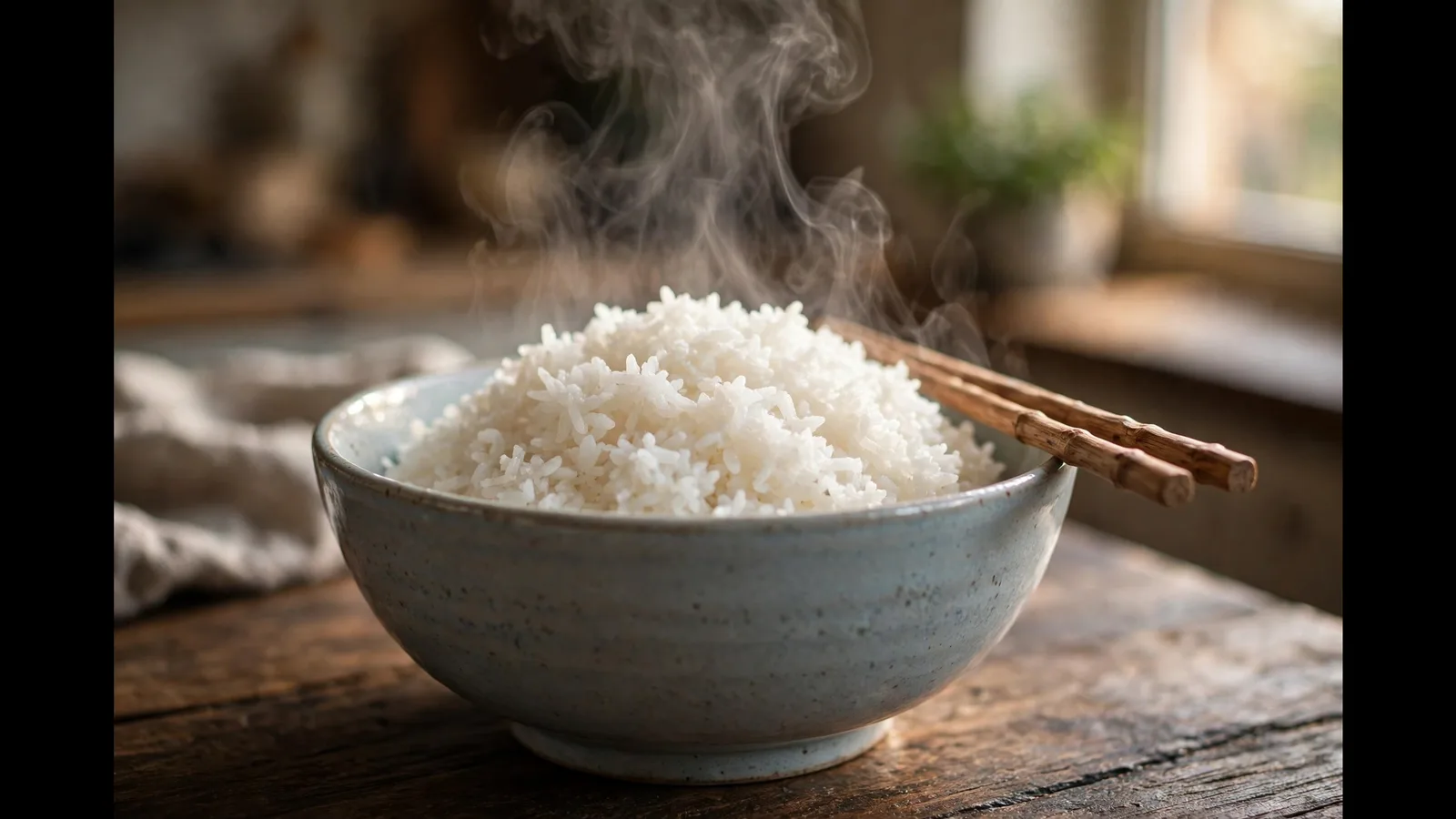
Cold rice is a texture problem, not a cooking problem
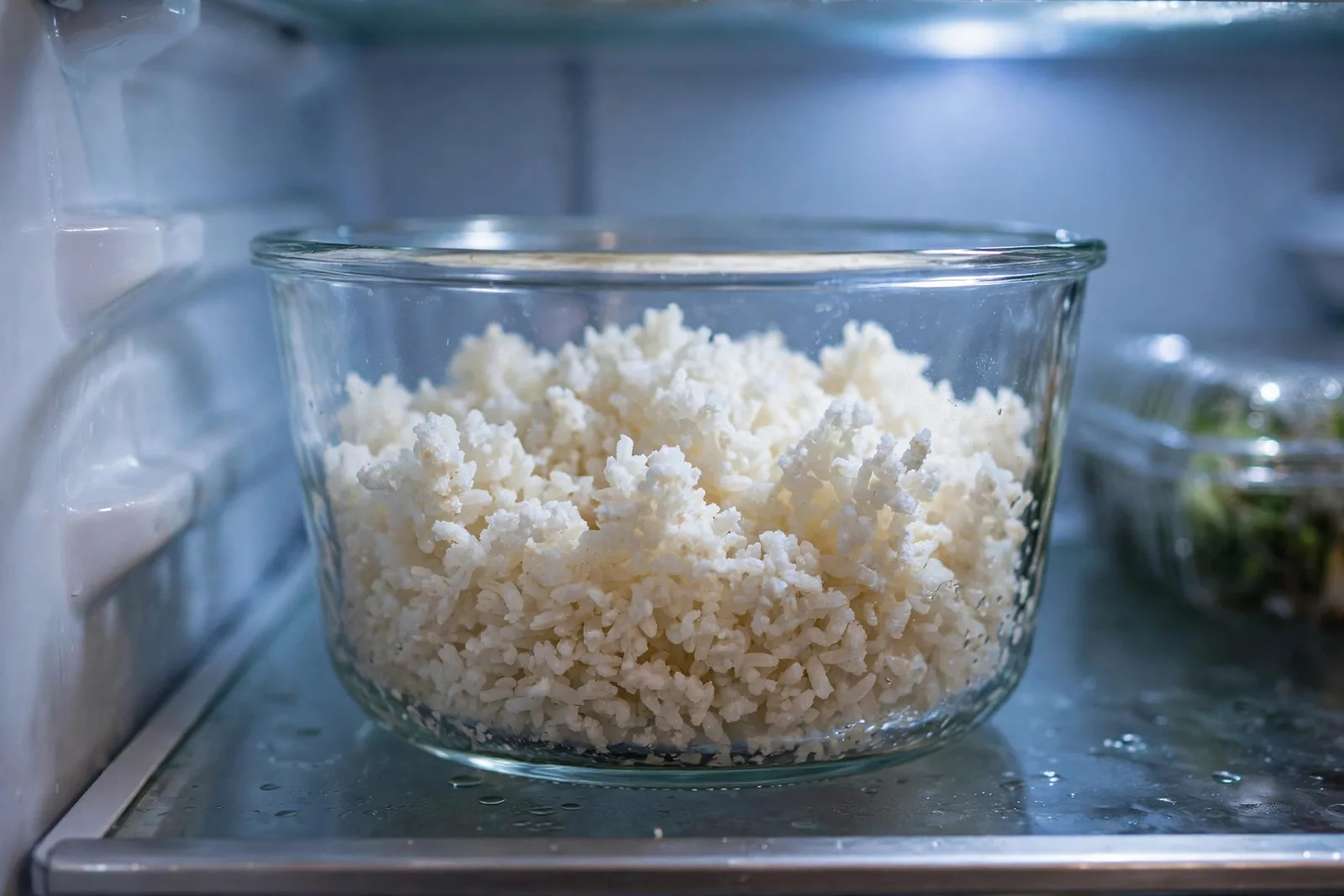
Leftover rice from the fridge is firm, dry, and a little crumbly, and that is normal. As cooked rice cools, the starches firm back up and squeeze moisture out of the grains. Reheating is just reversing that: add a little water, add heat, and trap the steam so the grains soften again. Every method below works on that one principle. Pick the one that matches how much rice you have and how much time you have.
The quick answer
A pot of plain rice: sprinkle water over it, lid on, low heat on the stove. One bowl: microwave with a damp paper towel over the top. A plan to make fried rice: cold rice straight into a hot oiled wok, no water needed. Sticky rice: steam it again, since the microwave turns it gummy. Details and timing for each are below.
Why leftover rice goes hard in the fridge
Cooked rice is mostly starch and water. In the fridge, the starch chains slowly lock back together and push water out of the grains. The result is firm, dry, separate grains that feel stale even though nothing spoiled. Heat plus fresh moisture breaks those chains apart again, which is why every reheating method adds water in some form.
The same firming is exactly what makes day-old rice fry better than fresh. Dry grains hit hot oil and crisp instead of steaming into mush, so leftover rice is the starting point for sinangag and every good fried rice. Store it right and it keeps that advantage: cool it within an hour of cooking, refrigerate it, and use it within three to four days. The full storage routine is in How to Store Rice and Grains.
Method 1: stovetop steam (the fluffiest)
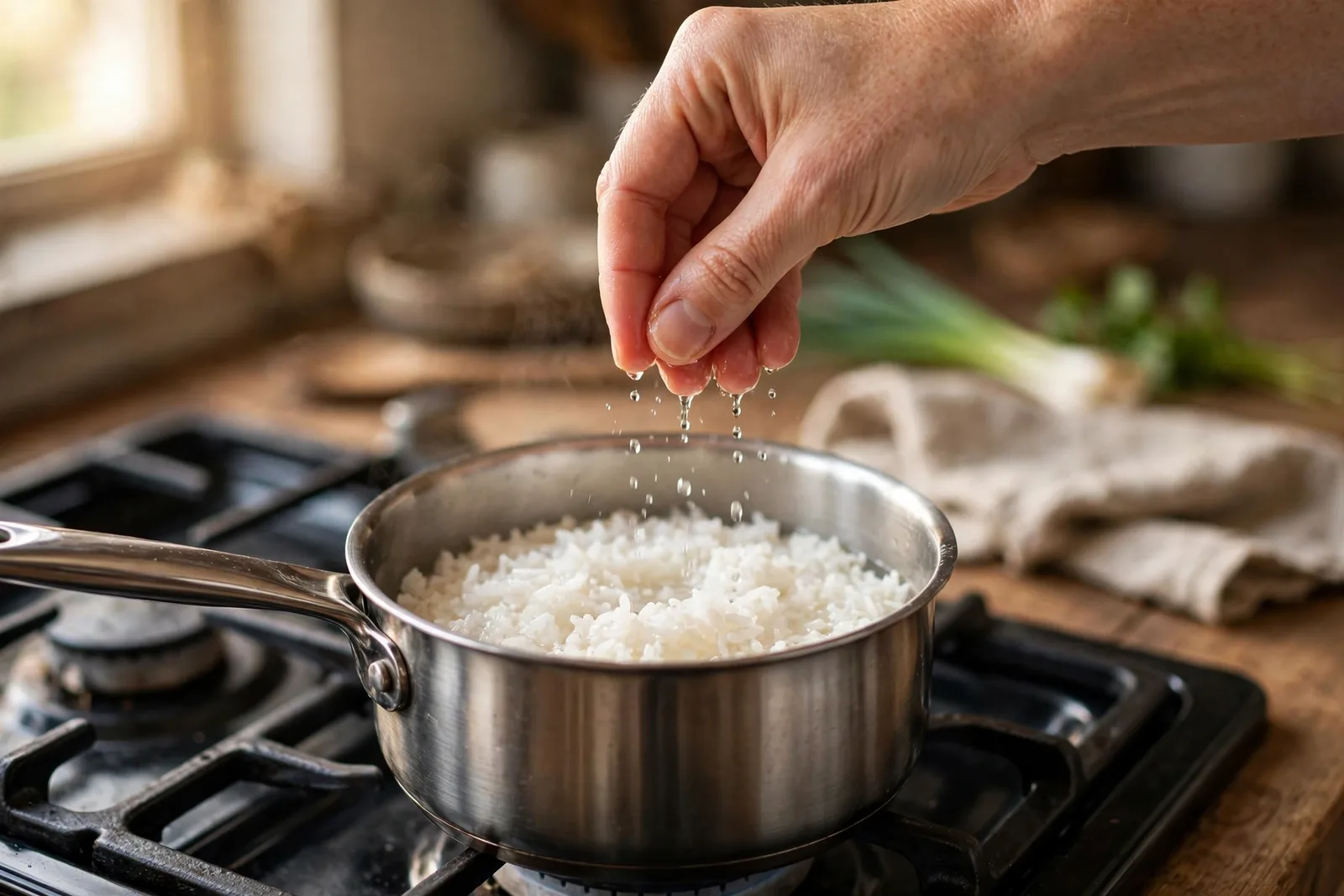
This is the one I reach for when there is a pot of rice to reheat. Put the cold rice in a saucepan and break up the clumps with wet hands. Drizzle 1 tablespoon of water over each cup of rice. That ratio is the whole trick: less and the bottom scorches before the top softens, more and it goes mushy.
Set the pan over the lowest heat with the lid on. Two to three minutes is enough to hear it start to hiss. Turn the heat off and leave it covered for five more minutes. The rest matters as much as the heat. The grains keep softening in the trapped steam, and rice that sits the full five minutes comes out noticeably fluffier than rice served straight off the burner. Fluff with a fork and serve. This works for any plain cooked rice, including the jasmine rice from the night before.
Method 2: microwave with a damp towel (the fastest)
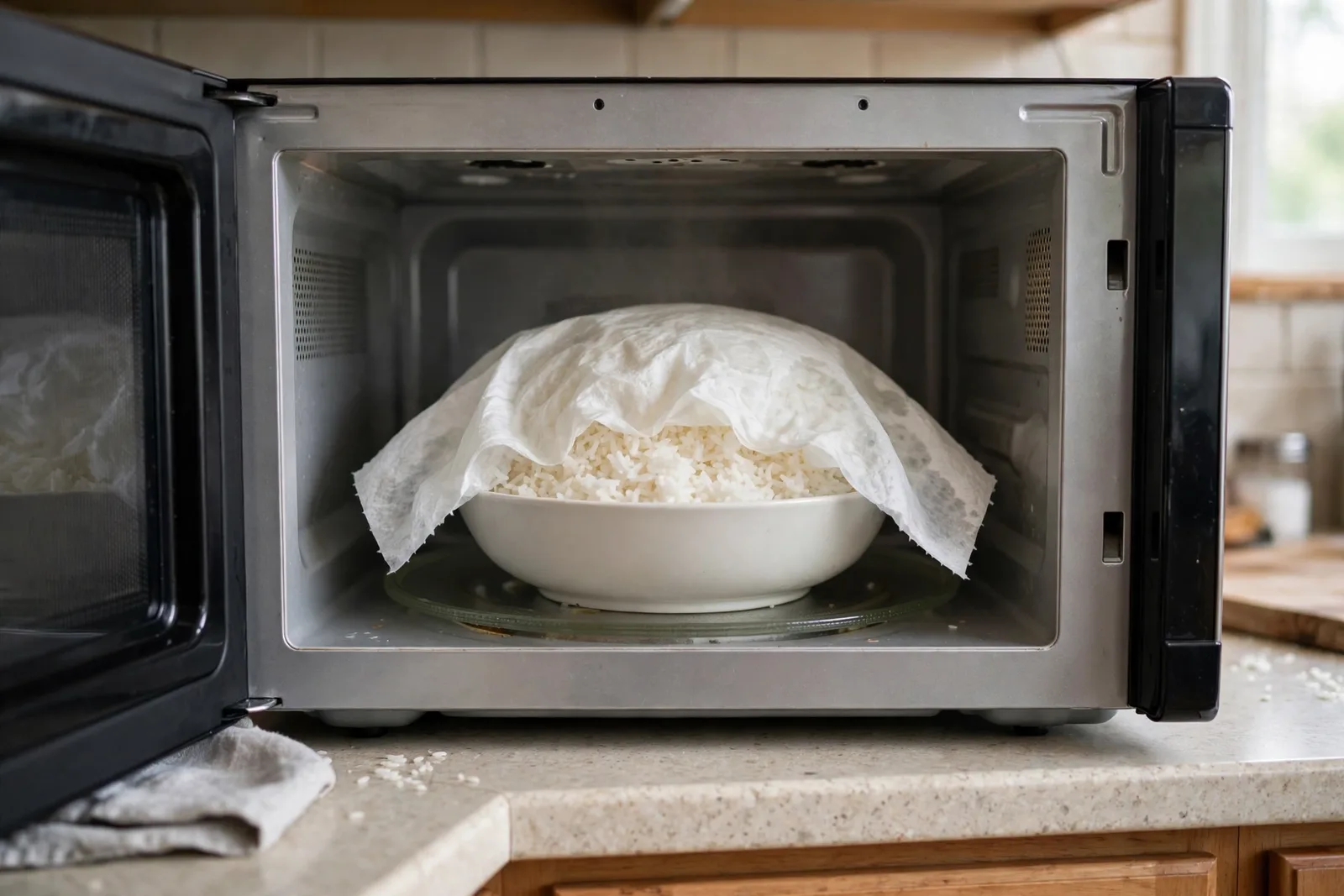
For a single bowl, the microwave wins on speed. Put the rice in a microwave-safe bowl and break up the clumps. Sprinkle a teaspoon or two of water over the top. A bowl holds less rice than a pot, so scale the water down from the stovetop ratio. Lay a damp paper towel over the bowl and microwave at 70 to 80 percent power for 90 seconds. Let it rest, still covered, for one minute before eating.
Two details make this work. First, the damp towel instead of plastic wrap pressed onto the rice: the towel lets steam circulate and keeps the surface from turning gummy. Second, medium power instead of full: full power reheats the edges while the center stays cold, and the hot edges go rubbery. Ninety seconds at medium power heats the bowl through evenly.
Method 3: hot skillet or wok (the tastiest way out)
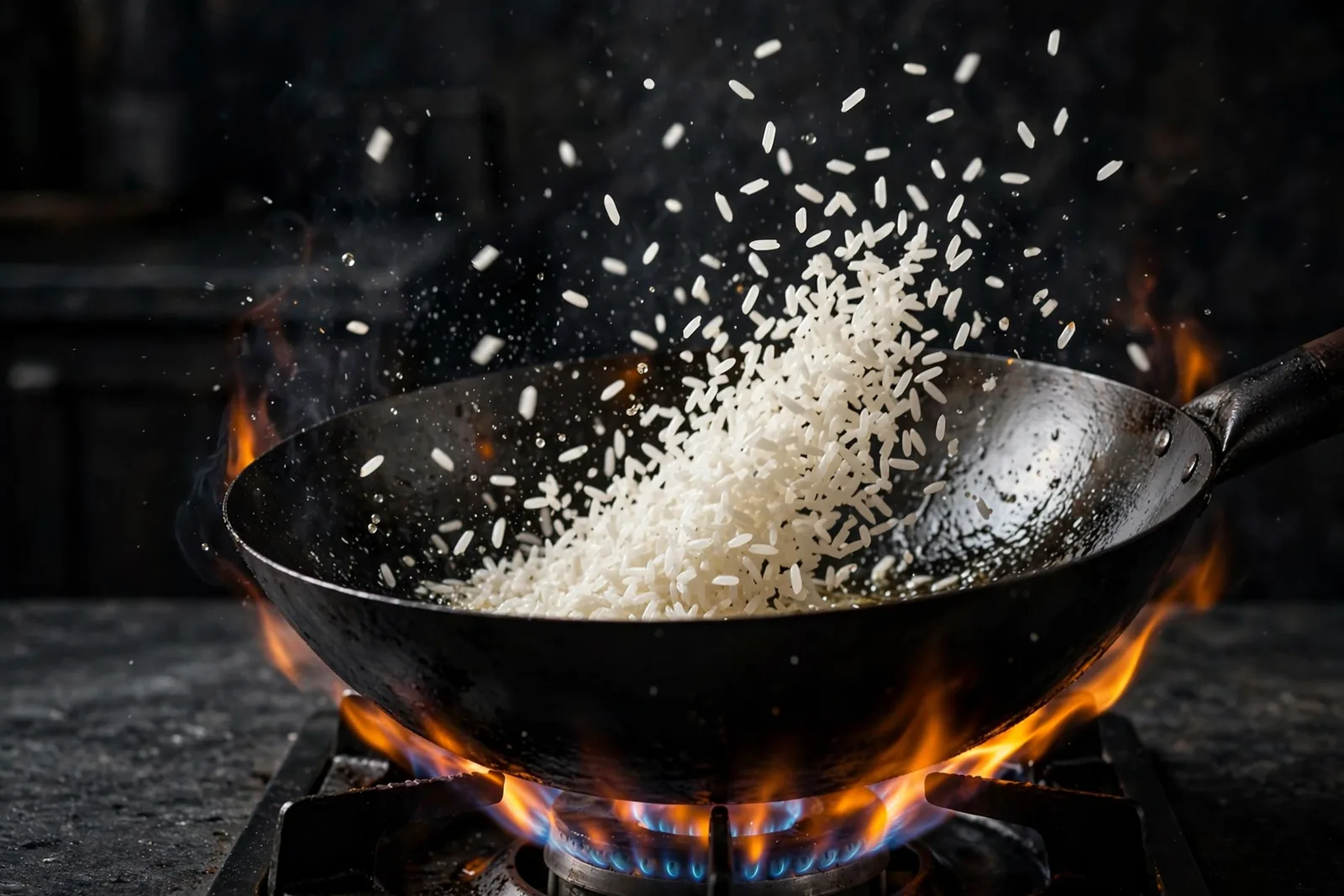
If the plan is fried rice, skip the water entirely. Cold, firm rice is the ideal starting point, and dry grains fry instead of clumping. Heat a wok or large skillet over high heat with a tablespoon of oil until it shimmers. Add the cold rice straight from the fridge and break up the clumps with a spatula. Spread it in a thin layer and let it sit undisturbed for a minute so the bottom crisps, then toss and repeat. In three to four minutes the grains are hot, separate, and lightly toasted.
From there it becomes dinner: garlic and egg for sinangag, kimchi and gochujang for kimchi fried rice. Do not wet the rice before the wok. That defeats the one advantage cold rice has.
Method 4: rice cooker reheat or steamer basket (the hands-off one)
For a big batch, or when the stove is busy, the rice cooker does the job. If yours has a reheat setting, use it. If not, a steamer basket over simmering water works the same way: spread the cold rice in the basket, sprinkle it lightly with water, cover, and steam eight to ten minutes. The rice comes out evenly soft with no hot spots to manage and nothing to watch.
Sticky rice gets its own treatment
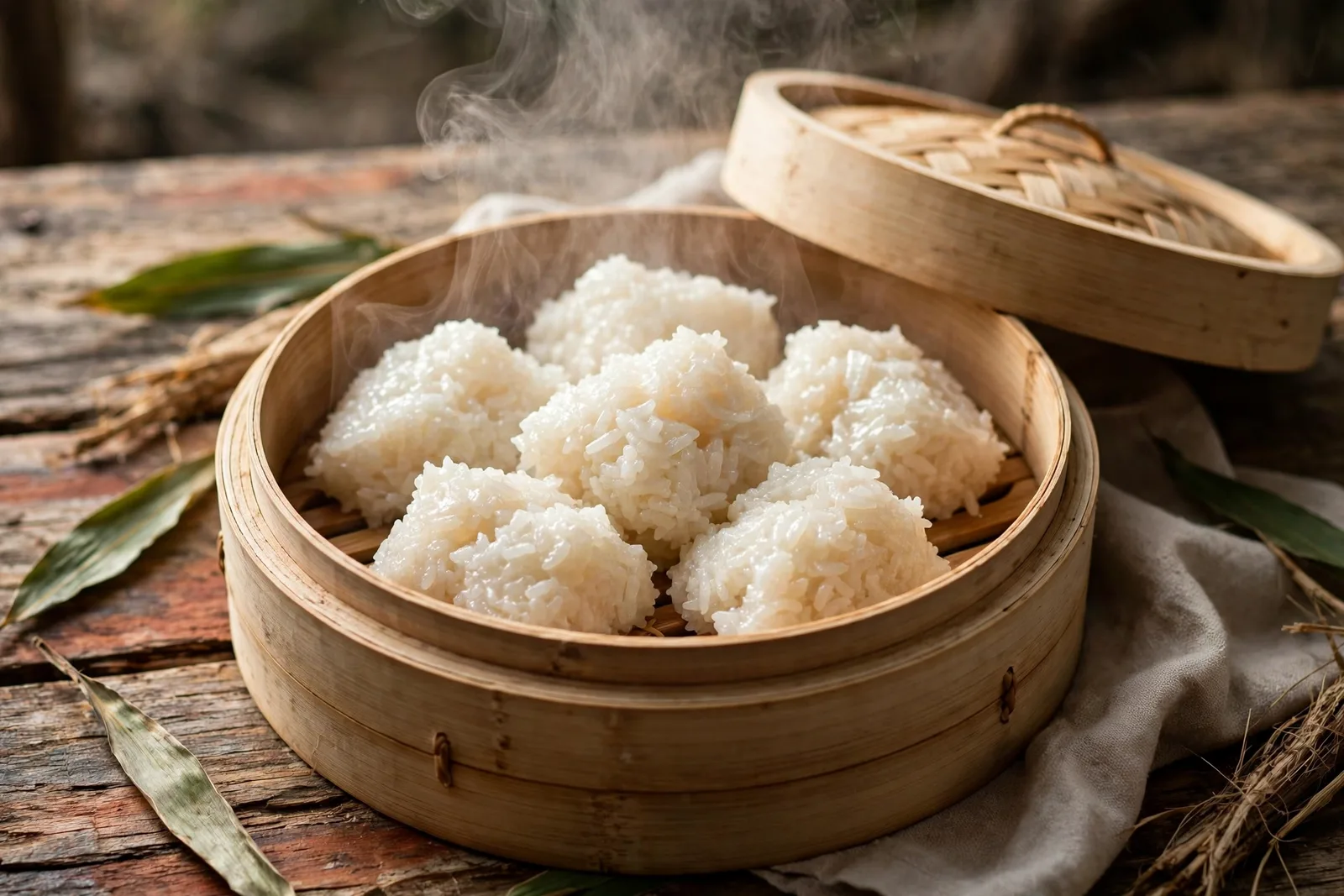
Glutinous rice behaves differently. The microwave makes it gummy on the outside and hard in the middle, and it firms up again within minutes. Re-steam it instead: break the cold cake into chunks, set them in a steamer basket over boiling water, and steam five to eight minutes until soft all the way through. A light sprinkle of water helps if the surface looks dry. Serve it right away. Reheated sticky rice, like fresh sticky rice, does not wait around.
Food safety, plainly
Reheated rice is safe as long as the storage was right. Cool cooked rice within an hour and refrigerate it. Do not leave the pot on the counter all evening. Eat refrigerated rice within three to four days. When you reheat, get it steaming hot all the way through, and reheat only once. A second round of cooling and heating is where trouble starts. When in doubt about a container that has sat too long, throw it out.
More rice recipes
- How to Cook Perfect Jasmine Rice Every Time : the starting point, with the water ratio that works pot after pot.
- Sinangag: Filipino Garlic Fried Rice : the best use of cold leftover rice, crisped in garlic oil.
- Kimchi Fried Rice : tangy, spicy, and built for day-old grains.
- Chicken Congee (Jook) : when the rice is too far gone for reheating, turn it into porridge.