
Palm sugar is the sweetener behind the deep, rounded flavor of Thai curries, pad thai sauce, and Southeast Asian desserts. It is made by boiling down the sap of palm trees, usually coconut palms, which is why “coconut sugar” and “palm sugar” are often the same thing in different packaging, into discs, cylinders, or a soft paste. What it gives a dish goes past plain sweetness into caramel and butterscotch with a faint smokiness, rounder and less sharp than white sugar, and it melts into sauces with a gentle thickness that refined sugar never has.
That profile is what makes substituting it a judgment call. Plain white sugar covers the sweetness but leaves the dish tasting flat and one-dimensional, especially in a curry or a tamarind-based sauce where palm sugar does half the flavor work. A good swap needs to bring the caramel depth along with the sweetness. The swaps below are ordered by how close they land, and every ratio is for 1 tablespoon of palm sugar.
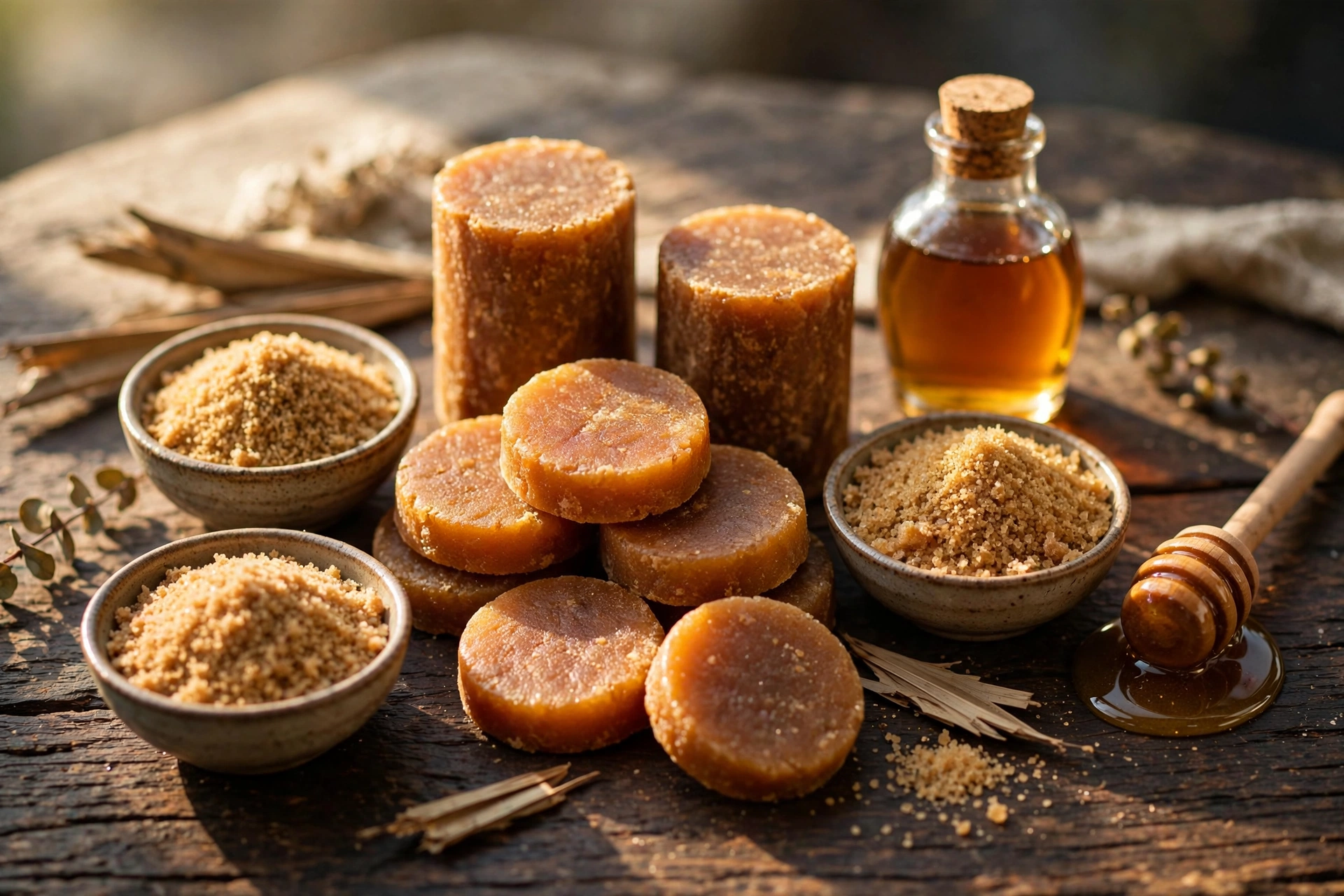
One practical note before you start: palm sugar sold in discs varies wildly in hardness. Some crumble under a spoon; others need a knife or a grater. If a disc fights you, grate it: grated palm sugar melts into a hot sauce in about 2 minutes, while rough chunks need 5 or more and can leave gritty pockets in a quick stir-fry sauce.

Quick picker: match the substitute to the job
| Substitute | Swap ratio (for 1 Tbsp palm sugar) | Best for | Watch out for |
|---|---|---|---|
| Coconut sugar | 1 Tbsp, 1:1 | Everything; the closest swap there is | Slightly drier; dissolve fully in sauces |
| Light brown sugar | 1 Tbsp, 1:1 | The easy pantry swap for any dish | A touch less caramel depth |
| Jaggery | 1 Tbsp, 1:1 | Curries and long-simmered dishes | Chop or grate it; sold in hard cones |
| Dark brown sugar or muscovado | 1 Tbsp, 1:1 | Dark sauces and desserts | Stronger molasses note; will darken pale dishes |
| Demerara or turbinado | 1 Tbsp, 1:1 | Sauces and dressings with liquid to dissolve it | Coarse crystals; do not use dry-rubbed |
| Maple syrup | 1 Tbsp, reduce other liquid by 1 tsp | Dressings, glazes, and drinks | Adds liquid; its maple note shows in delicate dishes |
| Honey | 2 1/4 tsp, reduce other liquid by 1 tsp | Salad dressings and dipping sauces | Sweeter than palm sugar; floral notes |
The seven substitutes, one by one
1. Coconut sugar: the closest swap
Reach for this first. Coconut sugar is palm sugar: both come from the boiled sap of palm trees, and most bags labeled “coconut sugar” are made exactly the same way as the discs labeled “palm sugar.” It swaps 1:1 with no adjustments, and its caramel depth is the real thing, not an imitation. The only difference is form (granulated instead of solid), which actually makes it easier to measure and melt. If your recipe calls for a grated or chopped disc, the same volume of coconut sugar goes straight in. In my kitchen this is what sweetens khao soi when the palm sugar jar runs empty, and the curry never gives it away.
2. Light brown sugar: the pantry swap
Almost every kitchen has this, and it does the job with zero fuss: 1 tablespoon for 1 tablespoon. Light brown sugar is white sugar with a little molasses mixed back in, so it brings mild caramel notes in the right direction, just not as deep as the real thing. The fix is simple: the swap works best in dishes with other strong flavors doing the talking, like a loud pad kee mao or a fish-sauce-heavy dressing. Pack it into the spoon the way you would for baking; a loose scoop under-measures by about a fifth.
3. Jaggery: the traditional swap
Jaggery is the unrefined sugar of India and much of Southeast Asia, made from sugarcane or palm sap boiled down into hard cones or blocks. Its flavor sits right next to palm sugar: deep caramel, faintly smoky, with more character than brown sugar. It swaps 1:1, but treat it like palm sugar discs: chop, grate, or shave it, because a whole cone will not melt in a quick sauce. This is my pick for long-simmered dishes like beef rendang, where the slow cooking melts it completely and its depth reads as intentional.
4. Dark brown sugar or muscovado: the deep swap
When the dish is already dark, these land beautifully. Dark brown sugar and muscovado carry more molasses than the light kind, so the caramel flavor runs deeper, closer to palm sugar’s intensity, though the molasses edge is its own thing rather than a match. Swap 1:1. The tradeoff is color: either one will darken a pale coconut soup or a light dressing, so keep them for red curries, dark stir-fry sauces, and desserts where the color does not matter. If a dish needs palm sugar’s depth but must stay pale, this is the wrong bottle; use light brown sugar instead.
5. Demerara or turbinado: the coarse swap
These large-crystal sugars have a light toffee flavor that works well as a stand-in, and they swap 1:1 by volume. The catch is the crystal size: the coarse grains need liquid and heat to dissolve, so they belong in sauces, dressings, and drinks, not in anything where the sugar stays dry. Stirred into a warm tamarind dressing for yam woon sen, they melt cleanly and the toffee notes fit right in. Rubbed dry onto meat, they stay gritty, so skip them there.
6. Maple syrup: the liquid swap
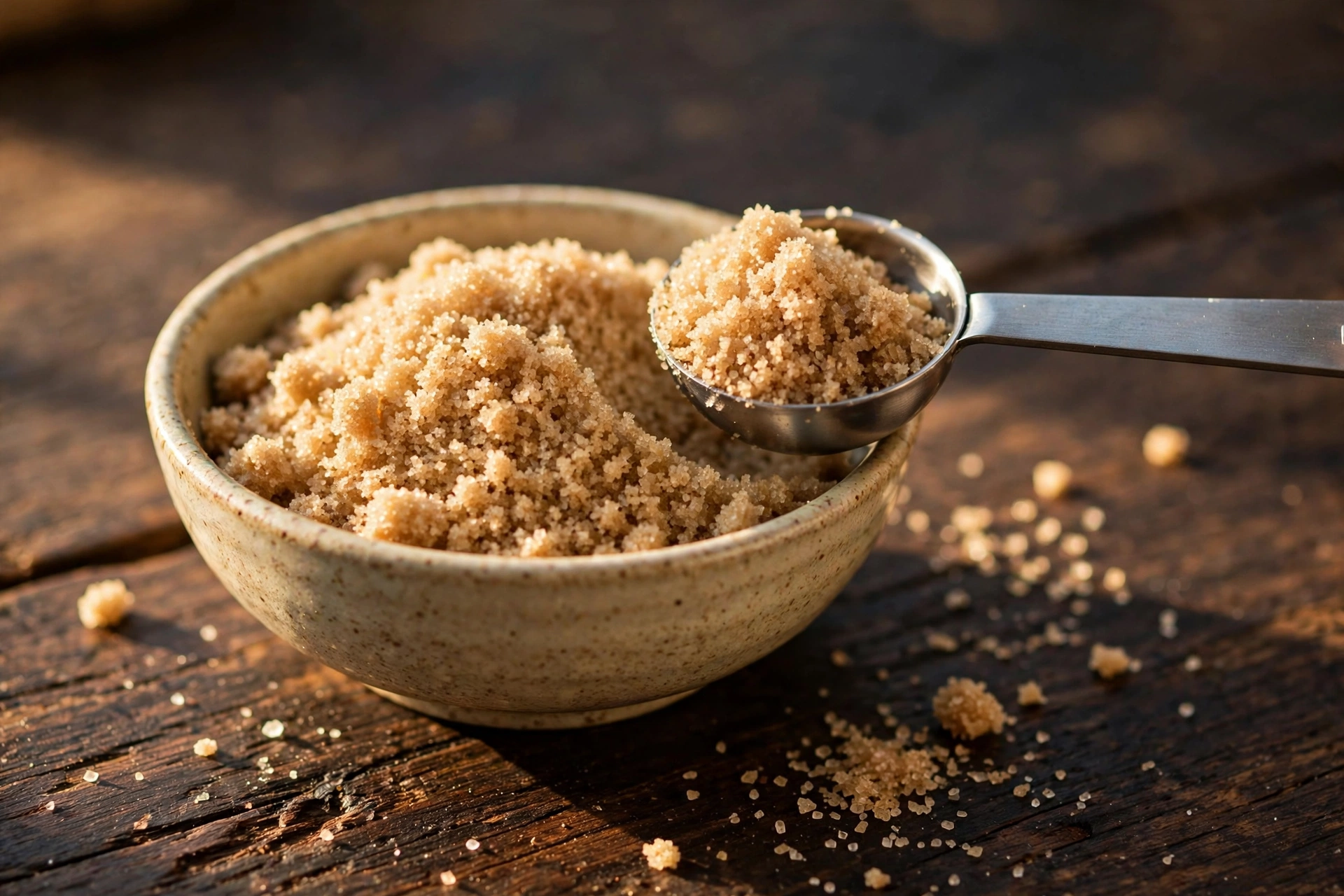
Maple syrup brings genuine caramel depth, and in dressings and glazes it can be the best-tasting swap on this list. The math: use 1 tablespoon of maple syrup for 1 tablespoon of palm sugar, and cut about 1 teaspoon of other liquid from the recipe so the sauce does not thin out. Its maple flavor is distinct, so it suits dishes where that note fits (glazes, dipping sauces, drinks) and stands out in delicate coconut desserts where palm sugar would have stayed in the background. Use the dark grade if you have a choice; it has more caramel character than the pale kind.
7. Honey: the last-resort swap
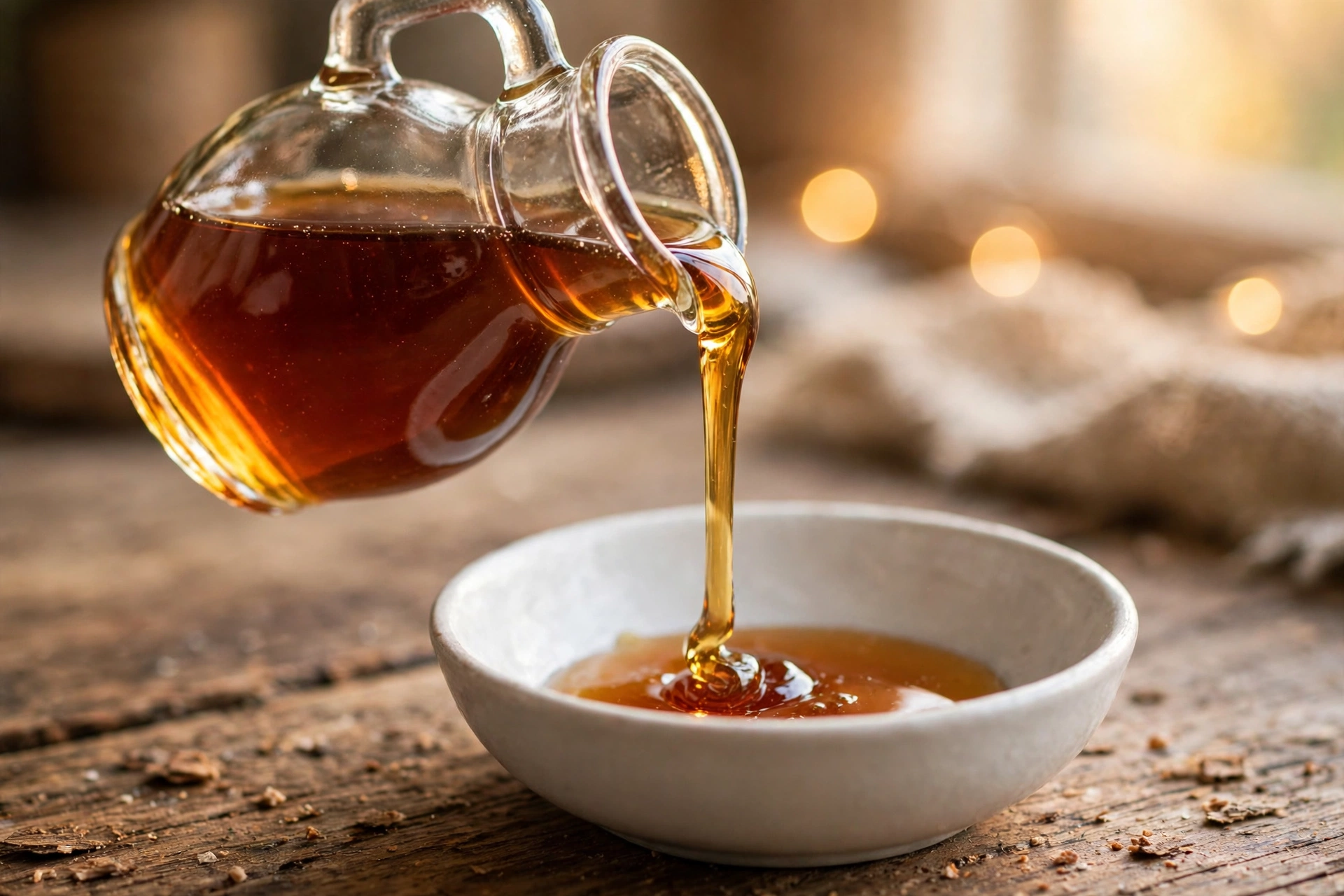
Honey works, but it changes the dish the most. It is noticeably sweeter than palm sugar, so use three-quarters of the amount (2 1/4 teaspoons per tablespoon of palm sugar) and reduce other liquid by about a teaspoon. Its floral notes come through clearly, which is fine in a bright salad dressing and wrong in a curry. It also browns and burns faster than sugar, so if the swap goes into a hot wok, add it late and keep the heat in check. When honey is the only bottle on the shelf, pick a mild one over a strong buckwheat or wildflower honey.
Which substitute for which dish
- Curries and long-simmered dishes: coconut sugar or jaggery. Both melt fully over time and bring real depth.
- Pad thai and stir-fried noodles: light brown sugar. The sauce is loud enough that the difference disappears.
- Salad dressings and dipping sauces: maple syrup or honey, with the liquid adjusted. Both dissolve instantly.
- Thai desserts: coconut sugar first, light brown sugar second. Avoid honey and maple: their flavors hijack delicate coconut and rice desserts.
- Drinks like Thai iced tea: demerara or maple syrup. Both dissolve easily and their toffee notes suit the tea.