
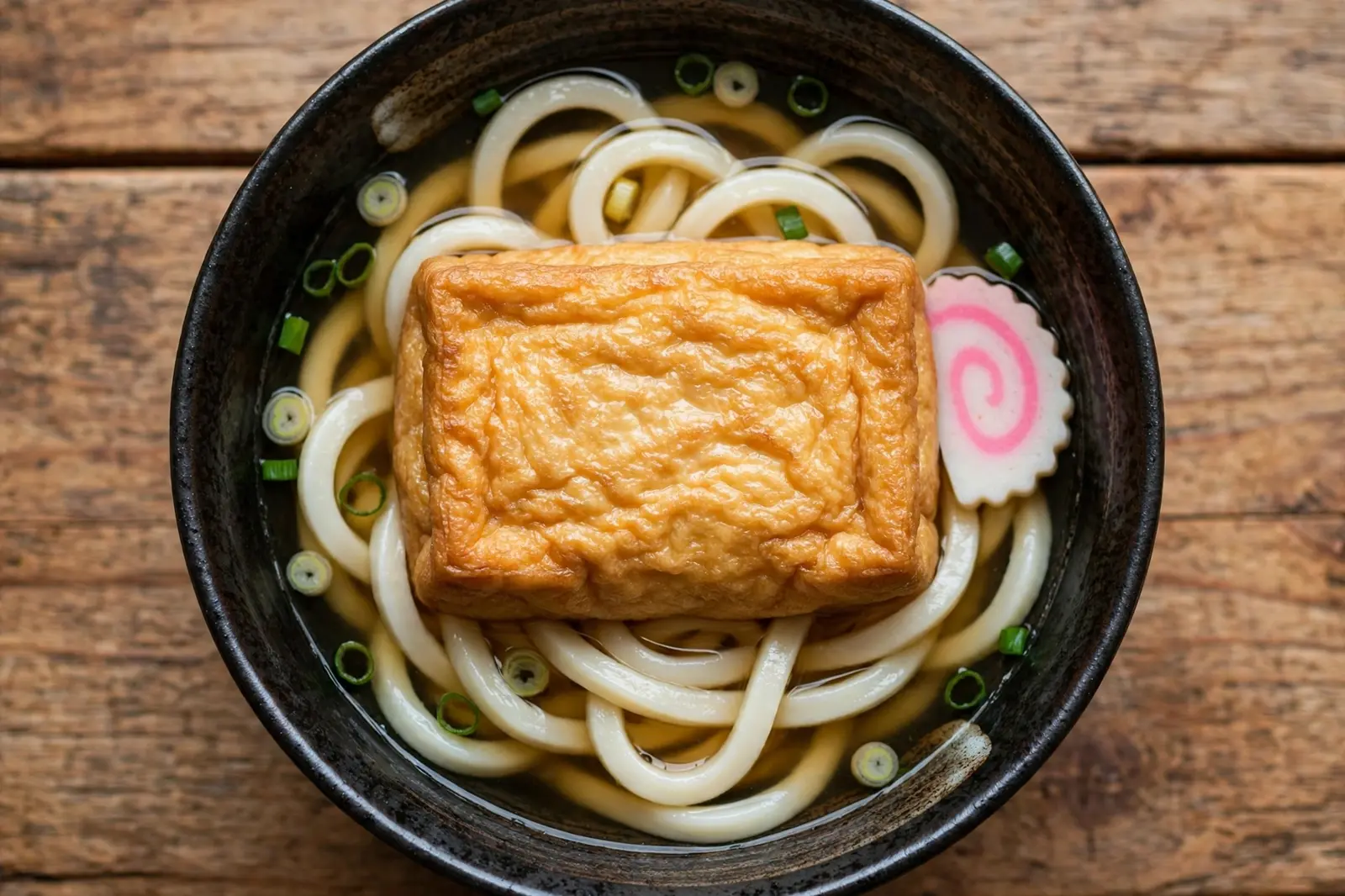
Kitsune udon is the bowl I reach for when I want comfort without a project: thick, chewy noodles in a clear, savory dashi, with one big sweet-salty piece of fried tofu sitting on top. Twenty minutes, one small pot for the aburaage, one pot for the noodles, and dinner is on the table.

What is kitsune udon?
“Kitsune” means fox, and the name comes from an old piece of Japanese folklore: foxes were said to love aburaage, the thin fried tofu pockets in this dish. A bowl of kitsune udon is udon noodles in hot dashi broth with pieces of aburaage that have been simmered sweet in sugar, mirin, and soy sauce laid across the top.
Osaka claims it as a local invention, and the broth tells you why. Expect something clean and light: clear dashi seasoned just enough to taste savory, noodles with a soft, springy chew, and the aburaage giving small bursts of sweet soy in every bite that includes it.
The blanch trick that keeps the broth clear
Aburaage comes out of the package slick with frying oil. That oil does two bad things: it clouds a clear broth, and it sits on the tofu like a raincoat so the sweet simmer seasoning cannot soak in. The fix takes sixty seconds. Drop the aburaage into a small pot of rolling boiling water for one full minute, lift them out, and press them flat between paper towels.
Do not skip the press. Blanched but unpressed pieces still carry enough oil to film the broth. Pressed, they drink the simmer liquid in about five minutes and stay plump instead of spongy. My tofu guide walks through the whole fried-tofu family if you want to know what else the package can do.
The 4-1-1-1 simmer ratio
For every two aburaage pockets, simmer them in four tablespoons of dashi, one tablespoon of sugar, one tablespoon of mirin, and one tablespoon of soy sauce. That 4-1-1-1 ratio is the only number worth memorizing here. Five minutes at the barest simmer, flipped once halfway, and the pieces turn glossy and deep gold.
Keep the heat low. A hard boil turns the tofu tough and rubbery, and it reduces the sugar too fast, so the seasoning tastes harsh instead of sweet. You want the surface of the liquid trembling, not bubbling. If your dashi is homemade, my dashi guide has the method; dashi powder dissolved in hot water works fine here too.

Cook the noodles in plain water, never in the dashi
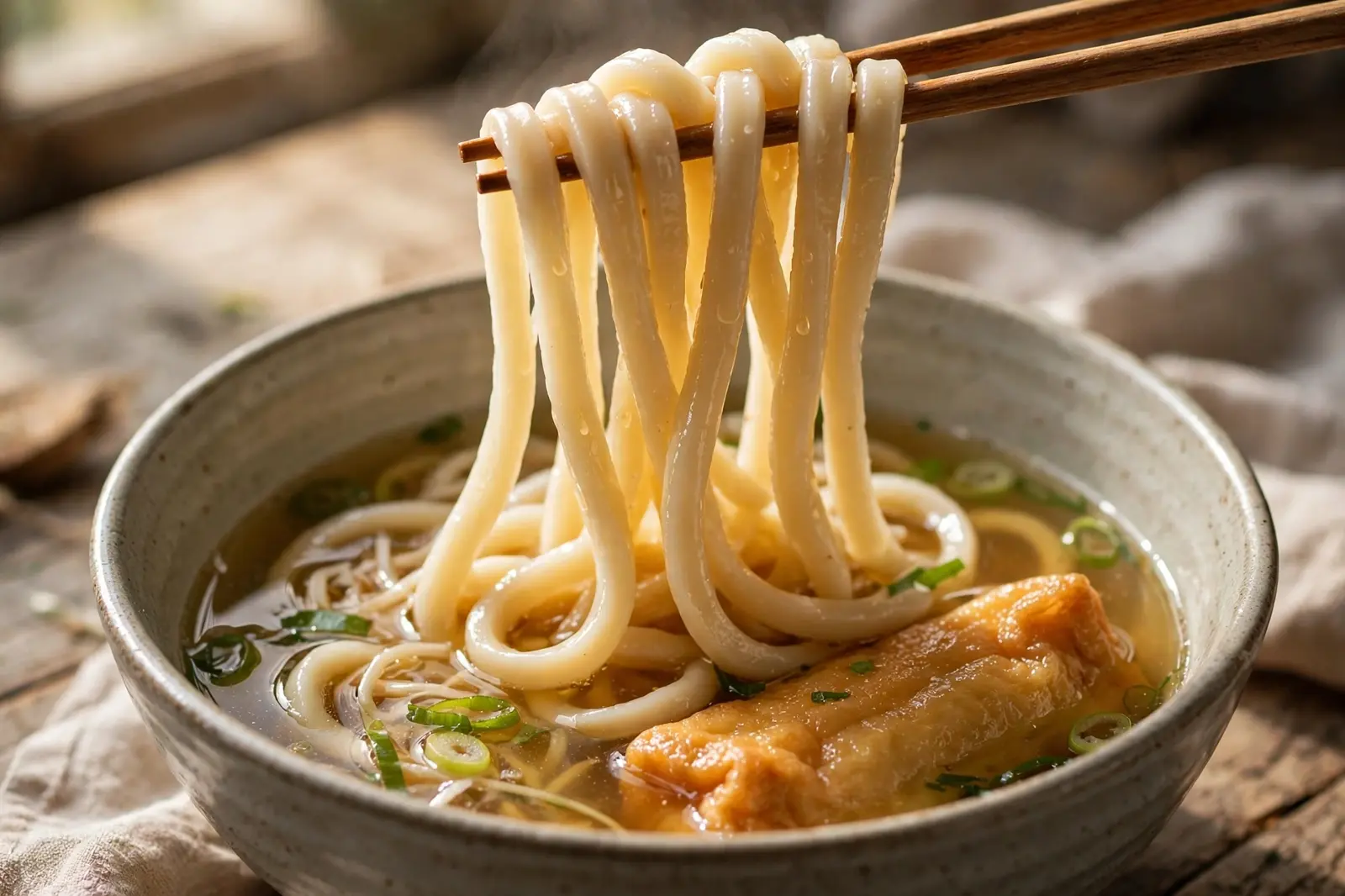
Frozen udon is already cooked. It needs one to two minutes in boiling water, just until the cakes loosen into separate strands. Cook it in the dashi instead and the starch that washes off turns the broth milky. Two pots sounds like extra dishes, but it is the difference between a clear broth and a cloudy one.
Drain the noodles well and divide them between warm bowls. A wet noodle waters down the broth it lands in, so shake the colander twice before portioning. Then ladle the hot seasoned dashi over the noodles, lay the sweet aburaage on top, and finish with scallions.

Seasoning the broth
Per two cups of dashi, stir in one tablespoon of soy sauce and one tablespoon of mirin, then taste. It should read savory first, with the sweetness sitting underneath. Add a small pinch of salt if your dashi was lightly seasoned, but go easy: the aburaage brings its own sweet-salty hit to every bite.
Troubleshooting: Fix My Kitsune Udon
Most kitsune udon trouble comes from the aburaage or the noodle water, and both are easy to get right on the next round. Pick what went wrong below for a concrete next step.
HERB & LIME · KITCHEN HELP
Fix My Kitsune Udon
Choose what went wrong to see a practical next step.
Possible cause
What to try next
For next time
From Paul's kitchen. Results vary with udon thickness, oil, and stove heat, adjust timing to your setup.
Quick reference (also works without JavaScript)
The broth turned cloudy and murky
Cause: Cooking the udon noodles directly in the dashi lets noodle starch leach out, which clouds the broth and gives it a slightly gummy texture.
Try: Strain the noodles out, return them to plain water, and make a fresh quick batch of seasoned dashi to replace the cloudy broth.
Prevent: Always cook udon in a separate large pot of plain boiling water, then drain and add the cooked noodles to the hot dashi just before serving.
The aburaage came out tough and greasy
Cause: The oil-removal blanch was skipped or cut short, so the fried tofu kept its surface oil and turned tough instead of supple.
Try: Simmer the pieces a few more minutes at a gentle simmer, then press out excess oil and liquid before serving so the bite is less greasy.
Prevent: Blanch the aburaage in a full rolling boil of plenty of water, about 3 minutes until it smells less oily, and press a drop lid or small plate on top to keep it fully submerged.
The aburaage tastes bland and flavorless
Cause: The oil barrier on unblanched aburaage stops seasoning from soaking in, and pieces floating above the liquid miss the flavor entirely.
Try: Return the pieces to the simmering braising liquid with a drop lid and give them a few more minutes so they absorb the seasoning evenly.
Prevent: Pour boiling water over the aburaage to remove excess oil first, then simmer with a drop lid or small plate holding it submerged so it soaks up the liquid on all sides.
The udon noodles went soft and soggy
Cause: Udon continues to soften after it lands in the hot broth, so noodles cooked to the full package time overshoot while sitting in the bowl.
Try: For the current bowl, serve immediately and eat the noodles first before they soften further.
Prevent: Cook the noodles slightly under the time stated on the package so they stay springy, and rinse them under cold water to stop the cooking before warming them briefly in the hot broth.
The aburaage is too salty
Cause: Pieces finished simmering full of concentrated sweet-salty liquid, and the excess was never pressed out before serving.
Try: Press out some of the excess liquid gently between your palms, but not all of it, so the pieces season the bowl without overwhelming it.
Prevent: After simmering, let the pieces cool in the liquid, then press out the excess liquid as a routine step before slicing and serving.
Kitsune Udon (Japanese Sweet Tofu Noodle Soup)
Ingredients
Method
- Blanch the aburaage: bring a small pot of water to a rolling boil. Add the aburaage and boil for 60 seconds. Lift out with tongs and press flat between paper towels to remove excess oil and water.
- Simmer the aburaage: in a small saucepan, combine 4 tablespoons dashi, the sugar, mirin, and soy sauce. Add the blanched aburaage and bring to the barest simmer over low heat. Simmer 5 minutes, flipping the pieces once halfway, until glossy and deep gold. Remove from the heat and leave the pieces in the liquid.
- Cook the noodles: bring a large pot of plain water to a boil. Add the frozen udon and cook 1 to 2 minutes, just until the cakes loosen into separate strands. Drain well and shake the colander twice to remove excess water.
- Season the broth: in a clean pot, heat 4 cups of dashi over medium heat until steaming. Stir in 2 tablespoons soy sauce and 2 tablespoons mirin. Taste and add a small pinch of salt only if needed.
- Assemble: divide the noodles between two warm bowls. Ladle the hot broth over the noodles. Lay one sweet aburaage piece on top of each bowl, scatter with scallions and narutomaki if using, and serve immediately.
Notes
Note 2: Keep the simmer at the barest tremble, never a hard boil. High heat turns the tofu tough and rubbery and reduces the sugar too fast, making the seasoning harsh instead of sweet.
Note 3: Cook the udon in plain water, not in the dashi. The starch that washes off the noodles turns the broth milky.
Note 4: For leftovers, store the noodles and broth in separate containers. Reheat the broth to a simmer and refresh the noodles in hot water before serving.
What to serve with it
Kitsune udon is a light meal, so I like something with a little more body next to it: tamagoyaki, the sweet rolled omelet, is the classic match. A crisp vegetable side works too, and the scallions on top tie the whole bowl together.
More Japanese recipes
Three more from the same shelf: Yaki Udon is the stir-fried version for nights you want the chew without the soup; Gyudon is the other fifteen-minute Japanese weeknight staple, beef and onion over rice; and Chicken Teriyaki puts the same soy-mirin-sugar balance to work as a glaze.
From the garden
I cut the scallions for this bowl from a pot by the kitchen window. Green onions grow back from their cut bases in a glass of water, which is why they are the one garnish I almost never buy. My green onion growing guide has the whole method.