
They sit in the same grocery aisle, both fermented cabbage, both tangy — and that is about where the similarity ends. Kimchi is a Korean staple built on napa cabbage, chili, garlic, and a short, punchy ferment. Sauerkraut is the German classic: plain shredded cabbage, salt, and a long, slow ferment that tastes clean and sharp. I keep both in my fridge, and I reach for them for completely different reasons. Here is the full breakdown so you buy and cook the right one.

The short answer
Pick kimchi when you want heat, garlic, and a deep savory-sour punch — it is a condiment that behaves like an ingredient. Pick sauerkraut when you want a clean, sharp sourness that cuts through rich food without adding spice. They can pinch-hit for each other in a sandwich or grain bowl, but they are not interchangeable in cooked dishes, and the reasons come down to seasoning, cut, and moisture.
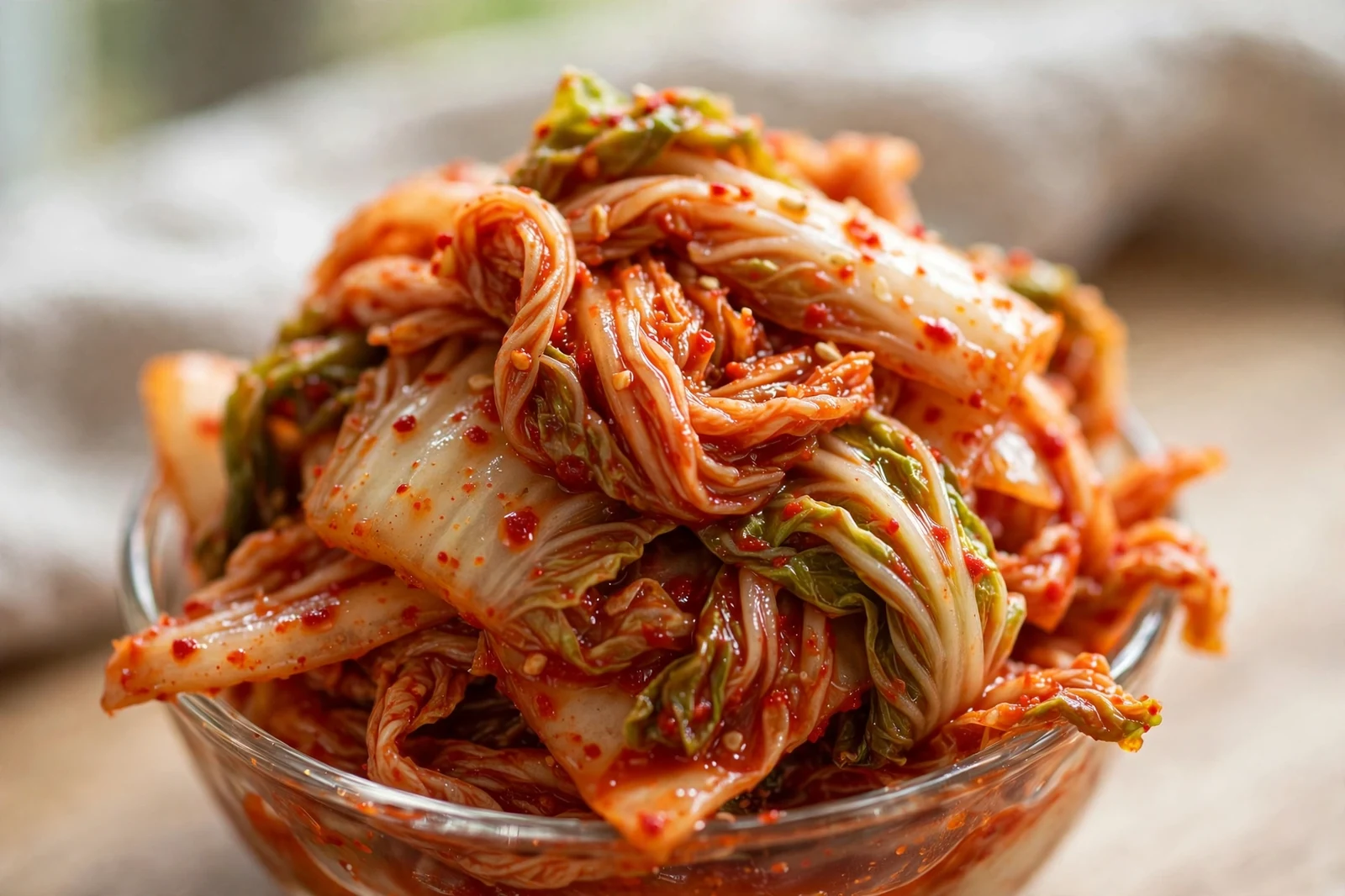
What kimchi brings
Kimchi starts with napa cabbage salted to soften, rinsed, then coated in a seasoning paste of Korean chili flakes (gochugaru), garlic, ginger, and usually fish sauce or salted shrimp. It ferments fast — mine is lively after 2 to 3 days at room temperature — and keeps developing in the fridge. The flavor is layered: sour from fermentation, warm from chili, and deeply savory from the seafood seasoning and garlic.
The cut matters as much as the seasoning. Traditional napa kimchi is quartered into wedges and chopped into 1- to 2-inch pieces, so every bite has stem crunch and leaf chew. That chew is kimchi’s signature texture: it does not wilt into the background the way a fine shred does.
One honest kitchen note: kimchi keeps giving off liquid. Half a cup of jarred kimchi usually carries about 2 tablespoons of red brine, which becomes part of the dish whether you planned for it or not. That is a feature in kimchi jjigae, where the brine seasons the stew — and it is the reason kimchi needs draining before it goes on a sandwich. (My full method is in how to make easy napa cabbage kimchi at home.)
What sauerkraut brings
Sauerkraut is the minimalist of the two: shredded green cabbage massaged with about 2% salt by weight, packed tight, and left to ferment. There is no spice paste, no garlic, no seafood — just cabbage, salt, and time, usually 3 to 4 weeks at cool room temperature. The result is pale, clean, and sharply sour, with a caraway-like note in some German-style batches (many commercial jars add caraway seeds).
The fine shred — most strands only a millimeter or two wide — gives sauerkraut its slippery, almost noodle-like texture. It has no crunch to speak of once fermented; it goes soft and silky, which is exactly why it drapes over a sausage instead of sitting on top of it. Compared with kimchi, sauerkraut is also drier out of the jar: it weeps a little brine but nothing like kimchi’s red flood.
The flavor is single-minded in the best way. Where kimchi brings five things at once, sauerkraut brings one: bright lactic sourness. That focus is why it works on foods where kimchi’s garlic and chili would hijack the plate.

Kimchi vs sauerkraut: head to head
| Kimchi | Sauerkraut | |
|---|---|---|
| Origin | Korea | Germany (and Central Europe) |
| Cabbage | Napa cabbage, in 1–2 inch pieces | Green cabbage, finely shredded |
| Seasoning | Chili flakes, garlic, ginger, fish sauce | Salt (sometimes caraway or juniper) |
| Heat | Yes — warm, building | None |
| Sourness | Sour plus savory | Clean, sharp, straight sour |
| Texture | Chewy with stem crunch | Soft, silky strands |
| Color | Red from chili | Pale yellow-white |
| Ferment time | Days (2–5 at room temp, then fridge) | Weeks (3–4 at cool room temp) |
| Brine | Generous — flavors everything it touches | Modest |
| Best role | Bold condiment and cooking ingredient | Acidy counterpoint to rich food |
If you have ever wondered where the chili heat in a Korean pantry comes from versus the paste itself, my gochujang vs gochugaru breakdown covers the two main sources.
When to reach for kimchi
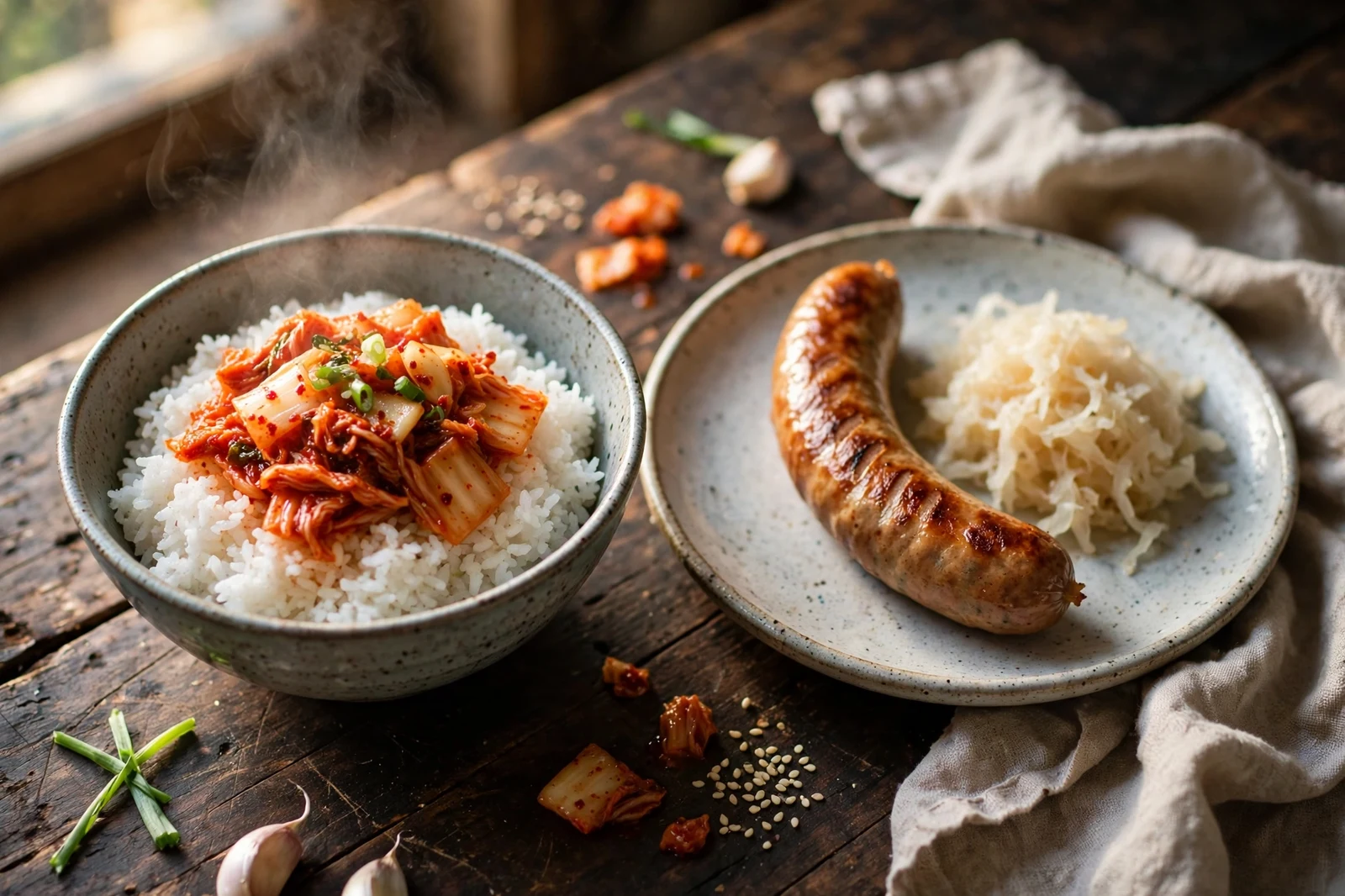
- Rice bowls and fried rice. Kimchi’s brine and chew were made for rice. A quarter cup over hot rice with a fried egg is a complete meal, and kimchi fried rice uses both the kimchi and its liquid as the seasoning base.
- Stews and braises. Older kimchi — 3 weeks or more in the fridge, extra sour — is the right kimchi for long cooking. Young, fresh kimchi turns mushy and loses its punch in a simmer; the aged stuff holds up and deepens.
- Grilled and fatty meats. The chili-garlic-sour combination cuts richness the way sauerkraut does, but adds its own flavor instead of staying neutral. Korean barbecue wraps are the classic case.
- Anything that needs a wake-up call. Noodles, grain bowls, avocado toast — kimchi is the louder, busier choice, and that is the point.
When to reach for sauerkraut
- Sausages, pork, and rich meats. This is sauerkraut’s home turf. Its straight sourness slices through fat without competing with the meat’s own seasoning — kimchi’s garlic and chili would pick a fight with a bratwurst’s spice blend.
- Sandwiches and hot dogs. The fine shreds stay put in a bun, and the drier texture will not soak the bread the way kimchi brine does.
- When the dish is already seasoned. If a stew or grain bowl already has chili, garlic, or fermented funk from other ingredients, sauerkraut adds acidity without adding another voice to the argument.
- When you want sour, full stop. Anything where clean acidity is the job.
Can you swap one for the other?
Sometimes, with adjustments. Here is what actually works in my kitchen:
Sauerkraut in place of kimchi: fine for cold uses — grain bowls, wraps, rice bowls — if you add back the heat and savor. Stir about 1 teaspoon of chili crunch or gochugaru into each half cup of sauerkraut, plus a small splash of fish sauce if you eat it. It will not fool anyone, but it lands in the same neighborhood.
Kimchi in place of sauerkraut: works on sandwiches and hot dogs, but drain it first — press half a cup in a sieve and pat dry, or the brine will flood the bun. Do not use it where sauerkraut’s neutrality matters: on a delicately spiced sausage or in a dish where garlic would clash, kimchi takes over.
In cooked dishes, do not swap blindly. Kimchi’s sugars and chili paste caramelize and can scorch where sauerkraut would just warm through; sauerkraut added to a long-simmered Korean stew turns bland and disappears. Match the ferment to the cuisine and you will rarely go wrong.
Which should you buy?
Buy both, honestly — they keep for months in the fridge and serve opposite jobs. If you only buy one, let your cooking decide: if your week runs on rice, noodles, and bold flavors, kimchi earns its jar space. If it runs on sausages, sandwiches, pork, and rich comfort food, sauerkraut does. The only wrong move is assuming they are the same thing because the labels both say fermented cabbage.