
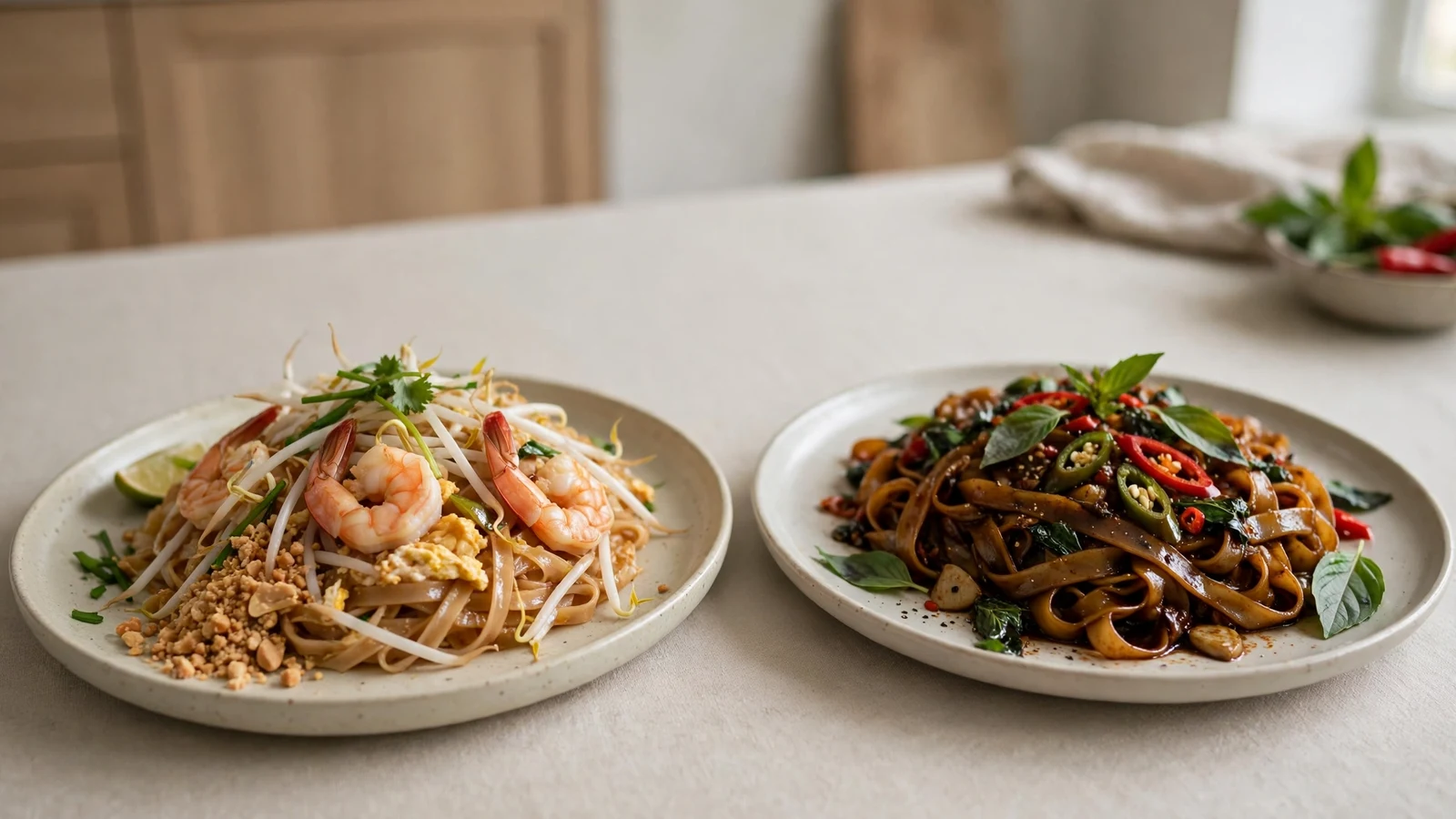
Both dishes arrive in a tangle of rice noodles from a Thai menu, and both cook fast in a wok. The difference shows up in the first bite: one tastes sweet, sour, and nutty, the other tastes dark, salty, and hot, with a hit of basil. Pick by the flavor you want, not by the noodle shape alone, because the sauces pull in opposite directions.
The short answer
Pad thai uses thin rice noodles in a sauce built from tamarind, fish sauce, and sugar, finished with egg, bean sprouts, chives, and crushed peanuts. Drunken noodles, or pad kee mao, use wide flat rice noodles in a dark sauce built from soy sauce and oyster sauce, with chilies, garlic, and Thai basil. Pad thai leans sweet and sour. Drunken noodles lean salty and spicy, and the basil is part of the flavor, not a garnish.
| Pad thai | Drunken noodles | |
|---|---|---|
| Noodles | Thin rice noodles, soaked until pliable | Wide flat rice noodles, fresh or dried |
| Sauce base | Tamarind, fish sauce, sugar | Soy sauce, dark soy sauce, oyster sauce, sugar |
| Heat | Mild, with chili flakes on the side | Hot, from fresh chilies cooked into the dish |
| Herbs | Chives and bean sprouts, added at the end | Thai basil, wilted into the wok |
| Finish | Crushed peanuts, lime wedge | No peanuts, no lime wedge on the plate |
| Cook time | About 20 minutes once noodles are soaked | About 15 minutes once noodles are ready |
Pad thai, in brief
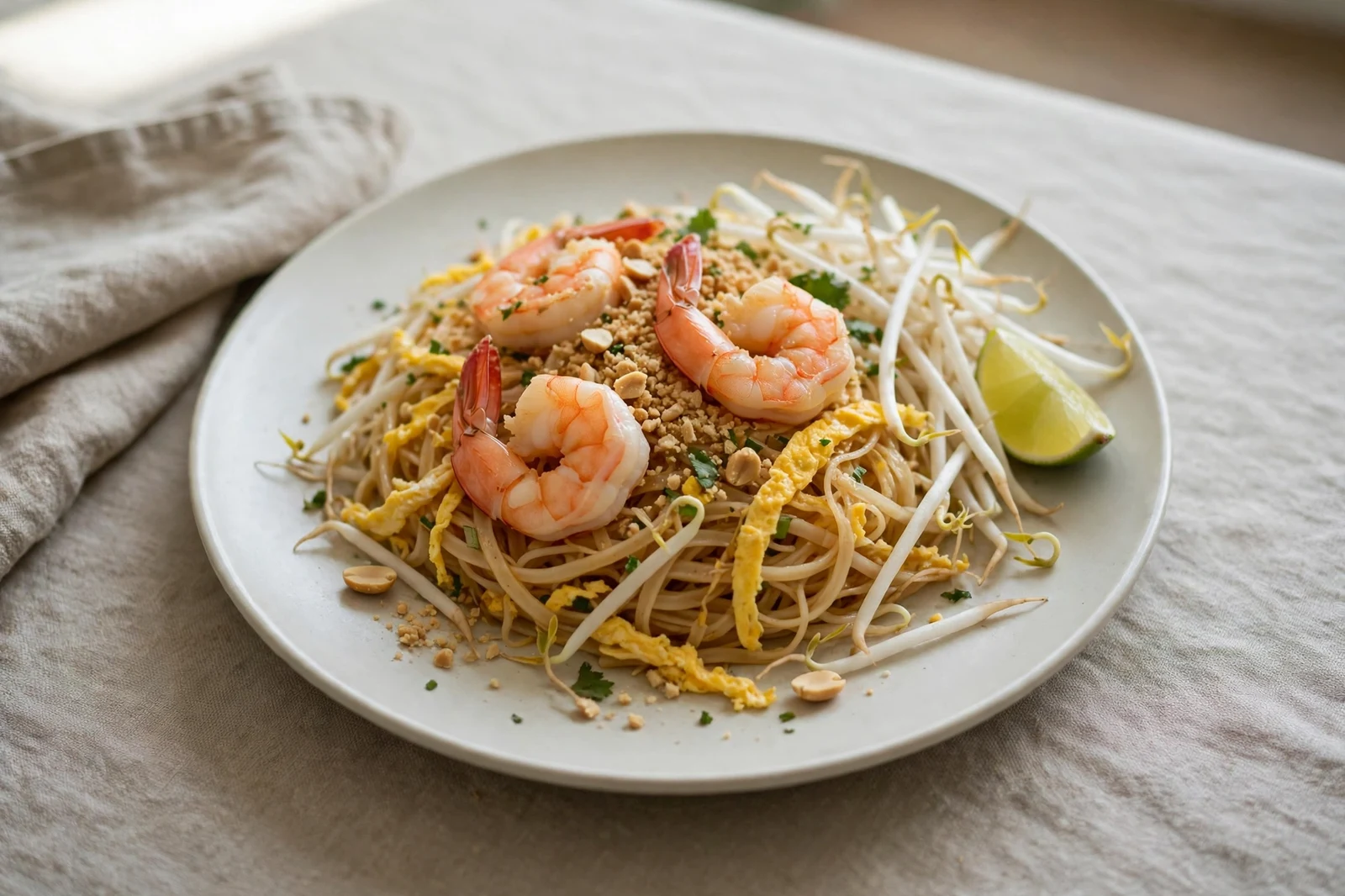
Pad thai starts with the sauce. Tamarind paste gives the sour note, fish sauce gives salt, and sugar rounds the edges. The balance matters more than any single ingredient: too much sugar and the dish tastes like candy, too little tamarind and it tastes flat. Soak thin rice noodles in warm water until they bend easily but still feel firm, usually 8 to 10 minutes. Noodles soaked until soft turn to mush in the wok, and that is the most common home mistake.
Cook the egg first, push it aside, then cook the protein, then add the noodles and sauce. The noodles finish cooking in the sauce, soaking it up as they soften. Bean sprouts and chives go in last, off the heat, so they stay crisp. Peanuts and lime go on at the table, so each eater sets the crunch and sourness. Our full version, with shrimp, is in pad thai with shrimp.
Drunken noodles, in brief
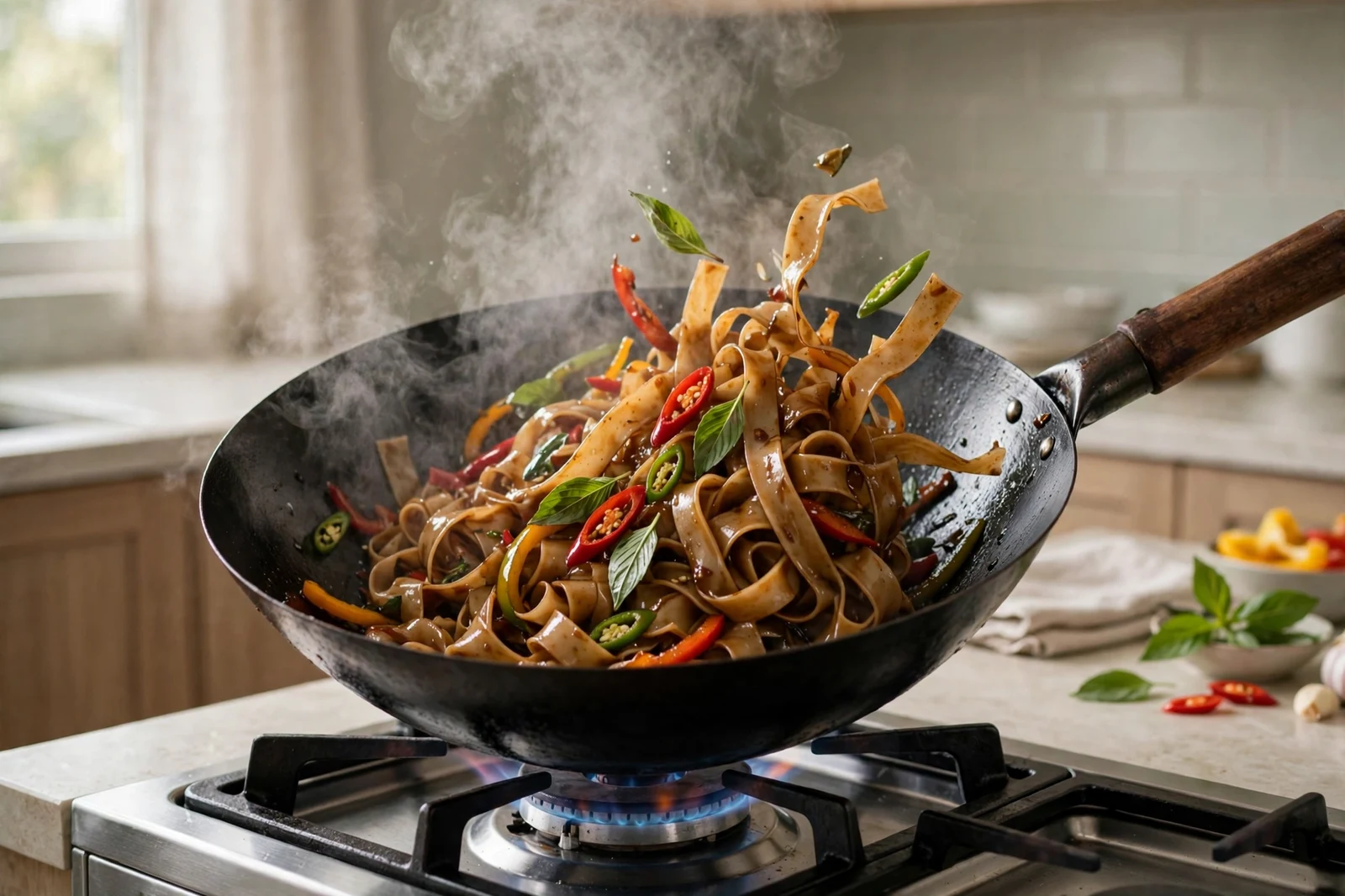
Drunken noodles start with heat and garlic. Fresh chilies and garlic go into hot oil first, then the protein, then wide noodles and sauce. Dark soy sauce gives the color, oyster sauce gives body, and a small amount of sugar keeps the salt from dominating. Thai basil goes in last and wilts in under a minute. Italian basil works in a pinch, but the flavor is milder and sweeter, and the dish loses the peppery note that marks the Thai version.
Wide noodles need a different touch than thin ones. Fresh wide noodles go straight into the wok. Dried wide noodles need a soak until pliable, then a brief boil of 1 to 2 minutes before they meet the sauce, or they stay stiff in the center. Our full version is in pad kee mao, Thai drunken noodles.
Noodles: thin versus wide
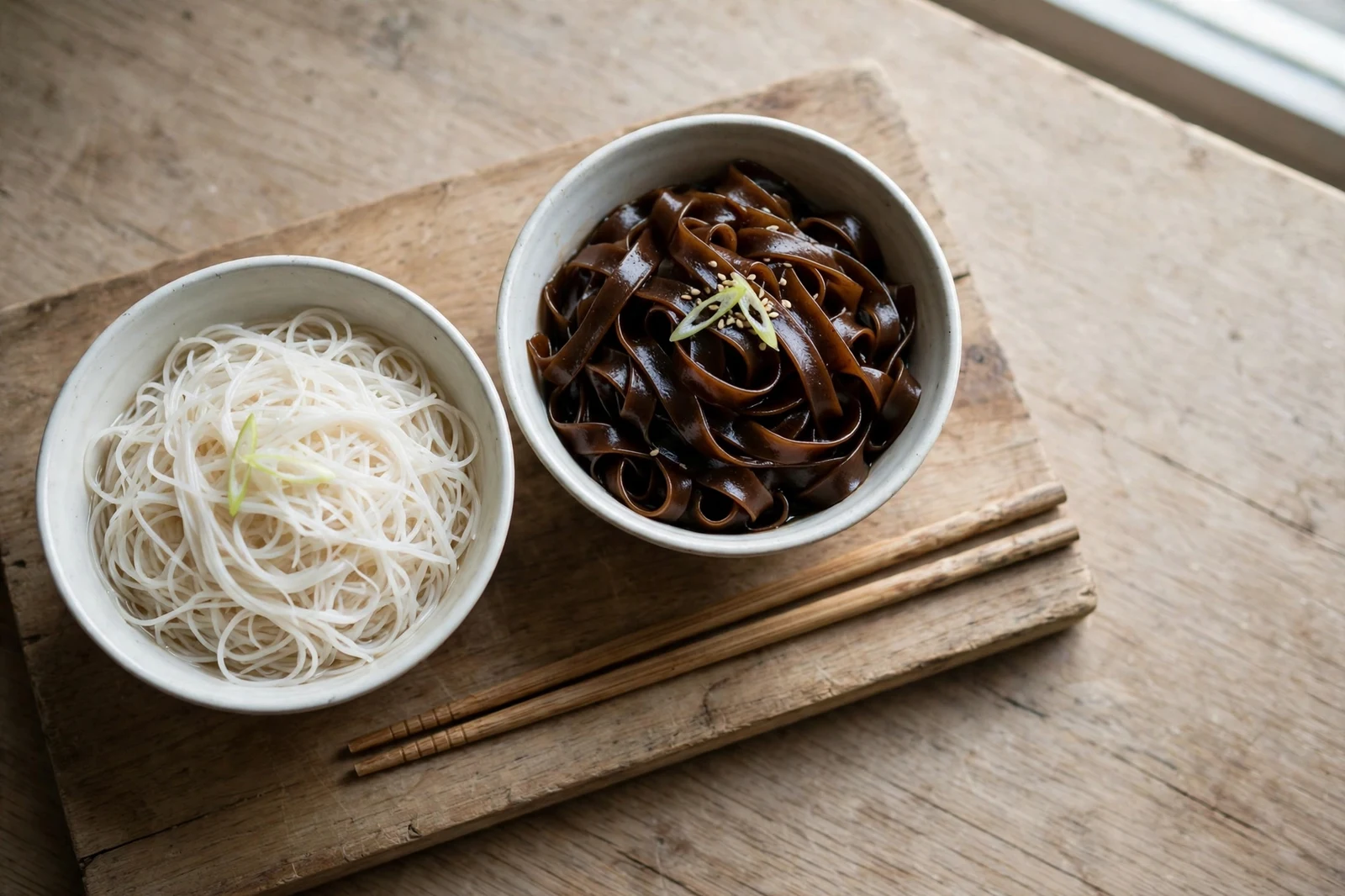
The noodle width changes how the dish eats. Thin noodles tangle, soak up sauce fast, and give a soft bite with crisp sprouts against them. Wide noodles stay chewy, hold a darker coating, and carry basil leaves and chili slices in each bite. If you swap them, the dish still works, but it stops tasting like itself: thin noodles in a drunken sauce turn soggy under the heavy coating, and wide noodles in a pad thai sauce stay slick and do not pick up the tamarind tang the same way.
For the noodle aisle itself, our rice noodle guide sorts thin, medium, and wide noodles by soak time and use, which helps when a shop stocks five widths and no labels in English.
When to pick each
- You want sweet and sour with crunch: pad thai. Peanuts, sprouts, and lime give it texture that drunken noodles do not have.
- You want heat and basil: drunken noodles. The chilies and basil are cooked in, not served on the side.
- You are cooking for children or for people who avoid spice: pad thai, with chili flakes left at the table.
- You have fresh wide noodles in the fridge: drunken noodles, which suit them best.
- You want leftovers that reheat well: neither dish keeps its best texture overnight, but pad thai reheats slightly better because thin noodles soften evenly. Wide noodles go stiff in the fridge and need a splash of water in the pan to loosen.
One practical note: pad thai takes a little longer because the sauce needs tasting and adjusting before the noodles go in. Taste the sauce alone, adjust sugar or tamarind, then cook. Drunken noodles move faster once the wok is hot, so have every ingredient cut and within reach before the oil goes in.