
Wontons and gyoza both wrap seasoned pork in a thin sheet of dough, and both show up on the same appetizer menu. The difference sits in the wrapper, the shape, and the pan: one is built for soup, the other is built for a crisp bottom. Mix them up and dinner still tastes fine, but the texture you wanted will be missing.

The short answer
A wonton uses a thin square wrapper, a small filling, and a loose fold, and it is usually boiled and served in soup or in a light sauce. A gyoza uses a round, slightly thicker wrapper, a larger filling of pork and cabbage, and a pleated fold, and it is pan-fried, steamed, then crisped again. Wontons eat soft and slippery. Gyoza eat crisp on one side and tender on the other.
| Wonton | Gyoza | |
|---|---|---|
| Wrapper | Thin square sheet, wheat and egg | Round sheet, slightly thicker, wheat |
| Filling | About 1 teaspoon, often pork and shrimp | About 1 tablespoon, pork and cabbage |
| Fold | Loose, gathered or folded in half | Pleated along one edge, flat bottom |
| Cooking | Boiled 3 to 4 minutes, often in soup | Pan-fried, steamed with water, then crisped |
| Serving | In broth, or tossed in chili oil | On a plate with a vinegar and soy dip |
| Texture | Soft all over | Crisp bottom, soft top |
Wontons, in brief
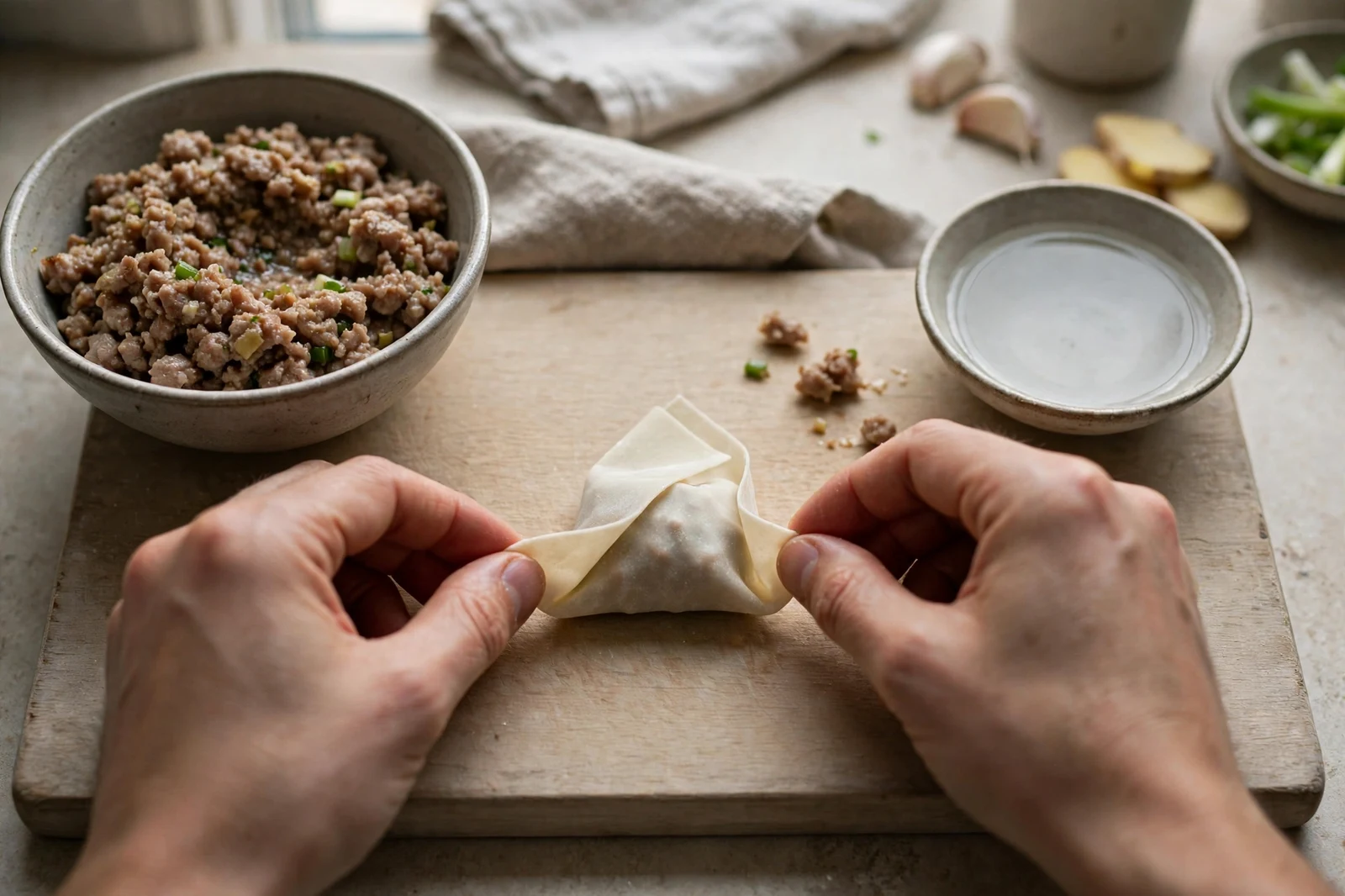
The wonton wrapper is the thinnest of the common dumpling wrappers, which is why wontons cook in 3 to 4 minutes and turn silky in broth. The filling stays small on purpose: about a teaspoon per wrapper. More filling than that and the wrapper tears or will not seal, and the filling leaks into the soup.
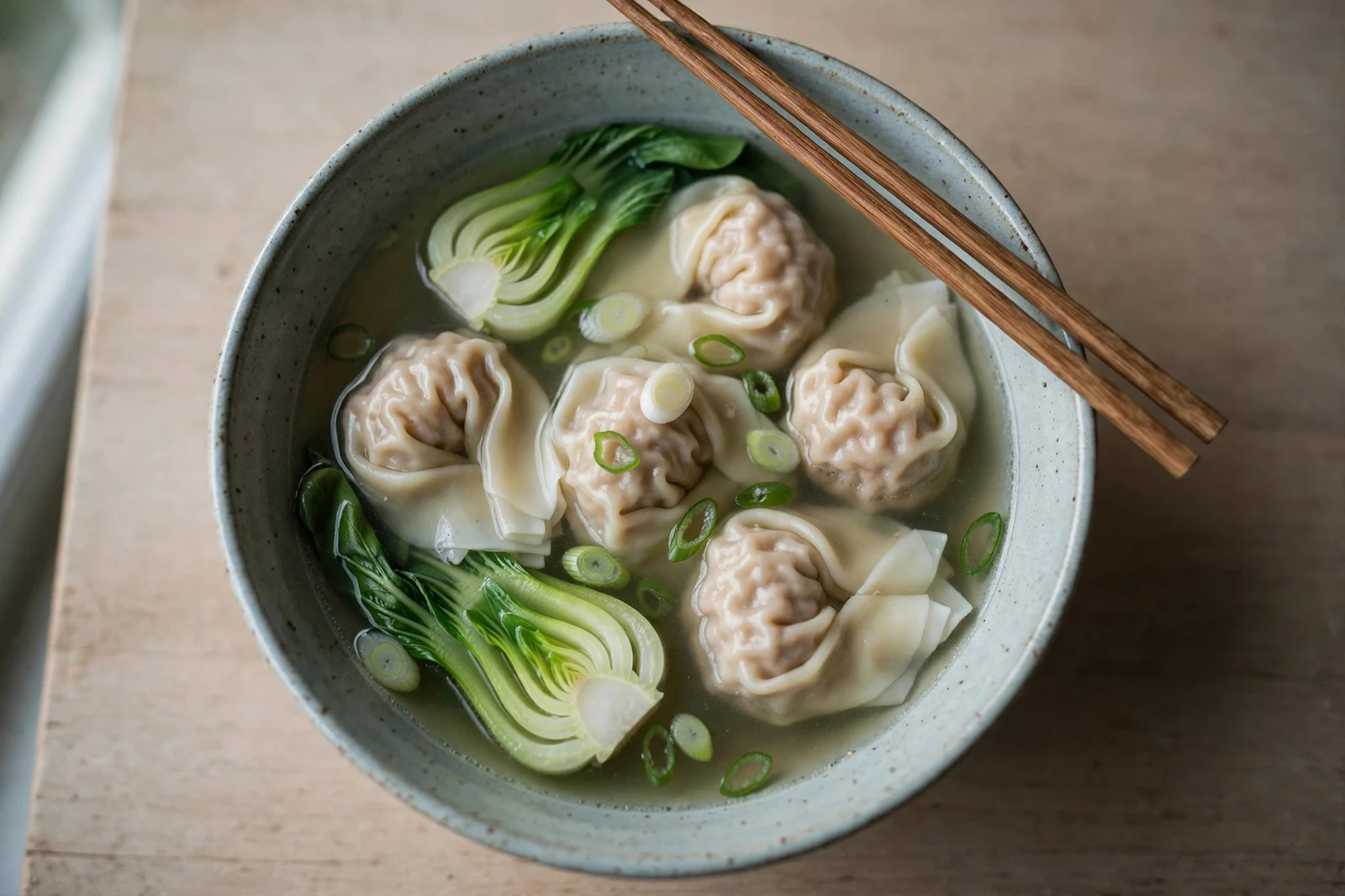
Folding is simple. Set the filling in the center, wet the edges, fold into a triangle or gather the corners together, and press to seal. No pleats are needed, and a slightly uneven fold does not matter once the wonton is in soup. A hard boil tears thin wrappers, so cook wontons at a gentle simmer and lift them out when they float. Our full bowl, with pork-and-shrimp wontons and bok choy, is in wonton soup.
Gyoza, in brief
Gyoza wrappers are round and a little thicker, which lets them hold a larger filling and stand up to frying. The filling is usually ground pork mixed with finely chopped cabbage, garlic chives, ginger, and garlic. Cabbage matters: it keeps the filling moist and light, and pork alone gives a dense, heavy gyoza.
The pleated fold is the part that takes practice. Hold the wrapper, set the filling in the center, fold in half, and pleat one edge while pressing it to the flat edge. The flat bottom is what makes the crisping work: gyoza sit flat in an oiled pan, fry until the bottoms brown, then steam under a lid with a splash of water, then fry again uncovered until the water leaves and the bottoms crisp a second time. Skip the second crisping and the bottoms stay pale and soft. Our full version is in homemade gyoza with pork and cabbage.

How the cooking changes the meal
Boiling suits wontons because the wrapper is thin and the filling is small. Soup carries the flavor, and the wonton itself stays gentle. Frying suits gyoza because the thicker wrapper can brown without tearing, and the crisp bottom gives contrast against the soft top and juicy filling.
Freezing works differently too. Gyoza freeze well flat on a tray, then go straight from the freezer into the pan with a longer steam time. Wontons also freeze, but they do best dropped frozen into simmering broth, not fried, because the thin wrapper tears if it thaws and sticks. For both, freeze in a single layer first, then bag, so they do not stick together. Our freezing method is in how to freeze dumplings, and the broader comparison is in wontons vs dumplings and gyoza vs potstickers.
When to pick each
- You want soup: wontons. They are built for broth, and the thin wrapper turns silky in it.
- You want a crisp appetizer with a dip: gyoza. The browned bottom is the point.
- You are short on time: wontons, if you buy wrappers. Folding a batch of 30 takes about 20 minutes, and cooking takes 4 minutes.
- You are feeding a crowd that likes to pick food up: gyoza, which hold their shape on a plate and do not need a spoon.
- You have leftover filling: gyoza take more per piece, so they use filling up faster. Wontons stretch a small amount of filling further.
One honest note: gyoza wrappers and wonton wrappers are not interchangeable without adjusting the recipe. A wonton wrapper used for gyoza tears in the pan and will not hold the larger filling. A gyoza wrapper used for wonton soup gives a thick, doughy bite that overpowers the broth. Buy the wrapper the dish calls for.
More dumpling guides
- Wonton Soup
- Homemade Gyoza with Pork and Cabbage
- How to Freeze Dumplings
- Siu Mai: Cantonese Pork Dumplings
From the garden
Garlic chives are one of the easiest gyoza fillings to grow at home. They come back on their own in a pot once they settle in, and a small handful chopped into the filling gives the pork a garlicky edge that plain garlic never quite matches. My notes on growing them are in how to grow garlic chives in containers.
1 thought on “Wonton vs Gyoza: What’s the Difference?”