
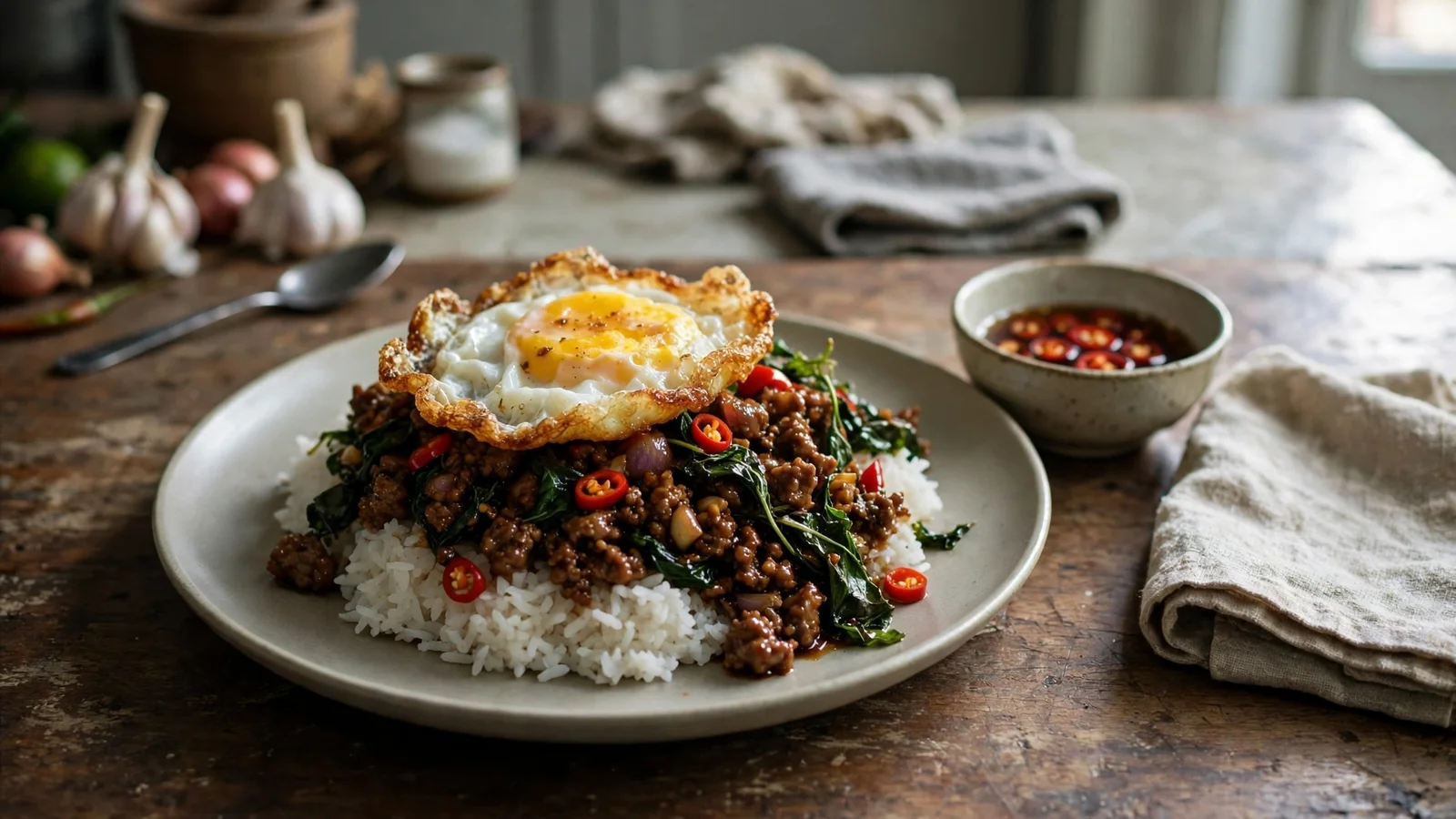
Pad kra pao moo is the pork version of Thailand’s fast holy basil stir-fry: ground pork seared hard in a wok, tossed with garlic and bird’s eye chilies, then coated in a sauce of fish sauce, oyster sauce, soy, and a little sugar. A big handful of holy basil goes in last, off the heat, so it wilts in seconds and keeps its peppery smell. Spoon it over jasmine rice, add a fried egg if you like, and dinner is done in about 20 minutes.
What is Thai basil pork?
Pad kra pao moo means pork stir-fried with holy basil. Pad means stir-fry, kra pao is holy basil, and moo is pork. Street stalls all over Thailand cook it to order, one plate at a time, and serve it over rice with a fried egg on top. It is the pork plate in the same family as my Thai basil chicken: same garlic-chili paste, same salty-sweet sauce, different meat. Pork brings more fat to the pan, so the sauce turns glossy and coats the rice instead of staying thin.
Expect heat first from the chilies, salt from the fish sauce, and a peppery, clove-like note from the basil. Holy basil tastes different from Thai sweet basil: holy basil is peppery with a clove edge, while Thai sweet basil leans toward anise. If you can only find Thai sweet basil, the dish still works, and my Thai basil substitutes guide covers the swap in detail. Use 1 1/2 cups of leaves, loosely packed. A small handful will not carry the dish.
The sauce: mix it before the wok gets hot
Stir the oyster sauce, soy sauce, fish sauce, dark soy sauce, sugar, and water in a small bowl until the sugar dissolves. Do this before you heat the pan. The stir-fry moves fast once the pork goes in, and there is no time to measure sauces with one hand while the garlic cooks with the other.
The amounts here give a glaze, not a pool: 1 tablespoon oyster sauce, 1 tablespoon soy sauce, 2 teaspoons fish sauce, 1 teaspoon dark soy sauce, 1 1/2 teaspoons sugar, and 2 tablespoons water for 1 pound of pork. Fish sauce, soy sauce, and oyster sauce all add salt, so do not add extra salt. Taste the finished pork and adjust at the table with prik nam pla, fish sauce with sliced chilies, instead of salting the pan again.
Pound the garlic and chilies
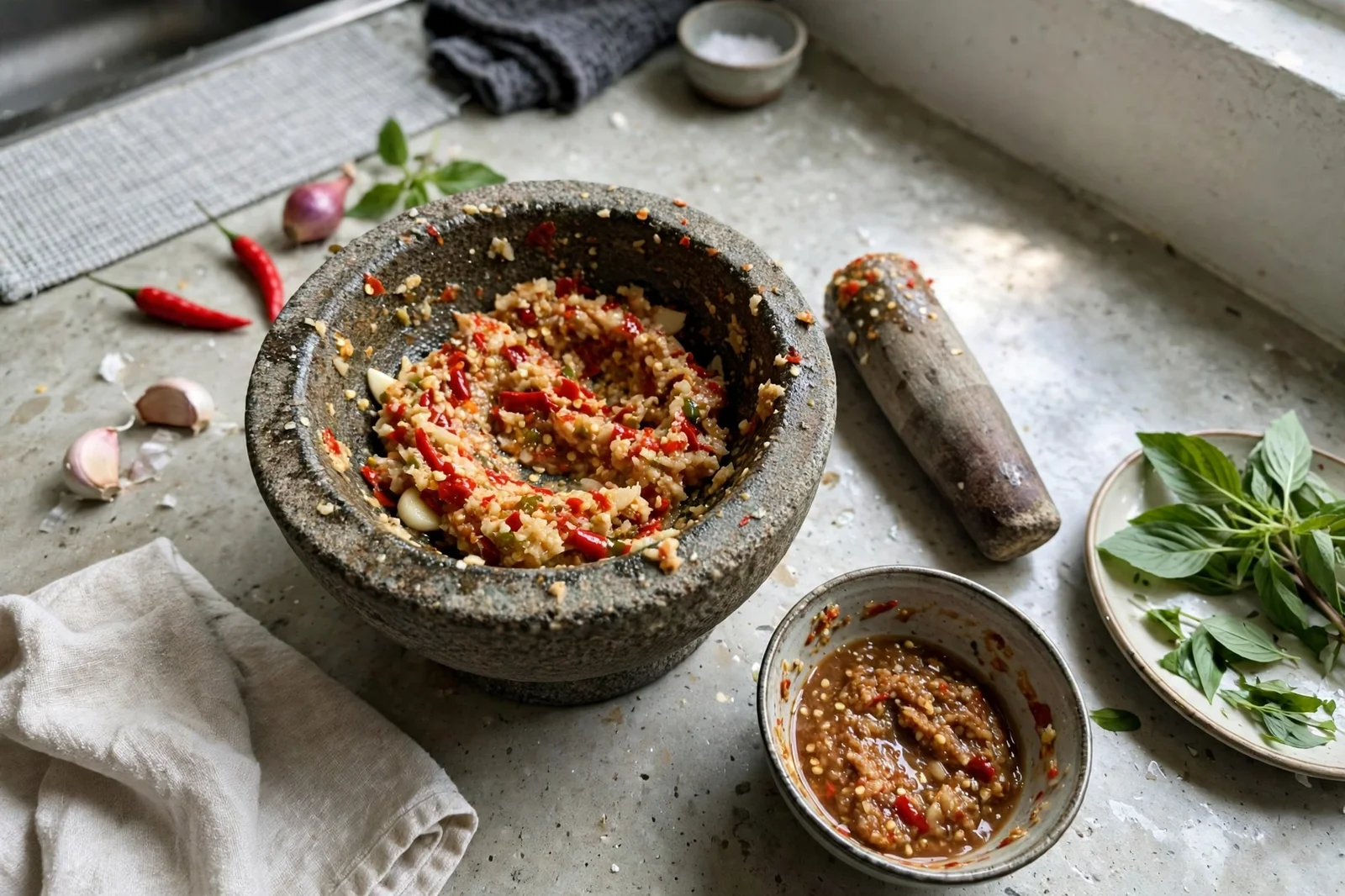
Pound 5 garlic cloves and 2 to 4 bird’s eye chilies into a coarse paste with a mortar and pestle. Pounding breaks the cells open and lets the oils out in a way that chopping alone does not match. If you have no mortar, mince everything fine with a knife. Use 2 chilies for a warm plate and 4 for a hot one. Keep the paste beside the stove with the sauce bowl and the picked basil leaves, since the cooking takes about 10 minutes from the first sizzle.
Sear the pork hard, then sauce it
Heat a wok or a large heavy skillet over high heat until a drop of water dances and vanishes on contact. Swirl in the oil, add the garlic-chili paste, and stir for 15 to 30 seconds until it smells fragrant. Do not let the garlic go past light gold. Dark garlic turns bitter, and the only fix is to start the paste again.
Add the ground pork and spread it into a thin layer. Leave it alone for 1 minute so the underside browns, then break it up and stir-fry for 3 to 4 minutes until no pink remains. Use ground pork that is about 80% lean. Very lean pork dries out in this kind of heat, and the fat is what carries the chili and basil flavor into the rice. If the pan looks crowded, cook the pork in two batches. A crowded pan drops the heat and the pork steams gray instead of browning.

Pour in the sauce and toss for about 30 seconds until the pork turns glossy and most of the liquid has cooked off. The pork should look coated, not swimming. If a puddle stays at the bottom, keep the heat high for another 30 seconds and toss again.
Basil goes in last, off the heat
Turn the heat off, add the basil leaves, and toss for about 15 seconds until they just wilt. The heat left in the pan and the pork is enough. Basil that cooks on full heat for a minute or more turns black and slimy and loses its smell. Serve at once over jasmine rice. A fried egg with crisp edges goes on top if you want the classic plate, and the runny yolk mixes into the rice and sauce.

Tips and variations
For a milder plate, use 1 chili and leave the seeds out. For a pork and green bean plate, add a handful of sliced long beans with the pork and cook 1 minute longer. For a make-ahead version, cook the pork and sauce, cool, and chill for up to 3 days, then reheat in a hot pan and add fresh basil at the end. Do not reheat the basil with the pork, since it will darken. Leftover pork without basil keeps 3 days in the fridge and reheats well in a skillet with a splash of water.
Troubleshooting: Fix My Thai Basil Pork
If a batch comes out wrong, the cause is usually one of five things: basil that turns black, pork that steams instead of browning, garlic that tastes bitter, a sauce that runs too salty or pools in the pan, or basil flavor that falls flat. Work through them one at a time and the next batch lands closer.
HERB & LIME · KITCHEN HELP
Fix My Thai Basil Pork
Choose what went wrong to see a practical next step.
Possible cause
What to try next
For next time
From Paul's kitchen. Results vary with pork fat content, chili heat, and stove heat, adjust timing to your setup.
Quick reference (also works without JavaScript)
The basil turned black and slimy
Cause: The basil cooked on full heat for too long, which breaks down the leaves and dulls their aroma.
Try: Next time, turn the heat off first, then toss the leaves for about 15 seconds until they just wilt.
Prevent: Pick the leaves before you start cooking and keep them beside the stove, so they go in last with no delay.
The pork steamed gray instead of browning
Cause: The pan was not hot enough or was crowded, so the pork released liquid and simmered in it.
Try: Turn the heat to high, spread the pork thin, and leave it alone for 1 minute so the underside browns before you break it up.
Prevent: Preheat the wok until a drop of water dances and vanishes on contact, and cook the pork in two batches if the pan looks full.
The garlic tastes bitter
Cause: The garlic chili paste fried past light gold, and dark garlic turns bitter fast in a hot wok.
Try: Pull the pan off the heat at once and add the pork, which stops the garlic from cooking further, and start the paste again if it already looks dark brown.
Prevent: Fry the paste for only 15 to 30 seconds, stirring the whole time, until it smells fragrant and the garlic is still light gold.
The sauce is too salty or pools in the pan
Cause: Fish sauce, soy sauce, and oyster sauce all add salt, and too much liquid leaves the pork swimming instead of glazed.
Try: Add a splash of water and a pinch of sugar, keep the heat high, and toss for 30 seconds more until the pork looks coated, then serve over unsalted rice.
Prevent: Mix the sauce before cooking and measure it, 1 tablespoon oyster sauce, 1 tablespoon soy sauce, 2 teaspoons fish sauce, and 2 tablespoons water per pound of pork, with no extra salt added.
The basil flavor falls flat
Cause: The dish used too little basil, or Italian sweet basil, which lacks the peppery clove note of holy basil.
Try: Toss in another large handful of fresh basil off the heat and add a pinch of white pepper to bring back some of the peppery edge.
Prevent: Use 1 1/2 cups of holy basil leaves, loosely packed, and if holy basil is not available, use Thai sweet basil as the second choice.
Thai Basil Pork Stir-Fry (Pad Kra Pao Moo)
Ingredients
Method
- Mix the sauce: stir the oyster sauce, soy sauce, fish sauce, dark soy sauce, sugar, and water in a small bowl until the sugar dissolves. Set beside the stove.
- Pound the aromatics: pound the garlic and chilies into a coarse paste with a mortar and pestle, or mince them fine with a knife.
- Bloom the paste: heat a wok or large heavy skillet over high heat until a drop of water dances and vanishes on contact. Swirl in the oil, add the garlic-chili paste, and stir for 15 to 30 seconds until fragrant and the garlic is still light gold.
- Sear the pork: add the ground pork and spread it into a thin layer. Leave it alone for 1 minute so the underside browns, then break it up and stir-fry for 3 to 4 minutes until no pink remains. Cook in two batches if the pan looks crowded.
- Sauce it: pour in the sauce and toss for about 30 seconds until the pork turns glossy and most of the liquid has cooked off. The pork should look coated, not swimming.
- Add the basil: turn the heat off, add the basil leaves, and toss for about 15 seconds until they just wilt. Serve at once over jasmine rice, topped with a fried egg if you like.
Notes
More Thai recipes
Thai basil chicken, Thai basil eggplant, Pad Kee Mao Thai drunken noodles, and Thai cashew chicken, four Thai plates that share this table, from basil stir-fries to noodles to a nutty chicken stir-fry.
From the garden
Thai basil grows well in a pot by a sunny door, and our guide to growing Thai basil in pots covers the basics. Leaves picked minutes before cooking smell stronger than a bunch that has sat in the fridge for days, so I pick the basil last, after the pork is already in the pan.