
Black cod spends a day in a sweet miso marinade, then goes under the broiler until the surface turns deep gold and the flesh flakes apart. The work is mostly waiting. The cooking itself takes about 12 minutes, and the fish is forgiving about a minute or two in either direction because of its fat content.
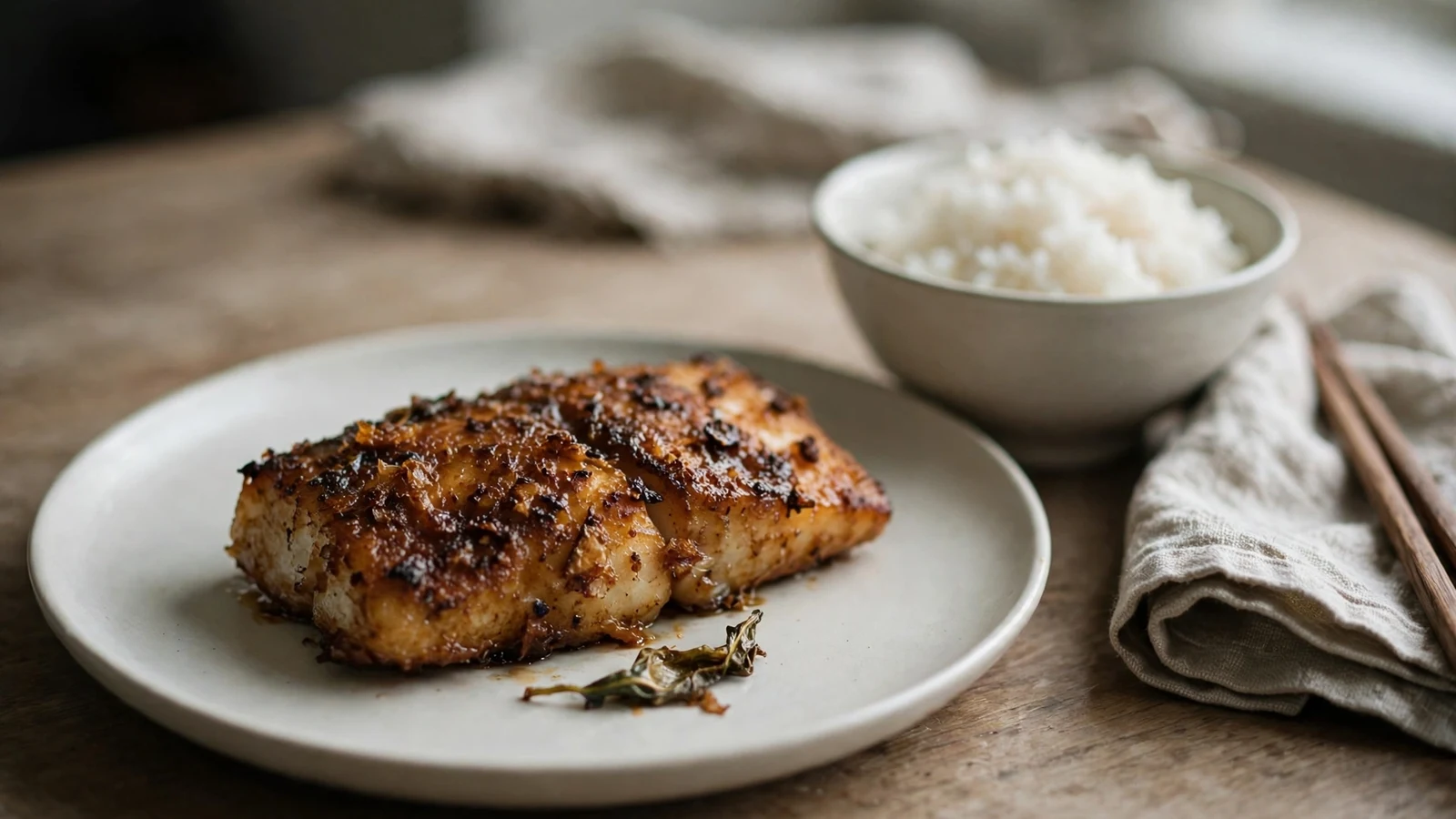
What is gindara no saikyo yaki?
Gindara is black cod, also sold as sablefish. Saikyo yaki is a Kyoto cooking method named for Saikyo miso, the sweet, pale miso made in Kyoto. The fish marinates in miso, mirin, and sake, then gets grilled or broiled. The marinade does two jobs at once: it seasons the fish all the way through, and its sugar caramelizes under high heat into a lacquered crust.
The result tastes sweet, salty, and savory at the same time, with flesh so soft it separates with light pressure from a fork. It is a restaurant dish that home cooks can match, because the marinade and the broiler do most of the work.
The miso marinade
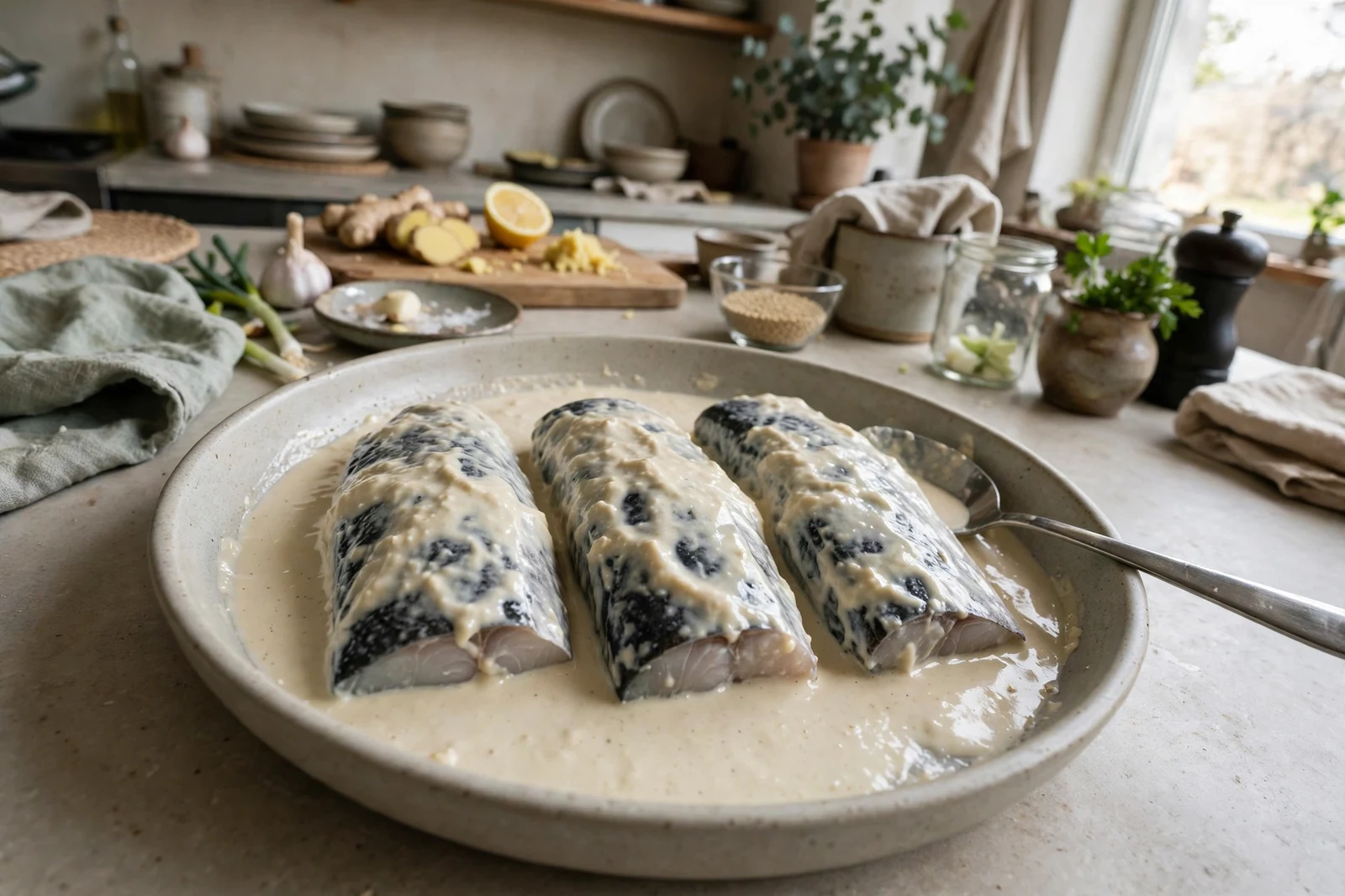
Use white miso, and Saikyo miso if you can find it. Red or brown miso is saltier and sharper, and it can take over the mild fish. For 4 fillets, about 1 1/2 pounds total, I use 1/2 cup white miso, 1/4 cup mirin, 1/4 cup sake, and 3 tablespoons sugar. That is a 2:1:1 ratio of miso to mirin to sake, with sugar to help the crust brown.
Whisk the marinade smooth before the fish goes in. Any lumps of miso stay as lumps on the fish and burn in spots under the broiler. Coat the fillets on all sides, cover the dish, and refrigerate for 24 hours. Eight hours gives good surface flavor, and 24 hours seasons the fish through. Past 48 hours the fish keeps getting saltier without gaining much more flavor, so 48 hours is the ceiling.
How to cook it
Take the fish out of the fridge 20 minutes before cooking so it loses the worst of the chill. Set a rack 6 to 8 inches below the broiler element and heat the broiler on high. Line a baking sheet with foil and set a wire rack on it.
Lift each fillet out of the marinade and wipe off the excess with your fingers or a rubber spatula, leaving only a thin, see-through layer. This is the step that decides whether the crust caramelizes or burns. A thick coat of miso and sugar chars in about a minute under a hot broiler, long before the center cooks.

Set the fillets skin side down on the rack and broil for 8 to 12 minutes, depending on thickness. Watch the whole time. The fish is done when the top is deep gold in spots and the flesh flakes with a fork. There is no need to flip it. If the top browns fast while the center still feels firm, move the tray down one rack level and give it a few more minutes at lower heat.
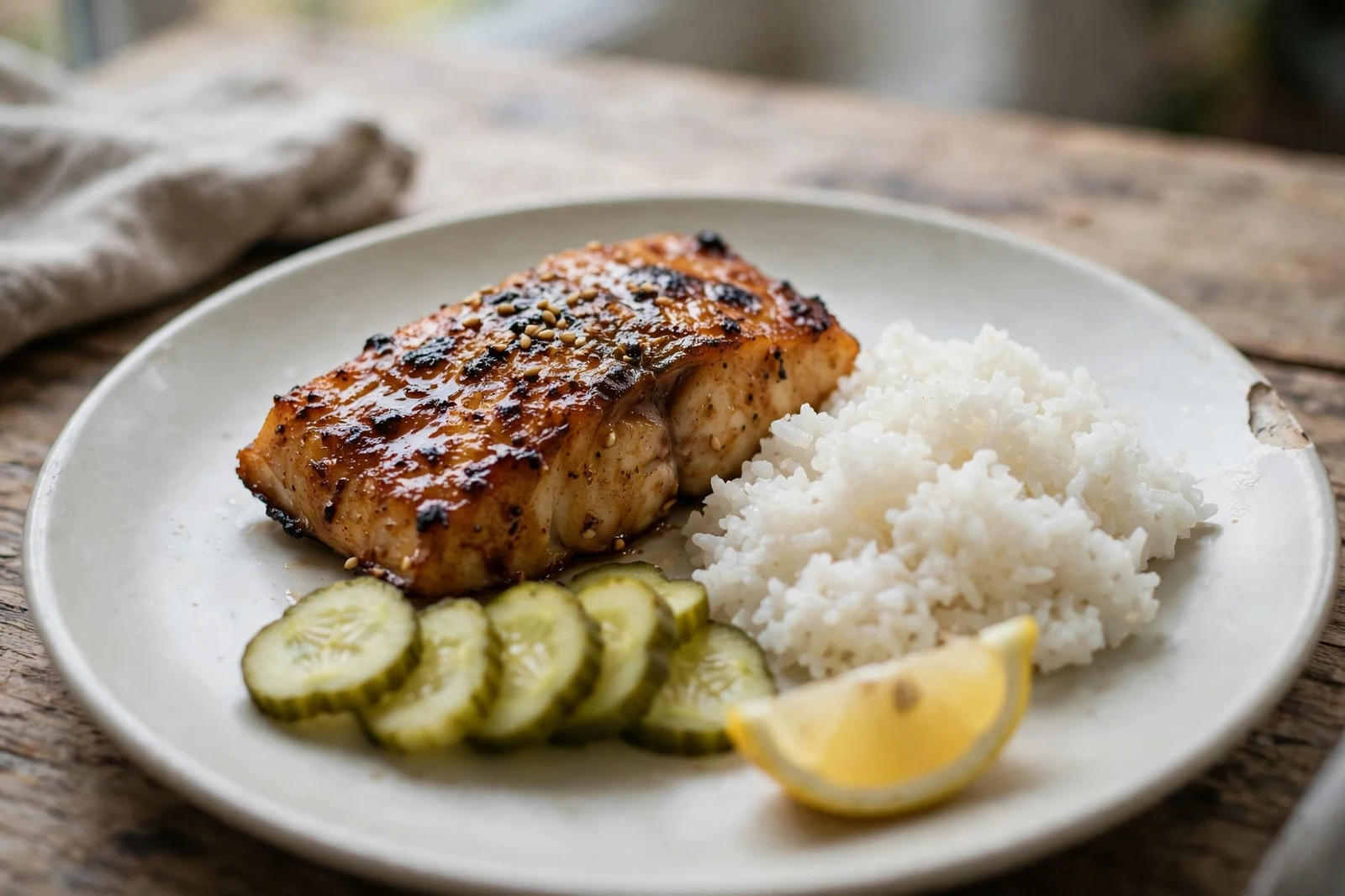
Serve it with plain steamed rice and something sharp or pickled on the side. My usual plate is rice, the fish, and quick pickled cucumber. A bowl of miso soup on the side keeps the meal simple, and our guide to cooking jasmine rice covers the rice if you want it fluffy rather than sticky. If you like glazed fish in general, salmon teriyaki uses a similar broiler method with a thinner, sweeter glaze.
Troubleshooting: Fix My Gindara no Saikyo Yaki
Most problems with this dish come from the marinade or the broiler, and both are easy to correct on the next round. Pick the problem that matches yours below.
HERB & LIME · KITCHEN HELP
Fix My Gindara no Saikyo Yaki
Choose what went wrong to see a practical next step.
Possible cause
What to try next
For next time
From Paul's kitchen. Results vary with fish thickness, miso brand, and broiler heat, adjust timing to your setup.
Quick reference (also works without JavaScript)
The miso coating burned before the fish cooked
Cause: Too much sugary marinade was left on the fish, and it chars in about a minute under a hot broiler.
Try: Scrape the burned spots off gently, move the tray one rack level lower, and finish cooking at lower heat until the flesh flakes.
Prevent: Wipe the marinade down to a thin, see-through layer before broiling, and keep the rack 6 to 8 inches below the element.
The fish tastes too salty or turned mushy
Cause: The fish marinated too long, and the salt in the miso kept curing it past the point of good flavor and texture.
Try: Serve it with plain rice and lightly seasoned vegetables instead of adding more salty sides, and do not add soy at the table.
Prevent: Keep the marinade between 24 and 48 hours. Less than 8 hours seasons only the surface, and past 48 hours the fish turns too salty.
The flavor is harsh and overpowering
Cause: Red or brown miso is much saltier and more pungent than white miso, and it takes over the mild fish.
Try: Balance the plate with plain rice and pickled vegetables, and skip extra salty garnishes.
Prevent: Use white miso, or Saikyo miso when you can find it, and taste the marinade before it touches the fish.
The top browned but the center is still firm
Cause: Thick fillets need more time for heat to reach the center, while the sugary surface browns fast.
Try: Move the tray down a level and give the fish a few more minutes at lower heat, or finish in a 350 degree oven for about 5 minutes.
Prevent: Cut fillets to a similar thickness so they finish together, and judge doneness by flaking, not by color alone.
I want to reuse the leftover marinade as a sauce
Cause: Marinade that touched raw fish carries raw fish juices, so it is not safe to pour over cooked fish as is.
Try: Throw the used marinade away, and serve the fish with plain rice and pickles instead.
Prevent: Set aside a small amount of clean marinade before it touches the fish if you want a sauce, and cook that portion separately before serving.
Gindara no Saikyo Yaki: Japanese Miso Black Cod
Ingredients
Method
- Mix the marinade: whisk 1/2 cup white miso, 1/4 cup mirin, 1/4 cup sake, and 3 tablespoons sugar until completely smooth.
- Marinate the fish: coat 4 black cod fillets on all sides, cover, and refrigerate for 24 hours and up to 48 hours.
- Bring to room temperature: take the fish out of the fridge 20 minutes before cooking and heat the broiler on high, with a rack 6 to 8 inches below the element.
- Wipe off the excess: lift each fillet out of the marinade and wipe off the excess with your fingers or a spatula, leaving only a thin layer. Lightly oil a wire rack set over a foil-lined baking sheet.
- Broil: set the fillets skin side down on the rack and broil for 8 to 12 minutes, watching closely, until deep gold in spots and flaking with a fork. Move the tray down a level if the top browns before the center cooks.
- Serve: plate with steamed rice, pickled cucumber, and lemon wedges if using.