
Pork adobo is the pot I reach for when I want dinner with little fuss and a sauce worth saving. Pork belly and shoulder go into one pot with soy sauce, cane vinegar, garlic, bay leaves, and black peppercorns, then simmer until the meat gives easily under a fork and the liquid turns into a dark sauce that clings to rice.
What is pork adobo?
Adobo is a Filipino cooking method more than a single fixed recipe. Meat simmers in vinegar, soy sauce, garlic, bay leaves, and black peppercorns until it turns tender and the liquid reduces to a salty, sour sauce. The pork version uses fatty cuts and a longer simmer than the chicken version. Our chicken adobo uses the same base, but chicken cooks in a shorter time and stays leaner, so pork needs more time in the pot and a fattier cut to stay moist.
Why pork belly and shoulder together
I use 1 pound of pork belly and 1 pound of pork shoulder, cut into 1.5-inch cubes. The belly gives fat that melts into the sauce during the simmer. The shoulder gives meat that holds its shape after an hour in the pot. All belly can feel greasy by the end, and all shoulder can dry at the edges, so the half-and-half mix lands in the middle. Cut the cubes large. Small pieces shrink fast and fall apart before the sauce has time to reduce.
Ingredients
For the pork: 1 pound pork belly and 1 pound pork shoulder, both cut into 1.5-inch cubes, plus 1 tablespoon neutral oil. For the braising liquid: 1/2 cup soy sauce, 1/3 cup cane vinegar, 1 cup water, 1 head garlic (about 10 cloves) peeled and crushed, 3 dried bay leaves, 1 teaspoon whole black peppercorns, and 1 tablespoon brown sugar. For serving: steamed jasmine rice and sliced scallions, if you like. The full quantities, with groups and notes, sit in the recipe card below.
How to make pork adobo
- Marinate the pork. Toss the pork belly and shoulder with the soy sauce, garlic, peppercorns, and bay leaves in a large bowl. Rest at room temperature for 30 minutes, or cover and refrigerate overnight and bring back to room temperature before cooking.
- Sear the pork. Heat the oil in a large heavy pot over medium-high heat. Lift the pork out of the marinade and keep the marinade liquid. Sear the pork in a single layer in two batches, 2 to 3 minutes per side, until browned at the edges. Move each batch to a plate.
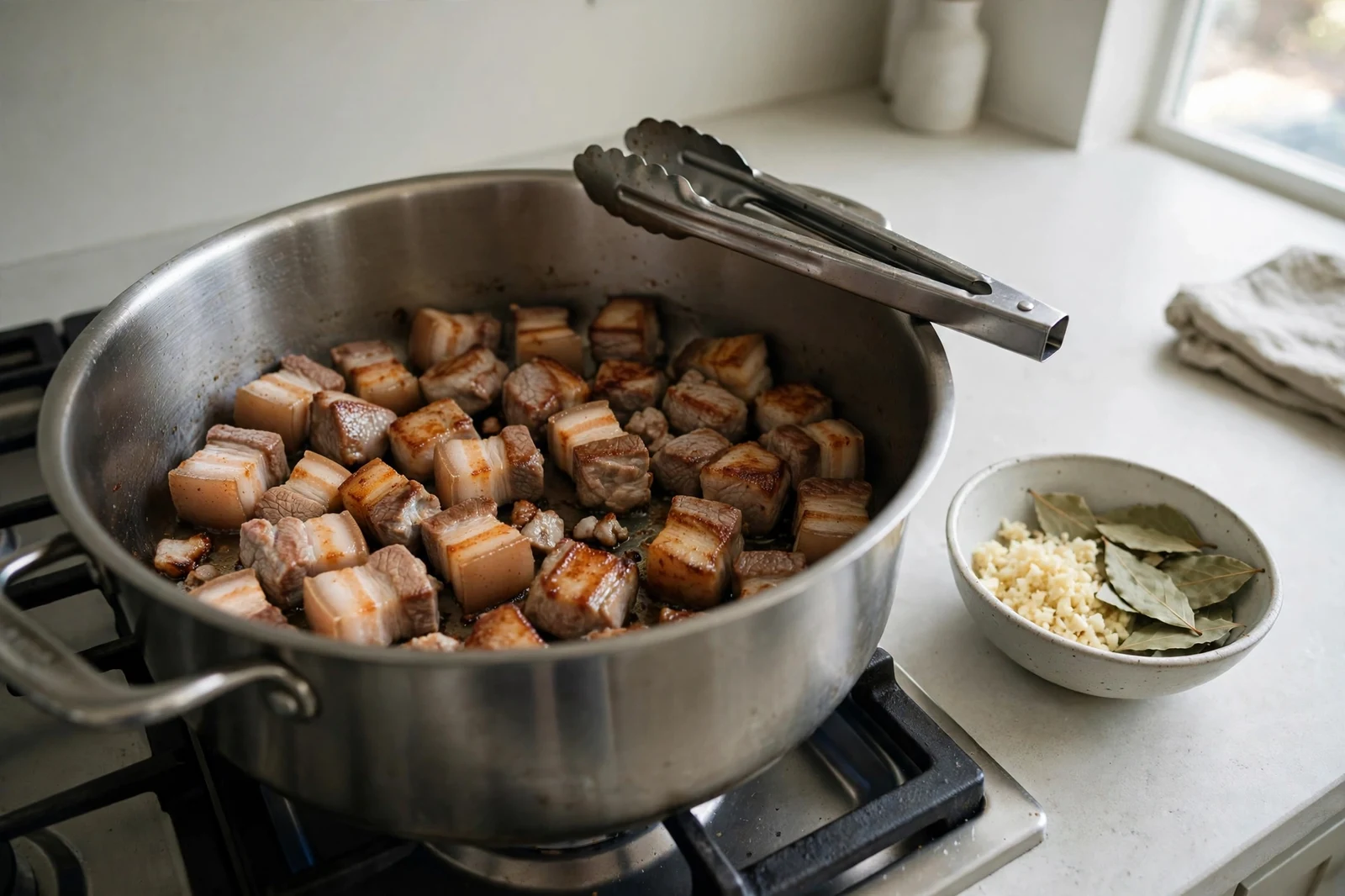
- Build the pot. Return all the pork and the reserved marinade liquid to the pot. Add 1 cup water and bring to a boil. Pour the vinegar around the edge of the pot and do not stir for 3 minutes, so the sharp vinegar smell cooks off before the liquid is mixed.
- Simmer until tender. Lower the heat until the liquid holds a gentle bubble, cover, and simmer for 50 minutes. Check at 40 minutes. If the pork still resists a fork, add 1/2 cup water and simmer 15 minutes more.
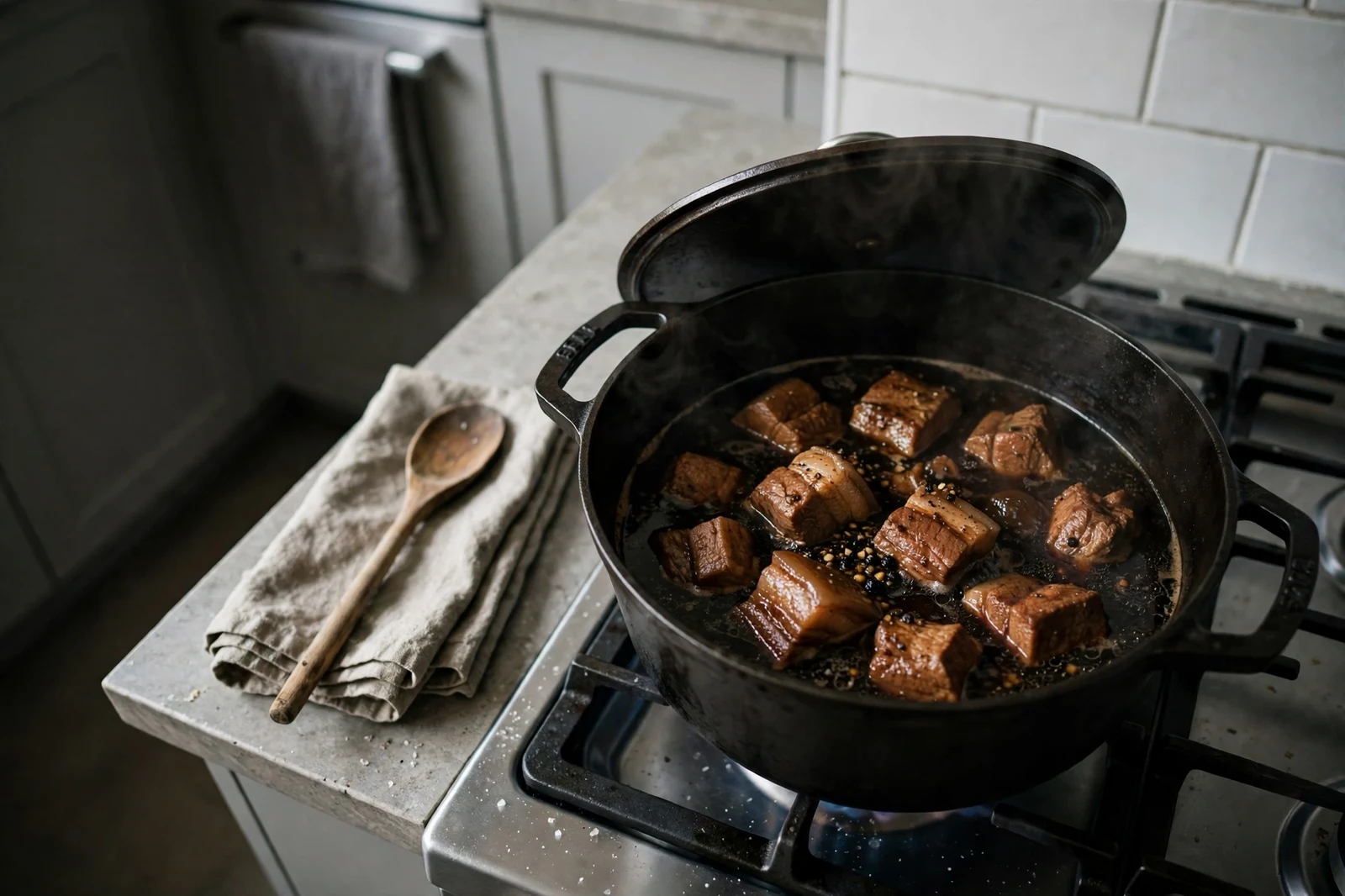
- Reduce the sauce. Uncover and simmer for 10 minutes, until the sauce coats the back of a spoon. Stir in the brown sugar. Taste and adjust with a splash of soy sauce, vinegar, or water until the sauce reads salty first, sour second, and just sweet enough to round the edges.
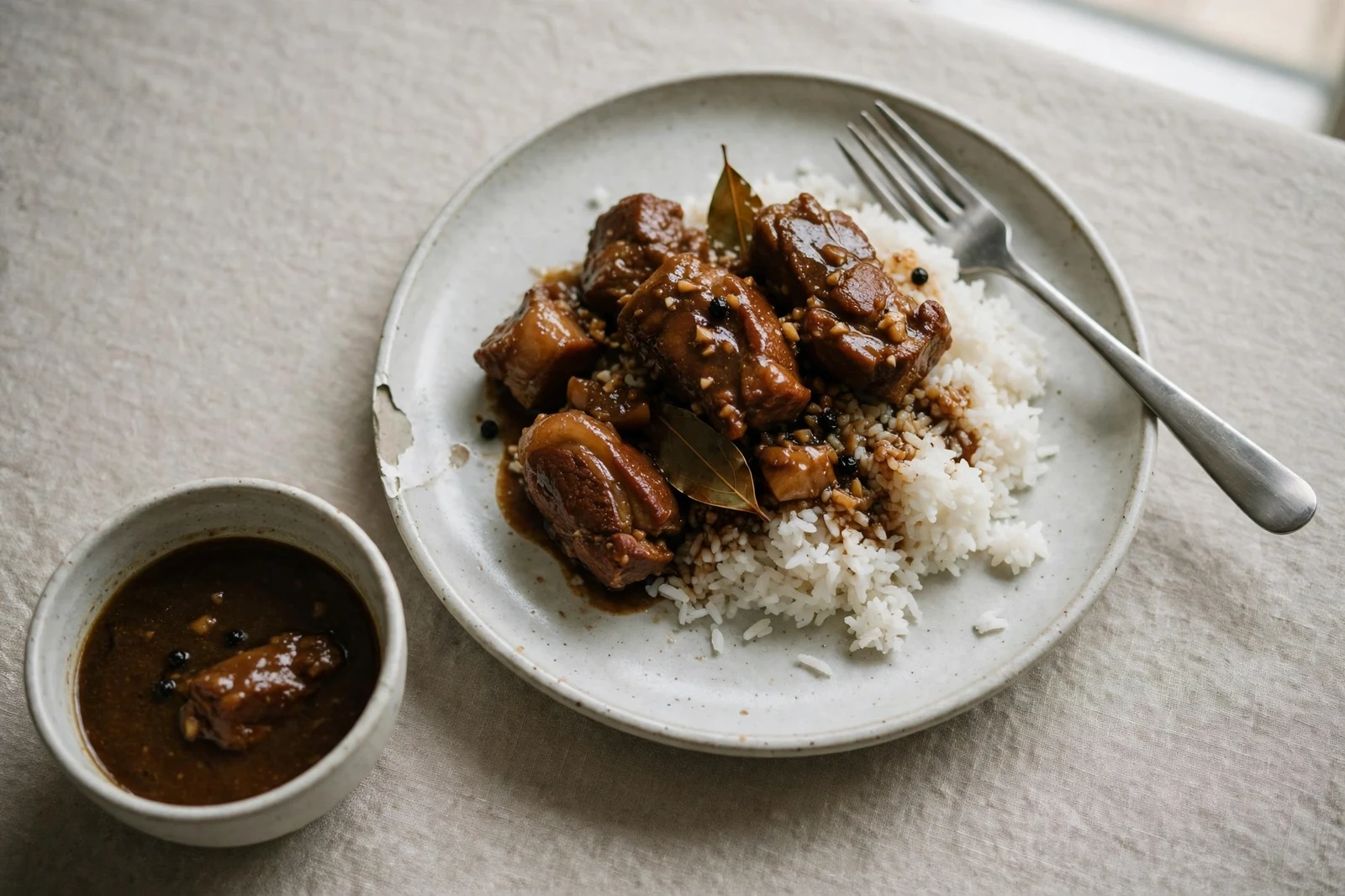
- Rest and serve. Rest the pot off the heat for 10 minutes. Fish out the bay leaves. Serve over steamed jasmine rice, with the sauce spooned on top.
Tips and variations
If you only have shoulder, add no extra water at the start and check tenderness at 40 minutes, since shoulder has less fat to render. If you only have belly, skim fat from the surface before the final reduce, or the sauce will sit oily on the rice. For adobo with eggs, add 4 peeled hard-boiled eggs in the last 15 minutes of simmering so they take on color without turning rubbery. For a drier, crisp-edged style, lift the cooked pork out after the sauce reduces, fry the pieces in a little oil until the edges crisp, and serve the sauce on the side. Leftovers keep 4 days in the fridge and 3 months in the freezer, and the sauce tastes deeper the next day. Reheat on low heat with a splash of water.
How to serve pork adobo
Steamed jasmine rice is the plain partner this sauce needs, and our guide to cooking jasmine rice covers the pot method I use. For a full Filipino plate the next day, pair leftover pork with garlic fried rice made from cold rice in the same pan.
Troubleshooting: Fix My Pork Adobo
If your adobo came out off, the fix is usually in the pot, not in a new batch. The five problems below cover the ones that show up most often in my kitchen, with a cause and a next step for each.
HERB & LIME · KITCHEN HELP Choose what went wrong to see a practical next step. From Paul's kitchen. Results vary with pork cut, soy sauce, and stove heat, adjust timing to your setup. Quick reference (also works without JavaScript) Cause: Soy sauces vary in salt, and the salt concentrates as the liquid reduces. Try: Stir in water, 1/4 cup at a time, with a pinch of brown sugar, then simmer 5 minutes and taste again. Prevent: Taste the sauce before the final reduce, and hold back part of the soy sauce until the end if your brand runs salty. Cause: The vinegar was stirred too soon, or a sharp white vinegar was used in place of milder cane vinegar. Try: Simmer uncovered for a few more minutes so more vinegar cooks off, then add brown sugar 1 teaspoon at a time until the edge softens. Prevent: Let the vinegar boil undisturbed for 3 minutes after adding it, and use cane vinegar when you can. Cause: The collagen has not broken down yet, often because the heat ran too high or the simmer was cut short. Try: Keep the pot at a gentle bubble, add 1/2 cup water if the liquid runs low, and check again every 15 minutes until a fork slides in easily. Prevent: Use belly or shoulder cut into 1.5 inch cubes, and keep the simmer low and slow instead of boiling hard. Cause: Too much water went in at the start, or the lid stayed on through the finish so the liquid never reduced. Try: Lift the lid and simmer uncovered for 10 to 15 minutes until the sauce coats the back of a spoon. Prevent: Add just enough liquid to cover about three quarters of the pork, and always finish uncovered. Cause: The pieces were cut too small, or the pot simmered well past tender. Try: Serve it as it is, spooned over rice like a pulled pork adobo, since the flavor is still sound. Prevent: Cut 1.5 inch cubes and start checking tenderness at 40 minutes, then pull the pot off the heat as soon as a fork slides in.Fix My Filipino Pork Adobo
Possible cause
What to try next
For next time
The sauce tastes too salty
The sauce tastes too sour or sharp
The pork is still tough
The sauce is thin and watery
The pork fell apart into shreds
Filipino Pork Adobo
Ingredients
Method
- Marinate the pork: toss the pork belly and shoulder with the soy sauce, garlic, peppercorns, and bay leaves in a large bowl. Rest at room temperature for 30 minutes, or cover and refrigerate overnight and bring back to room temperature before cooking.
- Sear the pork: heat the oil in a large heavy pot over medium-high heat. Lift the pork out of the marinade and keep the marinade liquid. Sear the pork in a single layer in two batches, 2 to 3 minutes per side, until browned at the edges. Move each batch to a plate.
- Build the pot: return all the pork and the reserved marinade liquid to the pot. Add 1 cup water and bring to a boil. Pour the vinegar around the edge of the pot and do not stir for 3 minutes, so the sharp vinegar smell cooks off before the liquid is mixed.
- Simmer until tender: lower the heat until the liquid holds a gentle bubble, cover, and simmer for 50 minutes. Check at 40 minutes. If the pork still resists a fork, add 1/2 cup water and simmer 15 minutes more.
- Reduce the sauce: uncover and simmer for 10 minutes, until the sauce coats the back of a spoon. Stir in the brown sugar. Taste and adjust with a splash of soy sauce, vinegar, or water until the sauce reads salty first, sour second, and just sweet enough to round the edges.
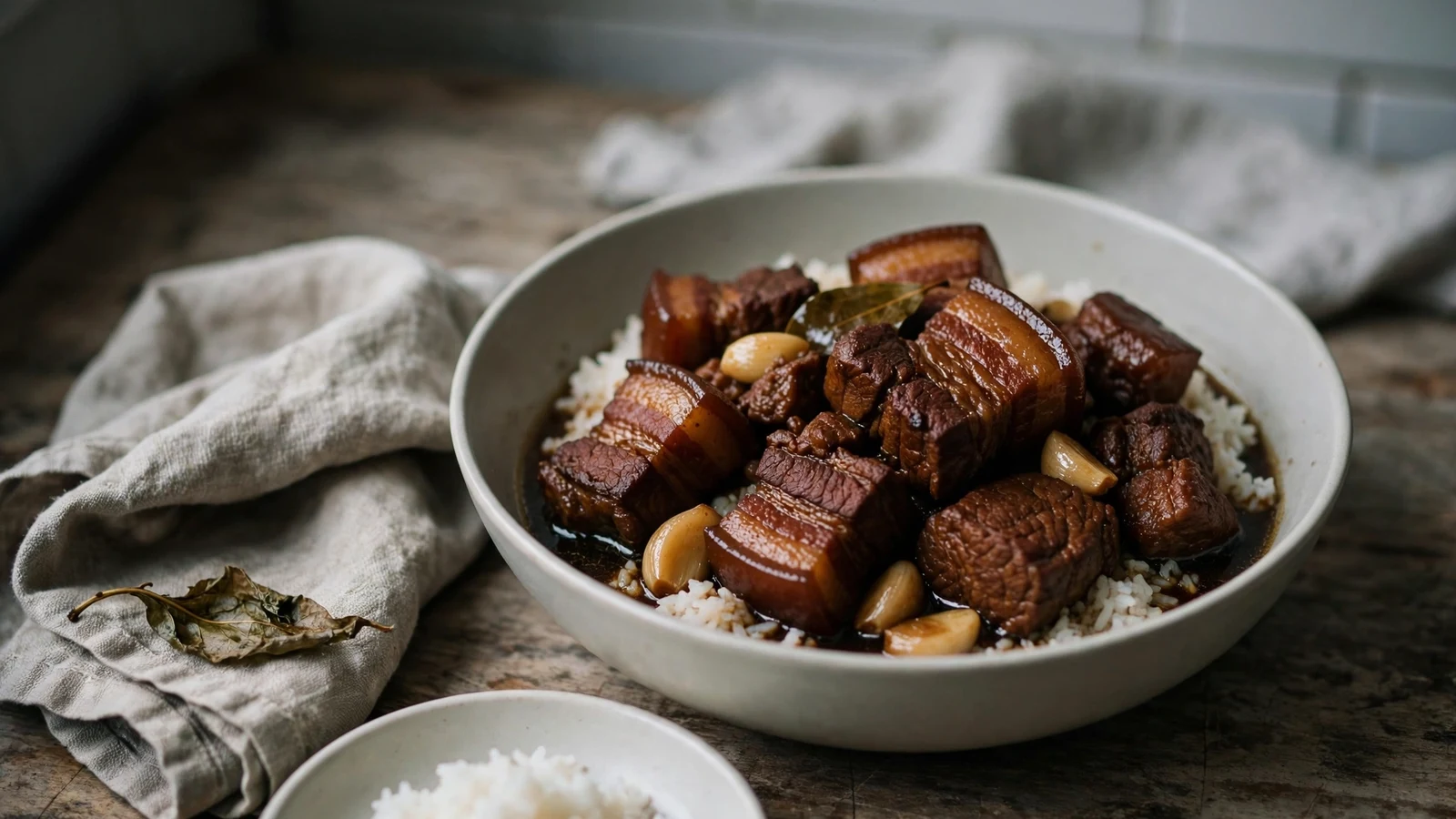
- Rest and serve: rest the pot off the heat for 10 minutes. Fish out the bay leaves. Serve over steamed jasmine rice, with the sauce spooned on top.
Notes
More Filipino recipes
Sinigang: Filipino Sour Soup, Lumpia: Crispy Filipino Spring Rolls, Kare-Kare: Filipino Peanut Stew, and Filipino Pancit Bihon all cook from the same pantry, so they make a good next stop after this pot.