
Rice vinegar and apple cider vinegar sit in the same aisle, cost about the same, and both say vinegar on the bottle. They do not taste the same, and they do not behave the same in a recipe. Rice vinegar stays quiet and clean. Apple cider vinegar speaks up, with a fruity edge you can taste even in a small amount.
The short version: reach for rice vinegar when the dish is delicate and the vinegar should season without announcing itself. Reach for apple cider vinegar when the dish is bold enough to carry a fruitier, sharper note. The rest of this post works through flavor, acidity, and the dishes where each one earns its place, plus the swaps that work and the one swap to avoid.
What is rice vinegar?
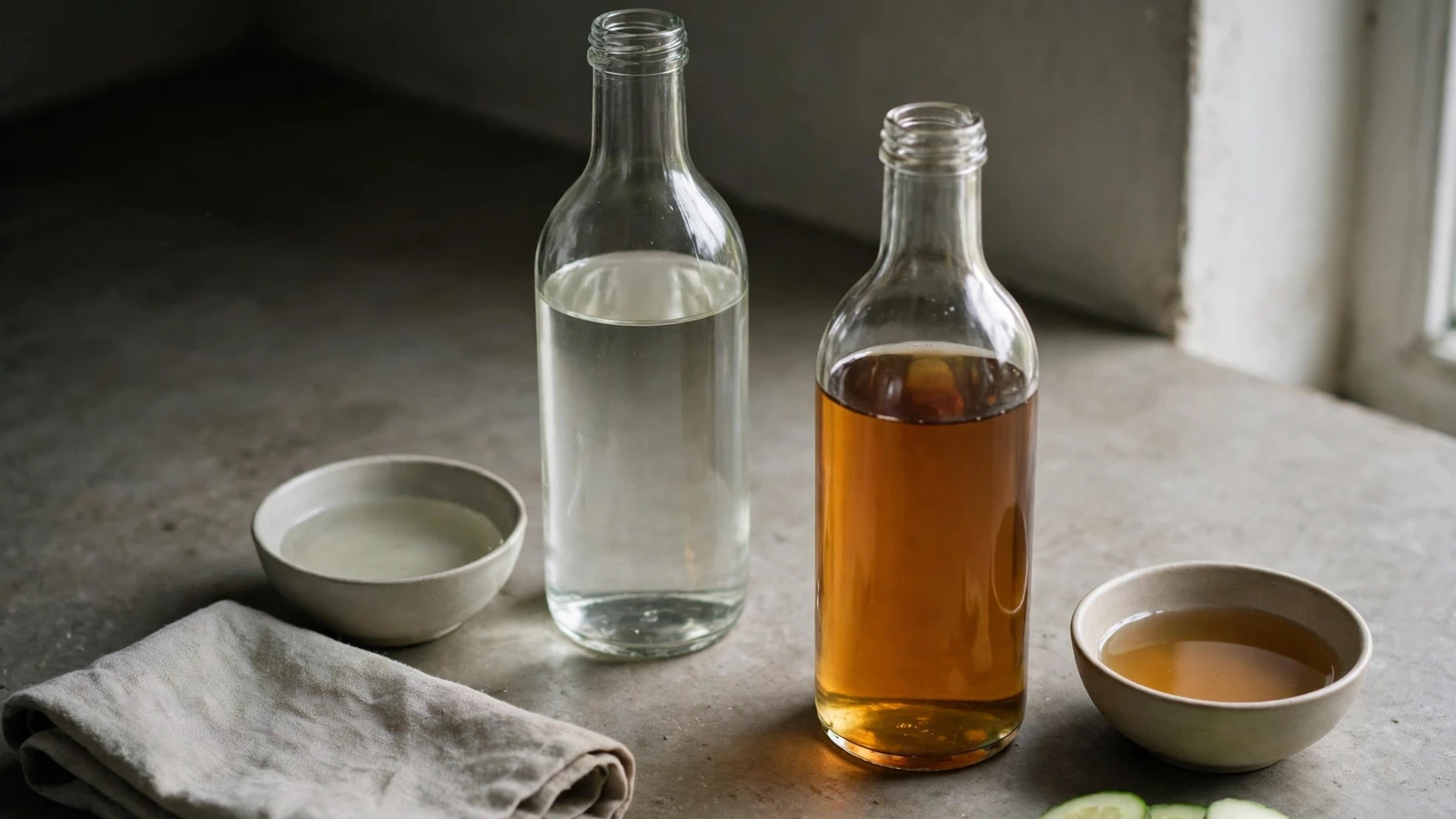
Rice vinegar is made from fermented rice. The unseasoned kind you want for most cooking is clear or pale straw in color, with a mild, clean taste and a light touch of sweetness. It is the vinegar behind sushi rice and Japanese cucumber salads, where the seasoning has to lift the dish without covering the fish, the cucumber, or the rice.
Buy unseasoned rice vinegar first. Seasoned rice vinegar has sugar and salt already added, which is handy for sushi rice but throws off a dressing or a pickle brine that already seasons to taste. The label tells you which one you hold: unseasoned lists rice and water, more or less, while seasoned lists sugar and salt too. If a recipe here calls for rice vinegar, it means the unseasoned kind.
For the full family picture, our guide to Asian vinegars walks through rice vinegar beside black vinegar, cane vinegar, and the rest of the shelf, with notes on which bottle suits which dish.
What is apple cider vinegar?
Apple cider vinegar is made from fermented apple cider. It is amber in color, and it tastes fruity and sharper than rice vinegar, with an apple note that stays present even after it is mixed into a dressing or a brine. Most grocery bottles in the United States are labeled 5% acidity. Rice vinegar bottles vary more, often around 4 to 5%, so the label is worth a glance when the vinegar does pickling work.
Some bottles are filtered and clear. Others are unfiltered and cloudy, with a wispy sediment called the mother. For cooking, that difference does not matter much: the sediment settles, the flavor is the same family, and the filtered bottle is easier to measure and pour. Buy the filtered bottle for the kitchen and leave the cloudy bottle to whatever else you use it for.
Rice vinegar vs apple cider vinegar at a glance
| Rice vinegar (unseasoned) | Apple cider vinegar | |
|---|---|---|
| Flavor | Mild, clean, lightly sweet | Fruity, sharper, apple note stays present |
| Acidity on the label | Often 4 to 5% | Usually 5% |
| Color | Clear to pale straw | Amber, sometimes cloudy if unfiltered |
| Best for | Sushi rice, cucumber salads, light dressings, delicate pickles | Slaws, bold dressings, sturdy pickles, sauces that can carry fruit |
| Watch out for | Seasoned bottles that add sugar and salt | Flavor that can take over a delicate dish |
When to use rice vinegar
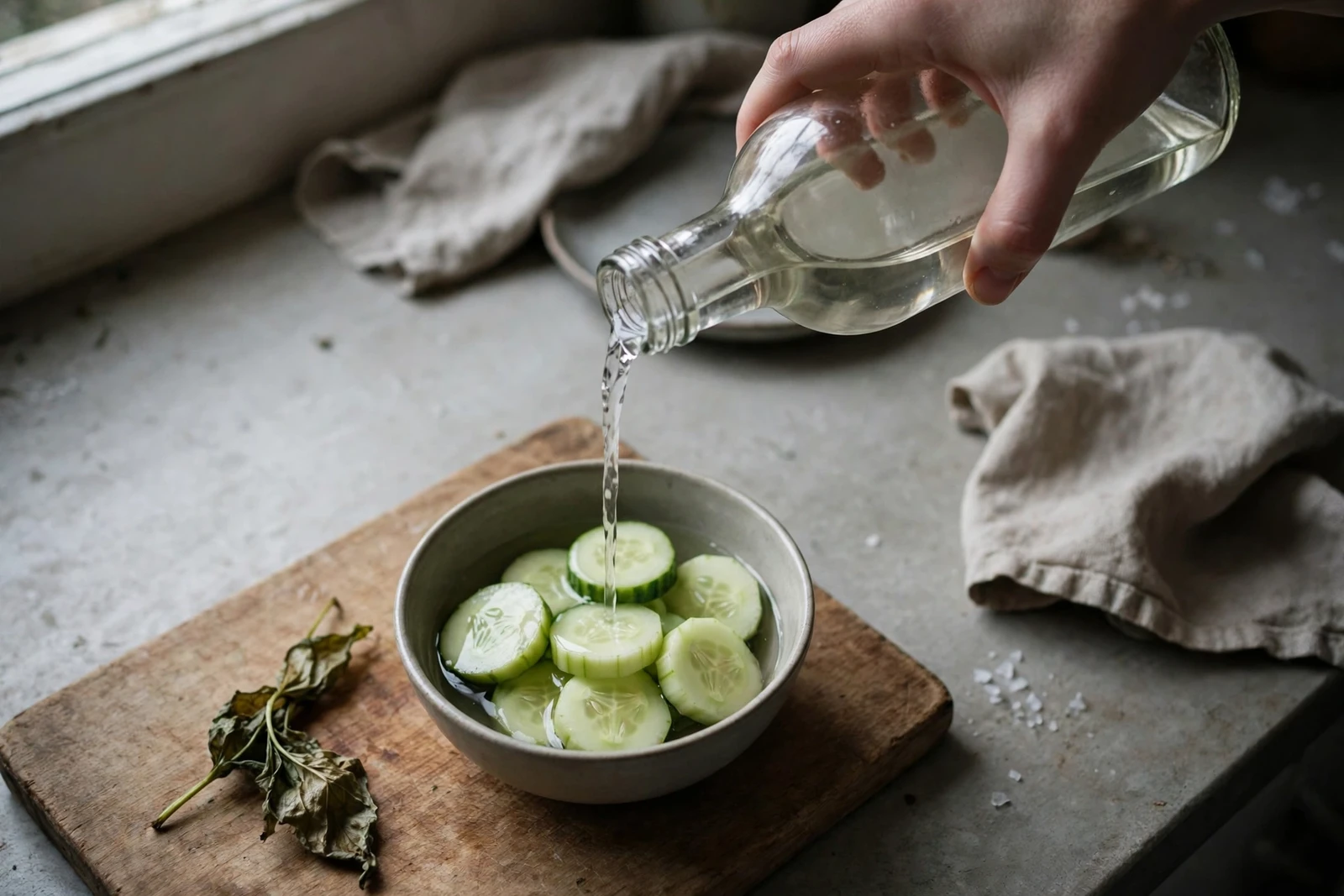
Use rice vinegar when the other ingredients are quiet and you want them to stay that way. It seasons sushi rice without leaving an apple note behind. It dresses a Japanese cucumber sunomono, where cucumber, a little sugar, and a pinch of salt are the whole dish and a loud vinegar would flatten them. It makes a light dressing for steamed vegetables or a cold noodle bowl, and it pickles thin-sliced cucumber, radish, or ginger without dyeing the brine amber.
A dressing ratio that works: 3 tablespoons rice vinegar, 1 tablespoon sugar, and 1/2 teaspoon salt, whisked, then 2 tablespoons neutral oil if you want a dressing rather than a straight seasoning. Taste before you add more sugar. Rice vinegar needs less sweetening than apple cider vinegar does, and the extra sugar is the easiest way to lose the clean taste you bought it for.
When to use apple cider vinegar
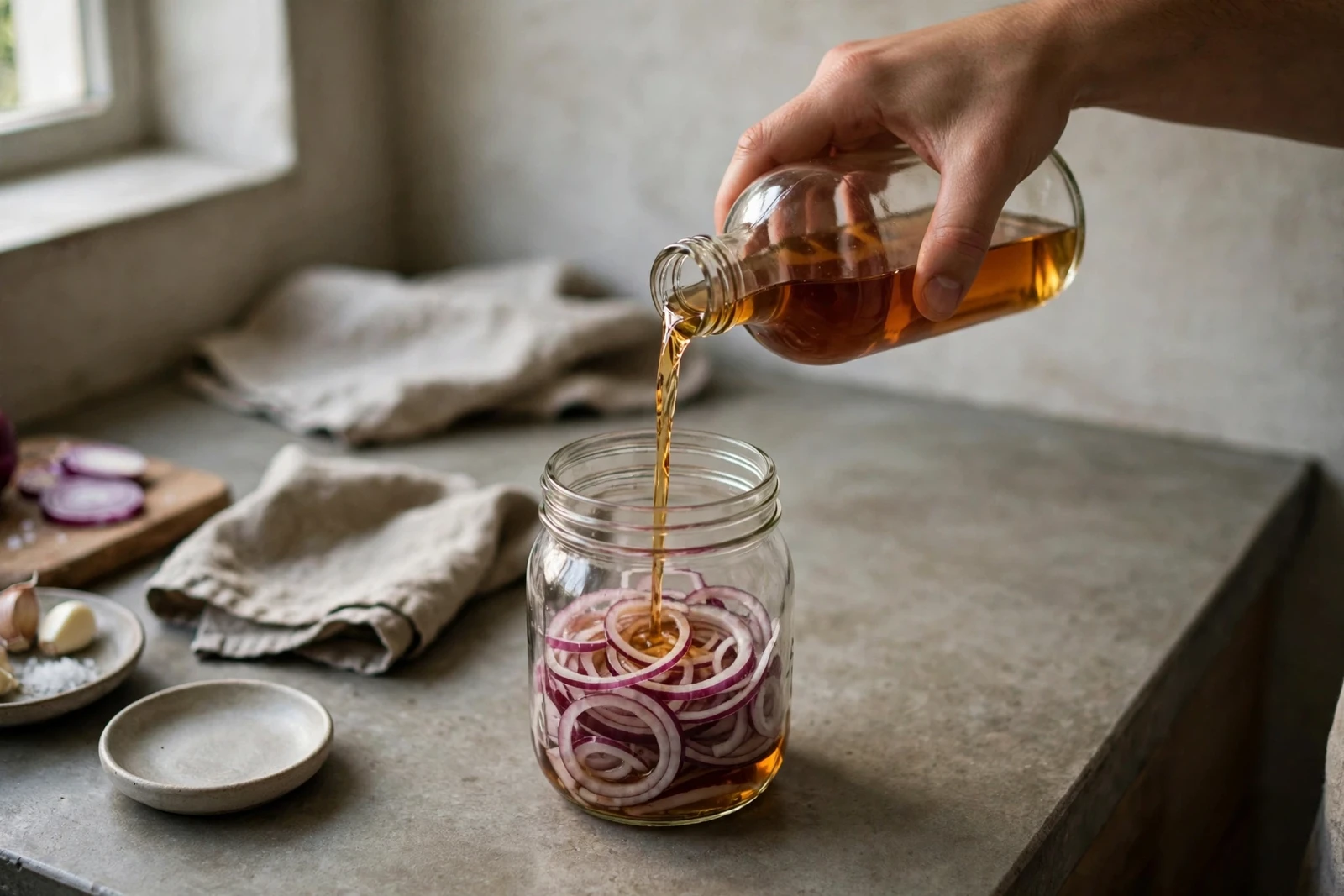
Use apple cider vinegar when the dish has strong flavors of its own and needs a vinegar that can keep up. It suits a cabbage slaw, where the crunch and the dressing both need a sharp edge. It works in a barbecue-style sauce and in a marinade for grilled meat, where sweetness, spice, and smoke already fill the pan. It pickles red onion and sturdy vegetables well, giving the brine a fruity color and taste that reads as part of the pickle rather than a flaw.
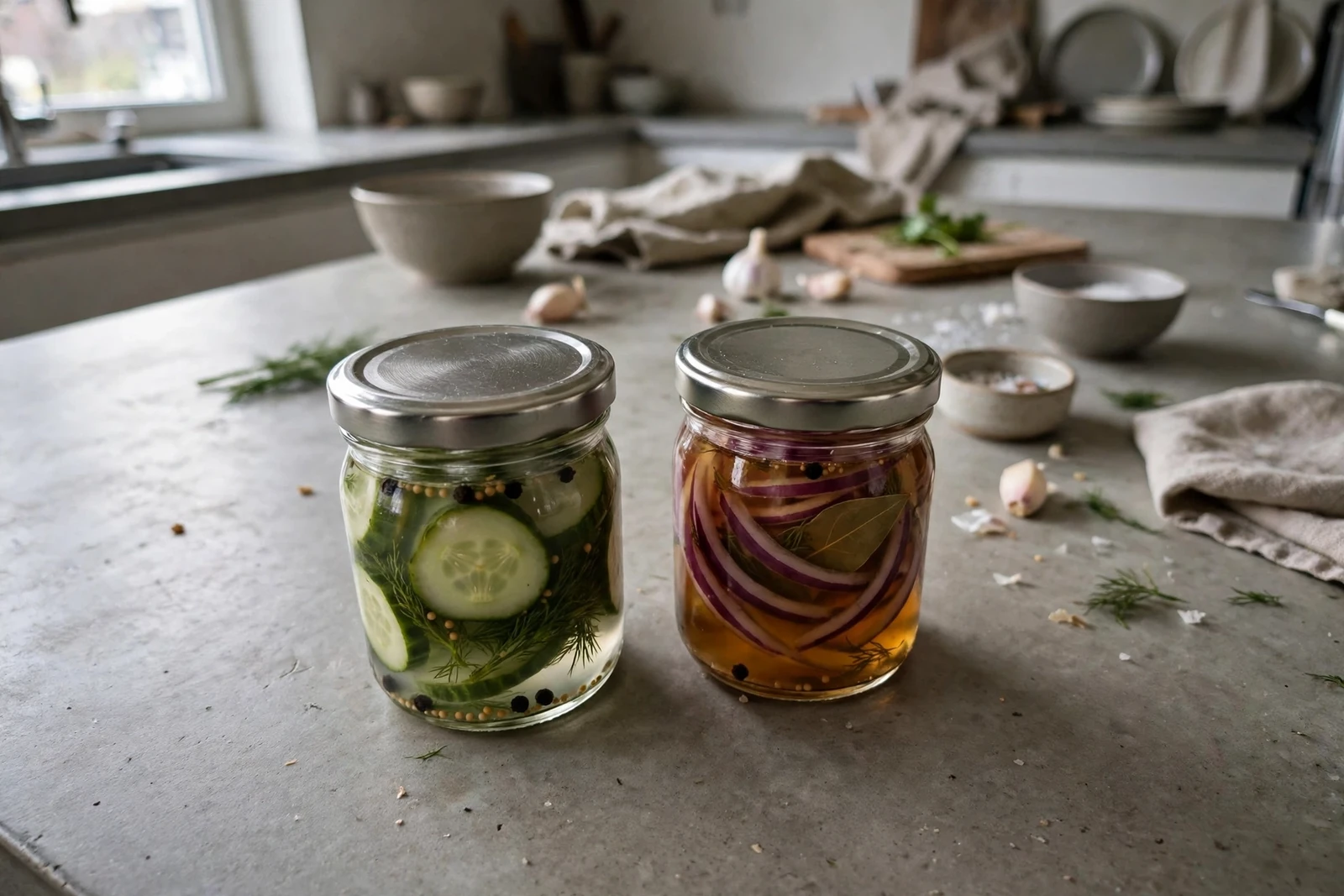
For a quick pickle, a brine of 1/2 cup vinegar, 1/2 cup water, 1 tablespoon sugar, and 1 teaspoon salt works with either vinegar. With apple cider vinegar, the onions turn a soft pink and taste fruitier on day two. With rice vinegar, the same onions stay paler and taste cleaner. Neither result is wrong. They are different pickles, and the choice depends on which one you want on the plate.
Can you swap one for the other?
In most dressings and refrigerator pickles, yes, at a 1 to 1 volume swap. Start with the same amount, taste, and adjust. Two adjustments cover most cases. When apple cider vinegar replaces rice vinegar in a delicate dish, use about a quarter less and add a pinch of sugar if the edge still shows. When rice vinegar replaces apple cider vinegar in a bold sauce, use the full amount and add 1 teaspoon of lemon juice per 1/4 cup of vinegar if the sauce tastes flat, since rice vinegar brings less bite on its own.
One swap to avoid: sushi rice. Seasoned sushi rice depends on rice vinegar for its clean, mild seasoning, and apple cider vinegar leaves an apple note that does not belong there. For 2 cups of cooked rice, the ratio I use is 3 tablespoons rice vinegar, 2 teaspoons sugar, and 1 teaspoon salt, folded in while the rice is warm. Keep apple cider vinegar out of that bowl.
A note on canning: refrigerator pickles are forgiving, and either vinegar works in the brine above. For water-bath canning, use a tested recipe and vinegar labeled 5% acidity, since the acidity is part of the safety of the method. Do not guess at the ratio for a canned batch.
Our chili vinegar for noodle soups and our pickled ginger both show the same idea in practice: the vinegar should match the dish, not the other way around. A light vinegar for ginger, a bolder one where the soup already brings heat and fat.
Three kitchen tests
I tested the two vinegars side by side in three dishes, with the same amounts in each, to see where the difference actually shows.
First, cucumber quick pickles. Rice vinegar gave a clean, crisp pickle where the cucumber still tasted like cucumber. Apple cider vinegar gave a fruitier pickle with a warmer color. Both were good on day one. By day two, the apple cider version tasted more like a pickle and less like a cucumber, which suits a rich sandwich and suits a plain rice bowl less.
Second, a simple vinaigrette of 1 part vinegar to 3 parts oil with a pinch of salt. The rice vinegar version tasted smooth and mild, and it let a sesame note through. The apple cider version tasted sharper and fruitier, and it needed a pinch of sugar to sit level with the oil. In a salad with strong greens or cheese, that sharpness helps. Over steamed vegetables, it gets in the way.
Third, sushi rice. This was the clearest result. Rice vinegar seasoned the rice and stepped back. Apple cider vinegar seasoned the rice and stayed in the foreground, with an apple note that clashed with the fish. That test is why the sushi rice swap stays off the list.
Which bottle to buy first
If you cook Asian dishes often, buy unseasoned rice vinegar first. It covers sushi rice, cucumber salads, light dressings, and delicate pickles, and it is the bottle most of our recipes call for. If your cooking leans toward slaws, sauces, and sturdy pickles, apple cider vinegar is the bottle you will reach for more. Most kitchens end up with both, since neither one covers the other job well.
Store both in a cool cupboard with the cap tight. They are pantry items, not fridge items, and an opened bottle keeps its character for months. When a bottle tastes flat or dull compared with a fresh one, replace it rather than pouring more of it into a dish.