
Chayote is the mild, crisp squash that shows up in stir-fries and soups across Southeast Asia, and it is one of the easiest vegetables to start: you plant the whole fruit, not a seed. There is no seed packet to buy and no seedling to harden off. A mature fruit from the grocery store, a big pot, and a trellis are enough to get a vine going, and one plant can give you 30 to 50 fruits in a season.
The catch is warmth. Chayote is a tender perennial from Central America, and it needs 120 to 150 frost-free days to fruit. In a warm climate it grows like a weed. In a cooler one, a pot is the trick that makes it work: you start the fruit indoors, move it out after the last frost, and bring the pot back inside before the cold returns. Paul grows it in a 5-gallon pot on a sunny patio, and the vine climbs a bamboo trellis against the fence all summer.

What chayote needs
Chayote (Sechium edule) is a member of the gourd family, also sold as mirliton or vegetable pear. The fruit is pale green and pear-shaped, with a mild flavor close to a cucumber crossed with a potato, and it stays crisp in a stir-fry. The plant is a vigorous climbing vine: in the ground it can run 10 feet or more in a season, which is why the trellis matters as much as the pot.
It wants full sun, 6 to 8 hours a day, and soil that stays warm. Plant only after the last frost, when the soil in the pot holds at 65 degrees or above. Growth stalls below 50 degrees, and frost kills the vine outright, so a fruit planted in a cold pot in April will sit there doing nothing while one planted in May catches up and passes it in a few weeks. Like water spinach, it sulks fast when it dries out, so the pot needs to hold moisture through a hot afternoon.
Picking a fruit to plant
Buy a mature chayote from an Asian grocery store or a farmers market, not a small young one. Look for a firm fruit with no soft spots, mold, or cuts, and pick one that has already started to sprout if you can find it: a pale green shoot poking out of the wide end is a head start. If the fruit has no sprout yet, set it in a warm spot on the kitchen counter for 1 to 2 weeks and check it every few days. The sprout usually appears on its own once the fruit warms up.
One fruit gives one plant, and one plant fills a trellis, so a single pot is enough for most home cooks. If you want a second vine, start a second fruit in its own pot: two plants in one pot fight for water and root room, and both come out small.
Pot and soil
Chayote has a deep root system, so the pot has to be big. Use a container at least 5 gallons in size, about 18 to 24 inches deep and just as wide, with drainage holes in the bottom. A pot this size holds enough soil to stay damp through a hot afternoon, which a small pot cannot do. Plastic or glazed pots hold moisture better than terracotta here, because terracotta dries fast and chayote hates drying out. If you only have terracotta, plan to water more often.
Fill the pot with a mix that holds water and still drains: 2 parts potting mix to 1 part finished compost, mixed loose. Do not use garden soil in a pot: it packs down, stays wet at the bottom and dry on top, and the roots suffocate. A 2-inch layer of mulch on top, straw or shredded leaves, slows drying and keeps the soil temperature steadier through summer.
Set the trellis in the pot before you plant, not after. A 6- to 8-foot trellis, bamboo poles, or a sturdy stake frame works, and a balcony railing or fence makes a fine anchor if the pot sits against it. The vine climbs fast once it starts, and pushing poles into a planted pot later risks stabbing the root ball.
Planting it step by step
Plant in spring, 3 to 4 weeks after the last frost, when the soil stays above 65 degrees day and night. Fill the pot with the potting mix and compost blend, leaving 2 inches at the top. Lay the sprouted fruit on its side with the sprout facing up, and cover it with 2 to 3 inches of soil, leaving the tip of the sprout exposed. Water it well until water runs from the drainage holes, then set the pot in its sunniest spot.
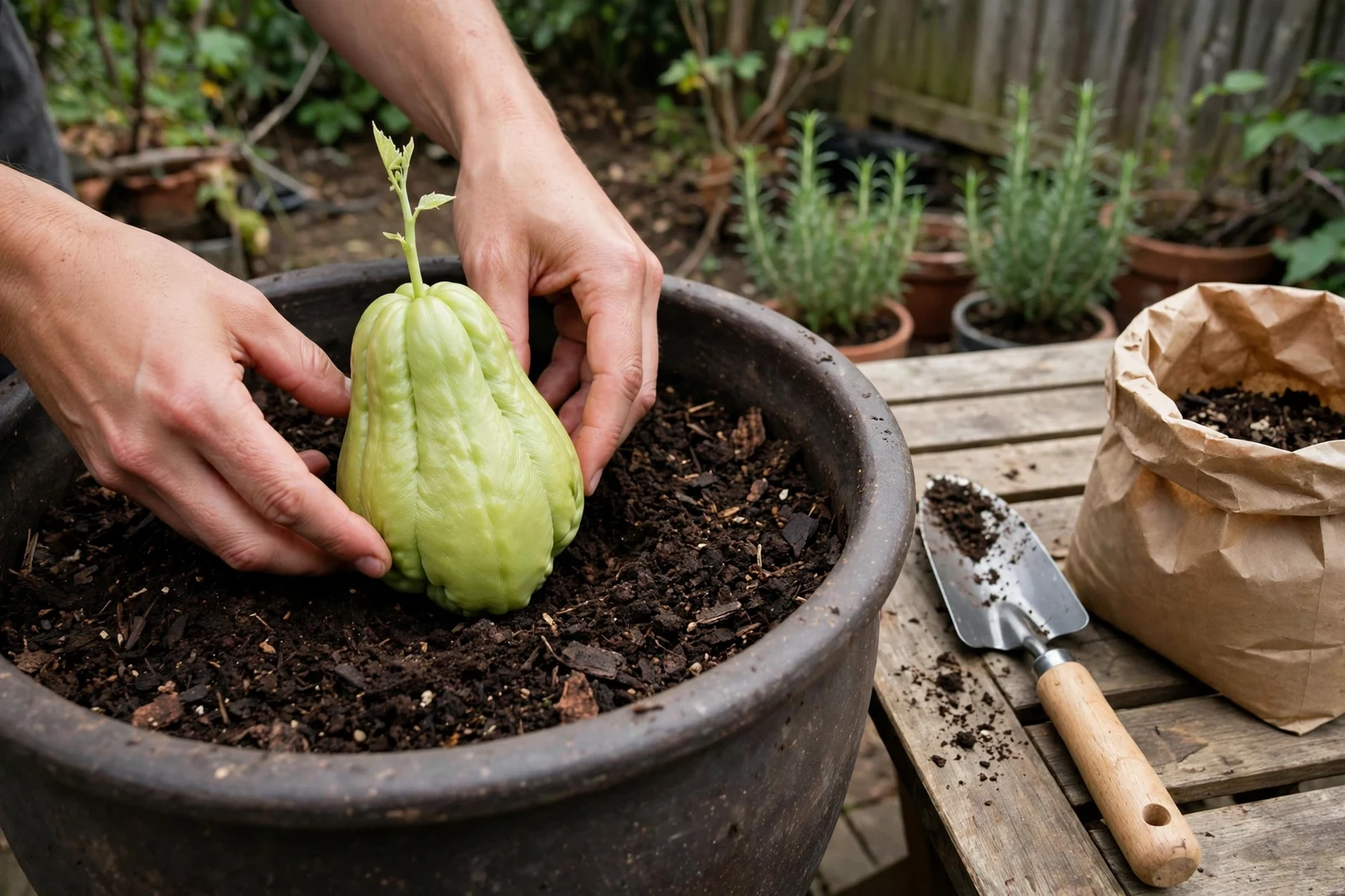
Vines appear in a few weeks in warm soil. Do not dig the fruit up to check: the wait is normal, and disturbing it sets the plant back. Water when the top inch of soil feels dry, and keep the soil evenly damp through the first month while the roots settle in.
Training the vine and care through the season
Chayote grows slowly at first, then takes off in summer heat. Once the vine reaches a foot long, guide it onto the trellis and tie it loosely with soft garden twine. Check the ties every week or two: the vine thickens fast, and a tight tie cuts into the stem. Let the tendrils do most of the work after the first few ties, and keep guiding stray shoots back onto the support so the fruits hang in the air instead of resting on the soil. Fruit that touches the ground spoils or sprouts while it is still on the vine.
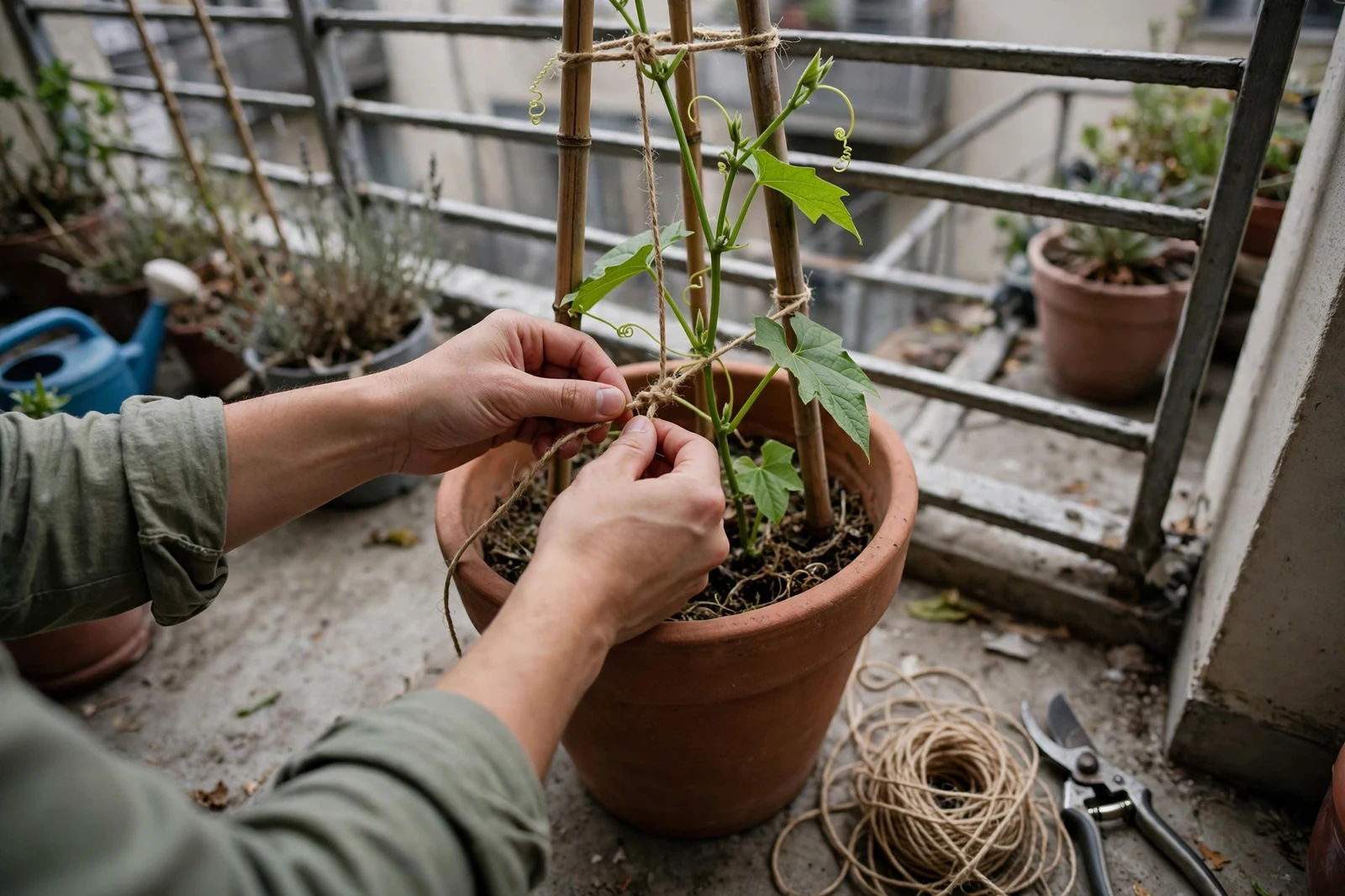
Water deeply 2 to 3 times a week, more in a heat wave, and feed every 4 to 6 weeks with a balanced liquid fertilizer at half strength through the growing season. A hungry plant shows it in pale new leaves and slow growth, while a well-fed plant pushes out new shoots every week. Stop feeding in fall when growth slows.
Chayote has few pests in a pot. Aphids sometimes cluster on soft new growth: a strong spray of water knocks them off. Slugs chew young leaves at night in spring: pick them off by hand in the evening, or set the pot on feet so slugs have a harder climb. Good airflow up the trellis keeps mildew down, which is one more reason to keep the vine off the ground.
Harvesting
Fruits are ready 120 to 150 days after planting, about 3 to 5 months in. Pick them when they are light green, tender, and 4 to 6 inches long. Cut each fruit from the vine with a knife or pruning shears, leaving a short stem attached, and pick often: regular picking keeps the vine producing, while fruit left on the vine turns hard and fibrous. Do not wait for a fruit to grow big. An overripe chayote tastes woody, and the vine slows down once it is carrying old fruit.

A healthy plant gives 30 to 50 fruits in a season. Fresh chayote keeps 2 to 4 weeks in a cool, dark place, or up to 6 weeks in the fridge in a perforated bag. Use the first pickings in sayur asem, the Indonesian tamarind vegetable soup, where chayote soaks up the sour broth without going soft, or slice it into a stir-fry the same way you would use bitter melon.
What to do when cold weather comes
In zones where nights stay above 55 degrees, the vine keeps growing year-round, and the pot can stay outside. Everywhere else, the plant is an annual in practice: frost kills it, so the season ends with the first cold nights. Pick the last fruits before the frost, then pull the vine and empty the pot.
In a short-summer region, the pot itself is the answer. Start the fruit indoors 4 weeks before the last frost, move it out once nights stay above 60 degrees, and bring it back inside if a late cold snap is forecast. A pot on wheels makes the move a one-person job. Next spring, start again with a fresh fruit from the store: saved fruit sprouts just as well, but a store-bought one is simpler, and one fruit is all a pot needs.