
Chao ga is the Vietnamese answer to chicken soup: a whole chicken poached with ginger and onion, then rice simmered in that same broth until the grains fall apart into a silky porridge. The numbers are measured: 1 cup of rice to 10 cups of water, a 25-minute poach for the chicken, and a 60-minute simmer for the rice, stirred every 10 to 15 minutes so nothing catches on the bottom. The bowl is finished at the table, with shredded chicken, green onions, cilantro, fried shallots, ginger strips, lime, and chili. The whole pot takes about an hour and 45 minutes, and most of that is the rice cooking on its own.

What is chao ga?
Chao means rice porridge and ga means chicken, so the name is the recipe in two words. A whole chicken goes into a pot of cold water with ginger and onion, and once it is cooked through it comes out to be shredded. Jasmine rice goes into the strained broth and simmers until the grains break down and the liquid turns thick and creamy. The porridge is seasoned with fish sauce at the end, then each bowl gets shredded chicken, green onions, cilantro, fried shallots, thin strips of fresh ginger, black pepper, and a lime wedge. In Vietnam it is a breakfast bowl, a family-gathering pot, and the bowl that shows up when someone in the house is under the weather. It is the same family as our Chicken Congee (Jook), but the Vietnamese version is seasoned with fish sauce instead of soy sauce, and the topping bar of fresh herbs, fried shallots, and lime is what sets it apart. Our congee vs jook guide walks through the naming, if the terms are new to you. Two close cousins on this site are khao tom, the Thai rice soup, which keeps its rice grains whole in a thinner broth, and arroz caldo, the Filipino chicken porridge, which leans on garlic and ginger in a different way.
Ingredients
For the chicken and broth
- 1 whole chicken, about 3 1/2 pounds
- 10 cups cold water
- 1 onion, halved
- 3-inch piece fresh ginger, half sliced and half cut into thin strips
- 2 teaspoons salt
For the porridge
- 1 cup jasmine rice
- 1/4 cup glutinous rice
- 2 tablespoons fish sauce, plus more to taste
- 1/2 teaspoon ground black pepper
To serve
- 4 green onions, thinly sliced
- 1/2 cup cilantro leaves
- 1/2 cup fried shallots
- 1 lime, cut into wedges
- 1 red chili, thinly sliced
- Fish sauce and ground black pepper, at the table
- Youtiao (Chinese crullers), torn into pieces, optional
How to make it
Put the chicken in a large pot with the cold water, onion, sliced ginger, and salt. Bring it to a boil over high heat and skim the foam that rises in the first 10 minutes. Lower the heat to a bare simmer, with the surface just trembling, cover, and cook 25 minutes. Lift the chicken out onto a plate and rest it 10 minutes, then strain the broth through a fine sieve into a clean pot and discard the onion and ginger. The thigh should read 165 degrees; the meat finishes cooking as it rests, and pulling it out now is what keeps it moist instead of stringy. A pot that fits the chicken with a few inches of water over the top is the right size, and our guide to chicken stock for Asian soups covers the same low-simmer logic for a plain stock.

Rinse the jasmine and glutinous rice under cold water until the water runs clear, then add both to the strained broth. Bring the pot to a boil, then lower it to a low simmer and cook, partially covered, for 60 minutes. Stir every 10 to 15 minutes and scrape the bottom of the pot each time, since the rice sinks as it cooks and a high flame scorches it before the grains break down. The porridge is done when the grains have fallen apart and a spoonful coats the back of a spoon and still flows. If you want it in about 40 minutes instead, rinse the rice, drain it, and freeze it in a bag overnight; the ice crystals break the grains open so they fall apart faster in the pot. The 1-to-10 ratio of rice to water is what gives this porridge its body: 1 cup of rice to 10 cups of water, with the glutinous rice adding the last bit of cling. Our guide to cooking jasmine rice explains why the rinse matters for plain rice too.
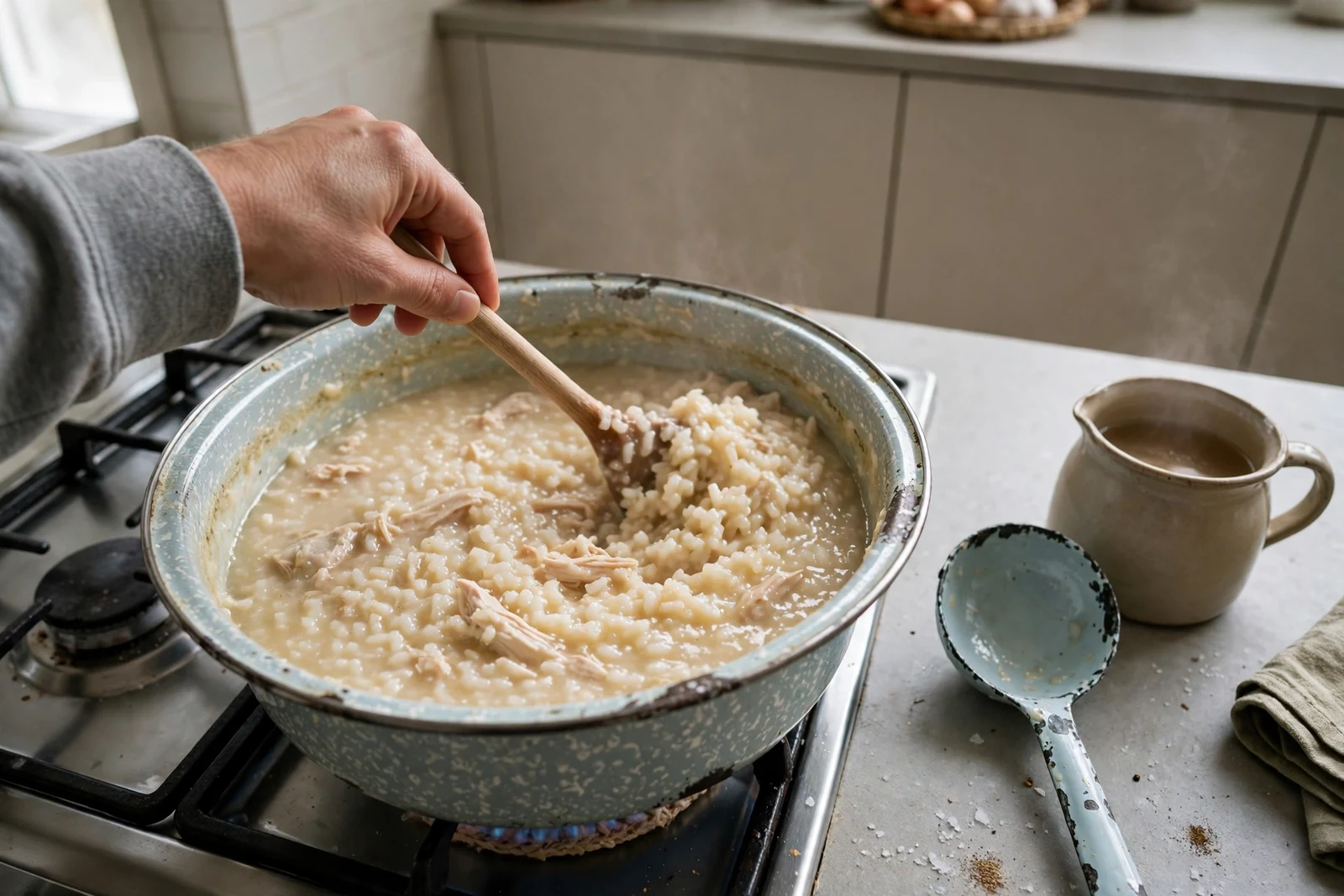
While the rice cooks, pull the chicken meat off the bones in shreds and set it aside. Slice the green onions, pick the cilantro leaves, and keep the ginger strips ready. When the rice has broken down, stir in the fish sauce and black pepper, then taste. Add fish sauce a teaspoon at a time if it needs more salt; the broth concentrates as it cooks down, so a bowl salted early ends up too salty. If the porridge is thicker than you like, stir in hot water a half cup at a time until it loosens. Return the shredded chicken to the pot for 2 minutes to warm through.
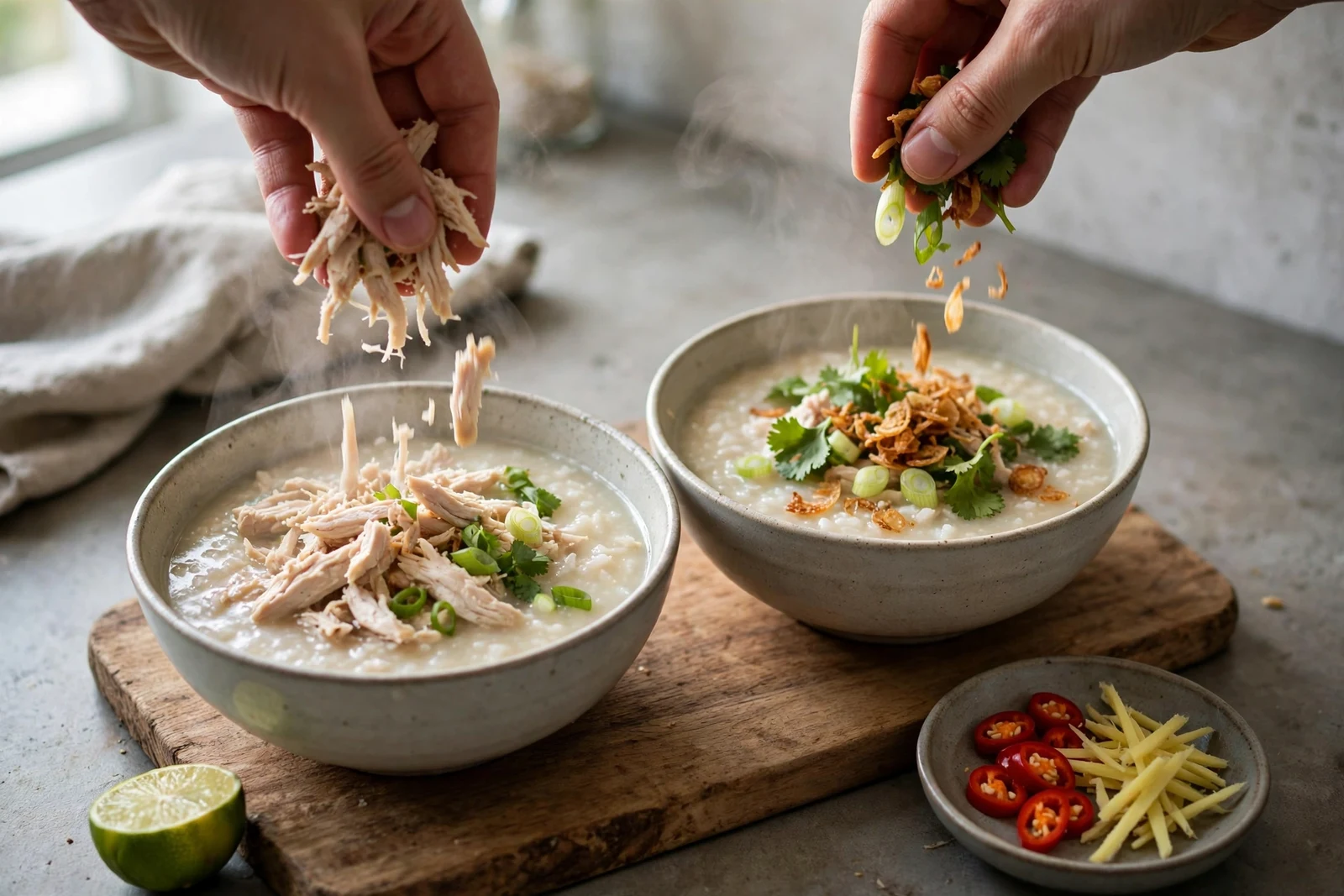
Ladle the porridge into bowls and top each one with green onions, cilantro, fried shallots, ginger strips, and black pepper. Serve at once with lime wedges, sliced chili, extra fish sauce, and torn youtiao on the table, and let each person season their own bowl. The fried shallots go on last so they stay crisp, and our guide to making crispy shallots at home is the one to follow if you fry your own.
Troubleshooting: Fix My Chao Ga
Most chao ga problems come from the rice, the chicken, or the seasoning. Pick the problem that matches your pot below for a practical next step.
This troubleshooting guide is not available yet.
Chao Ga: Vietnamese Chicken Rice Porridge
Ingredients
Method
- Put the chicken in a large pot with the cold water, onion, sliced ginger, and salt. Bring to a boil over high heat, skim the foam for the first 10 minutes, then lower the heat to a bare simmer, cover, and cook 25 minutes. Lift the chicken out onto a plate and rest it 10 minutes, then strain the broth through a fine sieve into a clean pot and discard the onion and ginger.
- Rinse the jasmine and glutinous rice under cold water until the water runs clear, then add both to the strained broth. Bring to a boil, then lower to a low simmer, partially cover, and cook 60 minutes, stirring every 10 to 15 minutes and scraping the bottom of the pot.
- While the rice cooks, pull the chicken meat off the bones in shreds and set it aside. Slice the green onions, pick the cilantro leaves, and keep the ginger strips ready.
- When the rice has broken down and the porridge coats a spoon, stir in the fish sauce and black pepper. Taste and add fish sauce a teaspoon at a time if needed. If the porridge is thicker than you like, stir in hot water a half cup at a time. Return the shredded chicken to the pot for 2 minutes to warm through.
- Ladle the porridge into bowls and top each one with green onions, cilantro, fried shallots, ginger strips, and black pepper. Serve at once with lime wedges, sliced chili, extra fish sauce, and torn youtiao on the table.
Notes
More Vietnamese recipes
Four more from the same shelf: Pho Ga: Vietnamese Chicken Noodle Soup is the chicken noodle soup to cook when you want broth and noodles instead of porridge; Bun Cha: Vietnamese Grilled Pork with Noodles is the Hanoi pork-and-noodle plate for nights when chicken is not on the menu; Com Tam: Vietnamese Broken Rice with Grilled Pork is the broken-rice plate that uses the same jasmine rice in a different form; and Mi Quang: Vietnamese Turmeric Noodles with Shrimp and Pork is the central Vietnamese noodle bowl for a richer, turmeric-stained supper.
From the garden
The green onions on top of this bowl are the easiest part to grow yourself. A pot on a sunny step gives fresh stalks most of the year, and our guide to growing green onions in pots covers the pot size and watering that keep one bunch going through the season. Ginger grows the same way in its own pot, and our guide to growing ginger in pots covers the timing for a harvest that lands about the time the weather cools.
From Paul’s kitchen.