
Banh da lon is the Vietnamese steamed layer cake Paul makes when a dessert needs to look like something without a lot of fuss: green pandan batter and yellow mung bean batter, poured one thin layer at a time into a square pan and steamed until each layer sets. The numbers are measured: 200 grams of tapioca starch to 45 grams of rice flour in the pandan batter, 170 grams to 35 grams in the mung bean batter, about 1/2 cup (120 ml) per layer, 5 minutes of steam per layer, and 10 minutes more after the last one. The cake makes 8 servings, cut into 16 squares, and it keeps its chew best the day it is made.
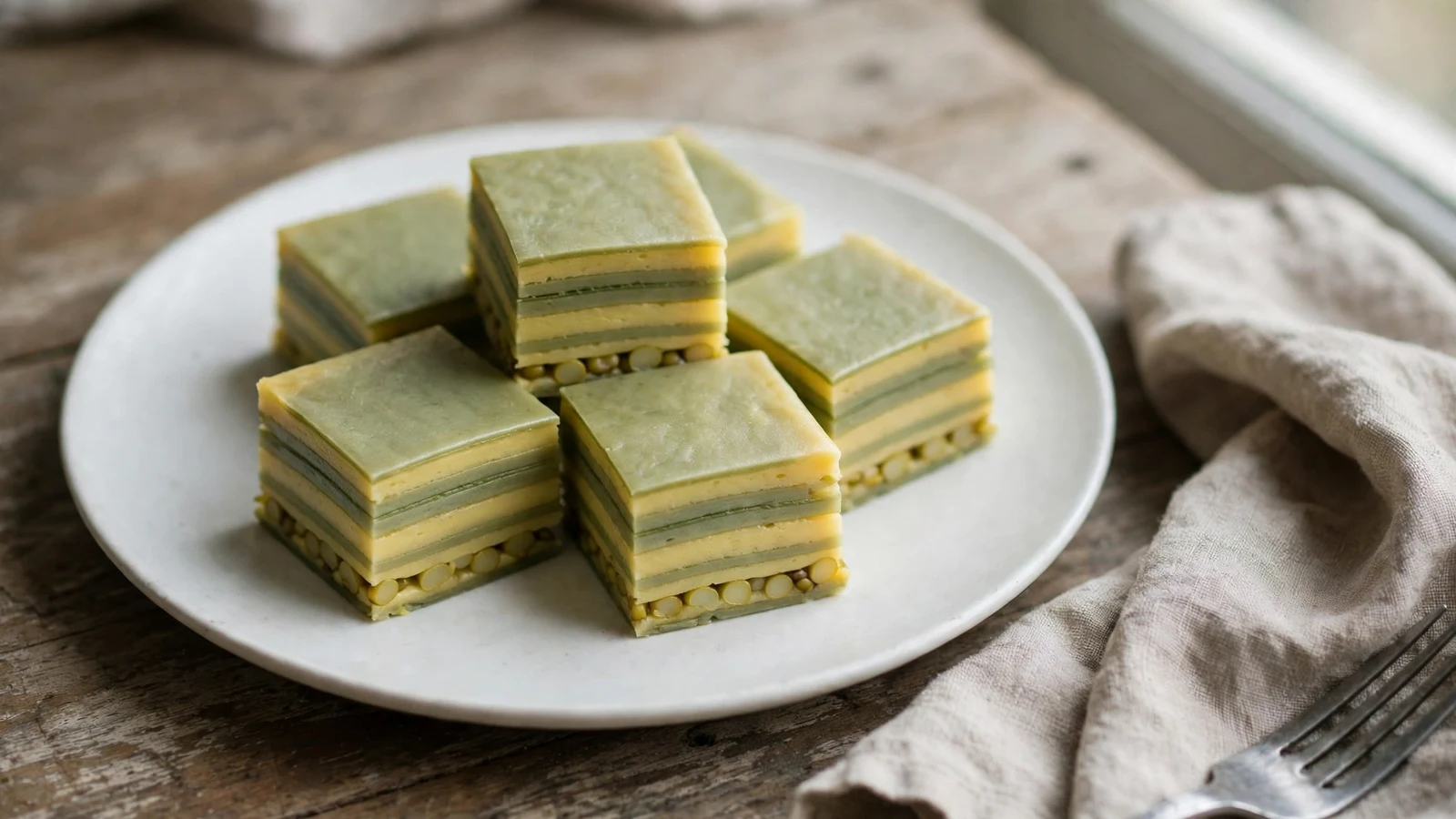
What is banh da lon?
Banh da lon is a traditional steamed layer cake from southern Vietnam. The name means pig skin cake, after the glossy, slightly translucent layers that look a little like pork skin, and the cake has no pork in it at all. Both batters start from the same base of coconut milk, sugar, salt, tapioca starch, and rice flour. The green batter gets its color and grassy, vanilla-like flavor from pandan leaves, and the yellow batter gets its color and nutty flavor from split yellow mung beans. The layers are steamed one at a time in the same pan, so the finished cake peels apart layer by layer and each bite is soft, chewy, and springy. It sits next to Che Ba Mau: Vietnamese Three-Color Dessert and Che Thai: Vietnamese Fruit Cocktail Dessert as one of the Vietnamese sweets on this site. Where che ba mau is a cold glass of layers and che thai is fruit in coconut milk, banh da lon is warm from the steamer, cut into squares, and eaten with the fingers.
Ingredients
For the pandan batter
- 45 grams pandan leaves, about 8 leaves
- 1 cup water (250 ml), for pandan juice
- 3/4 cup coconut milk (180 ml), full-fat
- 1/2 cup granulated sugar (100 g)
- 1/4 teaspoon sea salt
- 1 1/2 cups tapioca starch (200 g)
- 1/3 cup rice flour (45 g)
- 1/2 teaspoon pandan extract
For the mung bean batter
- 1/2 cup split yellow mung beans (120 g), soaked 4 hours or overnight
- 1 cup water (250 ml), to cook the mung beans
- 1 cup coconut milk (250 ml), full-fat
- 1/2 cup granulated sugar (100 g)
- 1/4 teaspoon sea salt
- 1 1/3 cups tapioca starch (170 g)
- 1/4 cup rice flour (35 g)
- 1/4 cup water (60 ml), for blending
How to make it
Cook the mung beans first. Rinse the soaked beans two or three times until the water runs clear, then put them in a small pot with 1 cup of water and bring it to a boil. Turn the heat to low, cover, and simmer for 15 minutes, stirring now and then, until the beans are soft and cooked through. Set them aside to cool to room temperature. The beans need to be fully soft before they go in the blender, or the yellow batter turns out grainy. While the beans cool, make the pandan juice: blend the pandan leaves with 1 cup of water, then pour the mixture through a fine mesh sieve or cheesecloth and press it to get all the green liquid out.
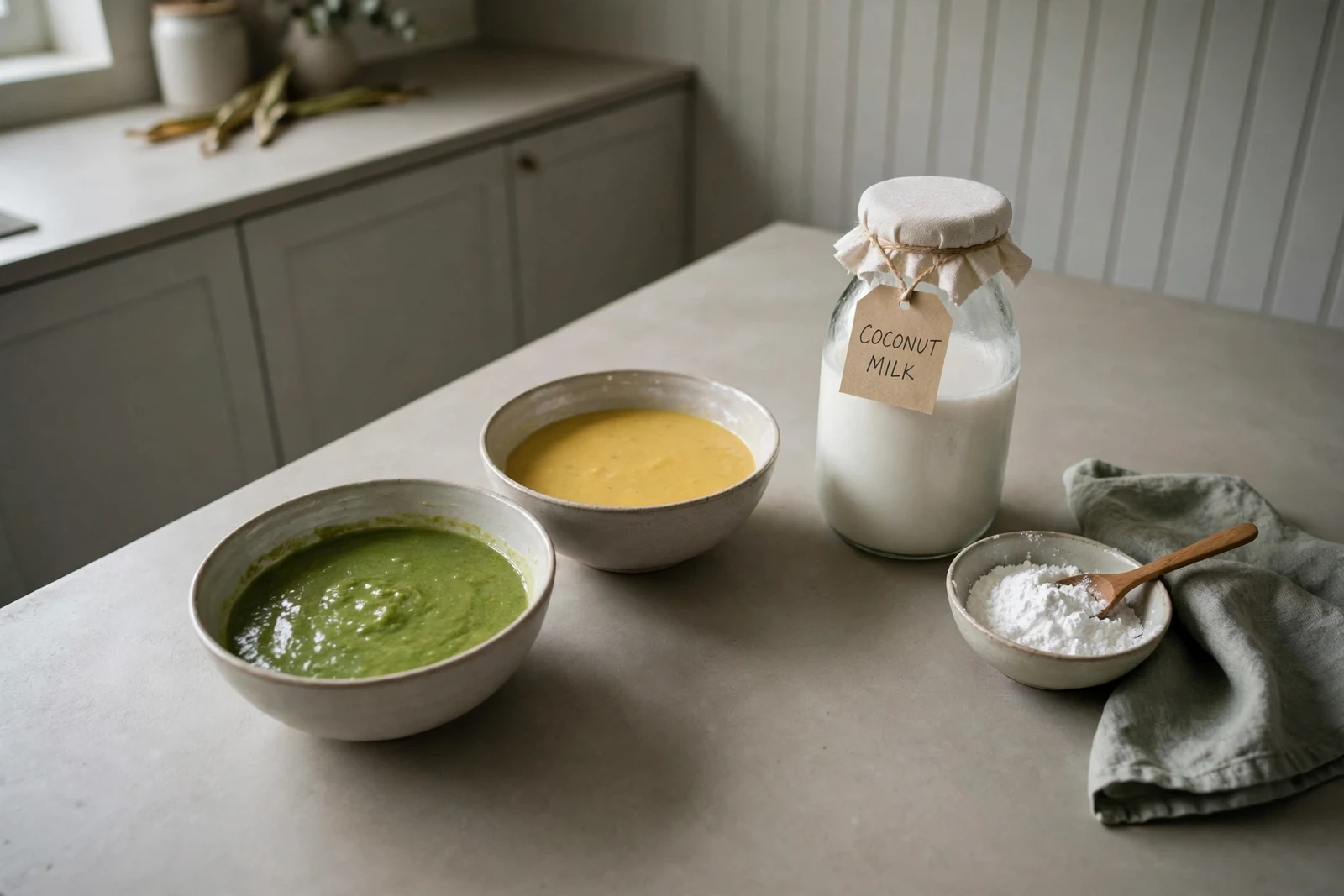
Blend each batter on its own and strain it. For the mung bean batter, put the cooled beans, coconut milk, 1/4 cup water, sugar, salt, tapioca starch, and rice flour in a blender and blend until smooth, then strain it into a bowl. For the pandan batter, put the pandan juice, coconut milk, sugar, salt, tapioca starch, rice flour, and pandan extract in a blender and blend until smooth, then strain it into a second bowl. Straining takes out the small clumps that the blender misses, and those clumps are what make a layer look lumpy instead of smooth. Both batters should pour like thin cream. If either one feels thick, add a spoonful of water at a time until it pours easily.
Set up the steamer next. Bring the water in the steamer to a boil over medium-high heat, then turn it down to low so the steam stays gentle and steady. Lightly grease an 8-inch square pan with a thin layer of oil and steam the empty pan for 2 minutes so it is hot when the first layer goes in. Our guide to how to use a bamboo steamer covers the water level and lid setup that keeps the steam even. A hot pan matters: batter poured into a cold pan spreads unevenly and the first layer comes out thicker on one side.
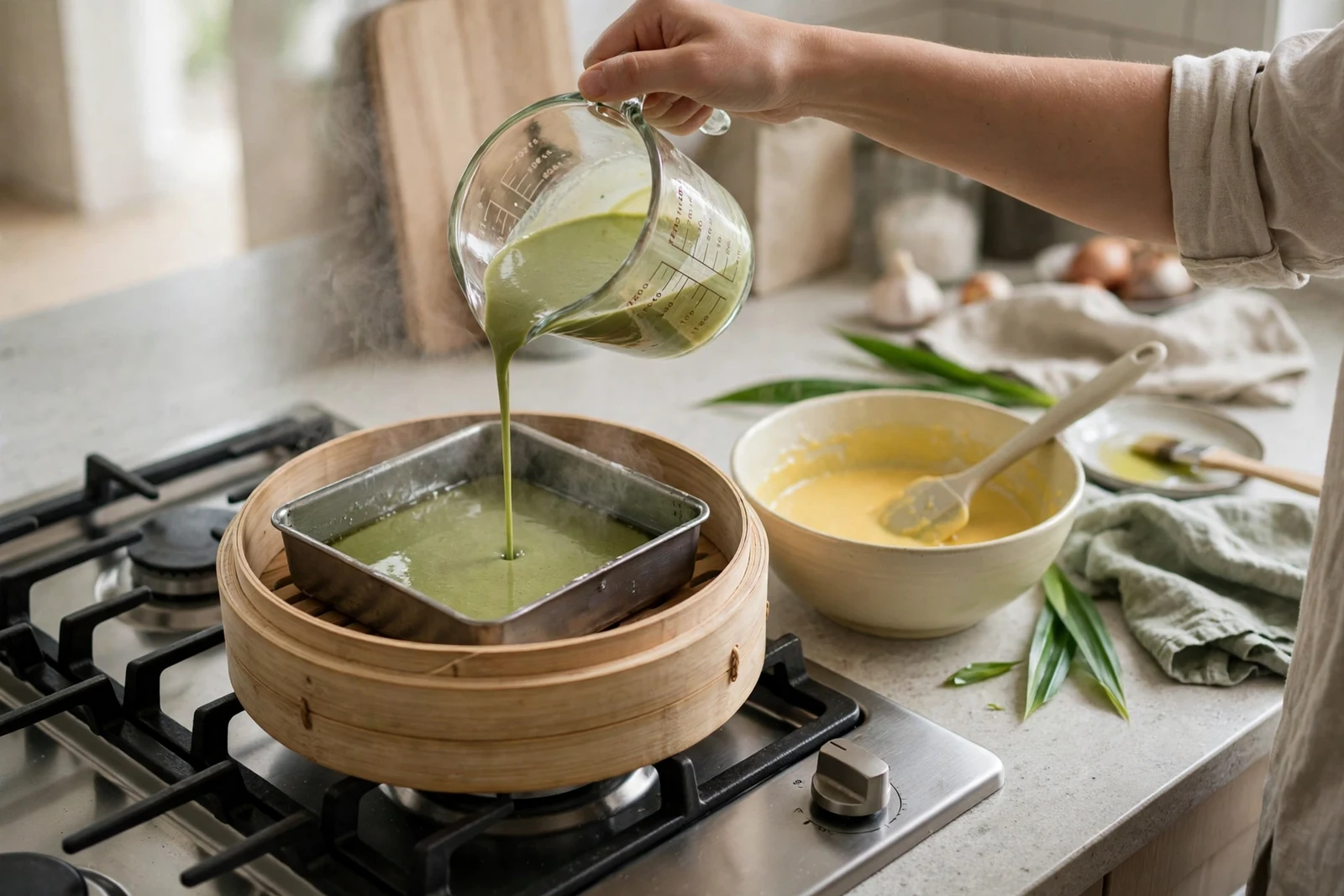
Steam the layers one at a time. Stir the pandan batter first, since the starch sinks to the bottom of the bowl in a minute or two, then pour about 1/2 cup (120 ml) into the hot pan and spread it evenly. Cover and steam for 5 minutes, until the surface turns slightly translucent and feels springy to the touch. Lift the lid away from you and wipe it dry, or wrap it in a clean towel, so condensation does not drip onto the cake. Then stir the mung bean batter, pour the same amount over the pandan layer, and steam for 5 minutes. Keep alternating, starting and ending with pandan, until you have 8 layers, 4 green and 4 yellow. The test for a done layer is simple: touch the surface lightly with the back of a spoon, and if no batter sticks to it, the layer is set and the next one can go on.
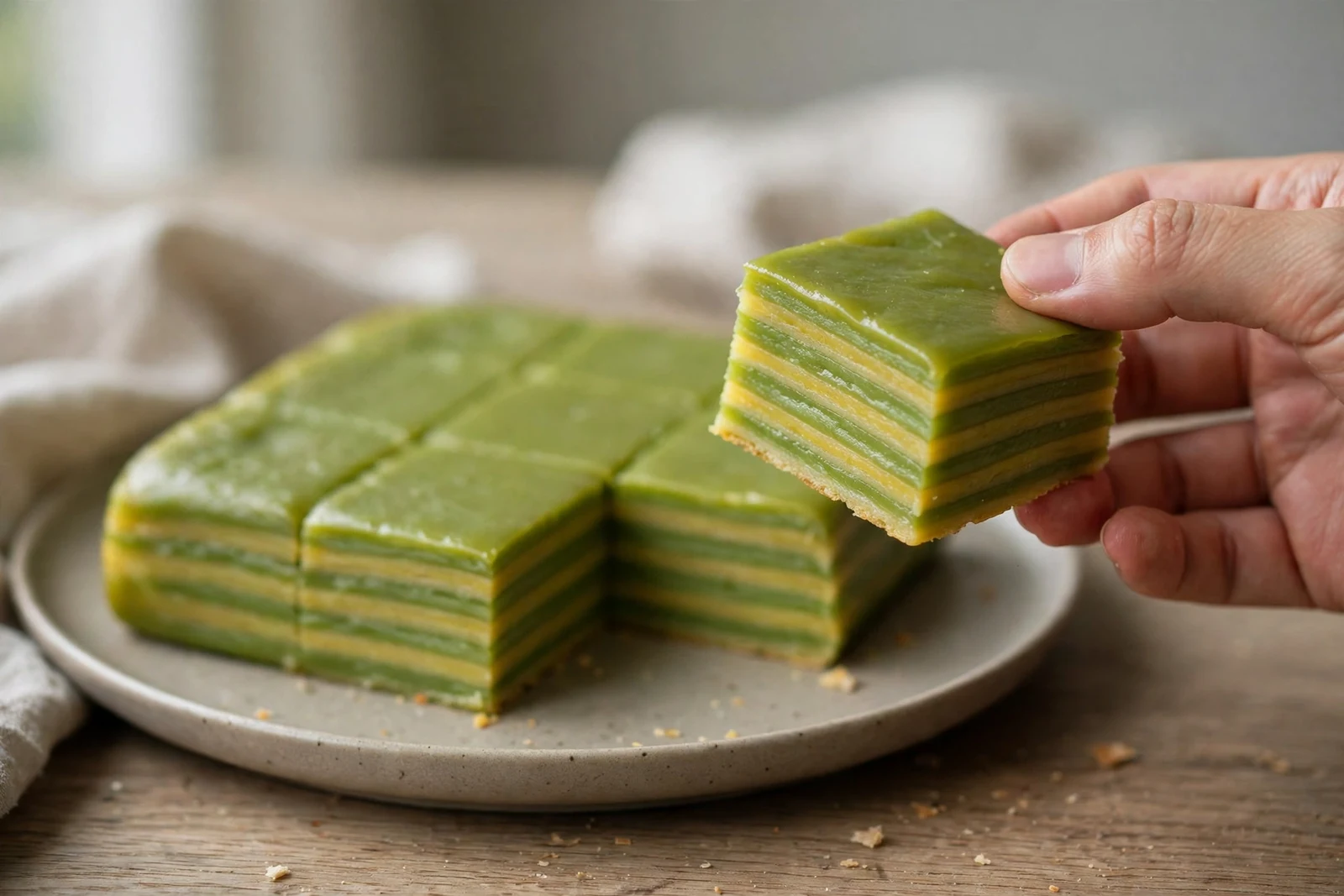
After the last layer, steam the whole cake for 10 more minutes, until the surface is slightly translucent all the way across and the center does not wobble. Take the pan out of the steamer and let the cake cool completely in the pan before you try to take it out. A warm cake is soft and sticky and will tear, and a cool cake firms up and holds its shape. Once it is at room temperature, run a thin knife around the edges and turn the cake out onto a board. Cut it with a knife wrapped in plastic wrap, or a knife lightly oiled, so the blade glides through instead of dragging. Cut the cake into 16 squares. The cake is best the same day. Leftovers keep wrapped in the fridge for up to 4 days and firm up when cold, so warm a slice in the microwave under a damp paper towel for 10 seconds, or steam it briefly, to bring the chew back.
Troubleshooting: Fix My Banh Da Lon
Most banh da lon problems come from the steam, the timing, or the cooling. Pick the problem that matches your cake below for a practical next step.
HERB & LIME · KITCHEN HELP
Fix My Banh Da Lon
Choose what went wrong to see a practical next step.
Possible cause
What to try next
For next time
From Paul's kitchen. Results vary with pan size, steamer heat, and batter thickness, adjust timing to your setup.
Quick reference (also works without JavaScript)
The layers slide apart when I slice it
Cause: The next layer went on after the one below had fully set and dried, so the two never bonded.
Try: Slice what you have and serve it in pieces, it still tastes the same. Next time, pour the next layer while the one below is just set and still slightly tacky, not dry.
Prevent: Steam each layer just until it is set but still slightly soft, then pour the next layer right away.
The cake came out firm and rubbery
Cause: Too much starch for the liquid, or the layers were steamed too long, and both make the cake firm.
Try: Warm a slice in the microwave under a damp paper towel for 10 seconds, or steam it briefly, to soften it back up.
Prevent: Weigh the starches on a kitchen scale and steam each layer for 5 minutes only, no longer.
The surface has bubbles and blisters
Cause: The steam was too hard, and strong rolling steam bubbles the surface and toughens the cake.
Try: Trim off the worst of the blistered top layer if you want a clean look, the layers below are usually fine.
Prevent: Bring the water to a boil, then turn the heat to low so the steam stays gentle and steady for the whole bake.
The green and yellow bled into each other
Cause: The next layer was poured before the one below had set, so the two batters mixed.
Try: There is no way to separate mixed layers, serve it as is, the flavor is unchanged. Note the timing for next time.
Prevent: Wait until each layer turns slightly translucent and no batter sticks to the back of a spoon before pouring the next one.
The slices come out ragged and torn
Cause: The cake was cut while still warm and soft, and a dry knife drags through the sticky layers.
Try: Chill the cake in the fridge for 30 minutes to firm it up, then slice with a knife wrapped in plastic wrap.
Prevent: Let the cake cool completely to room temperature before slicing, and wrap the knife in plastic wrap or oil it lightly.
Banh Da Lon: Vietnamese Layered Pandan Cake
Ingredients
Method
- Rinse the soaked mung beans two or three times until the water runs clear, then put them in a small pot with 1 cup of water and bring to a boil. Turn the heat to low, cover, and simmer for 15 minutes, stirring now and then, until the beans are soft and cooked through. Set aside to cool to room temperature.
- Put the cooled beans, coconut milk, 1/4 cup water, sugar, salt, tapioca starch, and rice flour in a blender and blend until smooth, then strain into a bowl.
- Blend the pandan leaves with 1 cup of water, then pour through a fine mesh sieve or cheesecloth, pressing to get all the green liquid out.
- Put the pandan juice, coconut milk, sugar, salt, tapioca starch, rice flour, and pandan extract in a blender and blend until smooth, then strain into a second bowl.
- Bring the water in the steamer to a boil over medium-high heat, then turn it down to low so the steam stays gentle and steady. Lightly grease an 8-inch square pan with a thin layer of oil and steam the empty pan for 2 minutes.
- Stir the pandan batter, pour about 1/2 cup (120 ml) into the hot pan, and spread it evenly. Cover and steam for 5 minutes, until the surface turns slightly translucent and feels springy to the touch.
- Lift the lid away from you and wipe it dry, or wrap it in a clean towel. Stir the mung bean batter, pour the same amount over the pandan layer, and steam for 5 minutes. Keep alternating, starting and ending with pandan, until you have 8 layers, 4 green and 4 yellow.
- After the last layer, steam the whole cake for 10 more minutes, until the surface is slightly translucent all the way across and the center does not wobble.
- Let the cake cool completely in the pan, then run a thin knife around the edges and turn it out onto a board. Cut with a knife wrapped in plastic wrap, or lightly oiled, into 16 squares. Best the same day.
Notes
More Vietnamese recipes
Four more from the same shelf: Che Chuoi: Vietnamese Banana in Coconut Milk is the warm banana dessert to make when you want coconut milk and something soft; Che Ba Mau: Vietnamese Three-Color Dessert is the cold layered dessert to make when you want color in a glass; Banh Flan: Vietnamese Caramel Flan is the steamed custard to make when you want something smooth and quiet; and Mango Sticky Rice is the coconut rice dessert to make when mango is in season. For the mung bean side of this cake, Xoi Xeo: Vietnamese Sticky Rice with Mung Beans uses the same beans in a savory sticky rice.
From the garden
The pandan in this cake comes from a pot by the back door, and fresh leaves make a real difference here: the juice comes out green and grassy instead of flat, and a little extract goes further when the leaves are fresh. Our guide to growing pandan in pots covers how to start a plant and when to cut the leaves.
From Paul’s kitchen.