
Adobong pusit is the adobo Paul makes when squid is fresh at the market and dinner needs to be on the table in half an hour. It follows the same vinegar and soy sauce base as our chicken adobo, but the cooking could not be more different. Chicken adobo simmers for the better part of an hour. Squid gets minutes. The sauce is dark from the soy sauce and, if you want it, darker still from the squid ink, and it tastes sour first, salty second, with garlic all the way through.
The whole dish turns on one number: the squid spends about 5 minutes over heat, start to finish. A minute past that and it goes from tender to rubbery, and no amount of sauce fixes it. Paul uses 1/2 cup of vinegar to 1/4 cup of soy sauce, simmers the squid for 2 to 3 minutes once the sauce boils, and serves it with steamed rice to soak up the sauce.
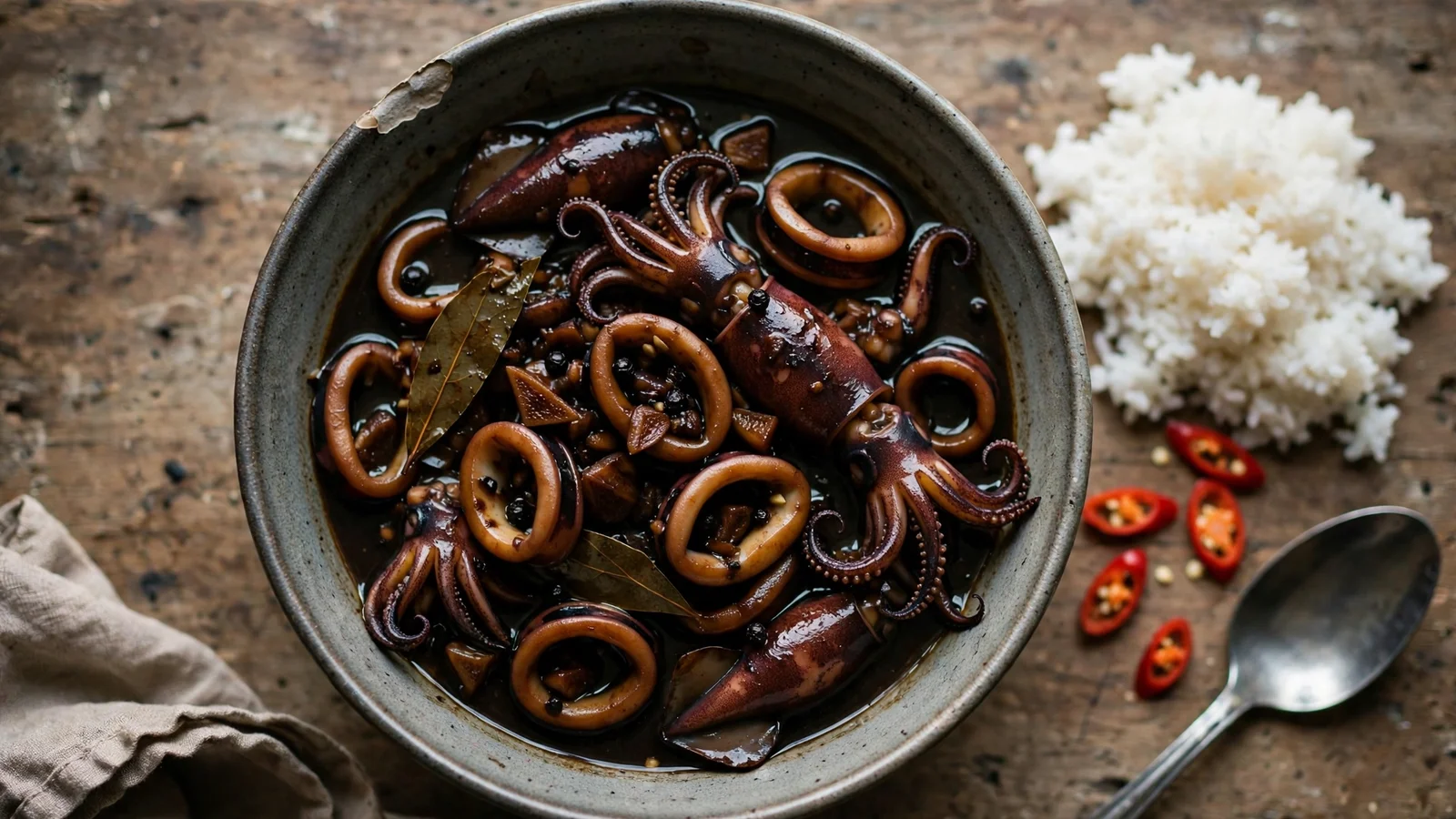
What is adobong pusit?
Adobong pusit is Filipino squid adobo. Pusit means squid, and adobo is the Filipino method of cooking meat or seafood in vinegar, soy sauce, garlic, bay leaves, and black peppercorns. The squid is cleaned, cut into rings, and simmered briefly in that sauce until just tender. Many cooks stir in the ink from the squid sacs, which turns the sauce black and adds a briny depth that soy sauce alone cannot give.
Expect a dish that eats bold and fast. The sauce is sharp and savory, the squid is soft with a slight bite, and the rice underneath does real work soaking up the liquid. It is a weeknight dish in Filipino homes, usually cooked in one pan and served family style with a big pot of rice. If you have never cooked squid before, this is a forgiving place to start: the cleaning takes longer than the cooking, and the pot tells you when the squid is done because the rings turn opaque and curl.
Ingredients
For the squid:
- 1 1/2 pounds squid, cleaned, bodies cut into 1/2-inch rings, tentacles kept whole
- Ink from 2 squid ink sacs, strained, optional
For the adobo sauce:
- 2 tablespoons vegetable oil
- 6 garlic cloves, smashed and chopped
- 1 small onion, sliced thin
- 1/2 cup cane vinegar
- 1/4 cup soy sauce
- 1 tablespoon sugar
- 2 bay leaves
- 1 teaspoon whole black peppercorns
- 2 Thai chilies, sliced, optional
To serve:
- Steamed rice
- Sliced scallions
Steps
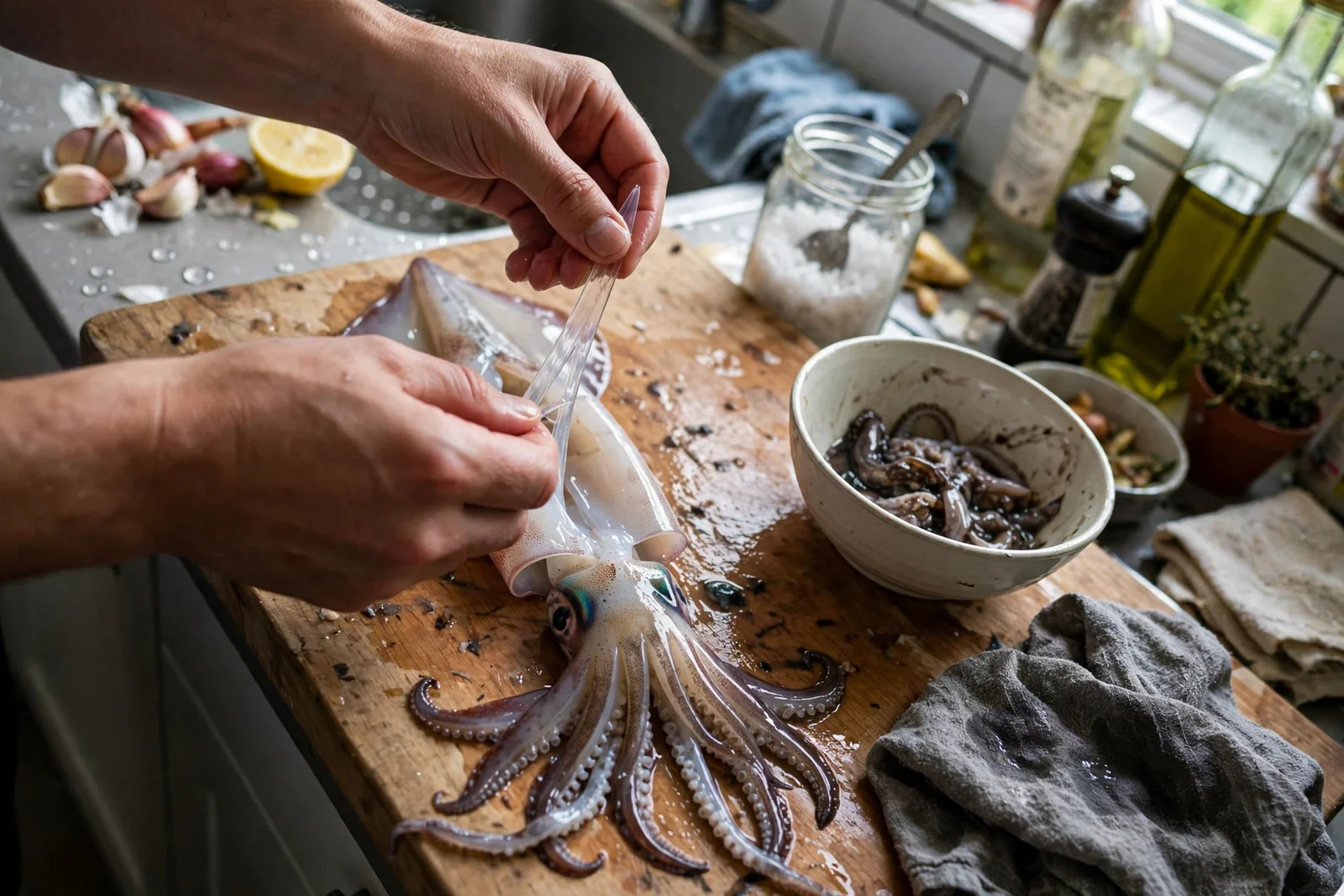
- Clean the squid if it is not already cleaned. Hold the body in one hand and pull the head and tentacles away from the body in one motion. Set the ink sacs aside if you want the ink. Cut the tentacles off just below the eyes and squeeze out the small hard beak at the center. Pull the clear quill out of the body, peel off the spotty skin, and rinse the body and tentacles under cold water. Pat everything dry with a towel and cut the bodies into 1/2-inch rings.
- Heat the oil in a wide pan over medium heat. Add the garlic and onion and cook for 1 minute, until the garlic smells fragrant and the onion starts to soften. Do not let the garlic brown.
- Add the squid rings and tentacles and toss for 1 minute. The edges of the rings will turn opaque and start to curl. That is enough heat for now.
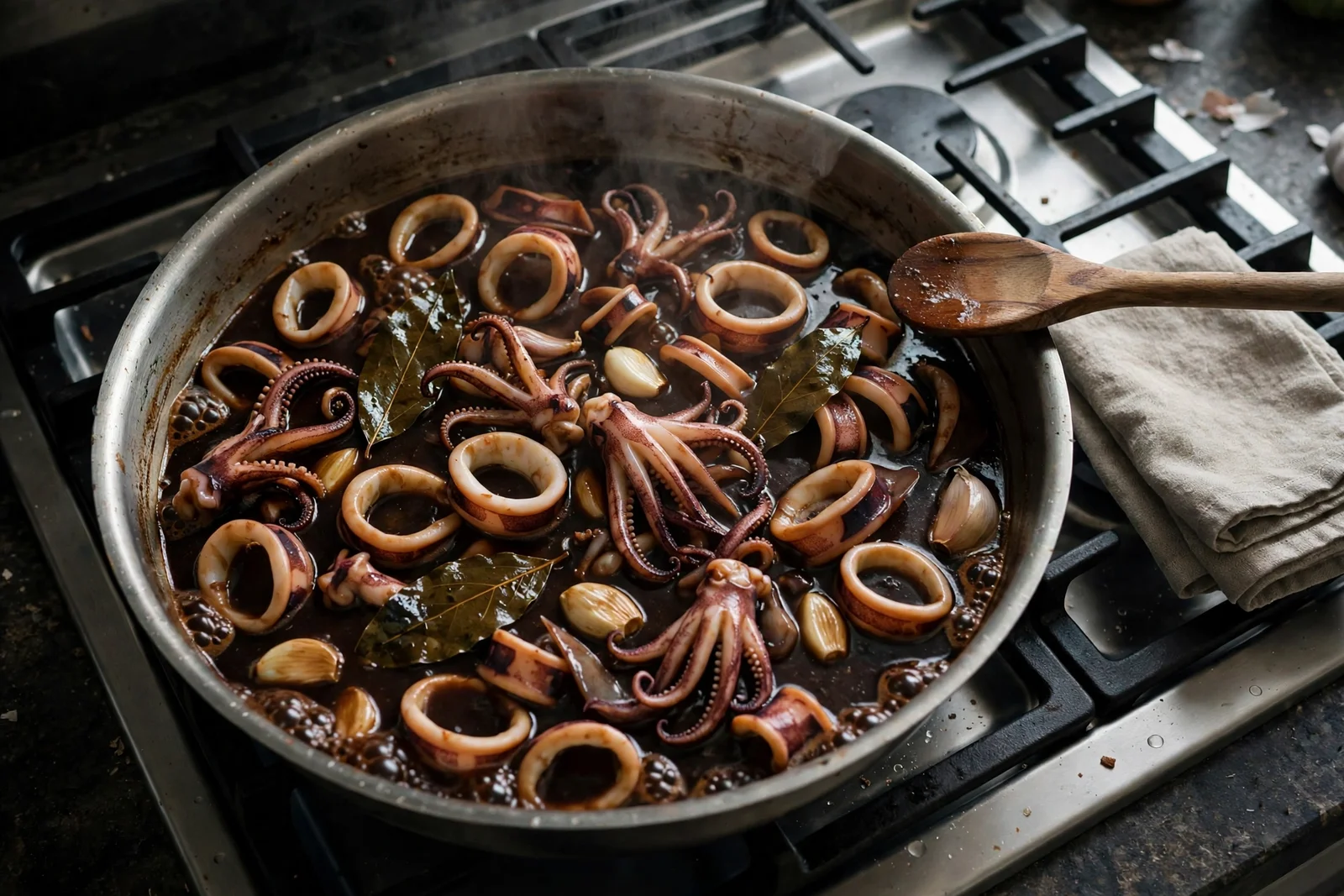
- Pour in the vinegar and soy sauce, then add the sugar, bay leaves, peppercorns, and chilies. Bring the sauce to a boil and let it boil for 1 minute without stirring. Stirring the vinegar before it boils keeps its raw, sharp edge in the sauce.
- Stir once, then add the strained ink if you are using it. Simmer for 2 to 3 minutes, until the squid is just tender and the sauce has thickened enough to coat the rings. The squid should be opaque all the way through and still soft when you press a ring with a spoon.
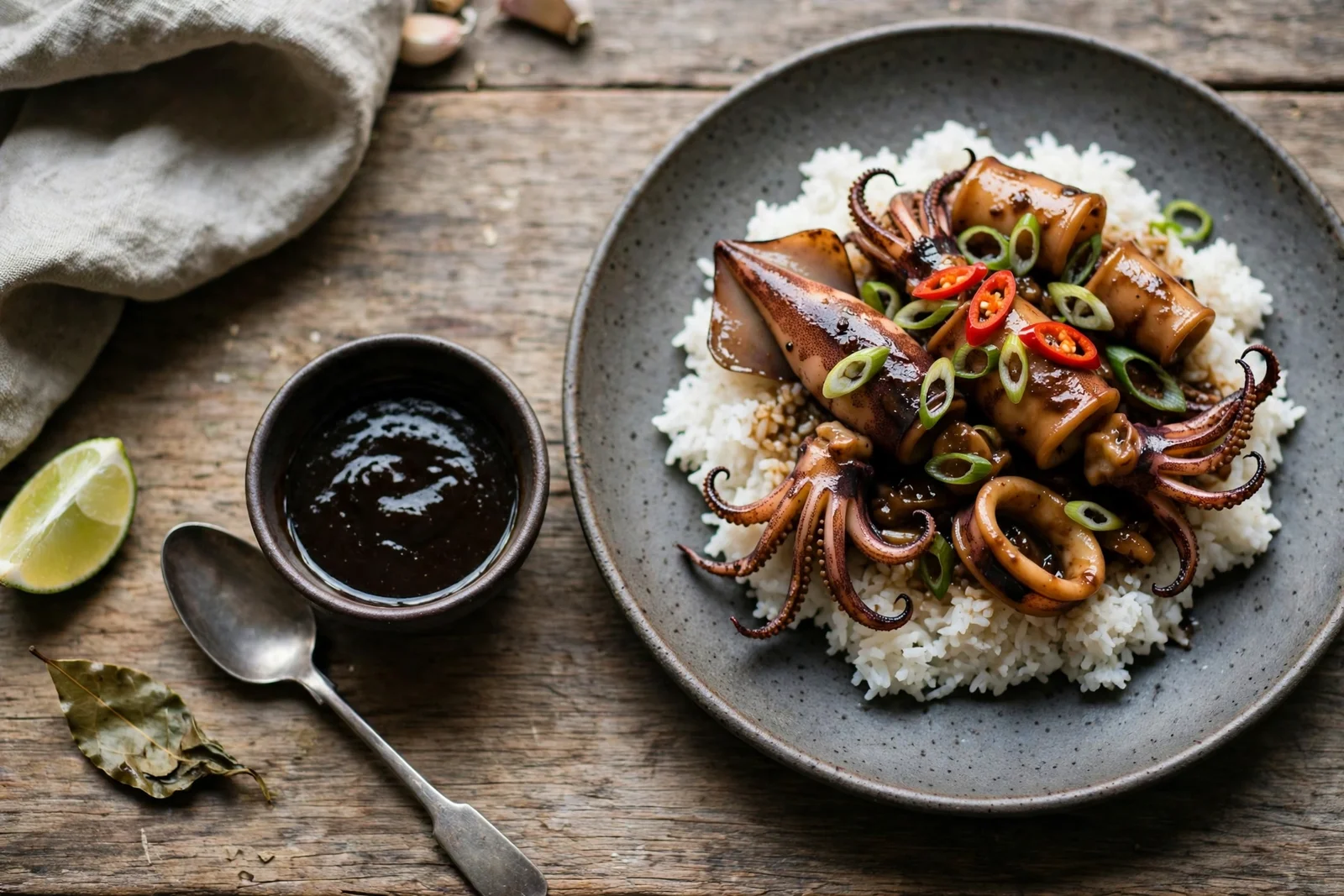
- Taste the sauce. If it is too sharp, add a pinch more sugar. If it is too salty, add a splash of water. If the sauce is thin, lift the squid out with tongs, boil the sauce for 1 to 2 minutes until it thickens, then return the squid to the pan. Serve at once over steamed rice, scattered with scallions.
The 5-minute squid rule
Squid has two tender states and a long rubbery stretch between them. Cooked for 2 to 3 minutes it is tender. Cooked for 45 minutes or more it turns tender again. Everything in between is chewy, and adobong pusit lives in the short window. Paul counts from the moment the squid hits the hot pan: about 1 minute of tossing, then 2 to 3 minutes of simmering once the sauce boils. That is 5 minutes of heat, and the squid comes off the stove while it is still soft.
The vinegar rule matters just as much. Pour the vinegar in, bring it to a boil, and do not stir for the first minute. The sharp smell cooks off in that minute, and the sauce turns mellow. Stir too early and the raw vinegar edge stays in the finished dish. The same idea shows up in chicken adobo, where the vinegar also gets a full minute of undisturbed boiling before anyone touches the pot.
The ink goes in last, and only if you strain it. Ink squeezed straight from a torn sac carries bits of membrane that turn gritty in the sauce. Paul strains the ink through a fine sieve into a small bowl, then stirs in about 2 tablespoons, which is enough to turn the sauce black without making it taste muddy. The rest goes in the bin. If you skip the ink entirely, the dish is still adobong pusit, just a lighter brown instead of black.
Tips and variations
Buy squid on the small side when you can. Small squid are sweeter and stay tender more easily, while large squid turn rubbery faster and can taste bland. If the squid at the market is already cleaned, the whole dish takes about 15 minutes. Frozen squid works too, but thaw it fully in the fridge and pat it dry, or the extra water thins the sauce.
For a hotter version, keep the chili seeds in and add one more chili. For a milder one, leave the chilies out entirely. Some cooks add a diced tomato with the onion for a rounder sauce; if you do, cook it for 2 minutes before the squid goes in so it softens fully.
Leftovers keep in the fridge for 1 day in a sealed container, but reheat them gently in a pan over low heat for 2 to 3 minutes. The microwave and a hard boil both push the squid past its tender window. The sauce keeps longer than the squid, so if you have sauce left over, save it for rice the next day.
Troubleshooting: Fix My Adobong Pusit
If your adobong pusit came out rubbery, too sour, bitter, or swimming in thin sauce, the cause is usually in the timing, the vinegar, or the cleaning. The section below covers the most common problems and how to fix each one.
HERB & LIME · KITCHEN HELP Choose what went wrong to see a practical next step. From Paul's kitchen. Results vary with squid size, vinegar brand, and stove heat, adjust timing to your setup. Quick reference (also works without JavaScript) Cause: Squid cooked past its short tender window turns chewy, and adobo squid only stays tender for about 2 to 3 minutes of simmering. Try: Take the squid off the heat at once and serve it as is, since extra cooking only makes it tougher. Prevent: Count about 5 minutes of heat in total, around 1 minute of tossing plus 2 to 3 minutes of simmering, and pull the squid when the rings turn opaque and curl. Cause: Vinegar stirred into the pot before it boils keeps its raw, sharp edge in the finished sauce. Try: Simmer the sauce uncovered for a few more minutes and add a pinch of sugar, then taste again. Prevent: After pouring in the vinegar, let it boil for 1 minute without stirring so the sharp smell cooks off before you stir. Cause: Leftover innards, a torn ink sac, or a beak or quill left in the squid all add bitterness. Try: Balance the finished dish with a pinch of sugar and serve it with plenty of rice, since the bitterness cannot be cooked out. Prevent: Clean the squid fully, pull out the quill, squeeze out the beak, rinse away the innards, and save the ink sacs separately instead of tearing them into the pot. Cause: Wet or partly frozen squid releases water into the pan, and a sauce that never reduces stays thin. Try: Lift the squid out with tongs, boil the sauce for 1 to 2 minutes until it thickens, then return the squid to the pan. Prevent: Thaw frozen squid fully in the fridge and pat the squid dry with a towel before it hits the pan. Cause: Ink squeezed straight from a torn sac carries bits of membrane, and too much ink overwhelms the sauce. Try: Strain the sauce through a fine sieve into a clean pan if grit is the problem, and lighten an over-inked sauce with a splash of water. Prevent: Strain the ink through a fine sieve before adding it, use about 2 tablespoons, and stir it in near the end of cooking.Fix My Adobong Pusit
Possible cause
What to try next
For next time
The squid turned rubbery
The sauce tastes harsh and too sour
The dish tastes bitter
The sauce is thin and watery
The ink made the sauce gritty or muddy
Adobong Pusit: Filipino Squid Adobo
Ingredients
Method
- Clean the squid if it is not already cleaned. Hold the body in one hand and pull the head and tentacles away from the body in one motion. Set the ink sacs aside if you want the ink. Cut the tentacles off just below the eyes and squeeze out the small hard beak at the center. Pull the clear quill out of the body, peel off the spotty skin, and rinse the body and tentacles under cold water. Pat everything dry with a towel and cut the bodies into 1/2-inch rings.
- Heat the oil in a wide pan over medium heat. Add the garlic and onion and cook for 1 minute, until the garlic smells fragrant and the onion starts to soften. Do not let the garlic brown.
- Add the squid rings and tentacles and toss for 1 minute. The edges of the rings will turn opaque and start to curl.
- Pour in the vinegar and soy sauce, then add the sugar, bay leaves, peppercorns, and chilies. Bring the sauce to a boil and let it boil for 1 minute without stirring.
- Stir once, then add the strained ink if you are using it. Simmer for 2 to 3 minutes, until the squid is just tender and the sauce has thickened enough to coat the rings.
- Taste the sauce and adjust: a pinch more sugar if too sharp, a splash of water if too salty. If the sauce is thin, lift the squid out with tongs, boil the sauce for 1 to 2 minutes until it thickens, then return the squid to the pan. Serve at once over steamed rice, scattered with scallions.