
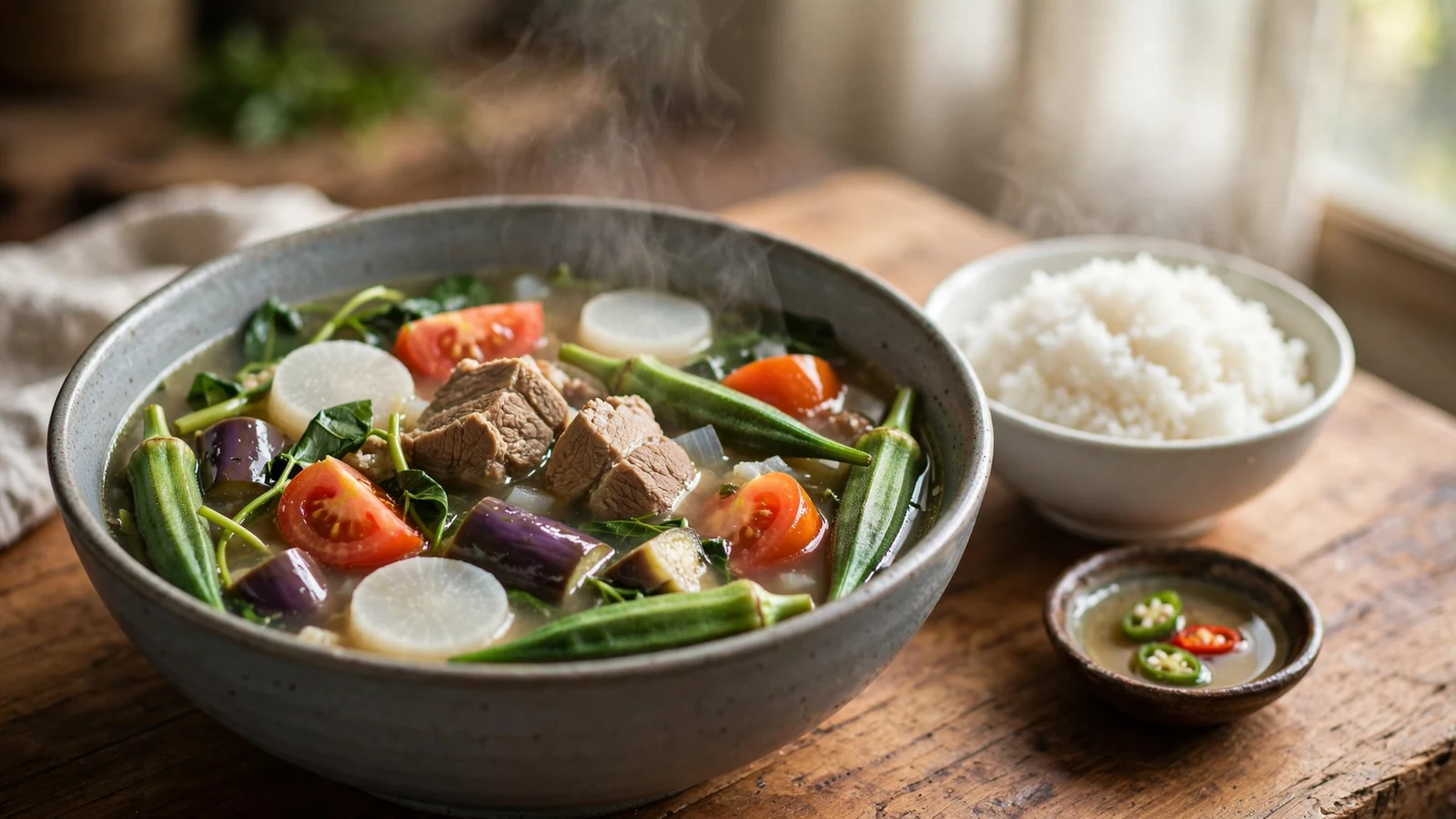
A Sour Soup Built Around Tamarind and Tomatoes
Sinigang is the Filipino sour soup that shows up when a meal needs something bright to cut through rich food. The classic pork version, sinigang na baboy, simmers pork in water with tomatoes and onion until the broth turns savory, then tamarind brings the clean, mouthwatering sourness the soup is known for. Daikon, eggplant, okra, long beans, and water spinach go in near the end, so each vegetable keeps its own texture instead of melting into the pot.
The soup is always served with rice. A spoonful of broth over plain rice, a piece of pork, a tomato that has gone soft and sweet-sour in the soup: that is the bite the whole pot is built around. It sits naturally next to the other Filipino dishes on this site, like Chicken Adobo: The Filipino Soy-Vinegar Classic, but where adobo is dark, salty, and concentrated, sinigang is clear, hot, and sharply sour.
Two choices shape the result more than anything else: what you use to sour the broth, and the order you add the vegetables. Get the souring agent and the timing right and the soup tastes layered. Add everything at once and you get flat sourness and mushy greens.
Choosing Your Souring Agent
Tamarind is the classic choice, but it comes in several forms, and Filipino home cooks also reach for a few other souring fruits. Use this table for a pot built on 8 cups of water.
| Souring agent | Amount for 8 cups water | Character | Best for |
|---|---|---|---|
| Tamarind concentrate or paste | 1/2 cup (120 ml), plus more to taste | Round, deep sourness with a little fruitiness | The reliable everyday choice; easy to adjust spoon by spoon |
| Fresh tamarind pulp | About 1 cup pods, simmered and pressed through a sieve | Brightest, cleanest sour flavor | When fresh or frozen whole tamarind is easy to find |
| Sinigang mix powder | 1 packet (about 1.4 oz / 40 g) | Strong, salty-sour, very consistent | The fastest weeknight version; check salt before adding fish sauce |
| Calamansi juice | 1/4 cup (60 ml), added off the heat | Fresh citrus sourness, aromatic | Finishing a lighter seafood sinigang; stir in at the end so it stays fresh |
| Green mango or kamias (bilimbi) | 1 cup chopped, simmered with the broth | Sharp, green, fruity sourness | Regional variations; simmer from the start so the fruit softens |
If you buy one form to keep in the pantry, make it tamarind concentrate. It gives the deepest flavor for the least work, and you can add it gradually until the broth tastes right. Powdered mix is a fair shortcut on a busy night, just know it brings its own salt and a flatter sour note. Fresh tamarind is worth the small extra step when you can get it: simmer the pods until soft, press the pulp through a sieve, and you get the brightest broth of the three. The same taste-and-adjust habit used for the vinegars in A Home Cook's Guide to Asian Vinegars applies here — sour first, then salt.
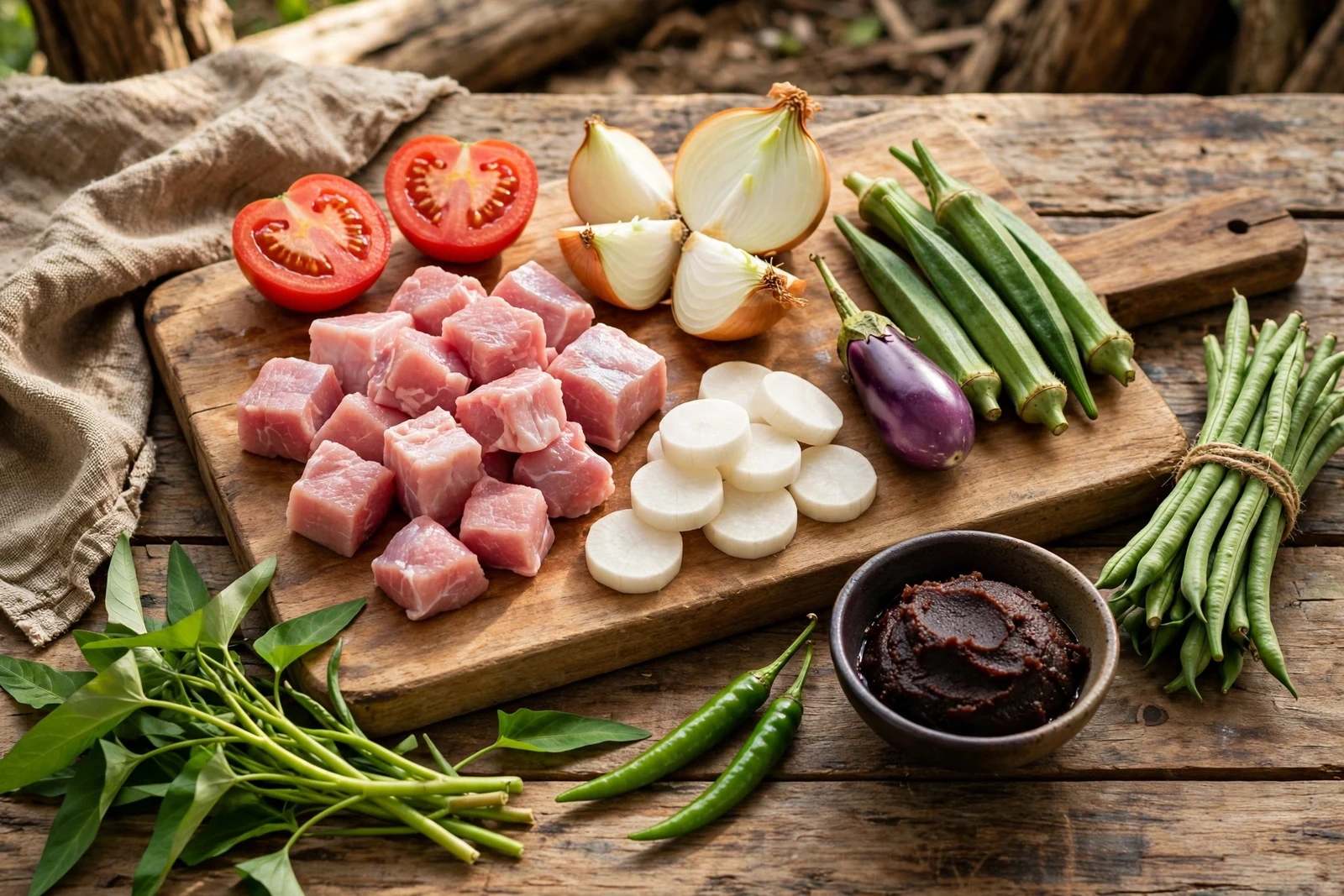
Ingredients
- 1 1/2 lb (680 g) pork shoulder, pork ribs, or a mix, cut into 1 1/2- to 2-inch pieces
- 8 cups (1.9 L) water
- 1 medium yellow onion (about 6 oz / 170 g), cut into wedges
- 3 medium tomatoes (about 12 oz / 340 g), quartered
- 1/2 cup (120 ml) tamarind concentrate or paste, plus more to taste
- 2 tablespoons fish sauce, plus more to taste
- 1 teaspoon kosher salt, plus more as needed
- 1 medium daikon radish (labanos, about 8 oz / 225 g), peeled and cut into 1/2-inch rounds
- 6 oz (170 g) long beans (sitaw) or green beans, cut into 2-inch pieces
- 1 small Japanese eggplant (about 6 oz / 170 g), cut into 1-inch chunks
- 6 whole okra pods, stems trimmed
- 2 cups (about 2 oz / 60 g) water spinach (kangkong) leaves and tender stems, or baby spinach
- 2 to 3 long green finger chilies (siling haba), optional
- Cooked rice, for serving
Prep: 20 minutes. Cook: 45 minutes. Total: 65 minutes. Serves 4 as a soup course with rice, or 2 to 3 as the main dish.
How to Make It, Step by Step
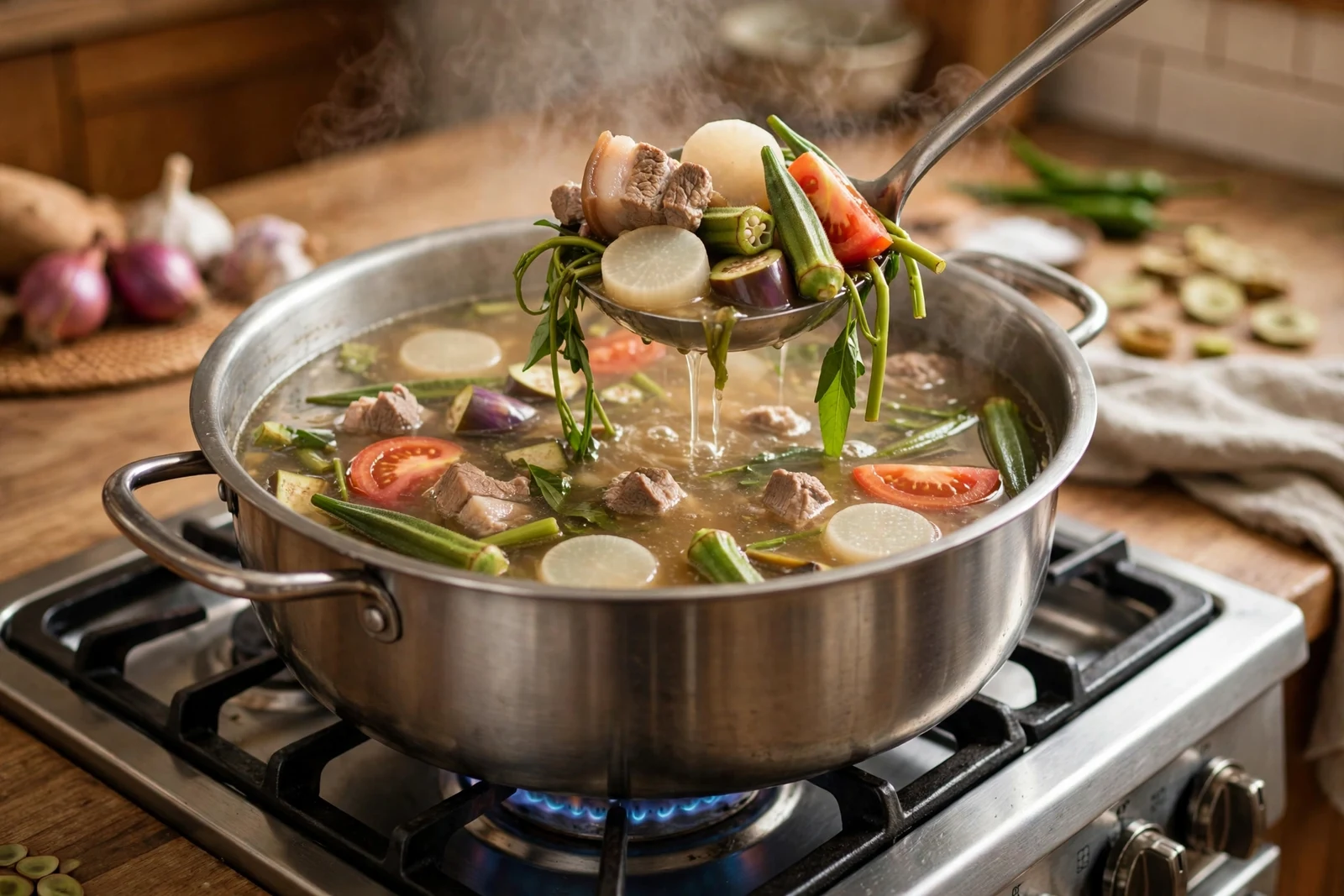
1. Start the pork and aromatics. Put the pork and water in a large pot and bring to a boil over medium-high heat. Skim off the foam that rises in the first few minutes. Add the onion and tomatoes, lower the heat to a steady simmer, and cook for 30 to 35 minutes, until the pork is tender and the tomatoes have softened into the broth. Lightly mash a few tomato pieces against the side of the pot to help them melt in.
2. Sour the broth. Stir in the tamarind concentrate and the salt. Simmer for 2 minutes, then taste. The broth should be clearly sour before any vegetables go in — it will soften a little as they cook. Add more tamarind a tablespoon at a time if it tastes flat.
3. Add the sturdy vegetables. Add the daikon rounds and finger chilies if using. Simmer for 4 to 5 minutes, until the daikon turns slightly translucent at the edges.
4. Add the quick-cooking vegetables. Add the long beans, eggplant, and okra. Simmer for 3 to 4 minutes, until the beans are bright green and just tender and the eggplant is soft but still holding its shape.
5. Season with fish sauce. Stir in the fish sauce and taste again. You want a balance: sour first, then salty and savory. Add more fish sauce a teaspoon at a time if the soup tastes thin. For how fish sauce and soy sauce behave differently as seasonings, see Fish Sauce vs Soy Sauce: When to Reach for Which.
6. Wilt the greens last. Add the water spinach and stir just until it wilts, about 30 seconds. Take the pot off the heat right away so the greens stay green.
7. Serve. Ladle the soup into bowls with a piece of pork and a mix of vegetables in each. Serve with hot rice on the side and extra fish sauce at the table for anyone who wants a saltier bite. The separate, fluffy grains from How to Cook Perfect Jasmine Rice Every Time hold up well under the hot broth.
Tips for a Bright, Balanced Broth
- Sour the broth before the vegetables go in. Vegetables release water as they cook, so seasoning at the end often means chasing the flavor. Build the sourness early, then finish with fish sauce.
- Taste in order: sour, then salt. If the soup tastes dull, it usually needs more tamarind, not more salt. Add sourness first, let it simmer a minute, then adjust the fish sauce.
- Keep the simmer steady, not rolling. A hard boil clouds the broth and toughens the pork. A gentle simmer keeps the soup clear and the meat tender.
- Add greens at the very end. Water spinach and spinach need seconds, not minutes. If they sit in the hot broth too long they go dark and slimy.
- Skim the first foam. Those first few minutes of skimming are what keep a pork broth tasting clean instead of heavy.
Variations
- Sinigang na hipon (shrimp): Build the same tomato and onion broth, sour it, add the vegetables, and drop whole shrimp in for the last 2 to 3 minutes, just until pink. Skip the long pork simmer; the broth is lighter and the sour note stays front and center.
- Salmon sinigang: Use salmon belly or head pieces in place of pork. Simmer the broth and vegetables first, then add the fish for 5 to 6 minutes so it stays silky. Calamansi juice stirred in off the heat suits this version well.
- Chicken sinigang: Swap in bone-in chicken pieces and simmer about 25 minutes before souring the broth. The result is milder than pork, so taste and add tamarind a little more boldly.
- With taro (gabi): Add 1 cup of peeled, cubed taro with the daikon. It softens into the broth and gives the soup a slightly thicker body while the sourness stays bright.
What to Serve With It
Sinigang is rarely the only dish on the table. It is the hot, sour counterpoint to something rich or fried — a piece of grilled pork, a plate of fried fish, or the crisp rolls from Lumpia: Filipino Spring Rolls. Plain rice is non-negotiable, and leftover rice turned into Sinangag: Filipino Garlic Fried Rice the next morning is a natural partner for reheated soup. If you enjoy sharply sour soups in general, the Chinese version in Hot and Sour Soup gets its bite from vinegar and white pepper instead of tamarind — a useful contrast in how two kitchens build the same appetite for sour heat. Leftovers keep for up to 3 days in the refrigerator; reheat gently and add a fresh handful of greens when you serve, since the first batch will have darkened in the broth.
Sinigang: Filipino Sour Soup
Ingredients
Method
- Start the pork and aromatics: put the pork and water in a large pot and bring to a boil over medium-high heat. Skim off the foam that rises in the first few minutes. Add the onion and tomatoes, lower the heat to a steady simmer, and cook for 30 to 35 minutes, until the pork is tender and the tomatoes have softened into the broth. Lightly mash a few tomato pieces against the side of the pot to help them melt in.
- Sour the broth: stir in the tamarind concentrate and the salt. Simmer for 2 minutes, then taste. The broth should be clearly sour before any vegetables go in. Add more tamarind a tablespoon at a time if it tastes flat.
- Add the sturdy vegetables: add the daikon rounds and finger chilies if using. Simmer for 4 to 5 minutes, until the daikon turns slightly translucent at the edges.
- Add the quick-cooking vegetables: add the long beans, eggplant, and okra. Simmer for 3 to 4 minutes, until the beans are bright green and just tender and the eggplant is soft but still holding its shape.
- Season with fish sauce: stir in the fish sauce and taste again. You want sour first, then salty and savory. Add more fish sauce a teaspoon at a time if the soup tastes thin.
- Wilt the greens last: add the water spinach and stir just until it wilts, about 30 seconds. Take the pot off the heat right away so the greens stay green.
- Serve: ladle the soup into bowls with a piece of pork and a mix of vegetables in each. Serve with hot rice on the side and extra fish sauce at the table.