
Lumpiang togue is the spring roll I make when I want crunch first and everything else second. The filling is mostly mung bean sprouts, with julienned carrots, green beans, a little ground pork, and chopped shrimp, all wrapped in a thin wheat wrapper and fried until the shell shatters. The dip is sharp: cane vinegar with garlic, onion, and chilies, and it cuts through the fry oil in the best way.
The trick is not in the frying. It is in what happens before the wrapper comes out. The sprouts get 30 to 40 seconds in the wok, no more, and the filling drains for a full 20 to 30 minutes before anyone rolls. Skip the drain and the rolls steam themselves soft from the inside, no matter how hot your oil is. Get the drain right and the rolls stay crisp long after they leave the pan.
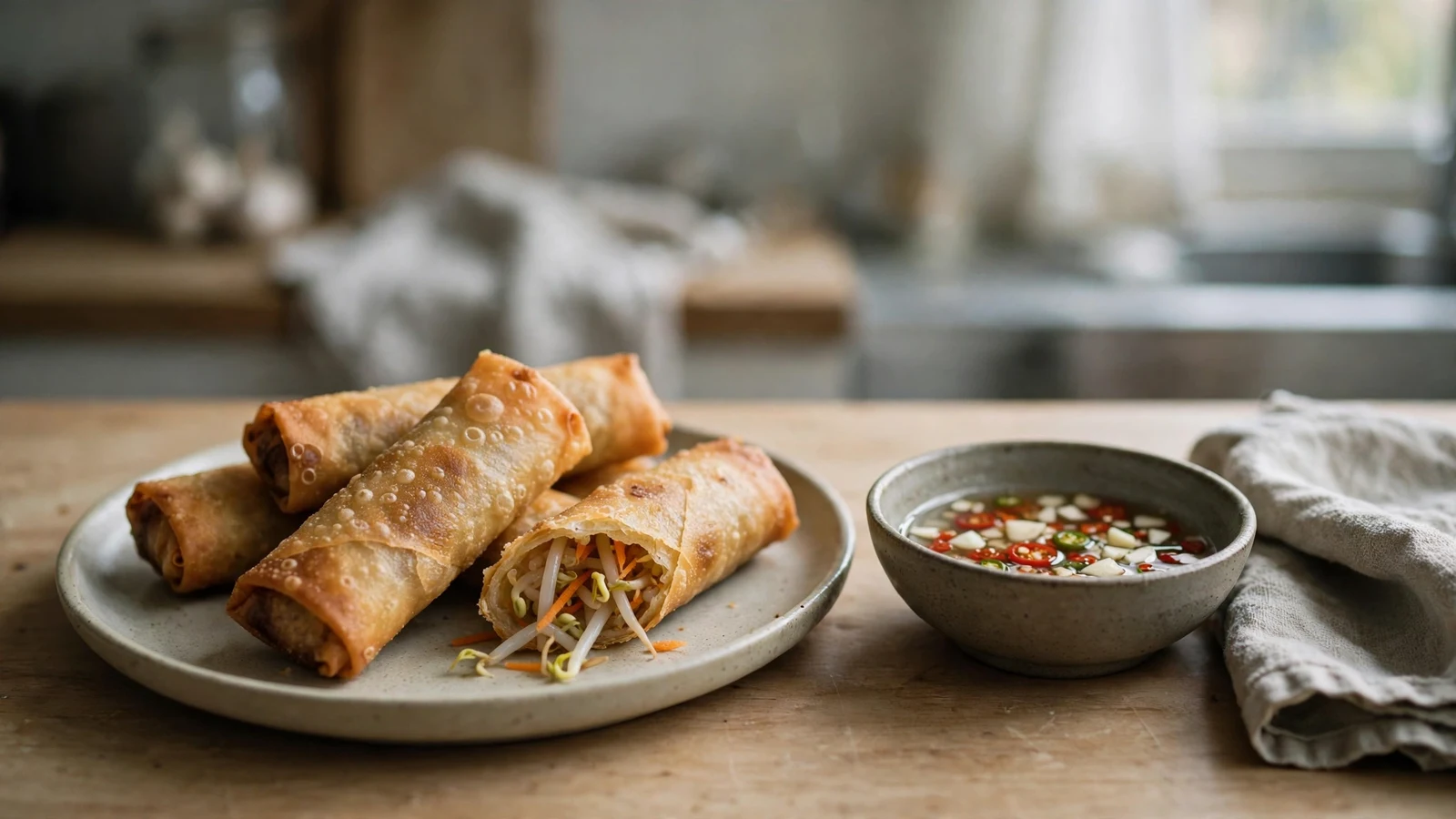
What is lumpiang togue?
Lumpiang togue is a Filipino fried spring roll built around togue, mung bean sprouts. Togue is the main filling, not a garnish: a batch starts with 4 cups of sprouts and only half a pound of pork. Carrots, green beans, and sometimes jicama or dried shrimp join the mix, and the rolls are fried in thin wheat wrappers until golden. It is also called lumpiang gulay, and in Malabon it goes by sumpia.
In the Philippines it shows up as a snack, a party appetizer, and a side with lugaw, the rice porridge Filipinos eat the way other places eat soup. My arroz caldo is the chicken version of that porridge, and it is the pairing I reach for on a cold night. The roll itself is light: mostly vegetables, a little meat, and a wrapper thin enough to turn crisp and blistered in hot oil. Compared with lumpia Shanghai, which is all pork and built to be dense and meaty, lumpiang togue eats lighter and fresher, and the sprouts keep a little bite even after frying.
The filling: quick heat, then a long drain
The filling cooks in two speeds. The pork and shrimp go first, then the carrots and green beans for 2 to 3 minutes, and the sprouts go in last for 30 to 40 seconds. That is not a mistake. The sprouts are basically raw when they leave the wok, and they finish cooking inside the roll in the fryer. Cook them soft now and they turn to wet strings by the time the rolls hit the table.
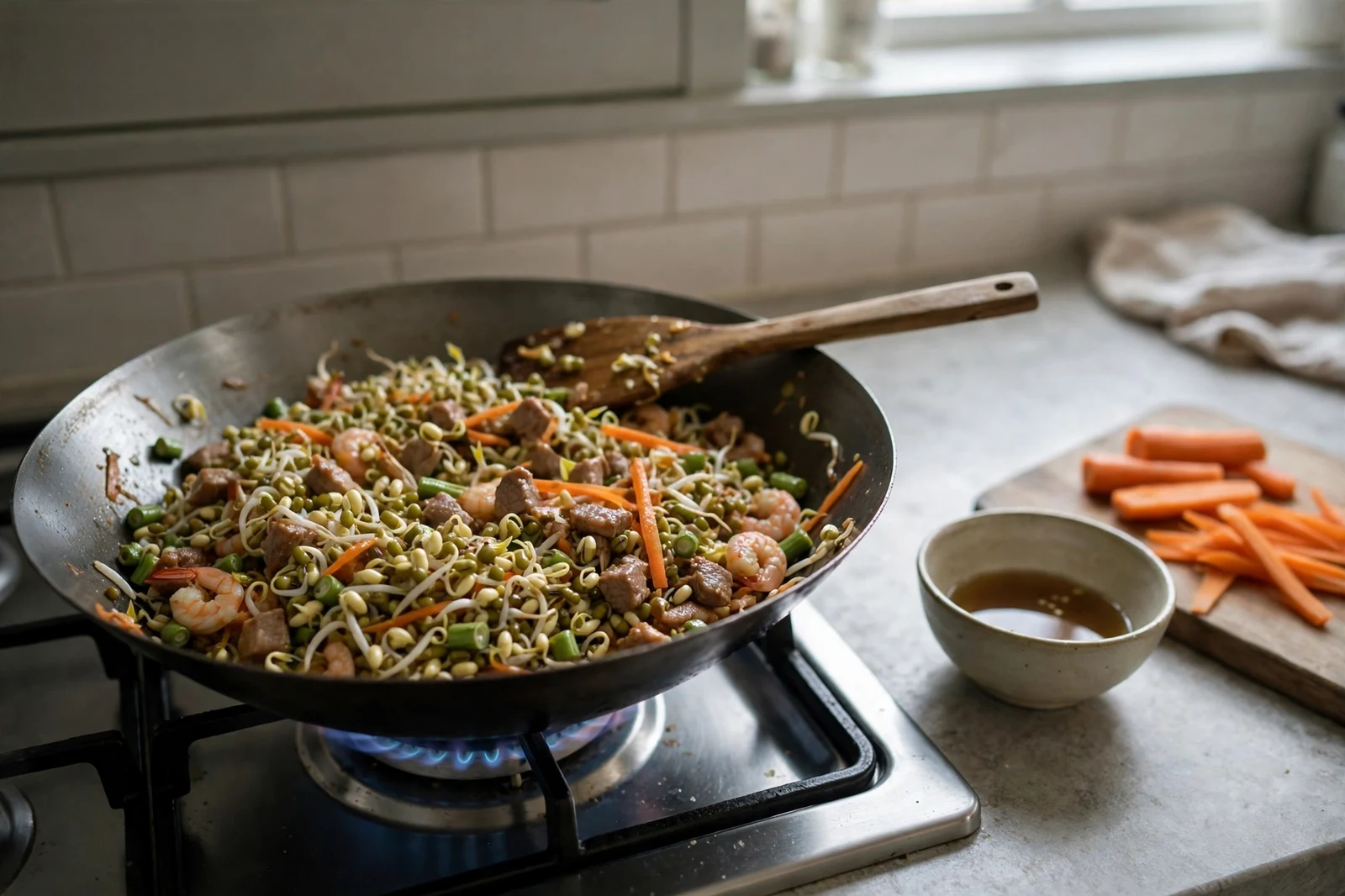
Then the filling goes into a colander and sits. Bean sprouts hold a lot of water, and they give it up as they cool. Twenty to 30 minutes of draining, plus cooling all the way to room temperature, is what keeps the wrapper dry enough to fry crisp. Warm filling steams the wrapper from the inside and tears it before it ever reaches the oil. I spread the drained filling on a plate to cool faster when I am in a hurry, and I never roll with filling that still feels warm to the touch.
The ingredients
For the filling:
- 4 cups mung bean sprouts, rinsed and drained (about 10 oz)
- 1/2 lb ground pork
- 1 cup small shrimp, peeled, deveined, and chopped (about 5 oz)
- 1 medium carrot, julienned
- 1 cup green beans, thinly sliced on the bias
- 1 small onion, diced
- 4 garlic cloves, minced
- 2 tablespoons dried shrimp (alamang), rinsed (optional)
- 1 tablespoon fish sauce (patis)
- 1/2 teaspoon ground black pepper
- 1 tablespoon cooking oil
For rolling:
- 24 thin spring roll wrappers, about 6 inches square
- 1 tablespoon cornstarch mixed with 2 tablespoons water
- 3 cups neutral oil, for frying
For the dipping sauce:
- 1/2 cup cane vinegar or white vinegar
- 2 tablespoons soy sauce
- 3 garlic cloves, crushed
- 1/4 cup red onion, finely chopped
- 2 Thai chilies, thinly sliced
- 1 teaspoon sugar
- 1/4 teaspoon ground black pepper
How to make lumpiang togue
Cook the filling in order, drain it dry, then roll tight and fry hot. The steps below run in that order for a reason.
- Cook the pork and shrimp: heat the oil in a wok over medium-high heat. Add the pork and break it into small pieces, cooking until no pink shows, about 3 minutes. Add the shrimp and cook 1 minute more, until just pink.
- Add the aromatics and hard vegetables: add the onion and garlic and cook 1 minute. Add the carrots and green beans and cook 2 to 3 minutes, until the carrots bend but still hold a little bite.
- Add the sprouts last: toss in the bean sprouts and dried shrimp, if using, and cook 30 to 40 seconds, just until the sprouts are heated through. Season with the fish sauce and pepper, toss once, and take the wok off the heat.
- Drain and cool: pour the filling into a colander and let it drain for 20 to 30 minutes. Spread it on a plate to cool completely. The filling must be dry and at room temperature before rolling.
- Mix the dipping sauce: stir the vinegar, soy sauce, garlic, onion, chilies, sugar, and pepper together in a small bowl. Set it aside.
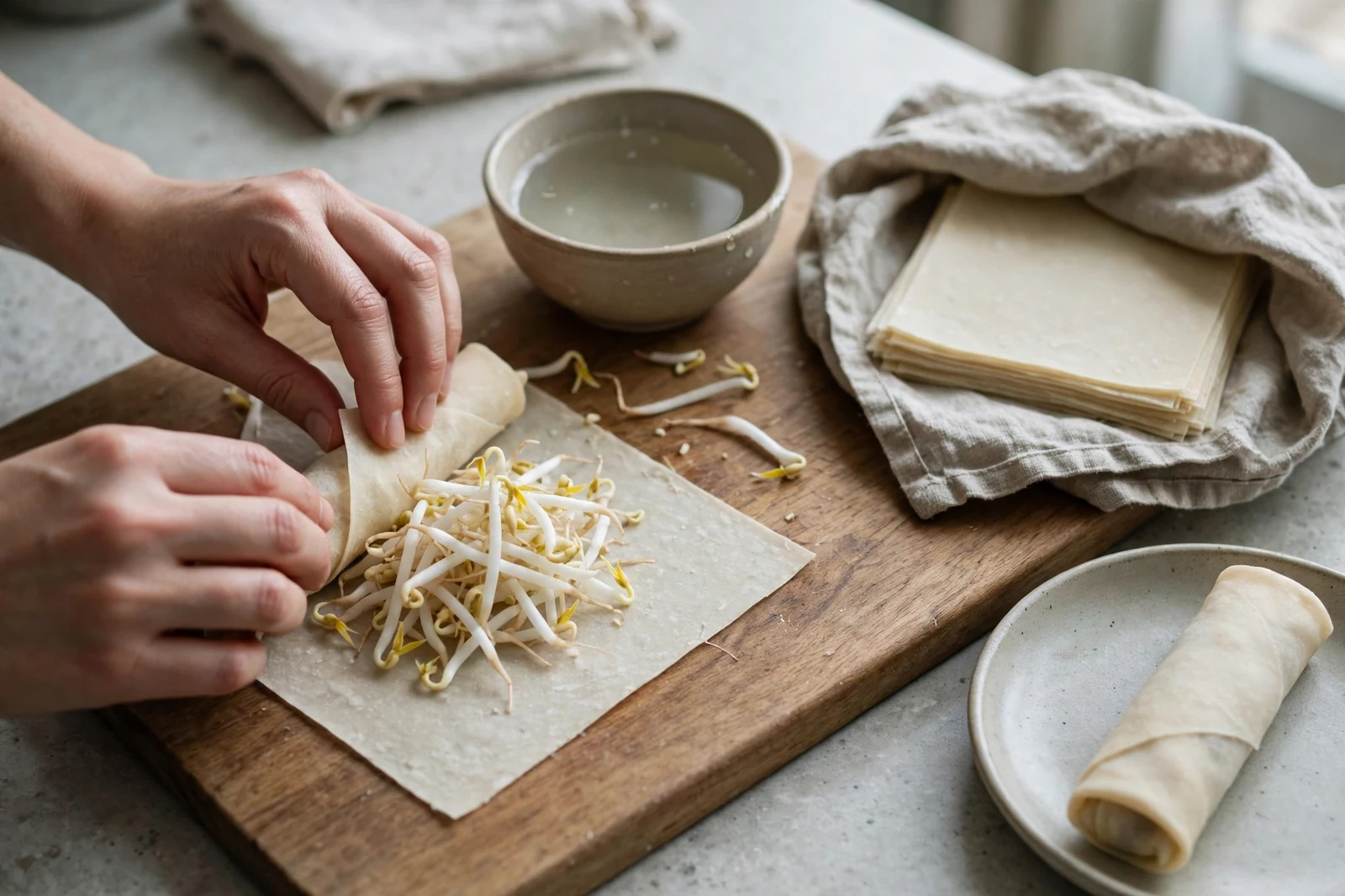
- Roll: lay one wrapper diamond-shaped, one corner toward you. Spoon 2 tablespoons of filling across the lower third. Fold the bottom corner over the filling, fold in both sides, and roll up tight, pushing out air as you go. Brush the top corner with cornstarch paste and press to seal. Set each roll seam-side down and keep the finished rolls covered with a damp cloth.
- Fry: heat 2 inches of oil in a deep pan to 350 to 375 F. Fry 4 to 5 rolls at a time, turning once or twice, for 2 to 3 minutes per side until deep golden. Lift out with tongs and drain on a wire rack, not paper towels. Serve hot with the dipping sauce.
The roll itself is a small skill. Two tablespoons of filling, a tight fold, and a sealed edge. The first few will look rough, and that is fine. By roll six your hands know the move.
Fry at 350 to 375 F, in small batches
Oil temperature is the second half of the crisp. At 350 to 375 F the wrapper sets fast and browns in 2 to 3 minutes per side. Drop below 350 and the rolls sit in the oil soaking it up instead of frying in it, and they come out heavy and greasy. Go much above 375 and the wrapper burns before the pork inside is fully hot.
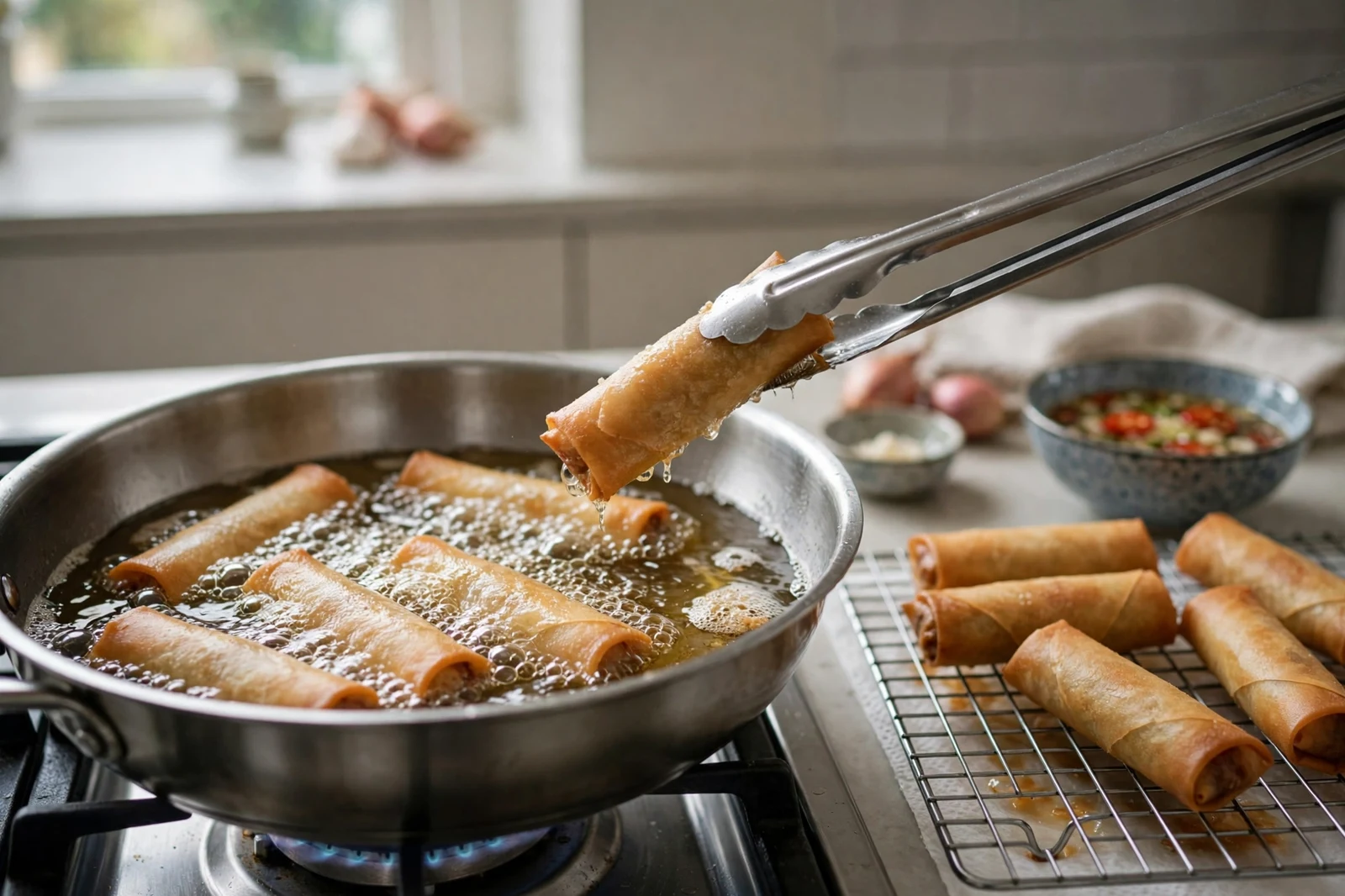
Fry 4 to 5 rolls at a time. A crowded pan drops the oil temperature fast, and the rolls steam each other instead of frying. Let the oil come back up between batches, and give the rolls room to float. When they come out, set them on a wire rack in a single layer. Paper towels trap steam underneath and soften the bottoms within minutes.
Tips and variations
Buy the sprouts the day you cook. They go soft fast in the fridge, and old sprouts give up even more water, which makes the drain harder. If the bag smells sour, do not use it.
Use thin wheat flour wrappers, not thick egg roll wrappers. Thin wrappers fry shatter-crisp; thick ones stay chewy. Check the date on the package: old wrappers turn stiff, crack when you fold them, and seal badly. My lumpia post covers the same wrapper choice, and the rule holds here.
For a meat-free version, leave out the pork, shrimp, and dried shrimp and add a cup of julienned fried tofu. The fish sauce substitutes guide covers swaps for the patis if you want the whole batch vegetarian, and soy sauce alone still gives the filling its salt.
If you like this kind of crisp fry, ukoy is the shrimp fritter version of the same idea, with a batter instead of a wrapper. Atchara is another sharp, pickled side that sits well next to fried food.
Leftovers keep 3 days in the fridge. Reheat in a 375 F oven or an air fryer for 8 to 10 minutes until crisp again, never in the microwave. My guide on how to reheat fried food so it stays crispy covers the same rule.
Troubleshooting: Fix My Lumpiang Togue
Soggy filling, burst rolls, or a crust that goes soft before dinner. Each failure has a cause and a fix. Tell the tool what went wrong:
HERB & LIME · KITCHEN HELP
Fix My Lumpiang Togue
Choose what went wrong to see a practical next step.
Possible cause
What to try next
For next time
From Paul's kitchen. Results vary with wrapper brand, oil, and stove heat, adjust timing to your setup.
Quick reference (also works without JavaScript)
The filling turned soggy and limp
Cause: The bean sprouts cooked too long and the filling held too much water.
Try: Next batch, cook the sprouts 30 to 40 seconds only, then drain the filling in a colander for 20 to 30 minutes and let it cool completely before rolling.
Prevent: Keep the filling dry, spread it on a plate to cool, and never roll with filling that still feels warm to the touch.
The rolls burst open while frying
Cause: Too much filling in the roll, or a loose roll with air pockets inside.
Try: Use 2 tablespoons of filling per roll, roll tight while pushing out air, and seal the last edge with cornstarch paste.
Prevent: Leave a clean border on both sides of the wrapper and set each roll seam-side down before frying.
The rolls came out greasy
Cause: The oil was below 350 F, or too many rolls crowded the pan and cooled the oil.
Try: Let the oil come back to 350 to 375 F between batches and fry 4 to 5 rolls at a time.
Prevent: Check the oil with a thermometer and give the rolls room to float, turning once or twice.
The wrapper tore while I rolled
Cause: The wrappers dried out on the counter, or warm filling steamed them soft.
Try: Keep the stack under a damp cloth, pull one wrapper at a time, and roll only with filling that has cooled completely.
Prevent: Work with fresh wrappers, keep hands dry, and keep the rest of the stack covered while you roll.
The rolls went soft minutes after frying
Cause: Steam trapped under the rolls on paper towels, or in a covered pile, softened the crust.
Try: Move the rolls to a wire rack in a single layer the moment they leave the oil.
Prevent: Never stack hot rolls or cover them while warm, and reheat leftovers in a 375 F oven, not a microwave.
Lumpiang Togue: Filipino Bean Sprout Spring Rolls
Ingredients
Method
- Cook the pork and shrimp: heat the oil in a wok over medium-high heat. Add the pork and break it into small pieces, cooking until no pink shows, about 3 minutes. Add the shrimp and cook 1 minute more, until just pink.
- Add the aromatics and hard vegetables: add the onion and garlic and cook 1 minute. Add the carrots and green beans and cook 2 to 3 minutes, until the carrots bend but still hold a little bite.
- Add the sprouts last: toss in the bean sprouts and dried shrimp, if using, and cook 30 to 40 seconds, just until the sprouts are heated through. Season with the fish sauce and pepper, toss once, and take the wok off the heat.
- Drain and cool: pour the filling into a colander and let it drain for 20 to 30 minutes. Spread it on a plate to cool completely. The filling must be dry and at room temperature before rolling.
- Mix the dipping sauce: stir the vinegar, soy sauce, garlic, onion, chilies, sugar, and pepper together in a small bowl. Set it aside.
- Roll: lay one wrapper diamond-shaped, one corner toward you. Spoon 2 tablespoons of filling across the lower third. Fold the bottom corner over the filling, fold in both sides, and roll up tight, pushing out air as you go. Brush the top corner with cornstarch paste and press to seal. Set each roll seam-side down and keep the finished rolls covered with a damp cloth.
- Fry: heat 2 inches of oil in a deep pan to 350 to 375 F. Fry 4 to 5 rolls at a time, turning once or twice, for 2 to 3 minutes per side until deep golden. Lift out with tongs and drain on a wire rack, not paper towels. Serve hot with the dipping sauce.
Notes
More Filipino recipes
If this hit the spot, keep going: Lumpia: Filipino Spring Rolls for the pork version of the same roll, Ukoy: Filipino Shrimp Fritters for another crisp fry, Pancit Canton: Filipino Stir-Fried Noodles for the noodle to serve beside them, and Filipino Pork Adobo for the dish that anchors most Filipino tables.
From the garden
The sprouts in this roll are the easiest crop I grow: mung beans sprouted in a jar on the kitchen counter, rinsed twice a day, ready in 3 to 4 days. No soil, no pot, no waiting on weather. My guide on growing bean sprouts indoors covers the jar, the rinsing, and when the sprouts are ready to cook.