
Atchara sits on the table next to fried and grilled food in the Philippines for a plain reason: a cold, sour-sweet spoonful cuts through fat and salt and resets the palate between bites. It is a refrigerator pickle, not a fermented one, so the whole batch comes together in one afternoon and tastes best after a night in the fridge.
My batch follows the ratio I keep coming back to: 1 1/2 cups vinegar to 1 cup sugar. That 3-to-2 balance lands sweet enough to round off the vinegar without turning the jar into candy, and it works for a full large papaya without scaling math. The crunch comes from two steps people skip: salting the shreds for a full hour, then squeezing them dry before the brine goes in.
What is atchara?
Atchara, also spelled atsara or achara, is a Filipino pickle made from unripe green papaya. The papaya is shredded, salted, squeezed dry, and packed in a sweet vinegar brine with carrot, bell pepper, onion, ginger, garlic, and often raisins. It shows up beside fried chicken, grilled pork, and fish, and it keeps in the fridge for weeks, so one batch covers many meals.
Green papaya here means a papaya picked before it ripens. The flesh is pale, firm, and mild, closer to a crisp vegetable than to the soft orange fruit sold for eating fresh. Once it starts to yellow or soften, it loses the snap that makes atchara work, so the papaya you pick matters more than any other choice in this recipe.
Picking the right papaya
Look for a papaya that feels rock-hard all over, with deep green skin and no yellow patches. Press the ends: neither end should give. A 2-pound papaya gives about 6 cups of shreds, which fills two pint jars with brine to spare. If your papaya is smaller, keep the brine ratio the same and scale the brine down, not the other way around.
Shred on the coarse side of a box grater, or cut the flesh into thin matchsticks with a knife. The shreds should be thin enough to pickle through in a day but thick enough to stay crisp, about the width of a matchstick. Grating too fine turns the batch soft by day three, and cutting thick batons leaves raw-tasting centers.

How to make atchara
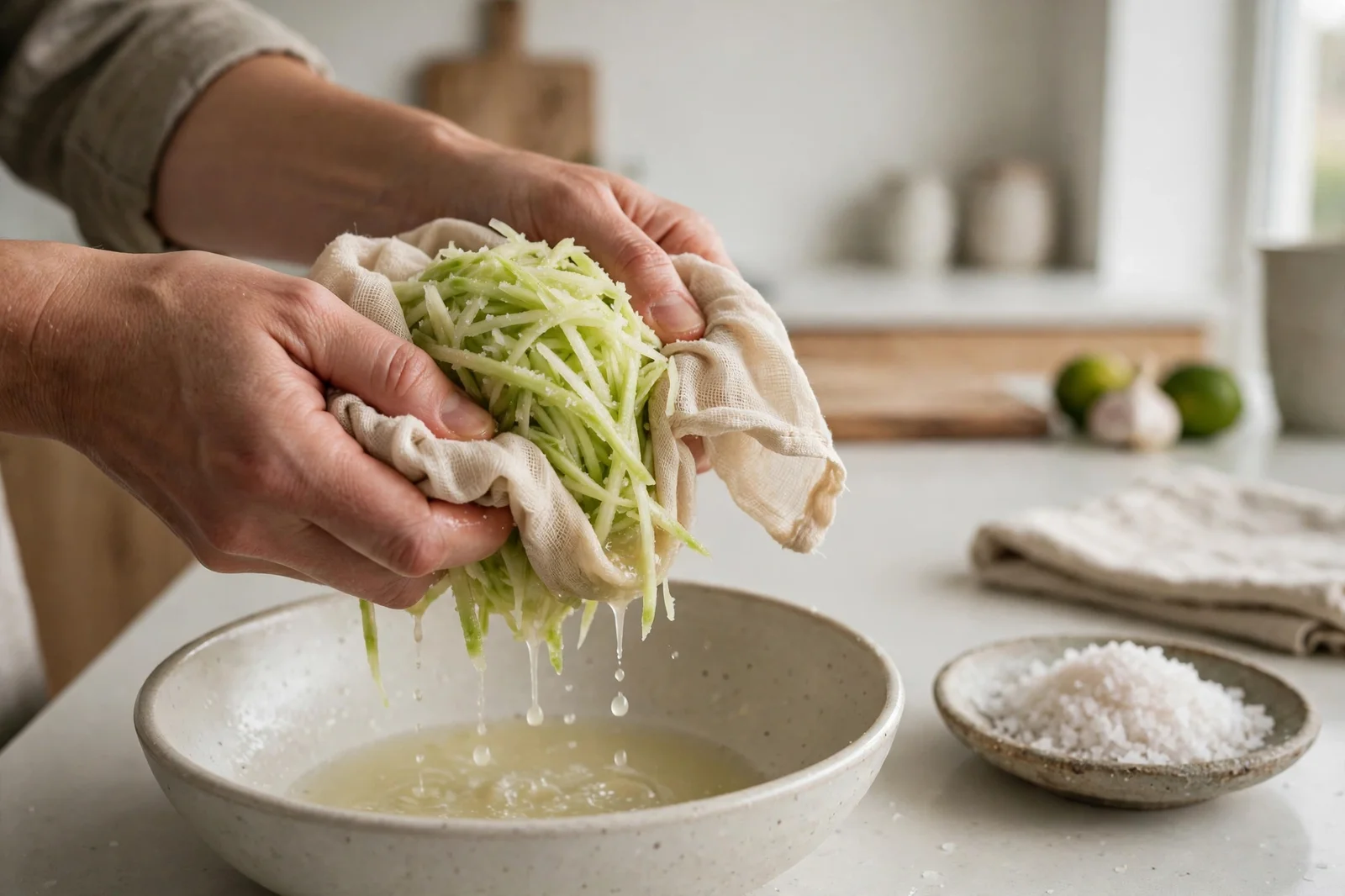
Toss the shreds with 2 tablespoons of kosher salt and leave them for 1 hour. The salt pulls water out of the papaya, and that water has to leave the bowl or it waters down the brine. Gather the shreds in cheesecloth, squeeze firmly until no more liquid runs out, rinse quickly under cold water, and squeeze again. The papaya should feel damp, not wet.
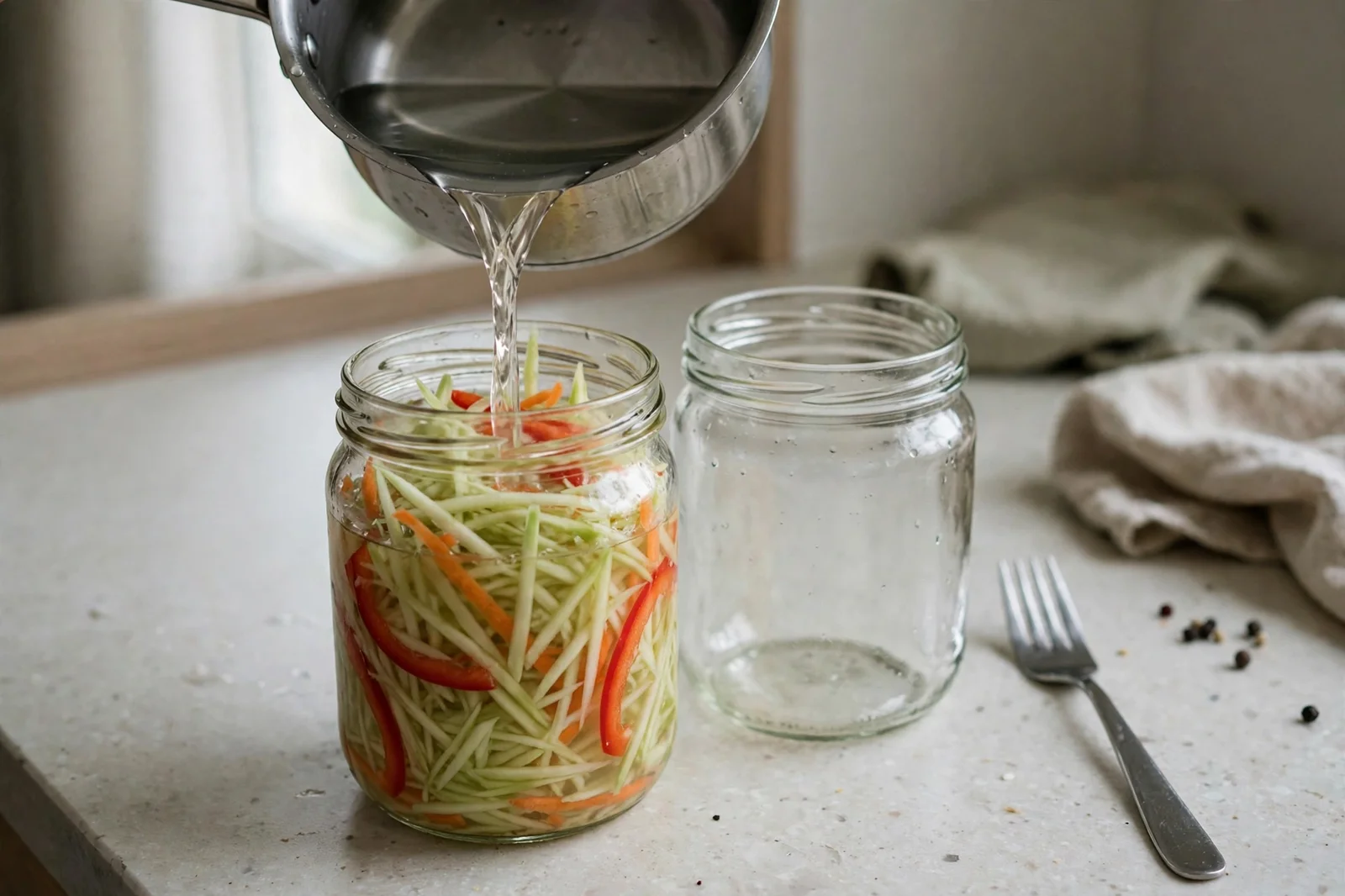
Mix the squeezed papaya with the carrot, bell pepper, onion, ginger, garlic, and raisins. For the brine, warm the vinegar, sugar, 1 teaspoon of salt, and the peppercorns in a saucepan just until the sugar dissolves, 3 to 5 minutes over medium heat. Then let the brine cool completely. Hot brine cooks the shreds and trades crunch for speed, so this wait is part of the recipe, not a delay you can skip.
The brine ratio
The brine is 1 1/2 cups vinegar to 1 cup sugar, with 1 teaspoon of salt and 1 teaspoon of whole black peppercorns. Cane vinegar gives the mildest result and is the vinegar most Filipino kitchens reach for; distilled white vinegar works and tastes a little sharper, so taste the cooled brine before you pour it and add sugar 1 teaspoon at a time if the edge feels too sharp. Do not pour the brine over the vegetables while it is still warm, and do not guess at the sugar: a brine that tastes balanced while warm reads sweeter once it cools.
How to serve atchara
Serve atchara cold, straight from the fridge, in a small bowl beside the main dish. It belongs next to fried food most of all: my Chicken Adobo is the weeknight pairing, and it is just as good with Lumpia: Filipino Spring Rolls. A spoonful also wakes up plain grilled pork or fish, and I use leftovers in rice bowls the next day. For the pickling side of the pantry, my Vietnamese Pickled Carrots and Daikon (Do Chua) follows the same salt-and-squeeze logic with different vegetables, and my Guide to Asian Vinegars explains how cane, white, and rice vinegar taste different in a brine.
Storage
Pack the vegetables into clean glass jars, pour in the cooled brine until every shred is covered, and press out air pockets with a clean fork. Seal the jars and refrigerate for at least 24 hours before serving; the flavor settles on day two, so taste then before you judge the balance. Kept submerged and served with a clean fork, atchara stays good in the fridge for up to 3 weeks. If the brine turns cloudy and the pickles feel slimy or smell off, throw the jar out and make a fresh batch.
Troubleshooting: Fix My Atchara
If a batch comes out soft, too sharp, or too sweet, the fix is usually in the salting, the brine temperature, or the ratio, and most jars can be saved or remade with one change. The section below covers the five problems that come up most with this pickle.
HERB & LIME · KITCHEN HELP
Fix My Atchara
Choose what went wrong to see a practical next step.
Possible cause
What to try next
For next time
From Paul's kitchen. Results vary with papaya size, vinegar, and fridge temperature, adjust timing to your setup.
Quick reference (also works without JavaScript)
The pickles went soft
Cause: A hot brine cooks the outer edges of the shreds, fine grating collapses fast in acid, and a ripening papaya has already lost its snap.
Try: Serve this jar cold, since chilling firms the shreds a little. For the next jar, use a rock-hard green papaya, shred it matchstick-thick, and let the brine cool completely before pouring.
Prevent: Never pour a warm brine over the shreds, and never grate the papaya fine, since both choices trade crunch for speed.
The brine tastes too sharp and sour
Cause: Distilled white vinegar tastes sharper than cane vinegar, and the 1 1/2 cups in this brine shows up fast if the sugar is short.
Try: Stir in sugar 1 teaspoon at a time, tasting after each spoonful, until the sharp edge softens.
Prevent: Taste the cooled brine before you pour it over the vegetables, and adjust the sugar then, since fixing it in the jar takes longer.
The brine tastes too sweet
Cause: Sugar dissolves slowly in a warm brine, so a brine that tastes balanced while warm can read sweeter once it cools.
Try: Stir in a splash of vinegar and taste again. Repeat in small splashes until the sweet and sour balance feels right.
Prevent: Measure the sugar instead of pouring freely, and stir until every grain dissolves before you judge the taste.
The papaya still tastes raw and bland after a day
Cause: Thick batons pickle slowly, so the brine has not reached their centers after 24 hours, and the flavor settles on day two.
Try: Leave the jar one more day, then taste again. For shreds still raw in the middle, cut them thinner and return them to the brine for another day.
Prevent: Shred matchstick-thin and wait a full 24 hours before the first taste, since that size pickles through in a day.
The brine turned cloudy and the pickles taste off
Cause: Shreds above the brine dry out, and fingers or used chopsticks carry bacteria into the jar, which clouds the brine.
Try: If the pickles feel slimy or smell off, throw the jar out and make a fresh one. Do not try to rescue a spoiled pickle.
Prevent: Keep every shred submerged, serve only with a clean fork, and keep the jar in the fridge for no more than 3 weeks.

Atchara: Filipino Pickled Green Papaya
Ingredients
Method
- Peel the papaya, halve it, scoop out the seeds, and shred the flesh on the coarse side of a box grater.
- Toss the shreds with 2 tablespoons of kosher salt and rest for 1 hour. Gather in cheesecloth, squeeze firmly until dry, rinse quickly under cold water, and squeeze again.
- Mix the squeezed papaya with the carrot, bell pepper, onion, ginger, garlic, and raisins.
- Warm the vinegar, sugar, 1 teaspoon of salt, and the peppercorns in a saucepan over medium heat for 3 to 5 minutes, stirring until the sugar dissolves. Remove from the heat and cool completely.
- Pack the vegetables into clean glass jars. Pour in the cooled brine until every shred is covered, pressing out air pockets with a clean fork, then seal.
- Refrigerate for at least 24 hours. Taste on day two and adjust the next batch from there.
- Serve cold with a clean fork. Keep refrigerated for up to 3 weeks, with the shreds kept under the brine.
1 thought on “Atchara: Filipino Pickled Green Papaya”