
Chicken-mu is the small bowl of pale radish cubes that comes out with Korean fried chicken, and it earns its place on the table. The cubes are cold, sweet, sour, and still crunchy, and one bite resets your mouth between pieces of fried chicken. The whole job takes about 15 minutes of work, then the jar sits in the fridge for a day while the brine does the rest.

What is chicken-mu?
Mu is the Korean word for radish, and chicken-mu is the pickled radish served with fried chicken. It is a quick pickle, not a fermented one like kimchi: radish cubes sit in a sweet vinegar brine in the fridge, with no chile and no waiting weeks. The flavor is simple on purpose. Sweet first, then sour, then the clean taste of radish, and a crunch that holds up if you cut the cubes right and keep the brine cold.
It is easy to mix this up with danmuji, the yellow pickled radish sliced thin for kimbap, but the two are different pickles. Danmuji is dyed yellow, cut thin, and rolled inside rice rolls, while chicken-mu is cut into cubes and served as a side dish. My kimbap post uses the thin yellow kind, and this post is the cubed white kind for the fried chicken table. Vietnamese do chua is a closer cousin, since it also pickles radish in sweet vinegar, but do chua adds carrot and garlic and is served with grilled pork and noodle bowls rather than fried chicken.
The radish to buy
Korean radish, mu, is the first choice: short, stout, and dense, with a green top. Daikon works in its place and is easier to find at most grocery stores. If you use daikon, peel it twice. The skin on daikon runs bitter, and a second pass with the peeler takes off the layer that carries that taste. Pick a radish that feels heavy for its size and firm all the way through. A light or bendy radish has already lost water, and no brine brings that crunch back.
Cut the cubes at 3/4 inch
Cut the radish into 3/4-inch cubes. That size is the part of this recipe I would not change. Cubes that small pickle through in a day, and cubes that big still bite like a fresh vegetable after two days in brine. Cut them at 1 inch and the centers stay raw-tasting on day one. Slice them thin and they go soft before the week is out. Pack the cubes into a clean 1-quart glass jar, leaving about an inch of room at the top for brine.

Stir a cold brine
The brine is 1 cup of water, 1/2 cup of distilled white vinegar, 1/2 cup of sugar, and 1 teaspoon of kosher salt for 1 pound of radish. Stir it in a bowl or a large measuring jug until the sugar and salt dissolve completely, and do not heat it. A hot brine cooks the outer edges of the cubes and takes the snap out before the jar even reaches the fridge. Distilled white vinegar is the standard here because it tastes clean and sharp; my guide to Asian vinegars explains how rice vinegar would soften that edge if you swap it in.
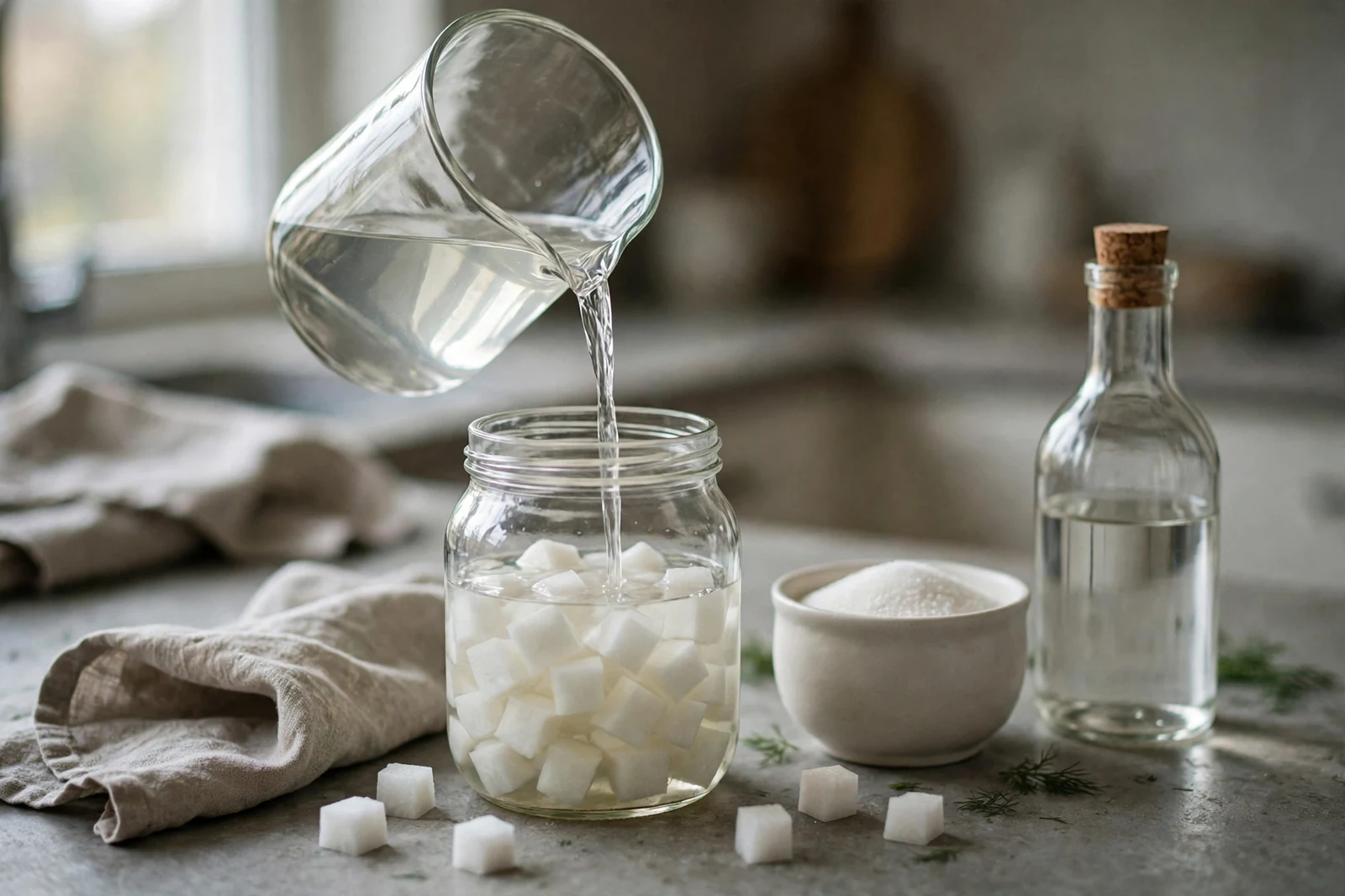
Pour the brine over the cubes until they are covered, tap the jar on the counter once or twice to let trapped air out, and add a little more brine if any cubes poke above the surface. Cubes left above the brine dry out and taste flat while the rest pickle. Seal the jar and put it straight in the fridge.
Wait a day, taste on day two
The pickles are edible after 24 hours, but day two is when they taste right: sweet and sour all the way through, still crunchy. Taste one cube at 24 hours, then again the next day, and you will hear the difference the extra day makes. Keep the jar in the fridge and the cubes under brine, and the jar keeps for 2 weeks. The crunch is best in the first week, so make a fresh jar rather than stretching an old one.
What to serve it with
Serve the cubes cold, straight from the fridge, in a small bowl beside Korean fried chicken. That pairing is the whole point of the dish: cold, sour crunch against hot, crisp chicken. It also works beside grilled pork, in a rice bowl, or anywhere a fatty main dish needs a sour counterpoint. My Korean fried chicken post is the pairing this jar was made for, and a small bowl of easy napa cabbage kimchi on the same table gives you a fermented counterpoint next to a quick pickle.

For pink pickles, add one thin slice of beet to the jar before you pour in the brine. The color spreads over a day or two, and the taste stays the same. Use a small slice only, since a large piece turns the brine earthy.
Troubleshooting: Fix My Korean Pickled Radish
Most problems with this pickle come down to cube size, brine temperature, or time. Pick the problem that matches your jar and the fix that fits it.
HERB & LIME · KITCHEN HELP Choose what went wrong to see a practical next step. From Paul's kitchen. Results vary with radish size, vinegar, and fridge temperature, adjust timing to your setup. Quick reference (also works without JavaScript) Cause: Cubes cut at 1 inch or larger pickle slowly, so the brine has not reached their centers after 24 hours. Try: Leave the jar one more day, then taste again. For cubes still raw in the middle, cut them smaller and return them to the brine for another day. Prevent: Cut the radish into 3/4-inch cubes and wait a full 24 hours before the first taste, since that size pickles through in a day. Cause: A hot brine cooks the outer edges of the cubes, and thin slices lose their structure fast in acid. Try: Serve this jar cold, since chilling firms the cubes a little. For the next jar, use a cold brine and 3/4-inch cubes. Prevent: Never heat the brine, and never slice the radish thin for this pickle, since both choices trade crunch for speed. Cause: Distilled white vinegar tastes sharper than rice vinegar, and the 1/2 cup in this brine shows up fast if the sugar is short. Try: Stir in sugar 1 teaspoon at a time, tasting after each spoonful, until the sharp edge softens. Prevent: Taste the brine before you pour it over the radish, and adjust the sugar then, since fixing it in the jar takes longer. Cause: Sugar dissolves slowly in a cold brine, so a brine that tastes balanced at first can read sweeter once it sits. Try: Stir in a splash of vinegar and taste again. Repeat in small splashes until the sweet and sour balance feels right. Prevent: Measure the sugar instead of pouring freely, and stir until every grain dissolves before you judge the taste. Cause: Cubes above the brine dry out, and fingers or used chopsticks carry bacteria into the jar, which clouds the brine. Try: If the pickles feel slimy or smell off, throw the jar out and make a fresh one. Do not try to rescue a spoiled pickle. Prevent: Keep every cube submerged, serve only with a clean fork, and keep the jar in the fridge for no more than 2 weeks.Fix My Korean Pickled Radish
Possible cause
What to try next
For next time
The cubes still taste raw and bland after a day
The pickles went soft
The brine tastes too sharp and sour
The brine tastes too sweet
The brine turned cloudy and the pickles taste off
Korean Pickled Radish (Chicken-mu)
Ingredients
Method
- Peel the radish and cut it into 3/4-inch cubes. Pack the cubes into a clean 1-quart glass jar, leaving about an inch of room at the top.
- Stir the brine: combine the water, vinegar, sugar, and salt in a bowl or large measuring jug, and stir until the sugar and salt dissolve completely. Do not heat the brine.
- Pour the brine over the cubes until they are covered. Tap the jar on the counter once or twice to release trapped air, and top up the brine if any cubes sit above the surface.
- Seal the jar and refrigerate right away. Taste a cube after 24 hours; the pickles are best on day two, when the sweet and sour flavor reaches the center of each cube.
- Serve cold from the fridge, in a small bowl beside fried chicken or grilled meats. Keep the remaining cubes submerged in brine.
- Store the sealed jar in the fridge for up to 2 weeks. The crunch is best in the first week.
Notes
More Korean recipes
If this jar worked for you, Korean fried chicken is the main dish it was made to sit beside. Kimbap uses the thin yellow pickled radish cousin of this dish, easy napa cabbage kimchi is the fermented side dish for the same table, and bibimbap is the mixed rice bowl that welcomes a spoonful of these cubes on top.