
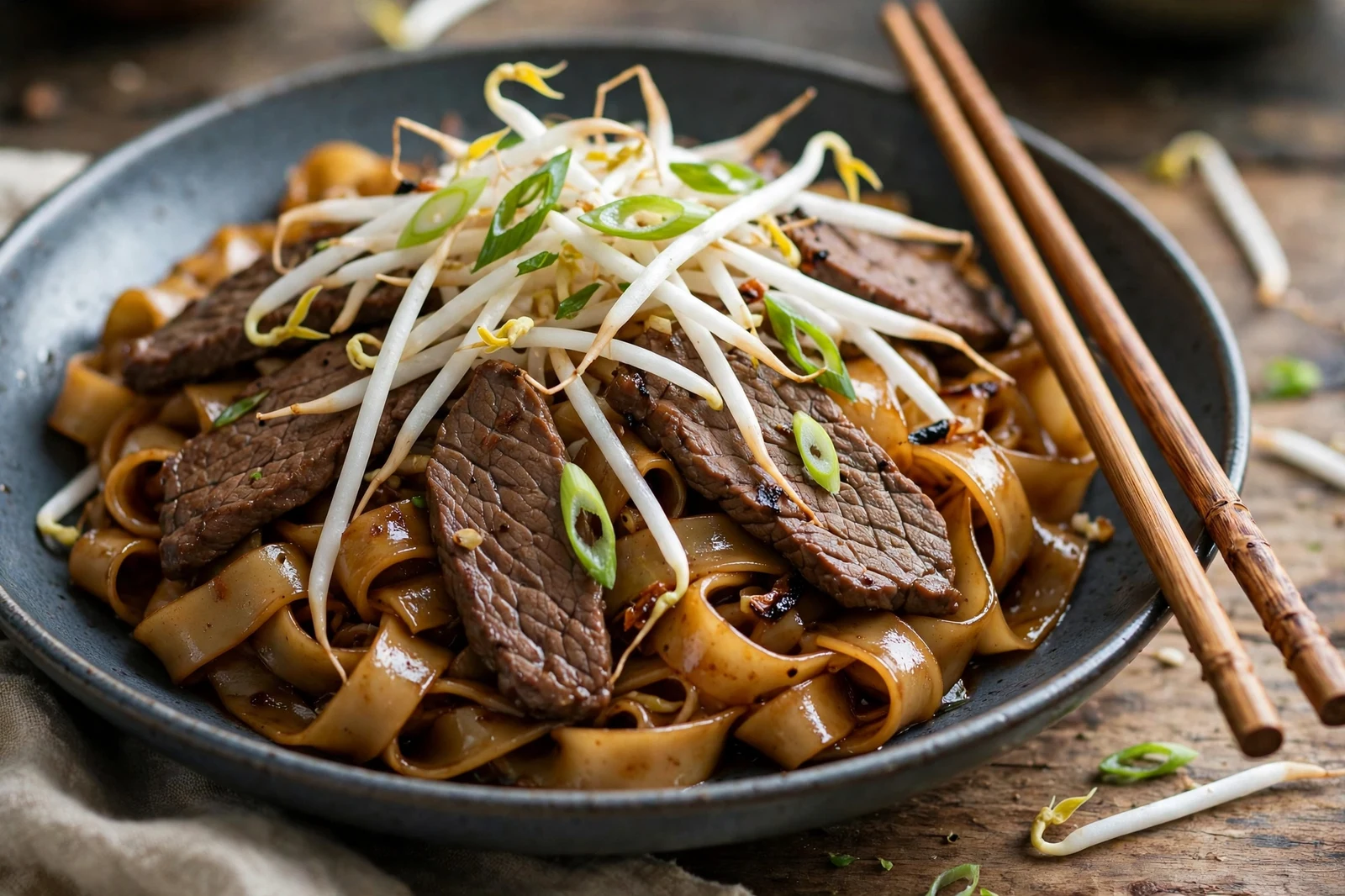
Beef chow fun is the dish I order when I want to judge a Cantonese kitchen. When it works, the wide rice noodles carry a light char, the beef stays tender, and the sauce coats every strand without pooling on the plate. When it fails, you get a steamy pile of broken noodles and gray beef. The difference comes down to a few concrete moves: thin beef, loose noodles, a smoking hot wok, and a sauce measured in tablespoons, not cups.
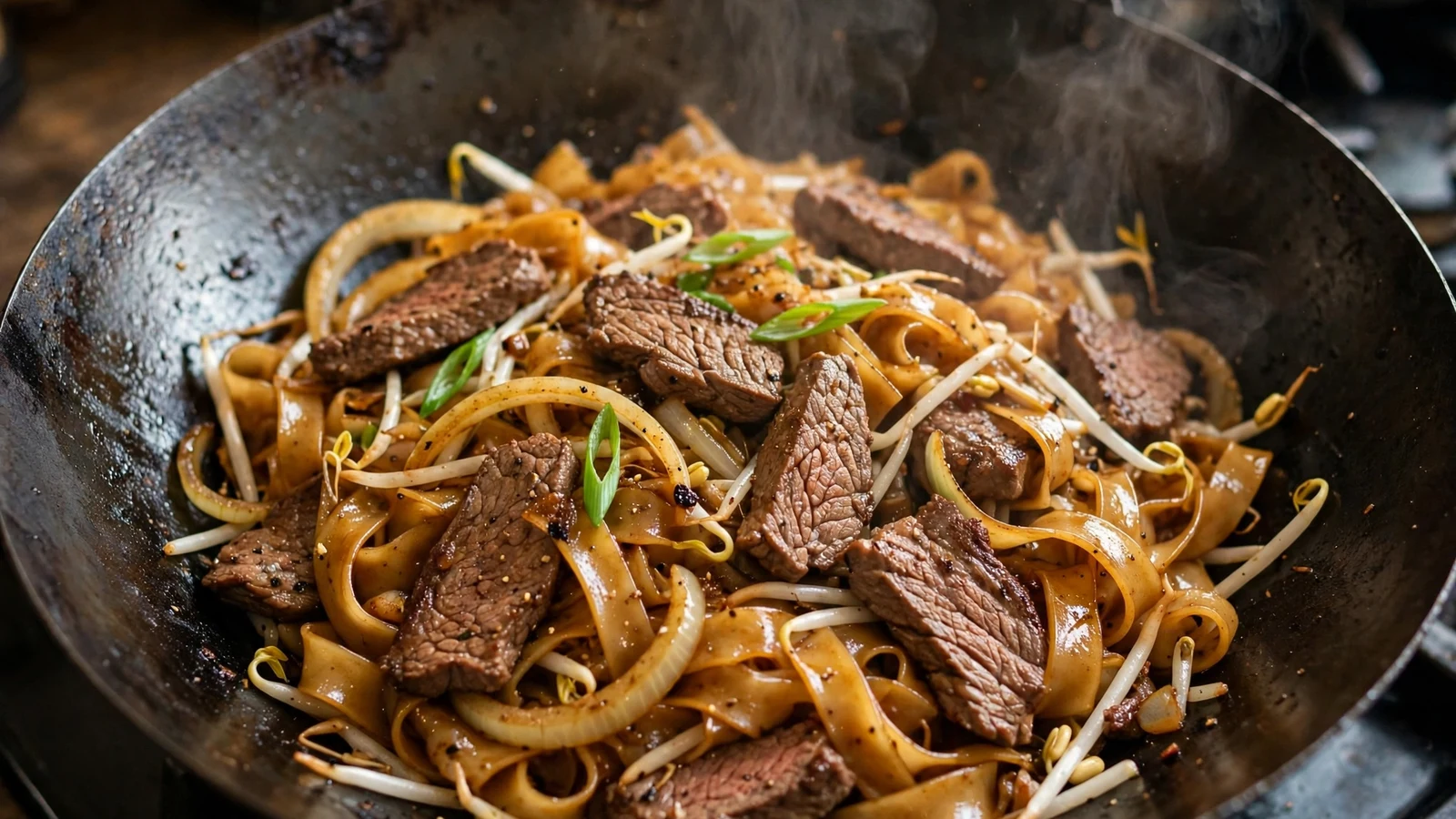
What is beef chow fun?
Beef chow fun, or gon chow ngau ho in Cantonese, means dry-fried beef with wide rice noodles. The noodles are ho fun, flat rice noodles about an inch wide, sold fresh in folded sheets or dried in flat bundles. Fresh noodles give the best texture, soft and chewy with edges that pick up a little char. The beef is sliced thin, marinated briefly, and seared fast. Onion, scallions, and bean sprouts round out the pan, and the sauce stays simple: light soy for salt, dark soy for color, oyster sauce for body, and a pinch of sugar to balance.
It differs from the noodle dishes around it. Chow mein uses wheat noodles, and the Cantonese soy sauce chow mein on this site leans on that thinner noodle and a lighter hand with sauce. Our rice noodle guide walks through which flat noodle suits which dish, and chow fun is the case for the widest cut. The wide noodle is the point here: it folds around the beef and holds the sauce in a way thin noodles cannot.
The beef: slice thin, marinate short
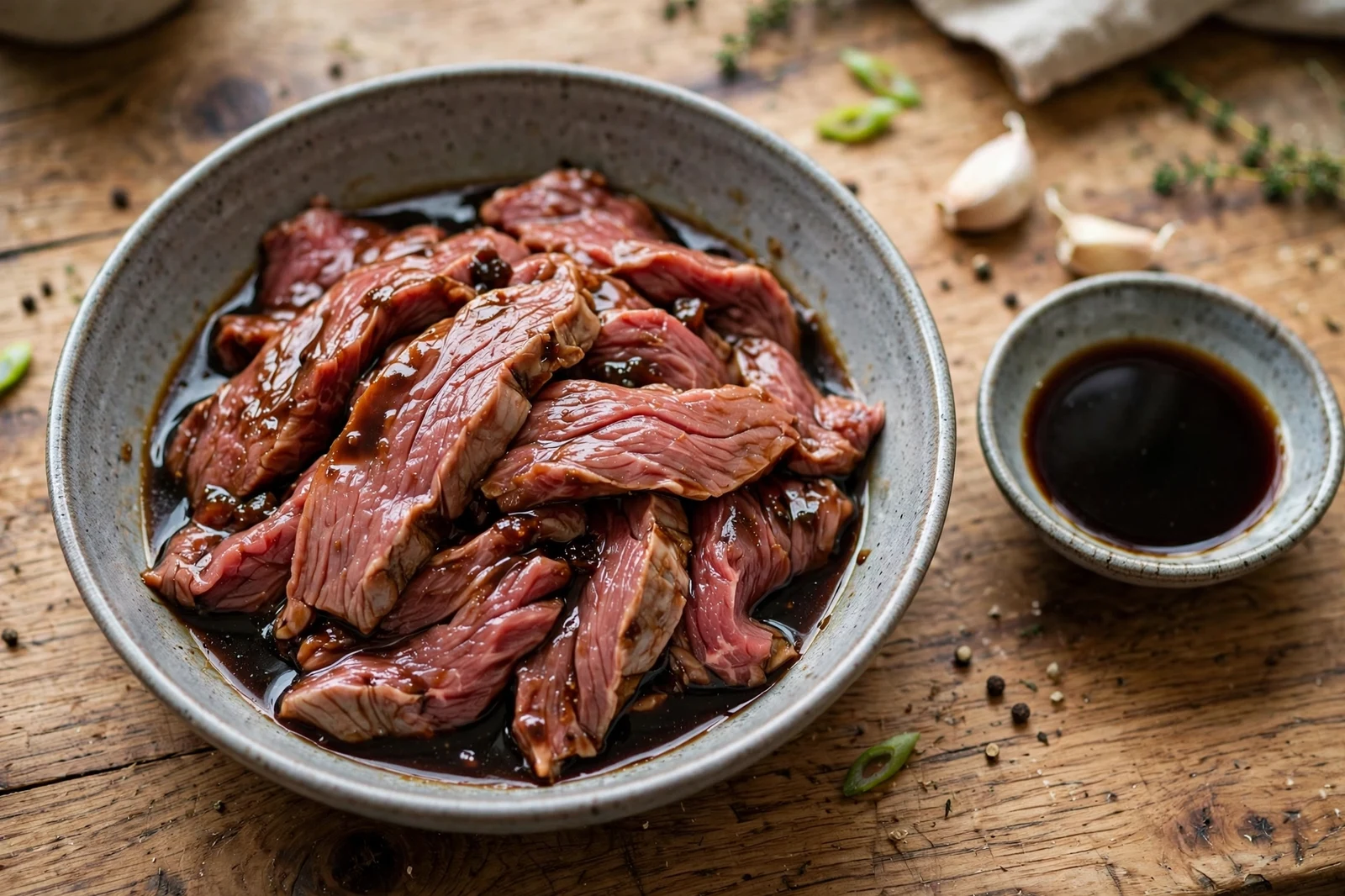
Flank steak is my pick for this dish. It has enough flavor to stand up to soy and high heat, and it slices cleanly when partly firm. Put the steak in the freezer for 15 to 20 minutes first. It firms up just enough that a sharp knife can cut even slices about 1/8 inch thick, always against the grain. Thick slices turn chewy no matter how good the marinade is, so this step matters more than any other part of the prep. Our guide to slicing meat paper-thin for stir-fry covers the same freezer trick in more detail.
The marinade is short and measured: for 1 pound of beef, 1 tablespoon light soy sauce, 1 tablespoon Shaoxing wine, 1 teaspoon cornstarch, 1 teaspoon sesame oil, 1/2 teaspoon sugar, and 1/4 teaspoon white pepper. Twenty minutes is enough. Longer than 30 minutes and the surface starts to turn soft in a way that hurts the sear. The cornstarch gives the slices a thin coat that browns fast and keeps the inside juicy during a 90-second sear.
The noodles: loose before they hit the wok
Fresh ho fun usually arrives as a cold, folded block. Pulling it apart cold tears the sheets into confetti, so warm it first. Microwave the block for 1 to 2 minutes under a damp paper towel, or run it under warm water until the sheets relax. Then separate the strands gently by hand and toss them with 1 teaspoon of oil. That thin oil coat is what keeps the strands from fusing in the pan.
If you only have dried wide rice noodles, soak them in warm water until pliable but still firm, about 8 to 10 minutes, then drain them well. Wet noodles steam instead of fry, and excess water is the fastest way to a soggy pan. Drain, shake, and let them sit in the colander for a few minutes while you prep the rest.
The sauce: two soy sauces, one ratio
The sauce ratio I use is 2 tablespoons light soy sauce, 1 tablespoon dark soy sauce, 1 tablespoon oyster sauce, 1 teaspoon sugar, and 1 teaspoon sesame oil. Light soy brings the salt, dark soy brings the color, and the oyster sauce gives the coating its body. Mixed ahead in a small bowl, it goes in all at once, so the noodles spend as little time as possible in liquid. Too much sauce is a common failure here: a light coating that glazes the noodles beats a pool that drowns them.
Cooking: hot wok, fast hands, batches if needed
Heat a carbon steel wok or a large cast-iron skillet until it just starts to smoke, then add 1 tablespoon of oil and swirl it. Sear the beef in a single layer for about 90 seconds, turning once, until the edges brown. Pull the beef out right away. Beef left in the pan while the noodles cook will overcook and turn tough.
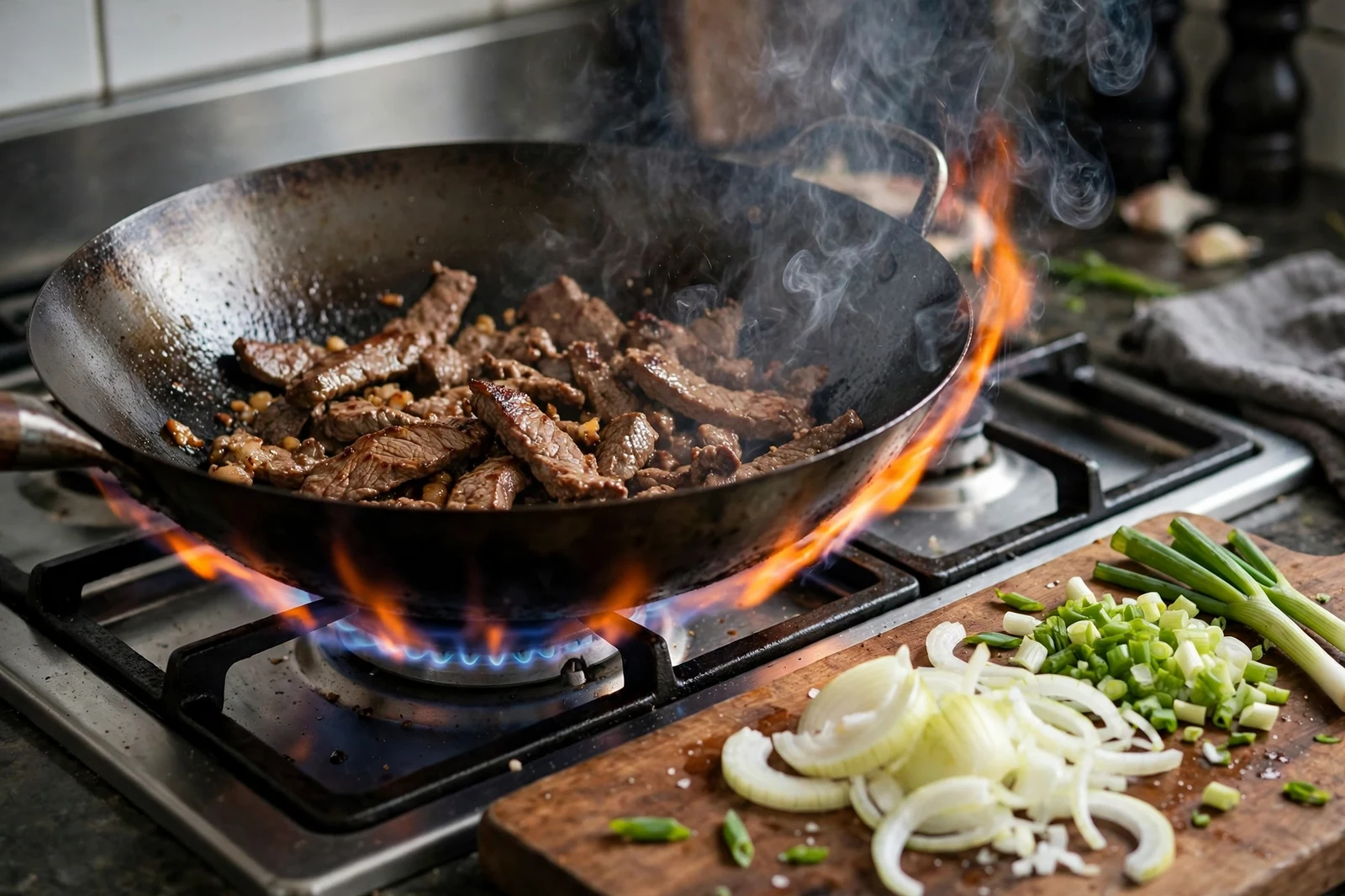
Add the remaining oil, then the onion, and stir-fry for about 1 minute until the edges soften. Add the noodles and the sauce, and toss gently with a spatula and tongs, lifting and folding rather than stirring hard. The noodles need about 2 minutes to take on color. Then return the beef, add the scallions and bean sprouts, and toss for 1 more minute. The sprouts should stay crisp and the scallions just wilted. Plate at once. Chow fun firms up fast as it cools, so it waits for no one.
If your pan is small, cook the noodles in two batches. A crowded pan drops the heat, and the food steams instead of frying. Two quick batches beat one steamy one every time.
Tips and variations
- Swap flank for skirt steak if that is what your store carries, and slice it the same way.
- Add 1 sliced bell pepper with the onion for a sweeter, more colorful pan.
- For heat, toss in 1 sliced Thai chili with the scallions, or serve chili oil at the table.
- Leftovers reheat poorly because the noodles firm up and break when stirred cold. Eat this one fresh, and scale the recipe down to 2 servings if you cook for two.
What to serve with it
This is a full meal on its own, but a cool, sharp side helps. A smashed cucumber salad with garlic gives the plate a cold crunch that plays well against the hot, savory noodles. Keep the rest of the table simple: the noodles are the meal.
Troubleshooting: Fix My Beef Chow Fun
Even a simple stir-fry has a few ways to go wrong. The section below covers the most common ones, with a practical fix for each.
HERB & LIME · KITCHEN HELP
Fix My Beef Chow Fun
Choose what went wrong to see a practical next step.
Possible cause
What to try next
For next time
From Paul's kitchen. Results vary with beef cut, noodle brand, and stove heat, adjust timing to your setup.
Quick reference (also works without JavaScript)
The noodles clumped into a solid block
Cause: Cold fresh ho fun sheets stick together and cannot be separated without tearing.
Try: Warm the noodle block for 1 to 2 minutes in the microwave under a damp paper towel, separate the strands gently by hand, and toss with 1 teaspoon of oil before cooking.
Prevent: Never pull refrigerated noodles apart while cold, and always loosen them before they reach the wok.
The beef turned tough and chewy
Cause: Thick slices cut with the grain, or beef left in the pan while the noodles cook, overcook quickly.
Try: Slice 1/8 inch thin against the grain, sear for about 90 seconds, remove the beef, and return it only for the final minute of tossing.
Prevent: Firm the steak in the freezer for 15 to 20 minutes before slicing so the cuts stay even and thin.
The noodles broke into small pieces
Cause: Stirring delicate ho fun hard, or starting from cold clumped sheets, tears the strands.
Try: Loosen the noodles fully first, then toss by lifting and folding with a spatula and tongs instead of stirring hard.
Prevent: Keep the tossing gentle and short, about 2 minutes, and stop as soon as the sauce coats the noodles.
The dish tastes flat with no smoky char
Cause: A crowded pan or low heat drops the temperature, so the food steams instead of frying.
Try: Heat the wok until it just smokes, cook in a single layer, and work in two batches if the pan is small.
Prevent: Have every ingredient prepped and beside the stove before the wok heats, so nothing waits and cools the pan.
The noodles turned soggy and greasy
Cause: Wet noodles or too much sauce pool in the pan instead of glazing the strands.
Try: Drain soaked noodles well and let them sit in the colander for a few minutes, then use only the measured sauce and toss briefly.
Prevent: Add the bean sprouts last and toss for only 1 minute, so they stay crisp and do not release extra water into the pan.
Beef Chow Fun: Cantonese Dry-Fried Beef Noodles
Ingredients
Method
- Firm and slice the beef: put the flank steak in the freezer for 15 to 20 minutes, then slice it 1/8 inch thin against the grain. Toss with the light soy sauce, Shaoxing wine, cornstarch, sesame oil, sugar, and white pepper, and set aside for 20 minutes.
- Loosen the noodles: warm refrigerated fresh noodles in the microwave for 1 to 2 minutes under a damp paper towel, then separate the strands gently by hand and toss with 1 teaspoon of oil. If using dried noodles, soak in warm water until pliable, about 8 to 10 minutes, then drain well.
- Mix the sauce: stir the light soy sauce, dark soy sauce, oyster sauce, sugar, and sesame oil in a small bowl and set it by the stove.
- Sear the beef: heat a wok or large cast-iron skillet until it just starts to smoke. Add 1 tablespoon of oil and swirl it. Spread the beef in a single layer and sear for about 90 seconds, turning once, until the edges brown. Lift the beef out at once and set it aside.
- Fry the noodles: add the remaining oil and the onion, and stir-fry for about 1 minute until the edges soften. Add the noodles and the sauce, and toss gently by lifting and folding for about 2 minutes until the noodles take on color.
- Finish and serve: return the beef to the wok, add the scallions and bean sprouts, and toss for 1 more minute. Plate at once and serve hot.
Notes
More Chinese recipes
Kung Pao Chicken, Mapo Tofu, Di San Xian: Chinese Potatoes, Eggplant, and Peppers, and Cantonese Soy Sauce Chow Mein.
From the garden
Scallions are one of the easiest pot plants to keep near the kitchen, and this dish uses a full bunch. Our guide to growing green onions in pots covers starting from store-bought bases, which means the scallion tops for the next pan of chow fun can come from the windowsill.